NFPA 13 Section 20.14 — Hose Connections for Storage Protection
NFPA 13 Section 20.14 Hose Connections for Storage Protection
Quick Answer: NFPA 13 hose connections storage protection provisions define accessible, clearly labeled hose connections on the standpipe network to support storage protection. The standard requires rapid water application, proper labeling, and assigned responsibilities for ongoing testing, inspection, and maintenance by qualified personnel.
If your facility is reviewing storage-area protection, it also helps to understand how these requirements fit into broader standpipe sprinkler combination system requirements and the larger installation framework outlined in NFPA 13 automatic fire sprinkler system installation.
Overview and Scope
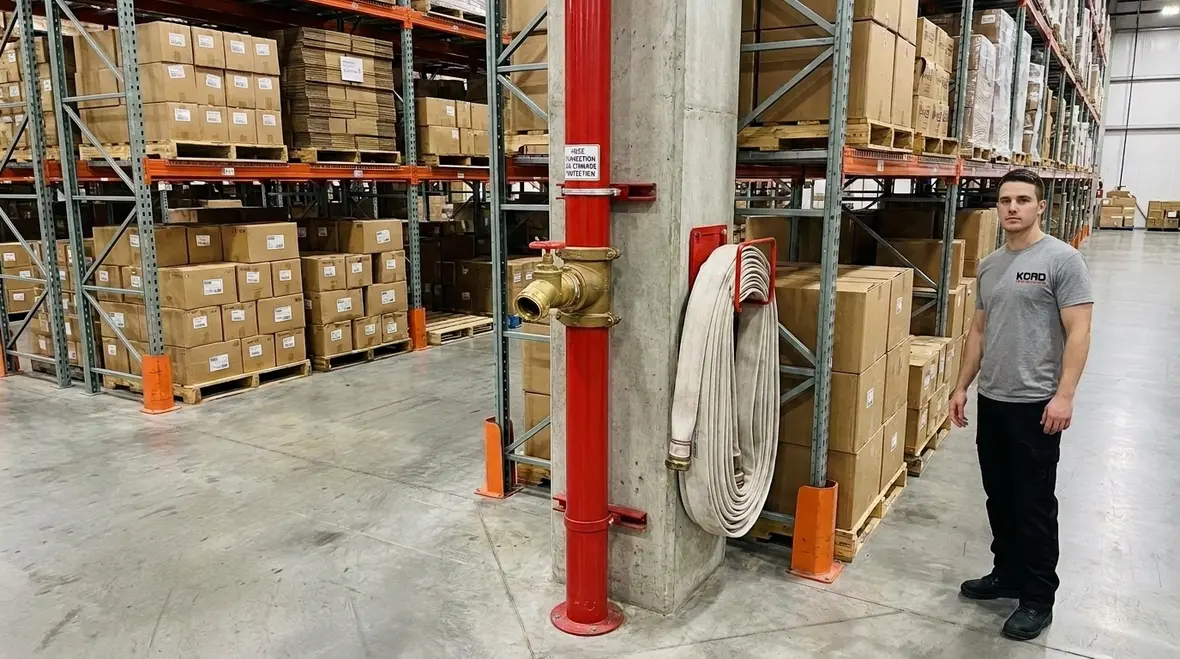
NFPA 13 hose connections storage protection is a targeted requirement within storage occupancy provisions. It focuses on ensuring reliable access to water through dedicated hose connections that integrate with the standpipe system to protect stored goods. The objective is to minimize fire growth and improve suppression effectiveness during the initial response by trained personnel and building staff.
Design and Installation Considerations
Location and Accessibility
- Connections should be placed in readily accessible locations that are not obstructed by stored materials or high traffic zones.
- Provide clear paths for maintenance crews and fire response personnel to reach each connection without delay.
Labeling Signage and Security
- Install durable, weather resistant labels that identify the purpose and elevation of each hose connection.
- Ensure caps are secure yet easy to remove and that tamper resistant features protect against loss or damage.
Compatibility and System Integration
- Verify that hose connections are compatible with standard portable hoses and align with the building standpipe design.
- Coordinate with the overall sprinkler system layout to prevent interference with sprinklers, heads, or other protection features.
Inspection and Maintenance Requirements
Visual Inspections
- Perform visual checks for corrosion, damage, obstructions, and seal integrity during routine maintenance visits.
- Confirm that caps and protective devices are present, intact, and properly seated.
Functional Testing
- Conduct functional tests to verify valve operation, pressure at the connection point, and the integrity of the connection with a representative hose end.
- Test should be performed by qualified personnel in accordance with NFPA 25 and project specific procedures.
For ongoing compliance, many facilities pair these tasks with a formal NFPA 25 standpipe inspection testing and maintenance program so hose connection readiness does not get overlooked until the worst possible moment.
Documentation and Records
- Maintain updated drawings and as built documentation showing hose connection locations, sizes, and access routes.
- Record test results, maintenance actions, and any corrective measures for regulatory review and audits.
Operational Use and Training
During an Incident
- Responding personnel should understand which hose connections serve which storage zones and how to deploy hoses without compromising other protection features.
- Procedures should minimize time loss, ensure crew safety, and rely on pre established water supply paths.
Training and Competency
- Provide periodic training for facility staff and contractors on operation, inspection, and maintenance of hose connections for storage protection.
- Document training completion and refresh with annual or event driven updates to reflect changes in layout or equipment.
Compliance Challenges in Commercial Facilities
Retrofits and New Construction
- New builds should integrate hose connections early in the design process to avoid clashes with storage configurations.
- Retrofits in existing facilities can be complex, requiring careful phasing and space planning to preserve storage capacity while meeting protection requirements.
Budgeting and Scheduling
- Ongoing inspection and testing represent recurring costs that facilities must budget for alongside capital improvements.
- Shifting occupancy patterns or reconfigured warehouses may necessitate relocation or addition of hose connections for continued coverage.
Coordination with Other Systems
- Integrate hose connection plans with standpipes, sprinklers, alarms, and access control to prevent conflicts during emergencies.
- Engage a qualified service partner to ensure consistent standards across design, installation, and maintenance activities.
Frequently Asked Questions
Conclusion and Call to Action
Maintaining compliant hose connections for storage protection is essential to protecting valuable inventory and ensuring rapid action during emergencies. Kord Fire Protection provides design reviews, installation support, ongoing testing, and maintenance programs tailored to commercial, industrial, and retail facilities. Contact Kord Fire Protection today to schedule a storage protection hose connection audit, develop a compliant maintenance plan, and train staff on operation and safety protocols.

Join Our Newsletter!
Get the latest fire safety tips delivered straight to your inbox From our Newsletter.