NFPA 25 Standpipe Inspection Testing Maintenance
Quick Answer
NFPA 25 §§ 6.1–6.5 sets the rules for inspecting, testing, and maintaining standpipe and hose systems in high rise and commercial buildings. Proper NFPA 25 standpipe inspection testing maintenance helps confirm performance, reduce risk, and keep compliance on schedule. Kord Fire Protection can manage the full job end to end, with clear reporting and practical fixes.
Every building manager knows the moment they hear the words “standpipe and hose system,” their day gets longer. Still, NFPA 25 §§ 6.1–6.5 matters, because it guides inspection, testing, and maintenance for high rise and commercial installations that people rely on when seconds count. A calm plan beats last minute panic, especially when teams want to keep systems reliable and audit ready. Near the top of that plan, it helps to understand how a standpipe system works and where it is required, because service decisions get much easier when the hardware is not a mystery. And that is exactly where NFPA 25 standpipe inspection testing maintenance fits.
Below, third person professionals will walk through what the standard expects under §§ 6.1–6.5, how facilities can execute the work with less disruption, and why Kord Fire Protection can become a vital partner for this service and job. For readers who want the broader maintenance picture, Kord Fire’s NFPA 25 overview of complete water-based fire protection systems maintenance adds useful context around how standpipes fit into the larger compliance puzzle.
What NFPA 25 §§ 6.1–6.5 requires for standpipe and hose ITM
NFPA 25 sections 6.1 to 6.5 outline the maintenance approach for standpipe and hose systems. In practice, it means facilities should plan regular inspections, run required tests, verify condition and operability, and document outcomes. The standard focuses on protecting the pathway between the water supply and the hose line, including valves, couplings, hoses, nozzles, cabinets, and related hardware.
To keep systems dependable, the scope does not stop at “looks good.” It also demands verification that components work as designed when crews need them under stress. And yes, inspections can feel like paperwork with a fire theme. But unlike a bad spreadsheet, NFPA 25 documentation can save a facility when an assessor, insurer, or fire authority asks for proof.
Why the standard pays attention to more than the obvious
A standpipe system can look perfectly respectable from the corridor while hiding issues that only appear when someone checks valve condition, access, hose storage, connection integrity, and readiness for use. That is why a serious ITM program treats the standpipe and hose assembly like working equipment, not lobby decor with a cabinet door. The point is not simply to pass an inspection day. The point is to know the system will respond when a fire crew needs water without delay, confusion, or a stubborn fitting that suddenly develops stage fright.
How inspection and readiness checks protect high rise operations
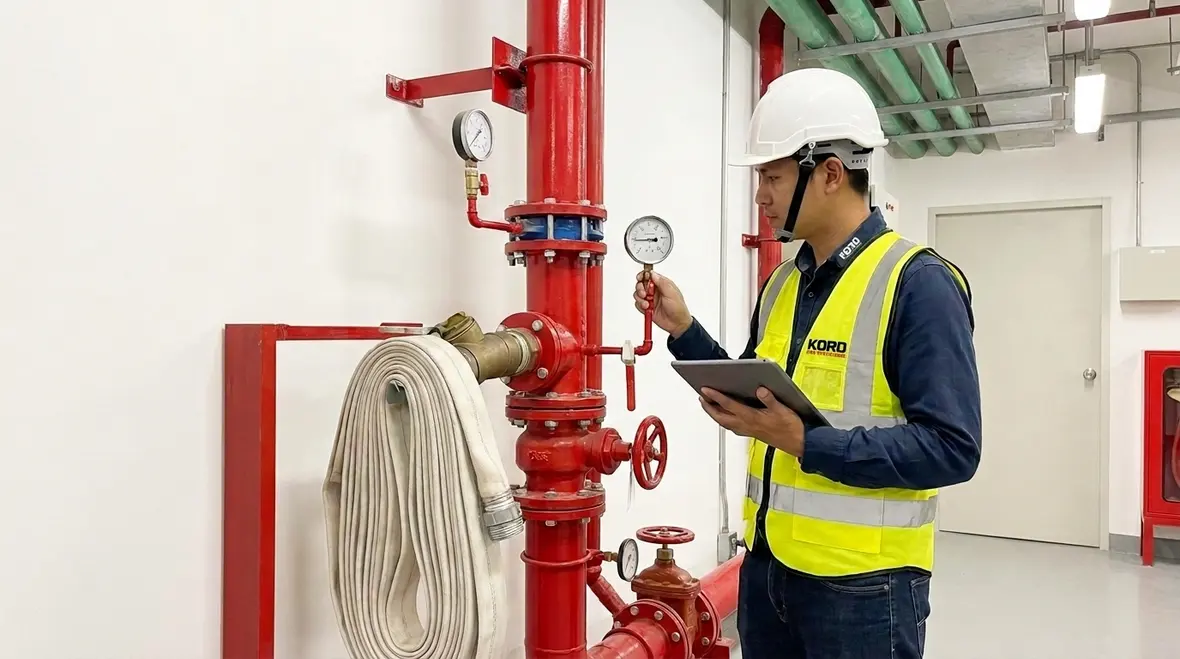
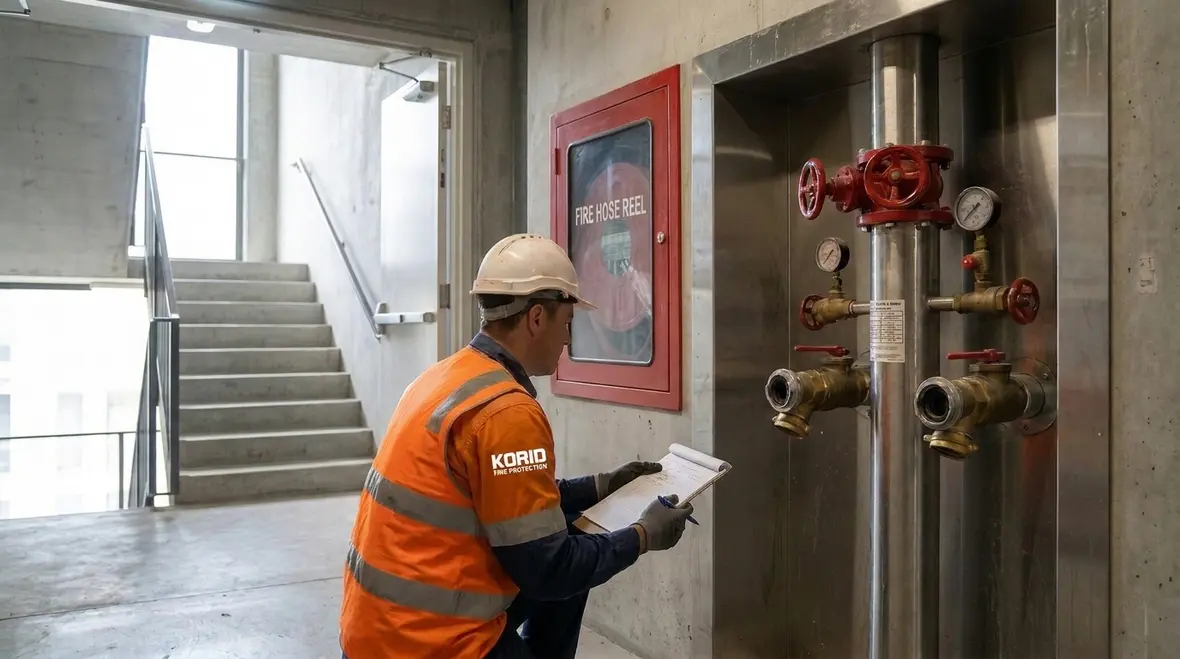
When a standpipe system sits across multiple floors, it should not rely on luck. Therefore, facilities typically start by verifying that cabinets remain accessible, labels remain legible, and hoses sit correctly on hangers or reels. Next, teams check for visible deterioration such as abrasion, contamination, or damage that could reduce flow or affect coupling fit.
Then the work moves from “visual confidence” to “operational confidence.” Crews should verify that manual controls, valve positions, and connections support fast use. If a hose cabinet is blocked by storage, or if a coupling does not seat properly, response time slips. Consequently, proactive NFPA 25 standpipe inspection testing maintenance reduces avoidable delays and keeps the system ready for real-world use, not just a training scenario.
That readiness matters even more in high rise operations, where firefighters depend on quick access to water at the correct level rather than hauling everything from the ground floor. Kord Fire’s standpipe resources repeatedly point back to the same idea: a system only helps if it is accessible, intact, and ready when crews arrive. A blocked cabinet or neglected outlet is a tiny oversight right up until it becomes a very large problem.
Common readiness issues that deserve attention
- Cabinets blocked by storage, displays, or temporary equipment
- Worn hoses or damaged jackets from abrasion and poor handling
- Missing caps, gaskets, labels, or identification markings
- Connections that do not seat cleanly or show thread damage
- Valves left in the wrong position or hardware that does not operate smoothly
Testing expectations for hoses, valves, and water delivery paths
Testing under NFPA 25 aims to confirm that the system can deliver water at the expected performance level. For high rise and commercial buildings, this often includes checking that water flows properly through the standpipe arrangement and that associated components function with the right mechanical response.
Where teams get tripped up is assuming that a component that passes a quick look will always pass a flow test. However, buildup, valve issues, or hose aging can change performance even when everything “seems fine.” Therefore, an ITM plan should align testing windows with building operations, coordinate access across risers and floors, and keep results clear enough for follow up actions.
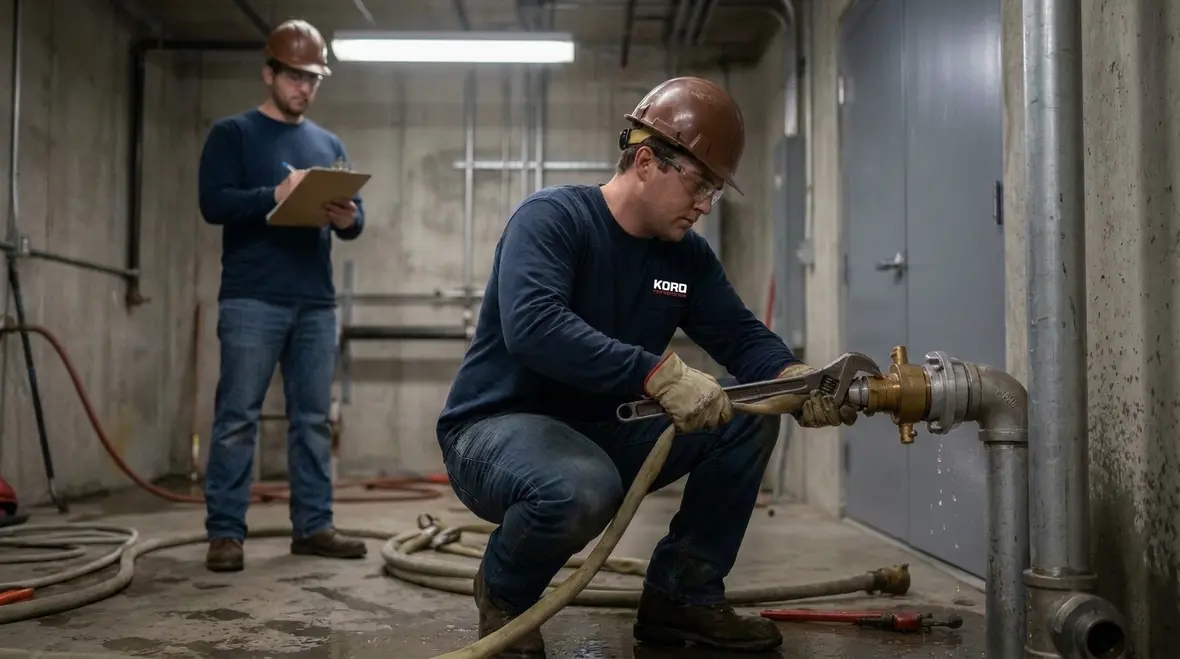
In busy facilities, this also means planning around tenant schedules, loading windows, visitor traffic, and floors that never seem to stop moving. A well run standpipe hose test should feel like a managed maintenance window, not a pop quiz. When Kord Fire Protection supports the job, they help teams schedule and execute testing with minimal disruption while keeping compliance records tight.
Testing works better when operations are part of the plan
Multi floor testing is rarely just a technical exercise. It is a coordination exercise with valves. Access control, tenant communication, after hours scheduling, and clear reporting all matter because they determine whether the maintenance window runs smoothly or turns into a scavenger hunt with radios. The more organized the plan, the easier it is to complete testing thoroughly and still let the building get on with its day.
Maintenance actions that reduce failure risk over time
Maintenance is where standards become real. After inspection and testing, the facility should address issues promptly, especially anything that affects coupling integrity, hose condition, valve function, or cabinet accessibility. Typical maintenance actions include replacing compromised hoses, correcting improper storage positions, repairing or adjusting hardware, and ensuring nozzles and couplings remain correct for the system design.
Additionally, teams should control how the system is kept “as installed.” If contractors swap parts without matching specifications, the system can drift away from its original intent. Hence, a documented ITM approach protects against mismatched components and helps future teams understand what was changed and why.
For industrial, retail, and commercial sites, this matters even more because the environment can be rough: dust, vibration, equipment movement, tenant changes, and frequent contractor activity. So, the best NFPA 25 standpipe inspection testing maintenance program treats the standpipe and hose system as critical plant, not as a forgotten cabinet in the hallway that everyone remembers only during audits.
A practical maintenance mindset beats reactive scrambling
Reactive work usually costs more, interrupts more people, and creates more paperwork than anyone wanted in the first place. A practical maintenance mindset keeps small deficiencies from maturing into testing failures or emergency repairs. It also gives facility teams a baseline they can actually use next year, instead of a vague memory that someone looked at it once and hopefully wrote something down somewhere sensible.
Scheduling ITM across multi site facilities and busy tenancies
Many organisations manage multiple facilities, sometimes with different tenants and different building layouts. As a result, a one size plan rarely works. A strong approach starts with mapping risers, locating hose stations, listing access requirements, and setting a realistic cadence that aligns with operational needs.
Then, teams coordinate resources for manpower and time on each floor. They also plan communication so building users know what to expect. That includes signage, escort procedures if required, and clear boundaries so maintenance teams can work without creating additional hazards.
Kord Fire Protection can act as a partner in that coordination. They support job planning, manage the documentation trail, and help facilities track trends across inspections so the next round of work targets likely problem areas instead of rechecking everything blindly. Because in the real world, time is money, and money does not like being wasted.
Documentation, compliance proof, and audit friendly reporting
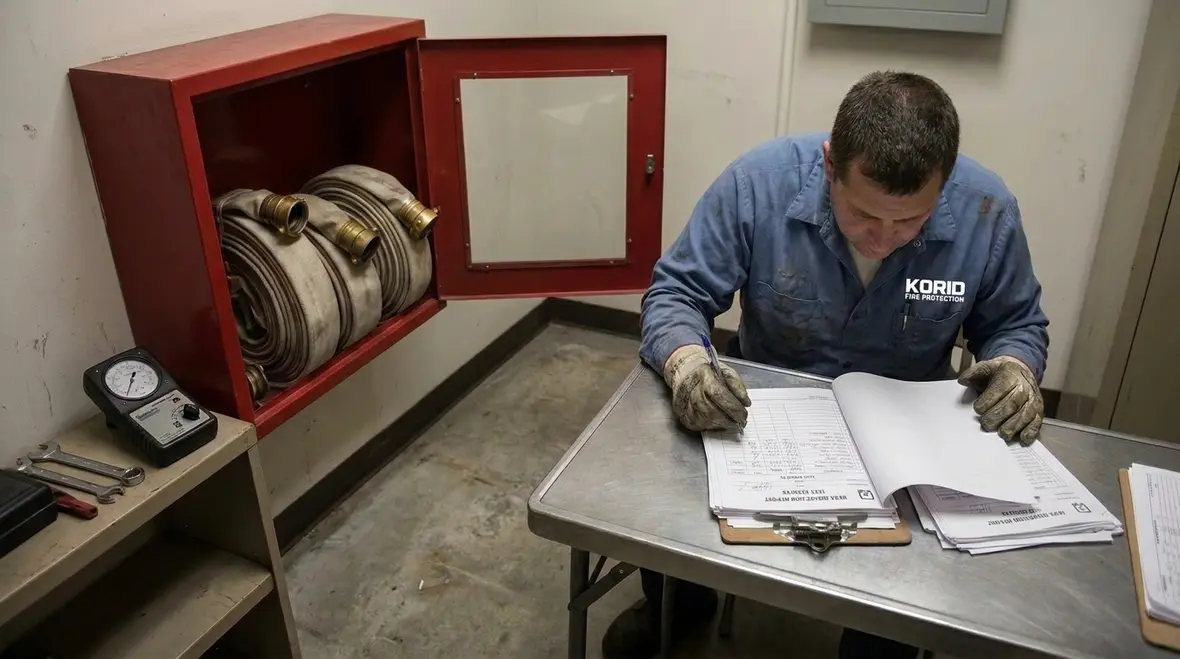
Compliance fails when records fail. NFPA 25 standpipe inspection testing maintenance depends on consistent documentation of what the team checked, what tests ran, what pass or fail means, and what corrective actions followed. Therefore, a good program includes reports that are easy for stakeholders to read: facility managers, maintenance supervisors, safety officers, insurers, and technical auditors.
The report should also connect outcomes to actions. If a hose shows wear, the facility should know the replacement plan and the reason behind it. If a valve needs adjustment, the report should capture the component, location, and what changed. That way, the next inspection starts from a known baseline rather than guessing what went wrong last time.
Kord Fire Protection supports this by keeping reporting structured and practical, so the facility gets compliance proof that stands up under review. And unlike some systems that only look good in theory, these records reflect the work actually completed.
Why Kord Fire Protection fits the standpipe and hose ITM job
Kord Fire Protection becomes a vital partner when the facility wants reliability, efficiency, and confidence. They help implement NFPA 25 standpipe inspection testing maintenance across high rise and commercial environments, with attention to scheduling, component condition, and documentation quality.
In addition, they support facilities operating in complex environments by coordinating access, minimising disruption, and aligning maintenance actions with inspection findings. That reduces the chance that a minor defect becomes a major issue. In short, Kord Fire Protection helps teams move from “we did the inspection” to “we can prove the system is ready.”
What building types benefit most from this service
High rise buildings, shopping centres, office towers, and mixed commercial complexes all benefit from robust standpipe and hose ITM. In addition, industrial facilities with high occupancy or complex utilities often need dependable standpipe arrangements because the consequences of delayed response increase when systems fail under pressure.
Facilities also face frequent contractor activity, refurbishments, and storage changes. Those changes can impact hose cabinet access and component integrity. Therefore, consistent NFPA 25 standpipe inspection testing maintenance keeps the system aligned with the installed configuration and ready for operational reality.
Frequently Asked Questions
CTA: plan the next standpipe and hose ITM with confidence
When facilities treat standpipe and hose systems as living safety equipment, readiness improves and surprises shrink. Kord Fire Protection helps organisations plan NFPA 25 standpipe inspection testing maintenance, execute testing and corrective actions, and deliver clear reporting that holds up under review.
Request a site assessment now and get a practical maintenance plan that fits your building schedule and risk profile. It is a much better feeling than discovering on audit day that the “forgotten cabinet in the hallway” was less ready than everyone hoped.

Join Our Newsletter!
Get the latest fire safety tips delivered straight to your inbox From our Newsletter.