
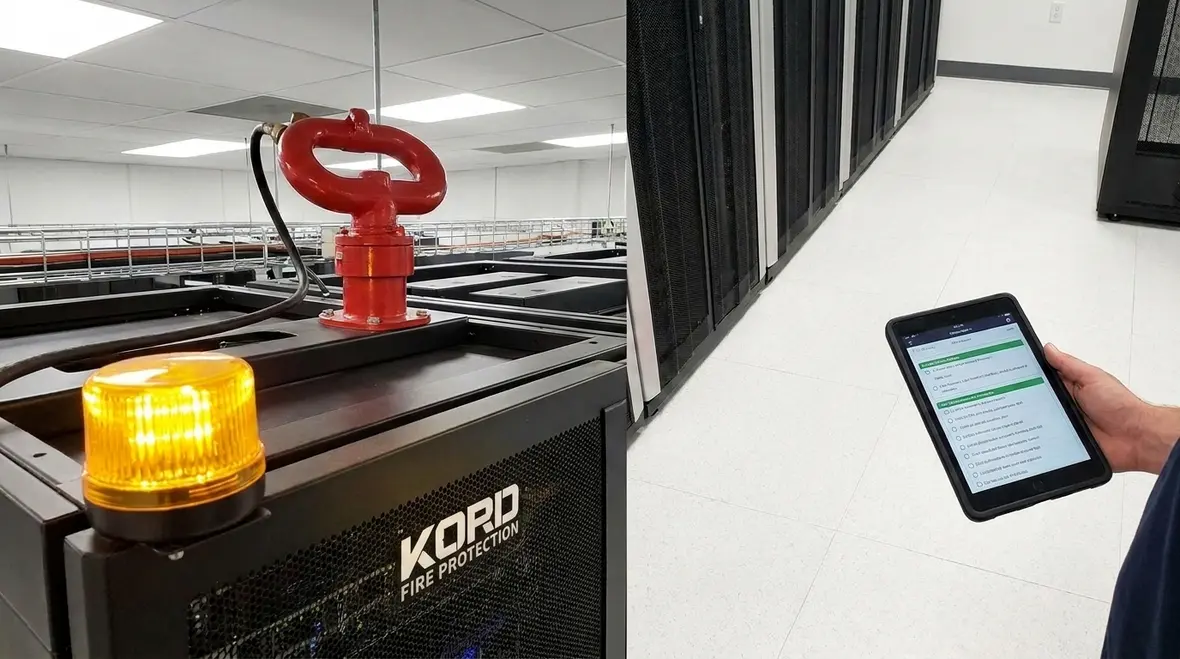
NFPA 12 Section 6.2: CO2 Local Application Hazard Specifications
NFPA 12 Section 6.2 defines CO2 local application hazard specifications by detailing how to identify occupant risks, delineate restricted zones, and ensure interlocks, alarm signals, and maintenance procedures are in place. It emphasizes that localized CO2 discharge must be managed to protect personnel, with documented procedures and clear responsibilities for ongoing compliance.
If you are reviewing system design, service intervals, or retrofit needs, commercial fire suppression services from Kord Fire Protection provide a practical starting point for aligning CO2 protection with real world facility conditions.
Understanding NFPA 12 CO2 Local Application Hazards
Local application hazards refer to targeted CO2 releases aimed at protecting a specific equipment or hazard area rather than flooding an entire space. This approach creates concentrated gas plumes in relatively small volumes, which can pose immediate risks to nearby personnel. NFPA 12 CO2 local application hazards require a rigorous risk assessment that considers occupancy, access routes, ventilation, and the potential for gas migration beyond the protected area. The standard mandates clear boundaries and protections to prevent inadvertent exposure during or after discharge.
Why local application needs closer control
Because the discharge is focused on a defined hazard instead of a full room, the system has to work with sharper precision. That means the protected equipment, nearby pathways, and adjacent occupied areas all need to be considered together, not as separate checkboxes that only meet on inspection day.
Hazard Evaluation and Zone Classification
Effective management begins with hazard evaluation and zone classification. Key elements include:
- Occupancy analysis: Identify spaces that may be occupied during system operation and determine safe exposure limits for CO2 concentrations in those zones.
- Hazard boundaries: Establish restricted, controlled, and safe zones around the protected area to prevent unintended exposure.
- Concentration targets: Define acceptable CO2 concentrations within each zone during and after release, aligned with applicable codes and occupational safety standards.
- Detection and notification: Integrate early warning systems and interlocks to trigger alarms and prepare occupants for evacuation or relocation.
For commercial facilities such as data centers, manufacturing floors, and critical electrical rooms, the boundary definitions directly influence how the system is designed, installed, and maintained. Clear zone delineation helps facilities stay compliant with NFPA 12 CO2 local application hazards requirements while minimizing downtime and risk to personnel.
For a broader compliance reference, Kord Fire Protection also offers its NFPA 12 compliance guide for carbon dioxide extinguishing systems, which fits naturally alongside local application planning and documentation.
System Design Requirements and Controls
Designing a CO2 local application system under NFPA 12 6.2 involves multiple interdependent controls and procedures. Important considerations include:
- Discharge mechanism: Local application uses targeted release devices that deliver CO2 where needed while limiting exposure elsewhere. The placement and type of nozzles or diffusers are chosen to achieve rapid yet controlled concentration in the hazard area.
- Detection and interlocks: Time-activated interlocks and detector systems ensure that CO2 release occurs only under verified conditions, with automatic shutdown if occupants are detected or if a fault is identified.
- Warning and access control: Audible alarms, visual indicators, and clear access restrictions alert personnel before and during release. Access to the protected area is typically controlled to prevent entry during discharge windows.
- Ventilation interactions: Local application must account for room ventilation, door openings, and HVAC configurations that could shift CO2 plumes beyond the intended zone.
- System documentation: Detailed design calculations, zone maps, operating procedures, and maintenance plans are required to demonstrate compliance with NFPA 12 CO2 local application hazards.
In commercial facilities, alignment with building management systems and fire alarm protocols is essential. Coordination helps ensure that fire suppression actions do not conflict with life safety procedures and that maintenance activities preserve system effectiveness.
Controls that should never be treated as an afterthought
Interlocks, alarms, signage, and shutdown logic may not be the flashy part of the system, but they are the part that keeps a technical solution from becoming a very bad surprise. Good design is not just about discharge performance. It is about discharge performance that respects where people actually work.
Occupant Safety, Alarm, and Access Control
Occupant safety is central to local application hazard specifications. NFPA 12 requires that occupants are protected through proactive measures, including:
- Pre-discharge alarms: Warnings provide a predictable notification period before any discharge, enabling safe evacuation or relocation.
- Restricted access: Physical or procedural barriers prevent entry to the protected area during a discharge event.
- Training and drills: Facility personnel, tenants, and maintenance teams receive training on discharge scenarios, alarms, and emergency procedures.
- Clear signage and lighting: Visible indicators and illuminated signage guide safe egress and minimize confusion during events.
For retailers and industrial facilities with high foot traffic, these measures translate into well-rehearsed safety plans, scheduled maintenance windows, and documented occupancy controls to sustain compliance while maintaining operational continuity.
Teams that want a more focused read on warnings and evacuation planning can also review CO2 fire suppression system safety and alarms for added context around notification and controlled access.
Commissioning, Maintenance, and Testing Protocols
Ongoing reliability hinges on robust commissioning, maintenance, and testing. Key practices include:
- Functional testing: Regular checks confirm detector sensitivity, interlock operation, and discharge sequences. Tests should simulate actual release conditions without releasing CO2 into occupied spaces.
- Leak and integrity checks: Piping, vessel, and release device integrity is validated to prevent unintended leaks or partial releases that could compromise protection.
- Charge verification: CO2 charge levels are validated after maintenance or discharge events to ensure the system can achieve the intended concentration and duration.
- Recordkeeping: Maintenance logs, test results, and incident histories are maintained to demonstrate adherence to NFPA 12 and to support audits.
- Periodic revalidation: Factory or third-party verification confirms that zone calculations, detection settings, and interlocks remain aligned with current occupancy and use.
Commercial facilities must integrate these routines into their facilities management programs, coordinating with building engineers, safety managers, and authorized service providers for predictable system performance.
Compliance Challenges for Commercial Facilities and Partnering with Kord Fire Protection
Commercial, industrial, and retail spaces face practical hurdles when implementing NFPA 12 CO2 local application hazard requirements. Common challenges include space constraints for equipment, ensuring unobstructed access to protected zones, coordinating with tenants and operations, and budgetary considerations for ongoing testing and maintenance. Additionally, aligning fire suppression with other life safety systems and ensuring that staff training remains current can strain internal resources. Kord Fire Protection specializes in navigating these challenges, offering comprehensive assessments, design support, commissioning, scheduled maintenance, and truthful reporting to maintain compliance and performance over time. Partnering with a dedicated provider helps facilities reduce risk, limit downtime, and sustain safe operations across multiple sites.
Frequently Asked Questions
To ensure ongoing compliance and equipment reliability in line with NFPA 12 CO2 local application hazards, facilities should engage a qualified partner for design reviews, commissioning, maintenance, and documentation. Kord Fire Protection provides these services across commercial, industrial, and retail facilities to sustain safe operation and regulatory alignment.
Protect people and property by ensuring your CO2 local application system aligns with NFPA 12 6.2 requirements. Contact Kord Fire Protection for a comprehensive assessment, precise zone mapping, and a tailored maintenance program designed to keep your facility compliant, safe, and ready for any audit. Schedule a consultation today to review your hazard specifications and close gaps in life safety coverage.

Join Our Newsletter!
Get the latest fire safety tips delivered straight to your inbox From our Newsletter.


