NFPA 12 Section 5.4: CO2 Requirements for Deep-Seated Fire Protection
Quick Answer: NFPA 12 CO2 deep seated fire requirements govern how carbon dioxide systems address fires hidden within deep pockets of storage. They define occupancy safety, design concentrations, discharge timing, detection integration, and post discharge checks to ensure effective suppression while protecting personnel and assets.
If you are reviewing system planning or service support, Kord Fire Protection’s CO2 fire suppression systems service page gives helpful context on where these systems fit and how they are maintained in real commercial settings.
Overview of NFPA 12 Section 5.4 and its Scope
NFPA 12 covers carbon dioxide extinguishing systems used for total flooding in enclosed spaces. Section 5.4 specifically examines deep seated fires where heat and fuel are distributed in voids or concealed pockets. This section guides design limits, safety controls, and the sequence of actions required to minimize risk to occupants while providing reliable suppression in commercial facilities such as warehouses, retail spaces, and data centers.
Why Deep-Seated Fires Need Extra Attention
A deep seated fire does not always announce itself with dramatic flames and a convenient sense of timing. It can hide inside packed storage, enclosed cavities, or layered materials where heat lingers and reignition becomes the annoying guest that refuses to leave. That is exactly why system design, discharge performance, and follow-up verification matter so much here.
Design and System Components for Deep-Seated Fire Protection
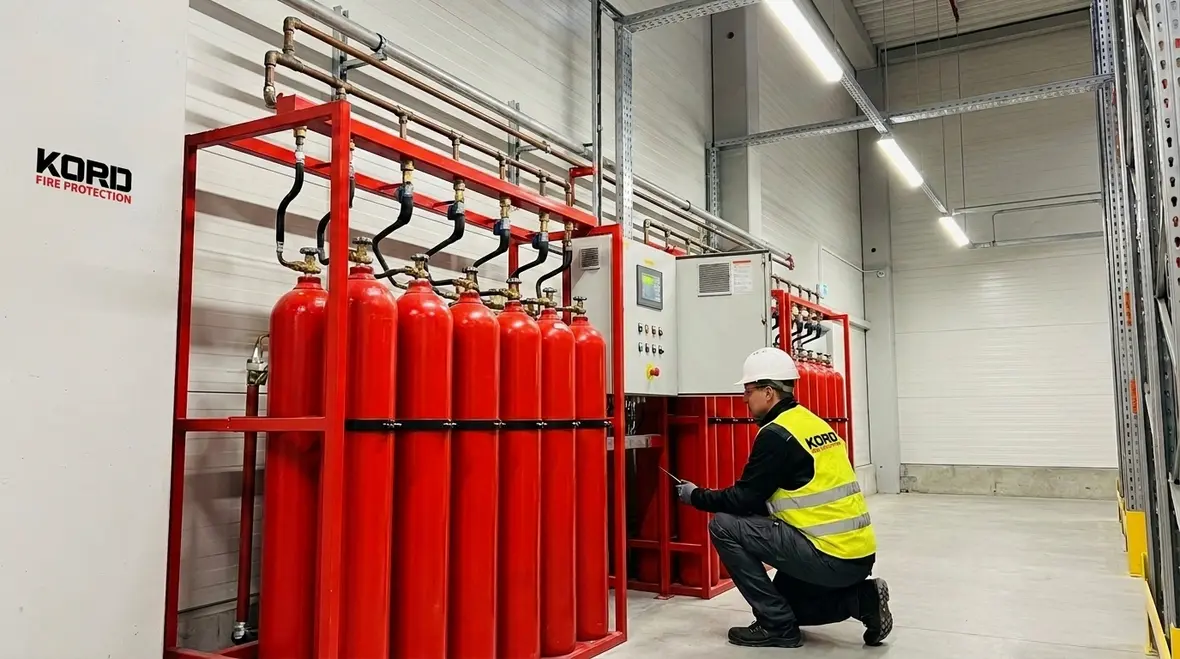
Design considerations focus on ensuring complete and uniform CO2 distribution to reach hidden fire zones. Key components include CO2 cylinders or banked storage, sequence valves, releasing panels, pneumatic or electric actuators, piping networks, nozzles, and alarm and interlock systems. Piping layout should avoid dead ends and provide a clear discharge path to all voids. Documentation, labeling, and access for service personnel are essential for ongoing compliance.
Core Components That Do the Heavy Lifting
In practical terms, the system only works as well as the coordination between storage, release hardware, detection inputs, and distribution piping. If one part is lazy, blocked, leaking, or wired like it was installed during a very chaotic Friday afternoon, the whole response can suffer.
Detection, Release Timing and Concentration Requirements
The standard requires reliable detection of a fire early enough to trigger discharge before the fire grows. It specifies the release sequence, interlocks, and performance criteria to achieve the target concentration rapidly and maintain it for a defined hold period. Space safety measures include occupant alarm systems and safe re entry protocols for post discharge assessment.
For a broader look at the discharge side of the equation, Kord Fire Protection also explains what happens during a CO2 fire suppression discharge, which fits naturally with the timing and safety concerns discussed here.
Safety Controls Are Not Optional Decorations
Because CO2 displaces oxygen, alarms, delays, lockout features, and controlled access are not nice extras. They are part of what keeps the system from becoming a compliance checkbox with extremely bad consequences.
Installation, Commissioning and Inspections
Installation must follow the design documentation with quality control checks on all components. Commissioning includes acceptance testing, functional testing of valves and actuators, and a verification of uniform distribution. Ongoing inspections and testing are performed in accordance with applicable standards and manufacturer recommendations, including post discharge inspections and documentation updates.
Commissioning Is Where Theory Meets Reality
A design can look beautiful on paper and still fall flat in the field if commissioning is rushed. Functional testing, sequence verification, and documentation review help prove the system is actually ready instead of simply looking confident from a distance.
Maintenance and Common Failure Points plus Compliance Challenges
Maintenance programs address cylinder integrity, valve sealing, gas purity, and leak detection. Common failures include valve leaks, corrosion of piping, blocked nozzles, sensor drift, improper wiring, and inadequate occupancy controls. Facilities should maintain up to date drawings, implement a formal change management process, and ensure that staff are trained to recognize hazards associated with CO2 systems and to evacuate safely if needed.
- Regularly verify cylinder pressure and seal integrity, and test backup power and interlocks.
- Inspect piping for corrosion, leaks, and blocked orifices that reduce distribution effectiveness.
- Maintain accurate valve IDs, as built drawings, and sequence logic to prevent misoperation during discharge.
- Ensure alarm annunciation and re entry procedures are documented and rehearsed with building staff.
- Coordinate with authorities having jurisdiction to keep documentation current for inspections and permits.
The Usual Troublemakers
Most compliance challenges are not especially glamorous. They tend to come from stale drawings, neglected inspections, drifting sensors, mislabeled components, and the occasional assumption that everything is probably fine because nothing has exploded lately. That is not a maintenance strategy. That is optimism wearing a hard hat.
Partnering with Kord Fire Protection for Compliance and Maintenance
Kord Fire Protection offers end to end services for NFPA 12 CO2 deep seated fire requirements in commercial facilities. Services include design review, system installation oversight, commissioning, training, and ongoing maintenance. The team helps facilities navigate regulatory expectations, perform periodic testing, coordinate with authorities having jurisdiction and maintain thorough documentation.
For readers who want the bigger compliance picture, Kord Fire Protection also has a dedicated NFPA 12 compliance guide for carbon dioxide extinguishing systems that pairs well with this section-specific breakdown.
Frequently Asked Questions
Conclusion and Call to Action Ready to verify your NFPA 12 CO2 deep seated fire requirements compliance? Contact Kord Fire Protection for a comprehensive assessment, design review, installation oversight, commissioning, and ongoing maintenance. We tailor solutions for warehouses, retail, and data centers to keep people safe and assets protected while maintaining operational readiness.

Join Our Newsletter!
Get the latest fire safety tips delivered straight to your inbox From our Newsletter.