NFPA 1 Section 14.5 Door Opening and Egress Requirements
Quick Answer
NFPA 1 Section 14.5 focuses on safe door opening and egress so people can leave quickly during an emergency. It requires doors to open easily, swing the right way, and avoid hardware that blocks escape. For facilities that need broader compliance support, Kord Fire Protection offers full fire protection services that help keep life safety systems practical, coordinated, and ready when it matters most.
NFPA 1 Section 14.5 matters because a door is not just a door when the alarm sounds. It becomes a life path. In many sites, the door opening egress code, exit door requirements NFPA, and egress door hardware fire code shape how people move out fast and safely. If a door sticks, swings the wrong way, or has the wrong lock, panic can turn a simple exit into a bad scene. Nobody wants that kind of surprise, not even in a fire drill that already feels like a low budget action movie.

NFPA 1 Section 14.5 in plain language
Section 14.5 sets the rules for door opening and egress so occupants can leave without delay. In simple terms, doors must allow fast escape, and they must not trap people inside. That means the opening direction, the latching method, and the force needed to open the door all matter. As a result, building teams must check more than just the frame and the leaf. They must review how the whole exit path works under pressure.
Why plain language matters on site
Code language can sound formal, but the real world is messy. Staff carry boxes, customers bunch up near the front, and warehouse exits pick up all kinds of random obstacles that somehow become “temporary” for six months. Looking at Section 14.5 in plain language helps facility teams connect the rule to the actual moment people need to move. If a person has to stop, think, twist, pull hard, or fumble with hardware, the exit is already losing valuable time.
What the code expects from exit doors
Exit doors must serve the people inside first. Therefore, they should open easily and in the direction of travel when required by occupancy and load. Hardware should not need special effort, secret knowledge, or a hero with a crowbar. In most cases, the goal is simple: one motion, clear release, quick exit. If a door needs extra steps, it slows escape and creates risk.
The difference between visible and usable
A door can look perfectly normal and still work poorly during an emergency. It may be painted, labeled, and sitting exactly where everyone expects it to be, yet still create trouble because the latch sticks, the closer resists, or the threshold catches carts and feet. Usability is the whole game. A compliant exit should work for the rushed person, the distracted person, and the person who is suddenly trying to remember where they left their coffee and their common sense.

How door hardware affects safe egress
Hardware can make or break compliance. Panic devices, latches, closers, hinges, and locks all play a role. Moreover, poor hardware choices can create friction, delay, or unsafe locking behavior. A door that looks fine on paper may fail in real use if the closer is too strong or the latch is stiff. So, regular checks matter. After all, a compliant door that nobody can open in a hurry is only half a solution.
Access control needs careful coordination
This is where many facilities get into trouble without meaning to. Security upgrades often happen one device at a time. A badge reader goes in, a magnetic lock gets added, or a new access sequence seems helpful for operations. Then someone realizes the door is no longer simple to release in an emergency. Kord Fire has also written about commercial fire alarm integration for safer door access, which fits naturally here because doors, alarms, and access control should never act like total strangers.
| Area to check | Why it matters |
| Door swing direction | Helps people exit in a fast, natural flow |
| Latch and lock function | Prevents delay during emergency escape |
| Closing force | Ensures the door opens without strain |
| Clear path to the door | Keeps the exit usable at all times |
Where compliance problems usually start
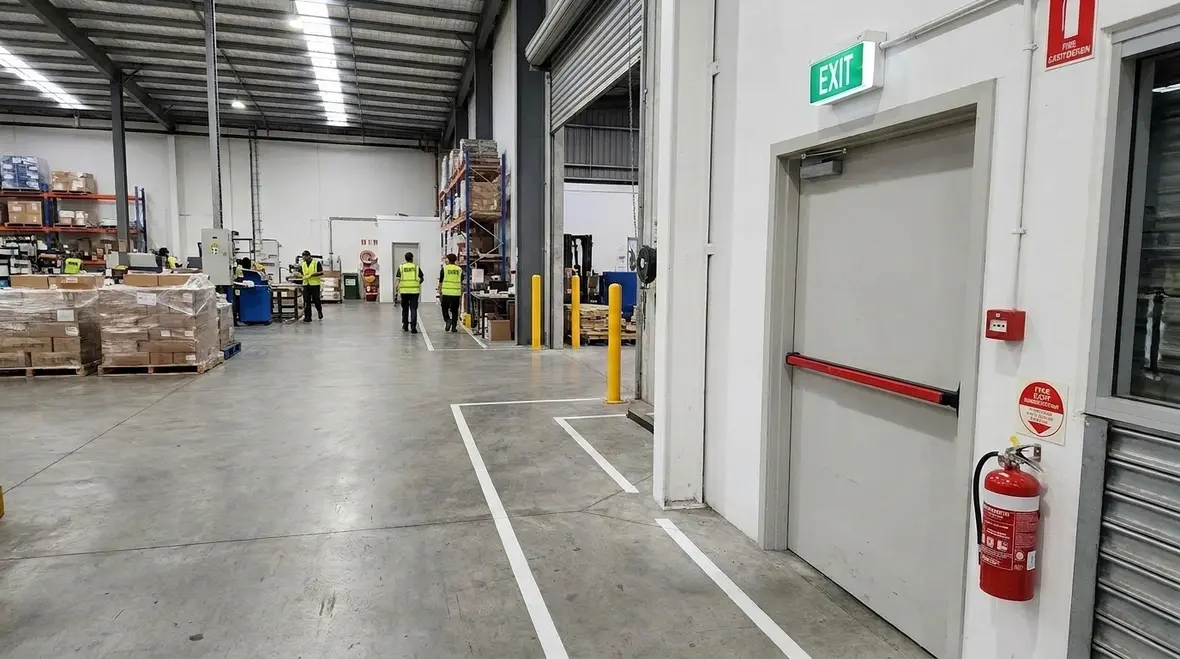
Most issues begin with changes over time. A site adds a new lock, installs a badge reader, moves stock near the exit, or upgrades hardware without checking the code. Then the door no longer performs as intended. In industrial and retail settings, that problem can show up in busy loading zones, stock rooms, plant rooms, or public exit paths. Because business changes fast, fire safety can fall behind unless someone keeps watch.
Small operational habits can create big egress problems
A wedge under a self closing door, extra stock parked beside the exit, or a chain added “just for after hours” can seem harmless in the moment. Yet those little habits are often what turn a working egress path into a compliance issue. This is especially true in retail environments where layouts shift often. Kord Fire’s article on retail fire safety compliance speaks directly to how egress paths, door swing, and floor activity all connect in day to day operations.

Door opening egress code for commercial and industrial facilities
Although the original draft mentions Australia, Kord Fire Protection serves Southern California and the broader U.S. market, so the practical takeaway here is strongest for commercial and industrial facilities working within NFPA driven expectations. That matters because large sites often operate across multiple uses, layered tenant demands, and changing occupancy patterns. Therefore, a practical compliance plan should align the door opening egress code with site use, daily operations, and the rest of the life safety strategy. A retail exit needs smooth public flow, while an industrial door may need stronger operational control without blocking escape. Different use, same outcome: safe egress.
Doors are only one part of the exit story
Even a great door can be let down by poor surrounding conditions. The approach path has to stay clear, lighting has to support visibility, and emergency planning has to match how people actually use the building. That broader view connects well with Kord Fire’s articles on building fire safety emergency planning, emergency lighting for fire safety, and NFPA 1: A Comprehensive Guide to Fire Prevention and Safety. The common thread is simple: egress works best when doors, paths, systems, and people are planned together rather than patched together later.
How Kord Fire Protection can help
Kord Fire Protection can become a vital partner because it brings fire safety knowledge into the real world of busy facilities. Their team can review exit doors, test hardware performance, and help identify weak points before they become costly problems. In addition, they can support maintenance planning, compliance checks, and corrective work that keeps doors ready for use. That kind of help is not flashy, but neither is a working fire exit. And frankly, that is the point.
Why early action beats rushed correction
Waiting for an inspection to find the problem is a risky strategy. Instead, managers should treat exit doors as active life safety equipment. Regular reviews help reduce downtime, avoid failed audits, and keep staff and visitors safer. Furthermore, early action often costs less than emergency repairs or rushed upgrades. A small fix today can prevent a bigger headache tomorrow, which is the kind of math even the toughest operations manager can appreciate.
FAQ
Conclusion
Safe egress starts at the door, and NFPA 1 Section 14.5 makes that clear. When doors open the right way, release easily, and stay free from hardware problems or blocked paths, the whole building becomes safer in the moment that matters most.
For commercial and industrial facilities, Kord Fire Protection can help turn compliance into a living system, not a paper exercise. If exit doors need review, upgrade, or ongoing care, now is the time to act and keep every path out open, simple, and ready.

Join Our Newsletter!
Get the latest fire safety tips delivered straight to your inbox From our Newsletter.