NFPA 1 Section 18.2 Fire Access Road Requirements and Guidance
Quick Answer
NFPA 1 Section 18.2 sets the standard for fire department access roads so emergency crews can reach buildings fast and safely. For industrial, retail, and commercial sites across Australia, strong fire access road requirements, correct fire lane width NFPA guidance, and a reliable fire truck access road code plan can reduce delays, support compliance, and protect lives. Kord Fire Protection can help make that happen.
NFPA 1 Section 18.2 matters because fire crews do not get points for style. They need clear, firm, and open access. In busy industrial parks, shopping centres, warehouses, and large facilities, the fire access road requirements and fire truck access road code shape how emergency vehicles move, turn, and park during a response. Likewise, fire lane width NFPA guidance helps decide whether a truck can reach the right point without wasting precious time. Therefore, good access design is not just a box to tick. It is part of a site’s safety backbone, and yes, it can save a lot more than paperwork.
For facilities that need broader planning support beyond access alone, full fire protection services can help tie site access, inspections, alarms, sprinklers, and ongoing readiness into one practical strategy. That matters because access roads do not live in isolation. They work best when the rest of the fire protection picture is also well managed.
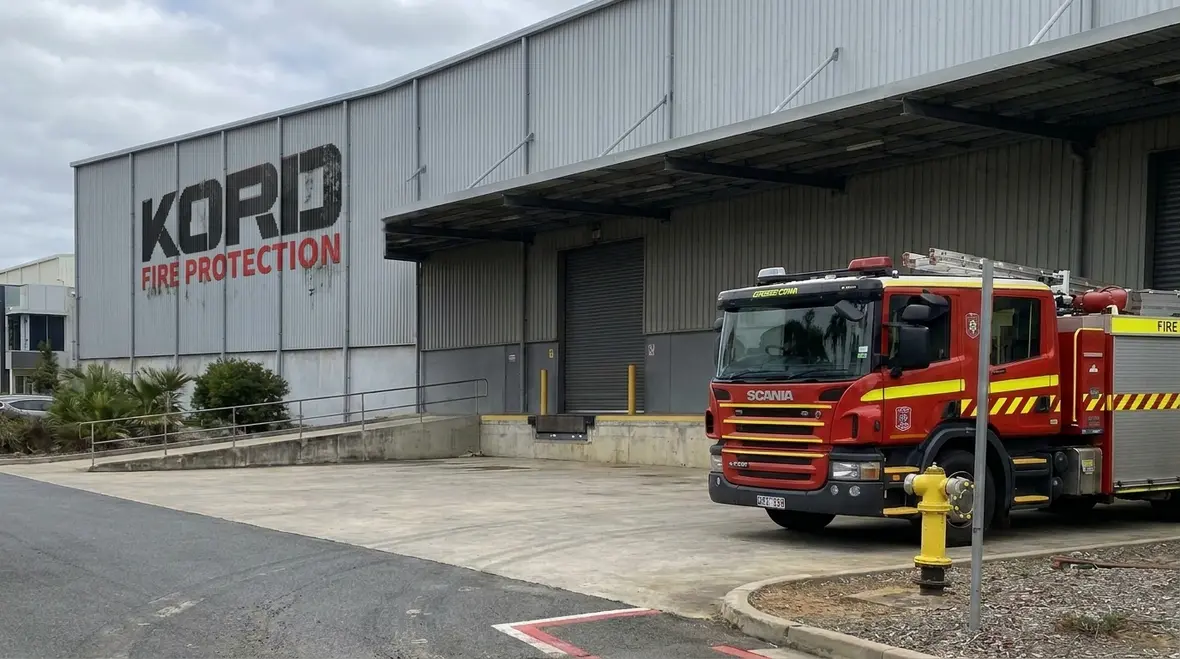
What NFPA 1 Section 18.2 Means for Site Access
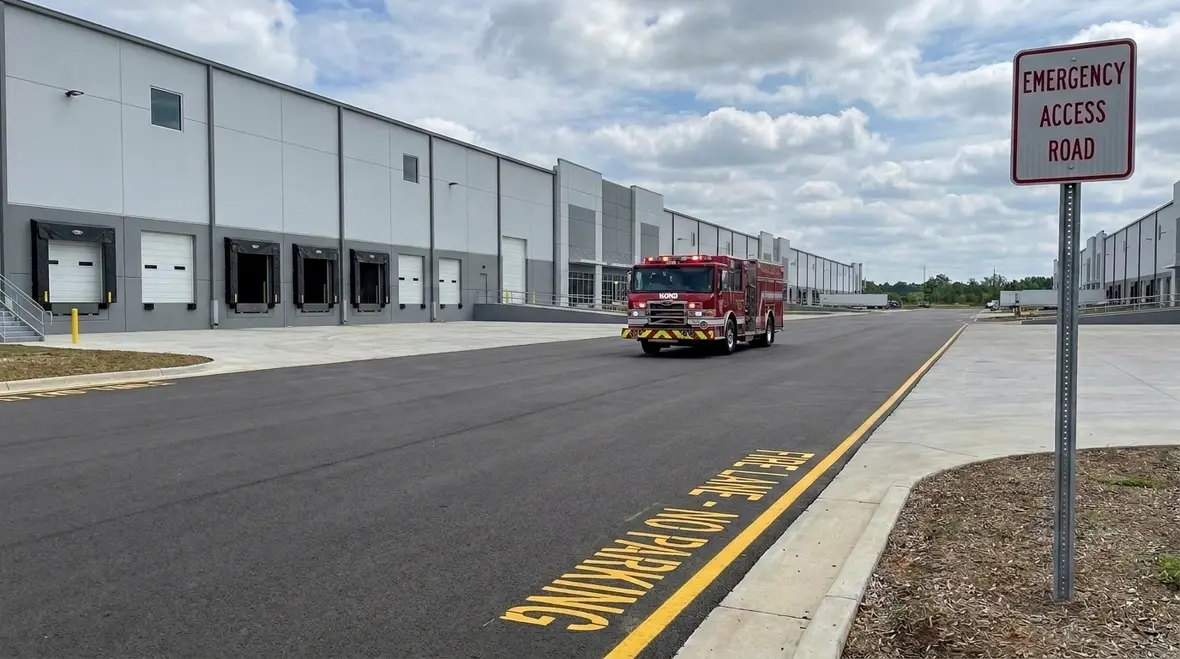
NFPA 1 Section 18.2 focuses on fire department access roads that allow emergency vehicles to reach buildings, hydrants, and other critical areas. In simple terms, the route must stay usable when it matters most. As a result, site owners need roads that support truck weight, turning space, and clear passage at all times.
For commercial and industrial sites, this section matters during design, construction, upgrades, and routine operations. Moreover, the access route must stay free from blocked loading bays, parked vehicles, fixed barriers, and overgrown landscaping. A fire truck should not need to play a game of urban chess just to reach a fire.
Why this section matters beyond the drawing set
A clean site plan can make everything look easy. Real facilities are less polite. Vehicles queue where they should not, pallets appear where nobody remembers putting them, and temporary works somehow become semi permanent. That is why access planning has to account for daily site behavior, not just neat design intent. If a route only works on paper, it does not really work.
This is also why access should be reviewed whenever a site changes. New fencing, altered gates, revised storage areas, fresh landscaping, or expanded loading zones can quietly damage emergency access long before anyone notices. A route that worked perfectly during handover can become awkward six months later and downright frustrating after a major layout shift.
Fire Access Road Requirements That Commonly Affect Sites
The fire access road requirements usually touch several practical points. First, the road must support emergency vehicle movement under real site conditions. Second, it must stay open and clearly marked. Third, it must connect to the right parts of the property, including high risk zones, plant rooms, or storage areas.
In many facilities, the biggest issue is not the road itself. Instead, the problem is what happens around it. Temporary pallets, containers, waste bins, and delivery trucks often creep into access areas. Therefore, site teams need a clear process for inspections and housekeeping. A neat access road is boring, but in this case, boring is beautiful.
Common site conditions that create trouble
Access problems usually build slowly. A business adds more stock, then more temporary storage, then another contractor compound, and suddenly the turning path looks like it was designed by a committee during a coffee shortage. None of these changes seem dramatic on their own, but together they can limit visibility, reduce clearance, and delay response.
Weather and wear also matter. Surface damage, pooling water, faded markings, or broken bollards can make an access route less reliable than it appears in broad daylight. Night conditions can be even worse. If crews arrive and key route markers are hard to see, those few seconds of confusion can matter more than anyone likes to admit.
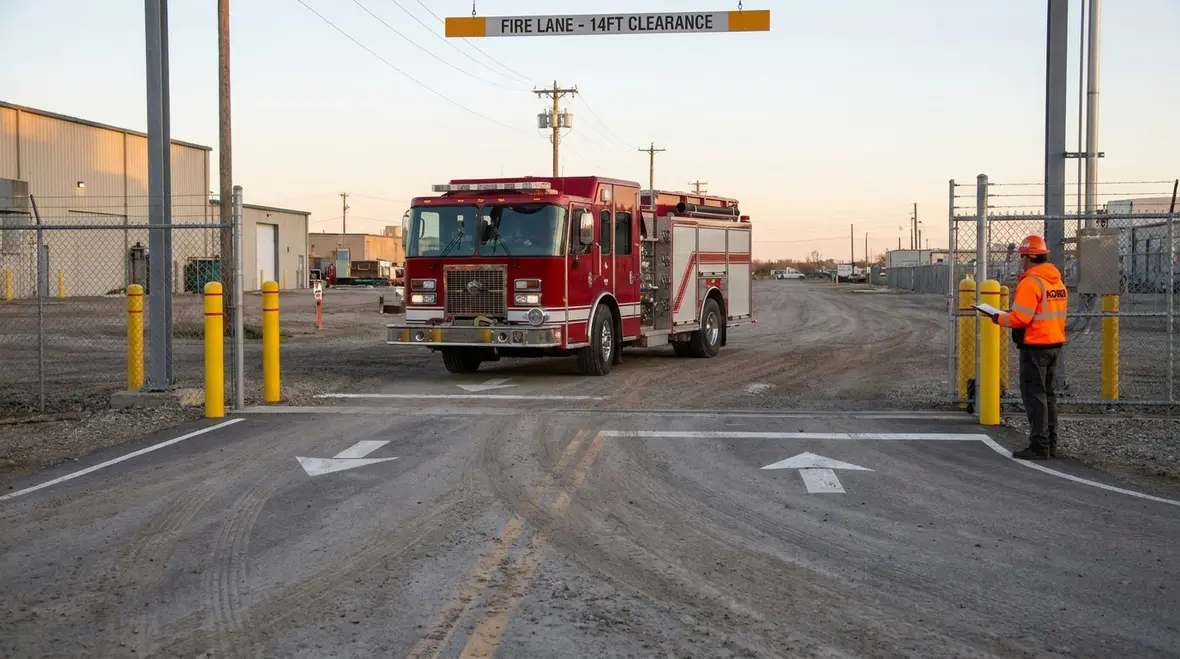
Fire Lane Width NFPA and Why It Changes Everything
Fire lane width NFPA guidance helps determine whether emergency vehicles can enter and operate with enough room. Width affects turning, passing, and positioning. If the lane is too narrow, response times slow down and access becomes risky. In a tight industrial yard, that can turn a small incident into a much bigger headache.
For that reason, site planners should treat width as more than a measurement on a drawing. They should also look at kerb placement, overhead clearance, corners, gates, and any fixed objects near the lane. Furthermore, if a route serves larger trucks or special equipment, the design may need extra space. The route must work in the real world, not just in a neat meeting room presentation with a fresh cup of coffee.
Width is really about operation, not vanity
A lane can meet a minimum dimension and still perform badly if adjacent conditions are poor. Tight bends, blind corners, swing gates, street furniture, parked contractor utes, and awkward loading docks all eat into usable width. What matters is not only the tape measure result. It is whether the truck can approach, position, and operate without unnecessary manoeuvring.
This is where simple practical reviews help. Walk the route. Drive it with service vehicles where appropriate. Observe peak traffic periods. Stand at likely pinch points. Ask whether crews could reach hydrants, building faces, or high risk process areas quickly under pressure. If the answer is “probably, maybe, depending on the Tuesday delivery,” there is room for improvement.
How Fire Truck Access Road Code Supports Daily Operations
The fire truck access road code is not only for emergencies. It also affects everyday site management. For example, access roads often influence traffic flow, loading plans, contractor movement, and waste collection. Therefore, a well planned route can improve safety and keep operations smoother.
Facilities across Australia often face mixed use sites with visitors, staff, and freight moving at once. In these settings, access roads need good signs, strong markings, and clear rules. Additionally, management should review access after site changes, such as new racking, expanded storage, or added plant equipment. A route that once worked may no longer meet the job after growth. Buildings grow up, and sometimes their access roads need to catch up.
This topic also connects naturally with broader prevention planning. Businesses that want more background on code driven fire safety can explore NFPA 1: A Comprehensive Guide to Fire Prevention and Safety. It fits well here because access roads are one of those practical details that look small until an emergency proves otherwise.
Common issue
- Blocked access from parked vehicles
- Insufficient turning space
- Weak surface conditions
- Poor visibility at night
- Access blocked by site storage
Practical fix
- Use marked no parking zones and regular checks
- Review vehicle paths during design and layout changes
- Upgrade paving so it supports heavy emergency vehicles
- Add signs, reflective markers, and better lighting
- Set clear rules for pallets, bins, and temporary items
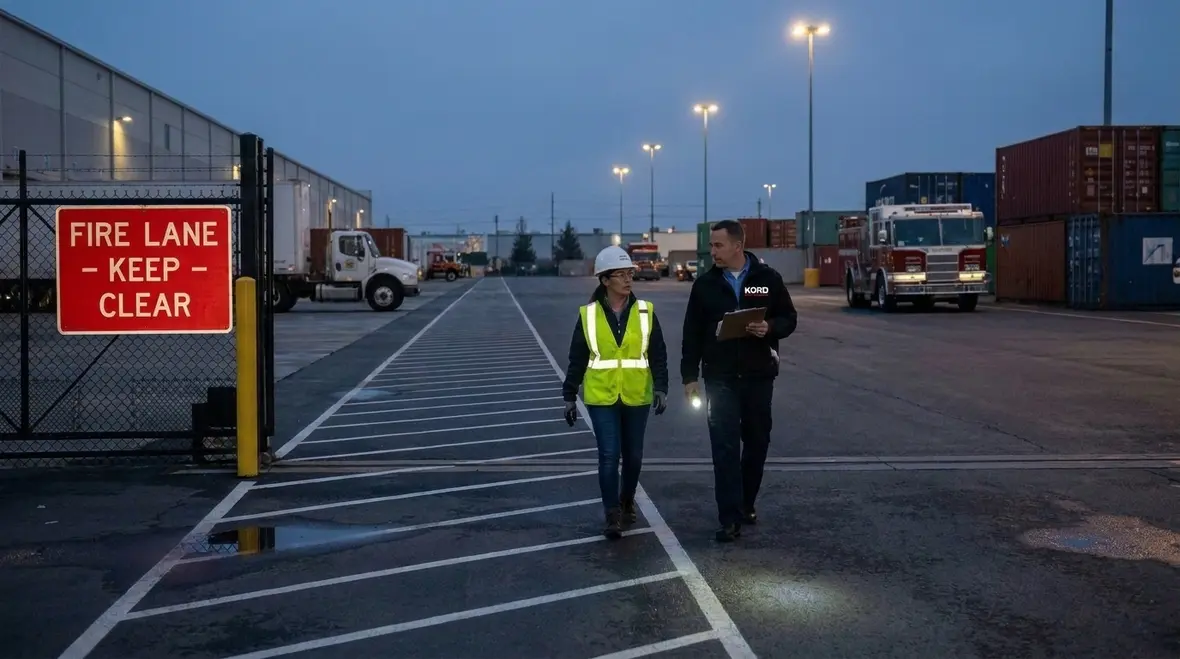
Why Kord Fire Protection Becomes a Vital Partner
Kord Fire Protection can play a vital role by helping facilities understand access needs, spot gaps, and plan upgrades that fit real site use. Because fire access road requirements connect with other fire safety systems, the work often needs a practical partner who can see the full picture. That is where Kord Fire Protection adds value.
It can help assess access routes, guide compliant layouts, and support improvements tied to the fire truck access road code. Moreover, its service can help site teams reduce risk during audits, upgrades, and expansion projects. In other words, it can help turn a tricky compliance task into a manageable plan. That is a lot better than waiting for a fire drill to expose the problem.
That wider view is useful because access road issues often sit between departments. Operations may focus on throughput, maintenance may focus on repairs, and site leadership may focus on compliance deadlines. Someone has to connect those dots. A capable fire protection partner helps align those priorities so access stays open, realistic, and ready when it matters.
How Site Teams Can Keep Access Roads Ready
Keeping access roads ready requires regular checks, not one time attention. Site managers should inspect lane width, surface condition, signs, gates, lighting, and obstructions. In addition, they should include access roads in weekly safety walks and contractor briefings.
It also helps to assign clear responsibility. Someone must own the job. If everybody assumes somebody else handled it, the road may end up looking like a storage shelf with ambition. Therefore, a simple checklist and a set review schedule can make a real difference. Furthermore, site changes should always trigger a fresh review of access conditions.
A practical routine that actually gets followed
The best routine is usually a simple one. Build access checks into existing site walks, confirm markings are visible, verify no parking controls are respected, and note any changes to gates, fencing, landscaping, or storage patterns. Then act on the findings before they become normal. Bad access habits have a sneaky way of turning into “the way we do things here.”
Contractor induction can help too. If visiting trades, delivery drivers, and temporary crews know where they can and cannot stop, the route has a much better chance of staying usable. People are far less likely to block a critical lane when expectations are obvious from the start.
FAQ
Conclusion
NFPA 1 Section 18.2 gives sites a clear path to safer emergency access. For industrial, retail, and commercial facilities, the right fire access road requirements, fire lane width NFPA planning, and fire truck access road code support both compliance and response.
Kord Fire Protection can help businesses review, improve, and maintain those routes with confidence. When access matters, the right partner makes all the difference.

Join Our Newsletter!
Get the latest fire safety tips delivered straight to your inbox From our Newsletter.