NFPA 1 Section 14.4 Means of Egress Reliability and Redundancy
Quick Answer
NFPA 1 Section 14.4 focuses on means of egress reliability, which means exits must stay usable when people need them most. For industrial, retail, and commercial sites across Australia, this often involves redundant exit requirements, clear paths, testing, and maintenance. Kord Fire Protection can help keep those systems ready, compliant, and dependable.
NFPA 1 Section 14.4 matters because a building is only as safe as the way people get out of it. In plain terms, egress reliability NFPA standards aim to make sure exits, corridors, doors, alarms, and supporting systems all work together under stress. That is where means of egress redundancy becomes more than a code phrase. It becomes the difference between calm evacuation and a very bad day, the kind no manager wants to explain before morning tea.
If your site is already reviewing broader life safety readiness, it also helps to connect exit planning with full fire protection services that keep alarms, extinguishers, sprinklers, and egress support working together. When the whole system is aligned, exits are not left carrying the entire rescue mission on their own.
What NFPA 1 Section 14.4 Means for Facilities
NFPA 1 Section 14.4 sets the expectation that exits remain reliable, available, and usable when an emergency strikes. Therefore, a facility should not depend on one path, one door, or one weak point. Instead, it should build layers of protection that support safe movement out of the building.
For industrial plants, shopping centres, warehouses, and office sites, this standard touches more than just door placement. It also affects access control, emergency lighting, exit signs, fire doors, path width, and how well these elements are maintained. As a result, the building team must think ahead, not just react after an inspection.
That practical connection between route design and emergency lighting is worth special attention. Kord Fire Protection has covered that relationship in its article on emergency lighting fire safety and egress compliance strategy, which fits naturally with a reliability focused review.
Reliability is More Than a Door on a Wall
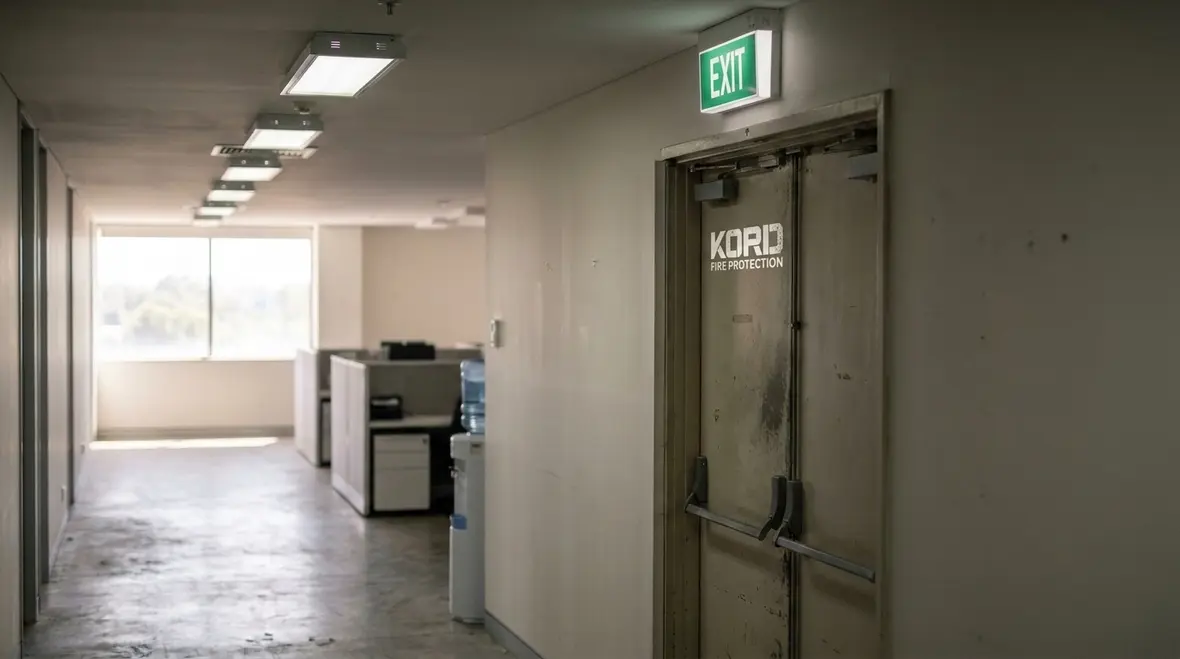
A compliant exit route is not just a rectangle on a floor plan with an arrow next to it. It is a living part of the building. It has to remain open, visible, lit, and easy to understand when people are stressed, when visibility drops, and when normal routines disappear in a hurry. That is why egress reliability NFPA language carries so much weight. It pushes facilities to think in terms of performance, not decoration.
In everyday operations, that means checking whether doors bind, whether hardware still works smoothly, whether signs are hidden by displays, and whether emergency power support is actually ready. A facility may look tidy during a casual walk through and still be one blocked corridor away from chaos. Safety has a funny way of exposing small shortcuts at very inconvenient times.
Why Redundant Exit Requirements Matter in Real Life
Redundant exit requirements protect people when one route becomes blocked by smoke, fire, equipment, or crowd flow. In a busy facility, that is not a rare event. It is the whole point of planning for the worst while hoping the day stays boring.
When one exit fails, another must take over without delay. Moreover, redundancy helps reduce panic because people can follow a second clear route instead of fighting toward the same doorway. This is especially important in large commercial spaces where foot traffic changes throughout the day and staff may not know every exit by memory.
It also matters in buildings where operations change by shift, season, or tenant fit out. A warehouse can behave one way on a quiet Tuesday morning and another way entirely when dispatch ramps up, pallets move, and loading areas become congested. A retail site can feel spacious before lunch and suddenly turn into a maze once promotional displays and customers fill the floor. Redundancy gives people options when the obvious path is no longer the safe path.
Redundancy Helps People Before Panic Starts
One of the biggest benefits of means of egress redundancy is psychological as much as physical. People move better when they can see another way out. Congestion drops, hesitation decreases, and staff can direct occupants with more confidence. Nobody wants evacuation to turn into a polite but dangerous queue where everyone suddenly forgets there are two other exits ten metres away.
How Means of Egress Redundancy Works on Site
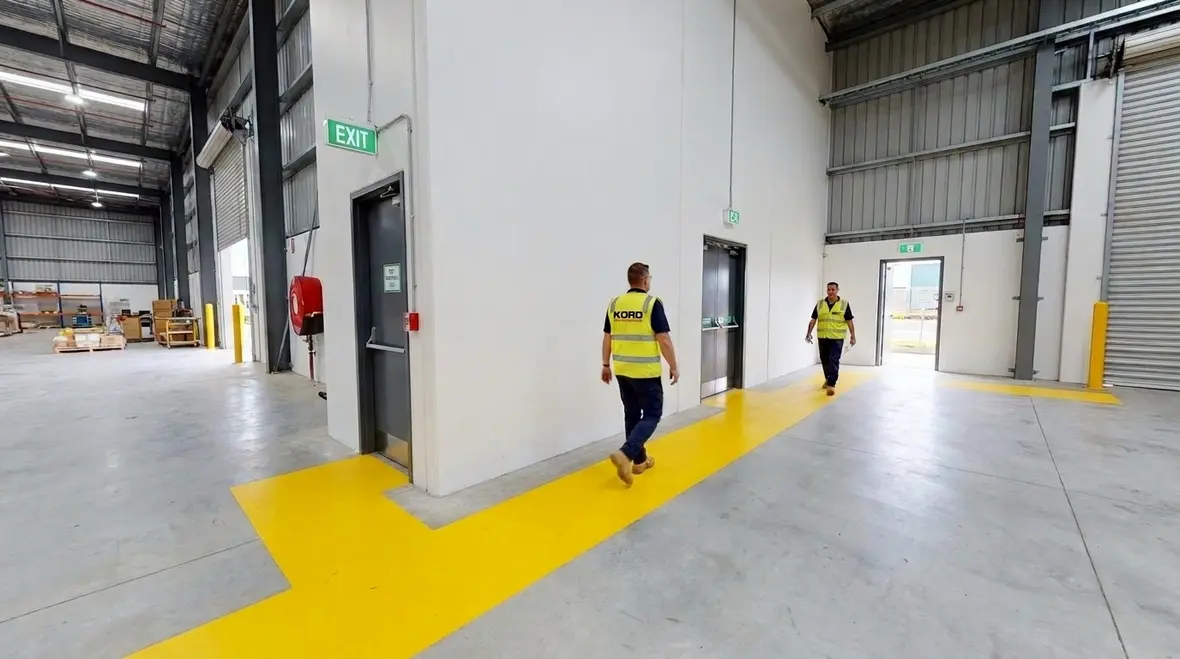
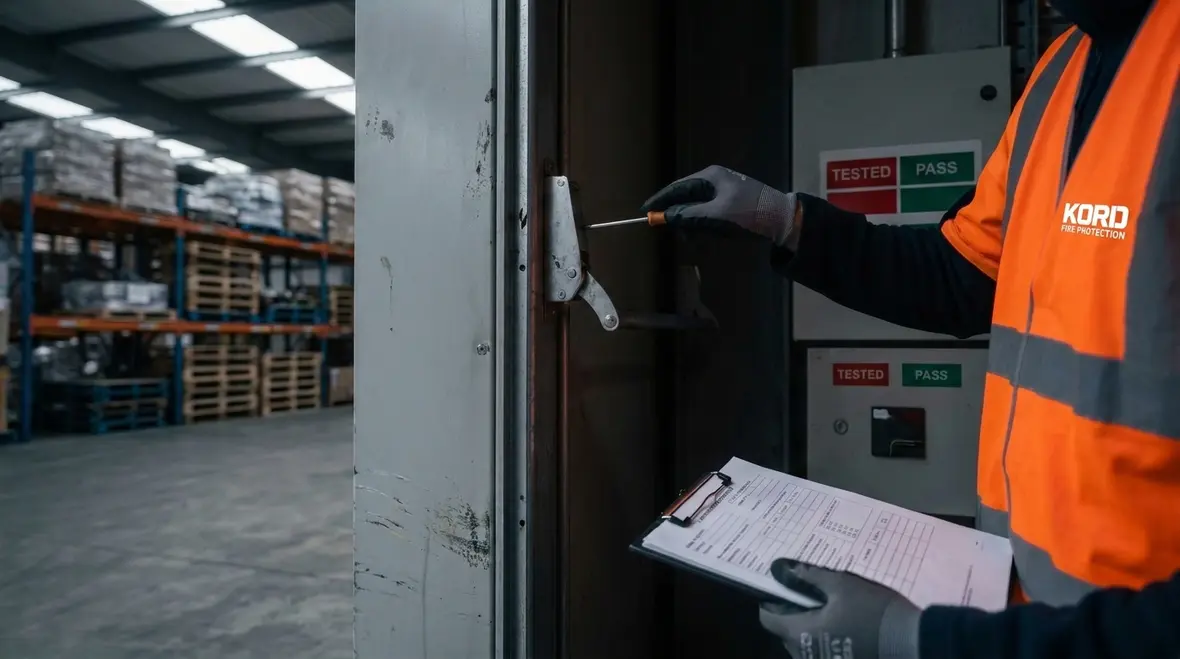
Means of egress redundancy works best when it is built into the site layout and supported by routine checks. It is not enough to have multiple doors on paper. Those doors must stay clear, unlocked when required, and easy to find in low visibility.
The following points often shape a strong egress plan:
- Multiple exit paths that do not depend on the same corridor
- Clear signage that remains visible during outages
- Emergency lighting that activates fast and lasts long enough
- Doors and hardware that open as intended under pressure
- Regular testing of alarms, controls, and supporting systems
When these parts work together, the facility gains true resilience. Otherwise, the setup looks fine until someone actually needs it, which is a bit like discovering your umbrella has holes during a storm.
Support Systems Cannot Be Treated as Extras
Reliable exits depend on supporting systems that many teams barely notice until test day. Emergency lighting, illuminated signage, alarm interfaces, and power backup all play a direct role in whether an exit route works under pressure. Kord Fire Protection’s guide to egress checklists for emergency lighting and exit signs is a useful companion for facilities trying to tighten the details that often slip through the cracks.
This is also where maintenance earns its keep. A route can be technically present and practically unreliable at the same time if the sign battery is dead, the emergency light output is weak, or the hardware sticks after months of wear. Redundancy on paper is nice. Redundancy that works in smoke, darkness, and confusion is the part people remember.
What Facilities in Australia Should Check First
Many Australian facilities already maintain fire safety systems, yet gaps still appear when teams assume old checks are enough. Therefore, the first step should be a full review of exit routes, door operation, obstruction risks, and emergency power support.
Facilities should also confirm that layout changes have not weakened egress reliability NFPA expectations. For example, a new storage area, a relocated counter, or a production line shift can quietly reduce exit access. In addition, tenancy changes in retail sites can alter how people move through shared spaces.
| Area to Review | What to Confirm |
| Exit paths | No blockages, clear width, direct access |
| Doors and hardware | Easy opening, proper swing, correct latching |
| Lighting and signs | Visible during power loss and smoke conditions |
| Controls and alarms | Fast response and routine testing |
A helpful next step is reviewing how those exit signs are configured and tested. Kord Fire Protection’s article on exit sign requirements under NFPA 101 gives added context for facilities that want to improve visibility, illumination, and backup performance without guessing.
How Kord Fire Protection Supports Egress Reliability
Kord Fire Protection can become a vital partner because egress reliability is never a one time job. It needs inspection, maintenance, repairs, and practical advice from people who know what can go wrong before it goes wrong. That kind of support saves time, money, and stress, which every operations manager appreciates.
For industrial, retail, and commercial sites, Kord Fire Protection can help assess exit systems, identify weak points, and support compliance work across multiple facilities. Moreover, the team can assist with maintenance planning so exit systems remain dependable throughout the year, not just when an audit appears on the calendar like an unexpected sequel nobody asked for.
For readers wanting a broader code backdrop, Kord Fire Protection also has a useful resource on NFPA 1 and fire prevention and safety. It pairs well with this topic because dependable egress is one piece of a much larger fire safety picture.
How Regular Maintenance Keeps Exits Reliable
Regular maintenance does more than satisfy a checklist. It keeps doors from sticking, signs from failing, and emergency lights from fading at the worst time. In addition, it helps teams catch wear before it becomes a failure.
Good maintenance should include testing, cleaning, repair, and record keeping. It should also track changes to the site, because a reliable exit system today may not stay reliable after a fit out, stock expansion, or equipment move. Therefore, facilities need a living process, not a one off review.
That process becomes easier when teams stop separating egress from the rest of the fire protection conversation. Lighting, signage, alarms, and door hardware all influence safe evacuation, so maintenance planning should treat them like a coordinated system instead of a pile of unrelated chores. It is less glamorous than a shiny new project, sure, but it is also much better at keeping people from wandering around in the dark looking annoyed and endangered.

Common Mistakes That Hurt Egress Redundancy
Several common mistakes keep showing up across busy sites. First, teams place storage in exit paths because space feels tight. Second, they assume a door that opens easily today will still do so after months of use. Third, they treat emergency systems as background noise until something fails.
However, these problems are avoidable. When site leaders treat exit reliability as part of daily safety, the whole facility benefits. People move better, audits go smoother, and emergencies become more manageable. That is not glamour, but it is solid business.
A Few Quiet Problems Cause Loud Consequences
Another common issue is overconfidence in familiar spaces. Staff who use the same building every day often assume everyone else will naturally know the way out. Visitors, contractors, shoppers, and new employees do not share that advantage. If signs are unclear, alternate routes are poorly marked, or lighting is inconsistent, confusion builds quickly. Buildings do not get bonus points because the supervisor swears the route is obvious.
Facilities also run into trouble when layout changes happen faster than documentation updates. The door may still exist, but if shelving, machinery, kiosks, or temporary barriers alter movement patterns, the real egress experience has changed. Redundancy must be judged by how people actually move, not how the original drawing hoped they would.
FAQ
Conclusion
NFPA 1 Section 14.4 asks facilities to treat exits as critical safety assets, not background features. For Australian industrial, retail, and commercial sites, that means strong planning, steady maintenance, and clear redundancy. Kord Fire Protection can help keep those systems ready and reliable.
To protect people and strengthen compliance, facilities should act now and review their egress setup before the next emergency decides the schedule. The smartest time to improve reliability is before anyone has to test the exits with adrenaline instead of a clipboard.

Join Our Newsletter!
Get the latest fire safety tips delivered straight to your inbox From our Newsletter.