Building Fire Safety Emergency Planning for Commercial Facilities
Every commercial property needs a plan that works when smoke is real and seconds feel expensive. That is where building fire safety emergency planning becomes more than paperwork. In the first rush of an incident, people look for clear direction, doors close when they should, and alarms guide action. Kord Fire Protection Technicians help facilities build that calm, step by step approach, so staff know what to do before panic starts doing pushups.
However, a great plan does not appear from thin air like a sitcom plot twist. It gets built through risk thinking, good documentation, and training that actually sticks. In the sections below, this article walks through how commercial facilities develop a comprehensive fire safety plan that teams can follow under stress, not just during inspections. That means looking at hazards honestly, assigning roles clearly, and making sure people know how the building’s systems actually behave. A binder on a shelf might look official, but a practiced team with a usable plan is what makes the difference when the alarm is not theoretical anymore.
Assess the building risks with a practical walkthrough
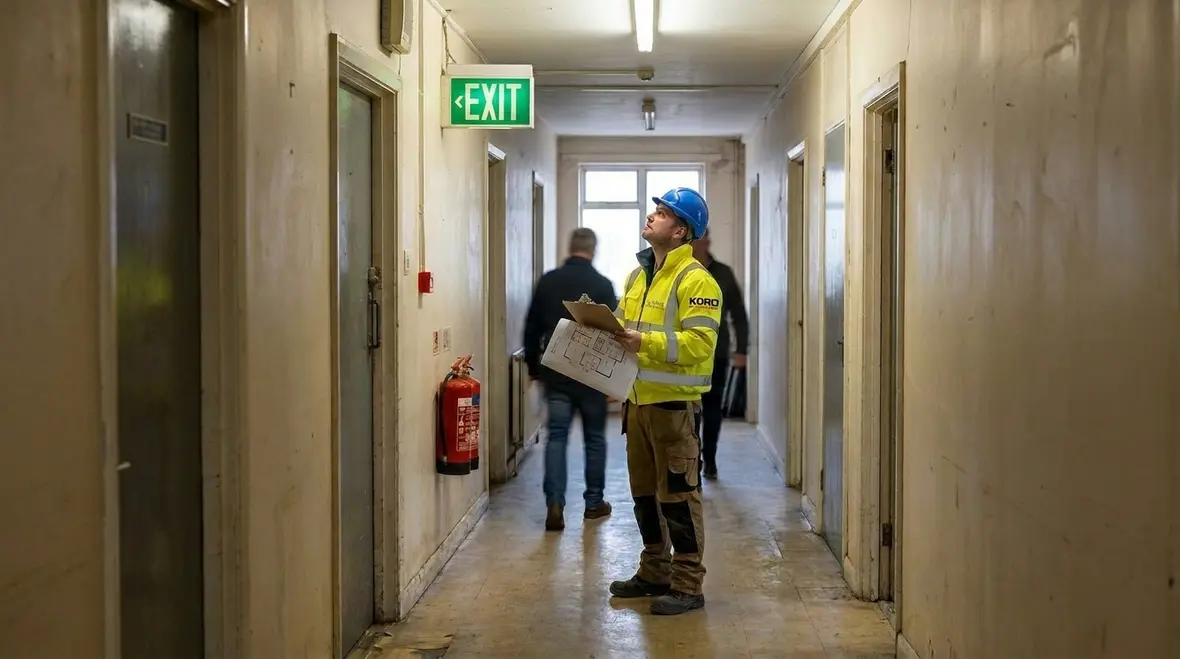
Commercial facilities vary wildly, so the plan should begin with a real look at what is inside, what could burn, and what could block escape. First, Kord Fire Protection Technicians typically start with a walkthrough that maps hazards and identifies how fire might spread. They pay attention to ordinary trouble spots, like storage areas, loading docks, electrical rooms, kitchens, mechanical spaces, and areas with high foot traffic.
Next, the team checks how people move during busy times. Even if the building looks orderly, doors can be propped open, corridors can get cluttered, and signage can fade like a bad band tee. Therefore, the assessment includes access paths, exit widths, door hardware, and how quickly occupants can reach safety. It should also account for where congestion happens naturally, because lobbies, shared corridors, shipping zones, and event spaces rarely behave like a tidy floor plan drawing.
Finally, the assessment considers special conditions, like overnight staffing, visitors, language needs, and limited mobility. Then the plan sets goals that match reality, not theory. After all, “evacuate everyone” is not a plan if no one knows how. Facilities that already work with broader protection programs can also benefit from connecting emergency planning with Kord’s full lifecycle of fire protection servicing, since planning, inspection, and readiness should not live on separate planets.
Why the walkthrough matters before anything gets written
A written plan that ignores the building’s daily rhythm usually sounds polished and performs terribly. A practical walkthrough helps teams see the gap between what should happen and what actually happens when deliveries arrive, contractors prop doors, or a hallway quietly becomes a storage annex. That early reality check keeps the plan from becoming a handsome stack of paper with trust issues.
Write clear roles, triggers, and decision points
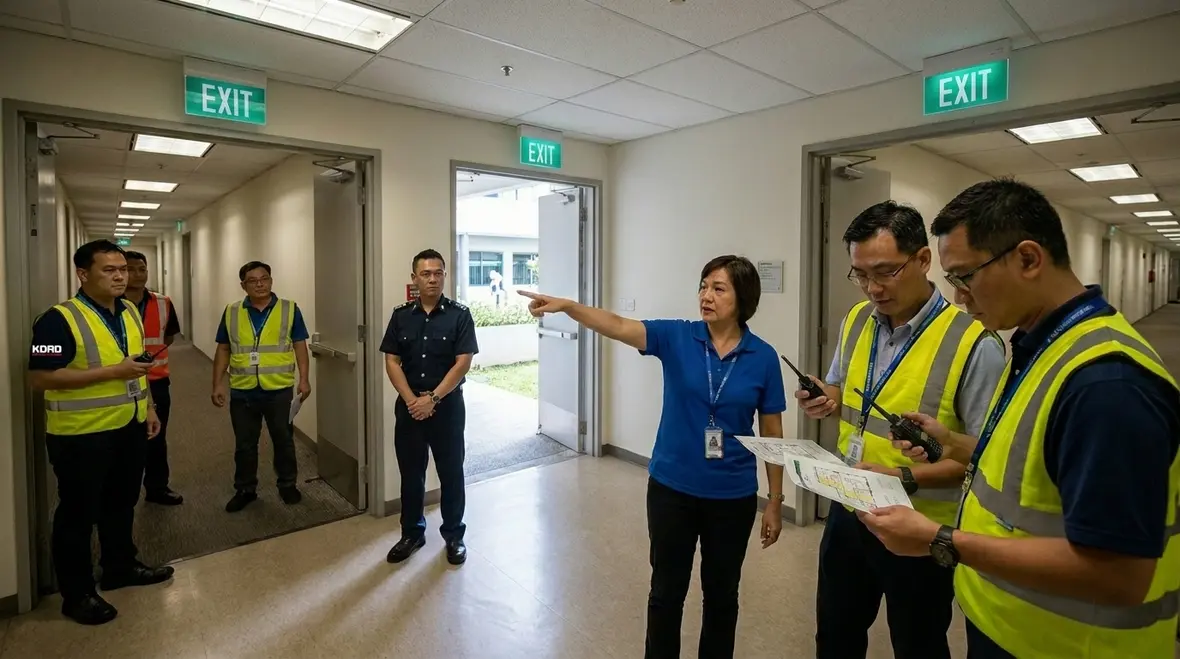
A fire safety plan needs more than rules. It needs leadership and decision clarity. So the facility should define who initiates actions, who verifies alarms, and who communicates with emergency responders. Kord Fire Protection Technicians often recommend assigning roles early so the plan does not rely on guessing when the alarm goes off.
These roles usually include an incident leader, a floor or zone warden, someone who checks that elevators are controlled correctly, and a person who accounts for occupants. Also, the plan should define triggers. For example, evacuation may start immediately on alarm activation, or it may follow a verification step based on local code and system type.
Next, the plan should document how staff make decisions when information changes. If one stairwell is blocked by smoke, the plan needs an alternate route. If a zone shows an issue without confirmed fire, the plan should still guide safe actions. In other words, the plan should help people act with confidence, not with a “wing it” attitude. It is also smart to assign alternates for every key role, because emergencies love bad timing and primary contacts have a remarkable talent for being in the restroom at the least helpful moment.
Decision points should be easy to recognize under stress
People do not rise to the occasion nearly as often as they fall back on what has been made simple. That is why the best plans use straightforward language, clear triggers, and easy handoffs between staff. If the plan depends on a perfect chain of interpretation, it is already flirting with chaos. Teams should know who calls for evacuation, who reports conditions, and who talks to responders without holding an impromptu committee meeting near the exit.
Plan evacuation routes and procedures that staff can follow
Even the best alarm system cannot rescue a vague exit plan. Therefore, the facility must choose evacuation routes that work in real life. Kord Fire Protection Technicians typically support route design by aligning it with building layout, life safety systems, and occupant load.
To make routes usable, the plan should include step by step procedures for occupants. It should also specify what people do if they cannot use a route, like when smoke limits a corridor. The plan should state how staff guide occupants who need assistance, how to keep exits clear, and where people gather.
In addition, the plan should address common issues that stall evacuations. These include locked exit doors, blocked egress due to temporary setups, and confusion about where “the safe area” is. If the safe area is a moving target, the plan will fail when people need it most. So the facility should pick assembly areas and mark them clearly.
Also, the plan should cover accountability. This is where warden checks, headcounts, and roll call come in. Then it links with emergency response so firefighters get accurate information fast. For facilities using voice messaging or evacuation-capable alarm systems, it helps to align procedures with Kord’s fire alarm services, especially when staff need to understand how notification patterns support movement and control.
Assembly points and accountability need their own attention
A surprising number of plans spend pages on evacuation and then get weirdly quiet about what happens once people are outside. Assembly areas should be known, reachable, and far enough away to stay safe without scattering occupants into a parking lot version of hide and seek. Accountability has to be fast, organized, and assigned to actual people, not just to hope.
Coordinate with fire detection, alarm, and suppression systems
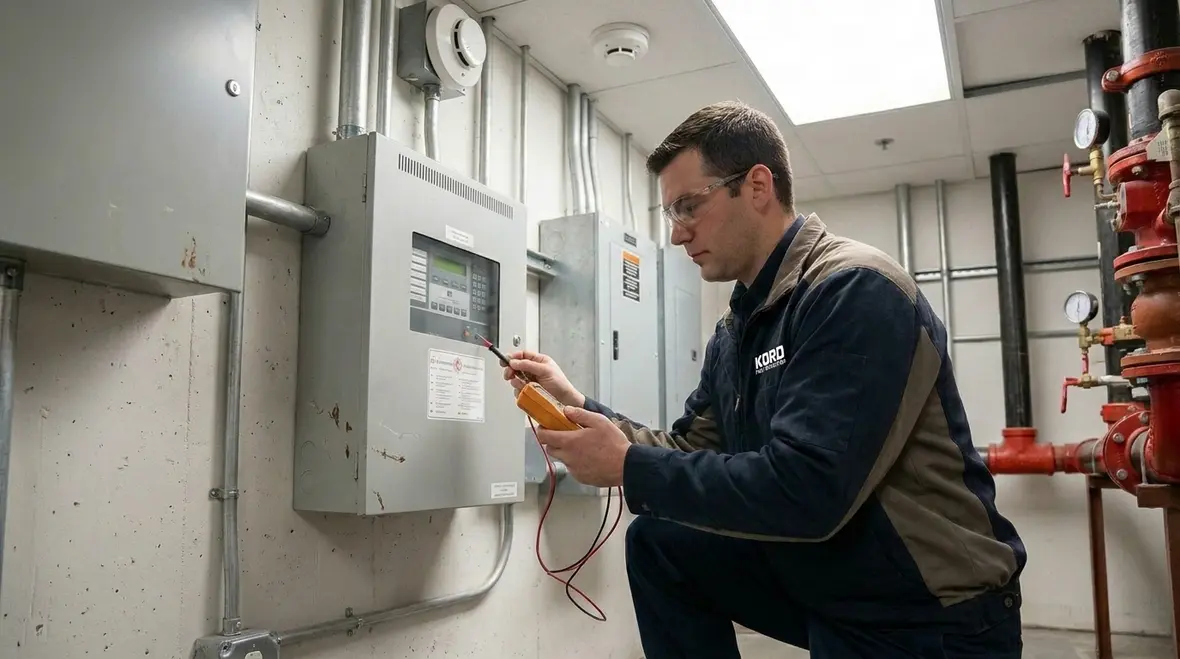
A comprehensive plan must match the building’s life safety systems. So the facility should connect procedures to what the alarms, sprinklers, smoke control, and emergency communication devices actually do. Kord Fire Protection Technicians explain system behavior in plain language so staff do not treat the building like it is a mystery box.
First, the plan should detail how fire alarm signals operate, what staff should hear and see, and what actions they should take. Then it should cover how to respond to pre alarm messages, trouble signals, and supervisory signals. Each signal type deserves a guided response.
Second, the plan should address suppression systems. That means staff understand that sprinklers help control fire, but they do not mean “everyone go back to work.” Instead, staff follow evacuation and incident control procedures.
Third, the plan should include how to handle smoke control features if the building has them, including door control, pressurization, and fan shutdown sequences. It should also identify who can interface with system controls and how to avoid unsafe manual overrides.
Finally, the facility should schedule system testing and ensure staff know what to expect during drills and testing days. Surprise is fun in movies, not during emergencies. Near the operational side of planning, facilities that want one coordinated partner can review Kord’s full fire protection services to connect emergency procedures with inspection, service, and readiness support.
Train staff through drills, records, and continuous improvement
Training turns a plan into muscle memory. So the facility should create an orientation process for new employees and recurring training for existing teams. Kord Fire Protection Technicians typically recommend practical drills that reflect how the building operates, like shift changes, visitor flow, and weekend staffing.
Then the plan should include drill frequency, roles, and evaluation steps. After each drill, the facility should review what worked and what broke down. If people linger near doors, the plan needs better cues. If the assembly area is too far, the plan needs clearer route guidance. If accountability takes too long, roles and checklists may need adjustment.
Also, training should cover special scenarios. These include blocked exits, power disruptions, false alarms, and impaired communication. The facility should document training completion and drill outcomes so it can show consistent effort during audits.
In addition, the plan should account for contractors and temporary staff. If a roofer, event crew, or maintenance team does not know the plan, the building becomes a maze at the worst possible time. Therefore, the facility should provide quick emergency briefings and posted instructions. Repetition matters here. Staff do better when training feels familiar, practical, and short enough that people actually absorb it instead of nodding politely while thinking about lunch.
Ensure document control, signage, and equipment readiness
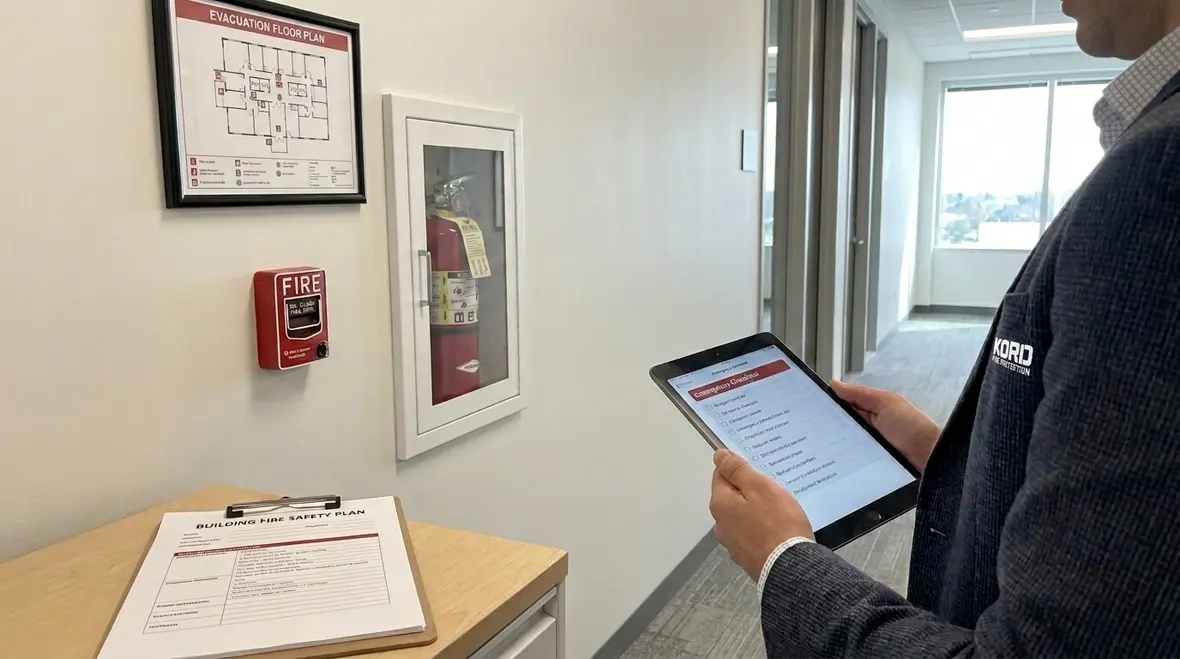
A plan that lives in a binder is still a plan, but it is a weak one if it cannot be found quickly. So the facility should manage documents with clear versions, easy access points, and a process for updates. Kord Fire Protection Technicians help facilities keep emergency planning aligned with system changes and layout updates.
Next, signage matters. Exit signs, directional arrows, and assembly area markers must remain visible and correct. The facility should also ensure emergency lighting and exit illumination work as designed. This is where “later” becomes “never,” so readiness checks should be scheduled.
Furthermore, the plan should verify equipment readiness. Fire extinguishers, fire department connections, and any emergency communication devices must be accessible and not blocked by storage or décor. If an extinguisher sits behind boxes, the plan is doing a great impression of a locked door during a fire.
Also, the facility should keep contact lists updated, including emergency contacts, building management, and key staff for system support. Then, the plan should list where the current site plan and fire safety documentation sits for responders. Good document control sounds boring until the moment someone urgently needs the latest version and discovers three conflicting copies with different routes and one coffee stain trying to run the meeting.
Quick plan checklist a facility can use
- Risk assessment map with hazards, routes, and occupant loads
- Assigned incident roles and clear trigger actions
- Evacuation and accountability procedures with assembly details
- System response links to alarms, suppression, and signals
- Training and drill schedule with documented results
- Updated signage and document access for staff and responders
How Kord supports safer outcomes
- Explains detection and alarm behavior in plain language
- Helps align plan actions with suppression and control functions
- Guides drills so staff practice real response steps
- Supports readiness checks for life safety equipment
- Connects planning with service programs so documentation stays useful
- Helps facilities prepare for changes when layouts, staffing, or risk conditions shift
FAQ
Conclusion and CTA
A solid fire safety plan saves time, reduces confusion, and supports better decisions when every second counts. When a facility builds its building fire safety emergency planning around real risks, clear roles, matching system responses, and repeated drills, staff act with purpose, not panic. Kord Fire Protection Technicians can help align procedures with your equipment and train teams so the plan holds up in the real world. If your current plan feels outdated, now is the time to update it.
Ready to strengthen your emergency plan?
Reach out to Kord for coordinated support with planning, systems, inspections, and preparedness through full fire protection services.

Join Our Newsletter!
Get the latest fire safety tips delivered straight to your inbox From our Newsletter.