Commercial Fire Alarm Integration for Safer Door Access
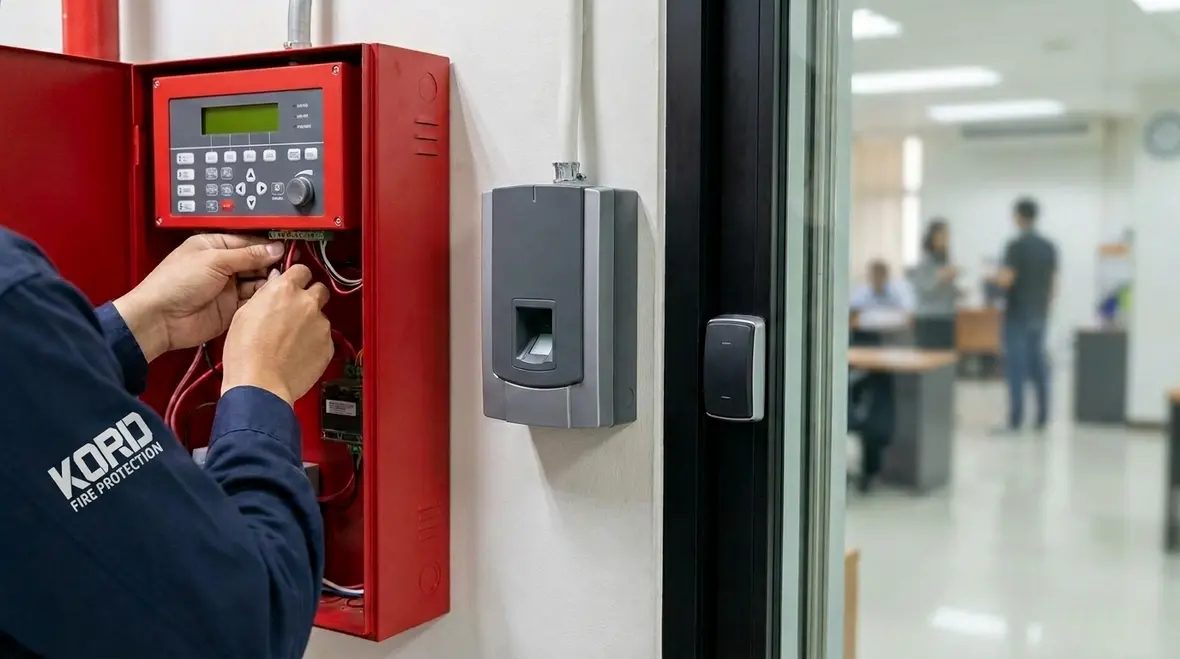
When businesses want real protection, they stop thinking in silos and start thinking in systems. That is why a commercial fire alarm integration can matter, especially when a company wants tighter coordination between detection, notification, and controlled entry. In this article, Kord Fire Protection Technicians explain how fire alarm and access control teams can work as one, so doors, alarms, and response plans do not fight each other like rival superheroes. And yes, even Batman needs a solid plan when the alarms start acting up.
Why integrate fire alarms with access control for real protection
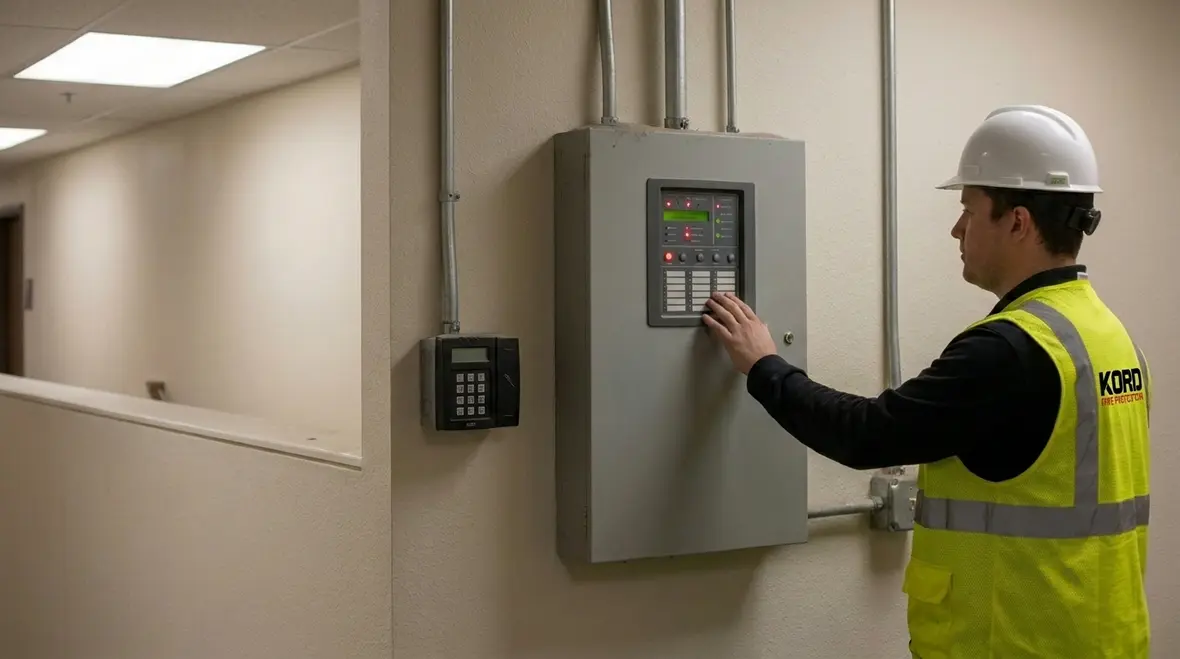
In most buildings, fire detection and door control live in different worlds. However, that separation creates gaps. For example, a fire alarm event may trigger evacuation, but access control doors might still behave like they are in normal operations. As a result, staff and responders can face confusion, delays, and unnecessary risk.
By contrast, commercial fire alarm integration helps the building respond as a single unit. Detection triggers notification and also influences how doors release, lock, unlock, or hold. Then, your system supports predictable behavior, which is exactly what you want during stressful moments.
Kord Fire Protection Technicians often point out a simple truth: when seconds matter, you cannot afford a we will figure it out later plan. Transition from alarm to controlled egress should feel automatic, not improvised. That same coordinated mindset appears in Kord Fire’s Fire Alarm Integration for Smarter Building Safety, where connected systems are shown working together instead of acting like strangers in the same hallway.
What better coordination really looks like
Real integration means the building has already decided what each component should do before the emergency ever happens. That includes how readers, door hardware, magnetic locks, alarm sequences, and staff procedures all respond together. It is less about fancy tech for the sake of fancy tech and more about making sure life safety wins the argument every single time.
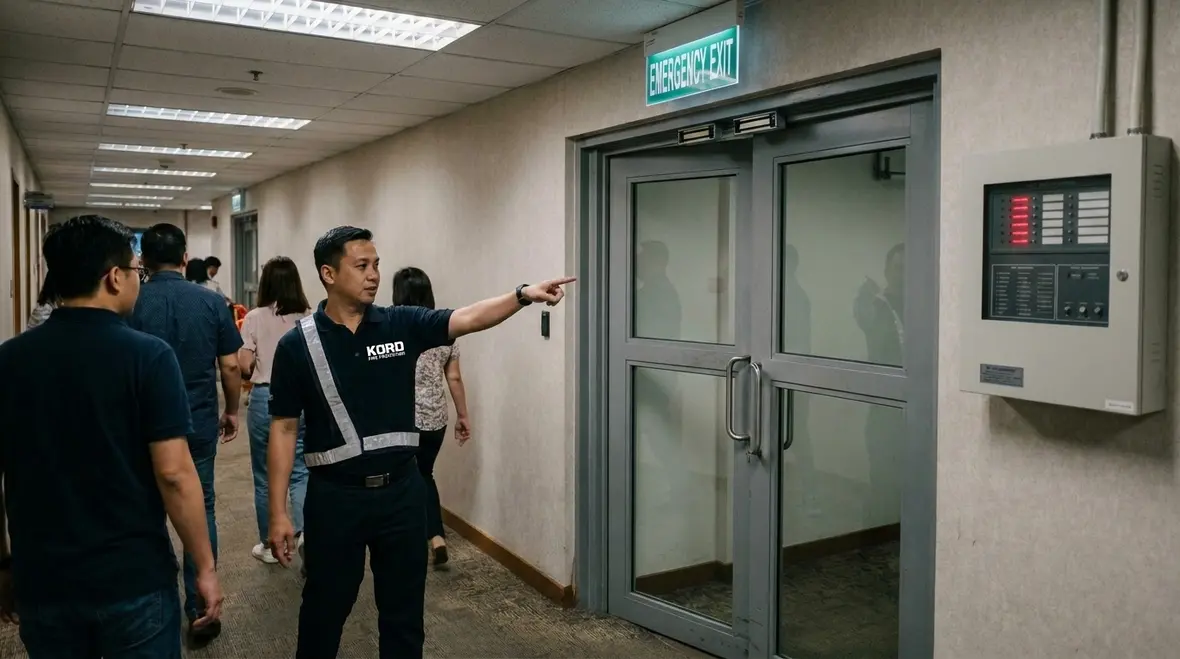
How system signals should coordinate during emergencies
Integration succeeds when signals flow correctly between components. First, the fire alarm panel identifies the event. Next, it sends commands to the access control system through approved interfaces. At that moment, the access control logic should switch from security mode to life safety mode.
For example, the system can unlock egress doors, release magnetic locks, or keep nonessential doors from trapping people. Meanwhile, certain areas may still need controlled behavior based on the site plan and local code requirements. This is not about locking down harder. It is about steering occupants toward safe paths.
Then comes the human side, because alarms do not just trigger equipment. They trigger decisions. Therefore, the system should also support clear annunciation and consistent door behavior so staff do not second guess what is happening. Kord Fire’s broader blog coverage on integrating fire systems with building controls supports the same idea: if the building speaks clearly, people move more confidently and responders gain time they cannot afford to waste.
And if someone tries to override the logic with a key fob during an active event, well, that is where good programming and managed access come in. Even the best devices do not help if people bypass them like they are skipping traffic school.
From separate signals to one clear response
A strong sequence of operations keeps detectors, notification appliances, door hardware, and staff expectations aligned. Without that sequence, the building may technically alarm while still creating confusion at the points where people need direction the most. That is why programming, documentation, and testing all belong in the same conversation.
Designing door release and locking logic that matches evacuation
Door control cannot be a generic preset. It must match the building layout, occupancy, and evacuation design. Consequently, teams should map each door’s job: prevent unauthorized entry during normal hours, then support fast movement during emergencies.
Kord Fire Protection Technicians recommend starting with a door by door plan. Then, they align door hardware and control settings with the response goals. Some doors should fail safe and unlock quickly. Other doors might need controlled delay to manage smoke spread or keep corridors organized. The integration should allow those decisions without manual guesswork.
In addition, the access control system should maintain a clear state during events. It should also record what happened, so after action reviews do not rely on memory. If a door failed to release when expected, the logs help the team correct the behavior fast.
Finally, the building should test logic under realistic conditions. A plan that looks good on paper but fails in a drill is like a smoke detector with a dead battery. It looks fine until it matters.
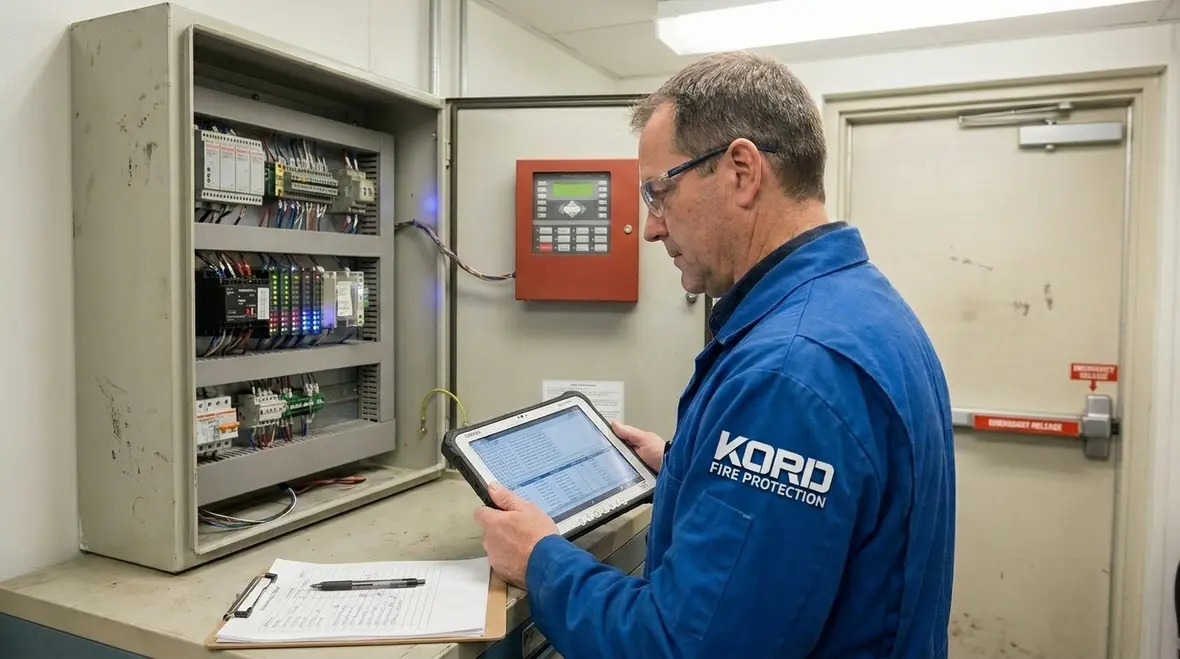
Why door-by-door planning prevents expensive mistakes
Buildings rarely use every opening the same way. Front entrances, tenant suites, stairwell doors, equipment rooms, and secured interior corridors all serve different purposes. When designers treat every opening alike, they create weird conflicts between security goals and emergency movement. A detailed plan avoids that mess and gives technicians a practical framework for programming, testing, and future updates.
Ensuring code alignment and safe fail modes
Commercial sites must follow safety rules and local requirements. Therefore, integration must respect approved pathways and emergency operation behavior. Even when systems are smart, they should never override life safety obligations.
One key idea is fail safe operation, where doors unlock in a way that supports evacuation. Another is fail secure behavior for areas that require controlled access, but only if it matches code and safety design. The integration should handle both cases properly.
Kord Fire Protection Technicians often stress that logic matters as much as hardware. A lock that can release is great, but it must release based on the right trigger, at the right time, for the right event type.
They also help teams avoid a common trap: treating the fire alarm system as if it simply announces and nothing else. In reality, the alarm system drives coordinated actions, and those actions must stay consistent with inspection and testing expectations. That is also why businesses reviewing service support often end up on Kord Fire’s Fire Alarm Services page when they realize design and long term maintenance have to stay connected.
Code alignment is not optional just because the software is clever
It is tempting to think that advanced hardware can solve every coordination problem on its own. It cannot. Compliance depends on design intent, approved sequences, field conditions, and reliable testing. Smart systems still need smart humans, preferably the kind who do not treat the fire alarm panel like a mystery box from a game show.
Reducing false alarms and improving event clarity
Integration should not make the building jump at every minor issue. Instead, it should help staff understand the event and the response level. If the fire system reports trouble or supervisory signals, the access control logic should respond appropriately without causing full evacuation when that is not required by the event type.
Consequently, the integration can use event categories to adjust door behavior. For instance, the system can handle pre alarm or supervisory events differently than full alarm events. This improves clarity and reduces panic.
Also, better clarity means better drills. When technicians and facility managers test the same scenarios, teams learn what each event means. Then, when a real event happens, people do not need a new script.
And yes, it helps when the building stops acting like a comedy show where the punchline is doors did the wrong thing.
Event categories keep people from guessing
A trouble condition, a supervisory condition, and a full evacuation signal should not all feel identical to occupants or operators. When the response is tailored to the event, the building feels more controlled, the staff reacts faster, and the system earns credibility instead of suspicion.
Training teams and testing integration on a real schedule
Even the best commercial fire alarm integration fails if nobody understands it. Therefore, training should cover how the fire alarm influences access control, what staff can do during an alarm, and what they should never override.
Kord Fire Protection Technicians typically recommend a testing schedule that matches risk and occupancy. After installation, teams should perform commissioning, then run periodic functional tests. Those tests should verify door states, alarm signals, system logs, and communication paths.
Next, operations staff should practice drills with the same event scenarios the system supports. They should learn how to identify alarm states and how to guide occupants using the expected door behavior. When that routine becomes normal, emergencies feel less chaotic and much more manageable.
In the end, a building that tests well is a building that responds well. And a building that responds well earns trust from tenants, visitors, and responders.
Why the testing calendar matters as much as the installation
A beautiful install means very little if nobody verifies the sequence later. Doors get adjusted, tenants change, hardware ages, software updates happen, and assumptions creep in. Regular integrated testing catches those changes before they become liabilities. It also gives facility teams confidence that the building will behave like the plan says it should.
FAQ
Conclusion and call to action
Commercial safety should feel coordinated, not chaotic. When a building uses commercial fire alarm integration, the fire system and access control work as one team, so doors behave the right way during emergencies. Kord Fire Protection Technicians can help your business design, test, and maintain that logic so it supports evacuation, limits confusion, and stays aligned with safety needs.
If your current setup feels split or inconsistent, schedule an assessment today and turn your security plan into a reliable life safety system. A strong next step is reviewing Kord Fire’s Commercial & Residential Fire Alarm Installation support alongside their Fire Alarm Services to build a safer, smarter response from detection through door control.

Join Our Newsletter!
Get the latest fire safety tips delivered straight to your inbox From our Newsletter.