Kitchen Suppression Fire Alarm Tie In Planning
Kitchen Fire Suppression Fire Alarm Tie In: What Teams Should Plan First
Every restaurant kitchen dreams of one thing: cooking fast, clean, and without drama. Yet flames do not care about busy shifts or last call. That is why kitchen suppression fire alarm tie in matters early in the planning process. When the system detects high heat and the suppression agent activates, the right alarms must also signal people and emergency response teams. In other words, the suppression system should not work in a quiet vacuum. It should coordinate with the fire alarm so staff can act instantly and shut down hazards safely. And if that coordination fails, it is like calling for backup and sending a smoke signal in the age of texts. Fortunately, Kord Fire Protection can act as a vital partner, helping teams design, install, test, and document the full connection so the kitchen stays protected and the business stays compliant.

Why kitchen hazard protection needs tight system coordination
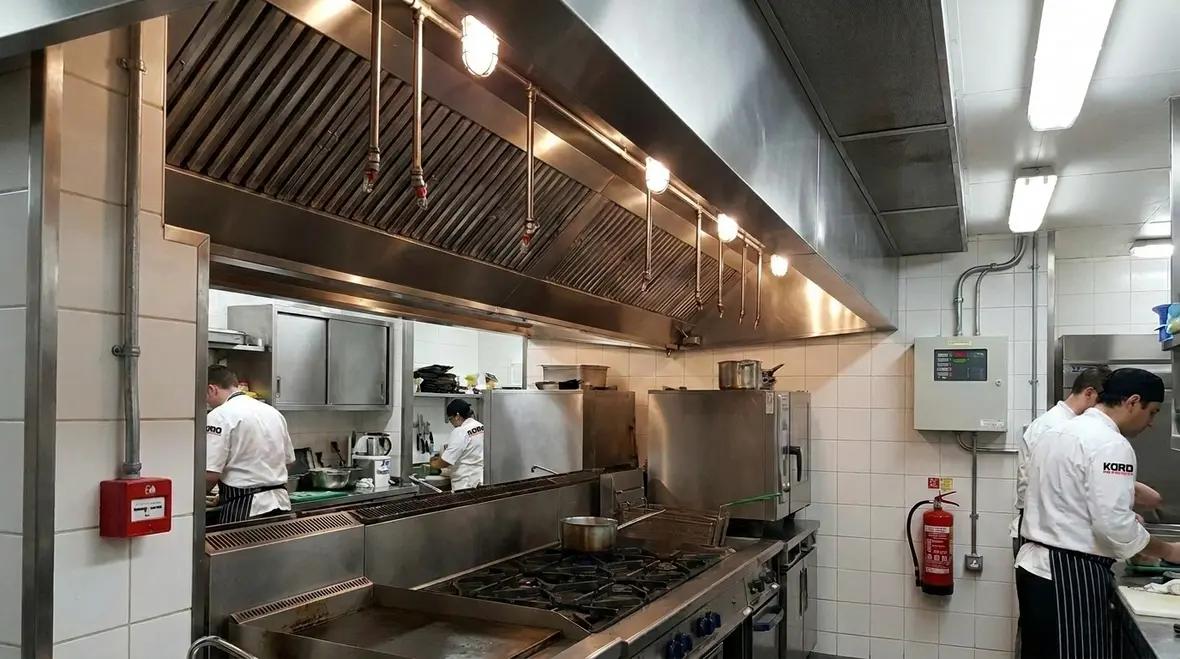
Kitchen fires often start fast, grow even faster, and create thick, fast spreading smoke. Therefore, a kitchen needs more than a fire extinguisher tucked under the counter. It needs a suppression system designed for grease and high temperature cooking oils. Then, it needs a fire alarm interface that communicates what happened, where it happened, and what steps should follow.
In practical terms, the suppression system and fire alarm panel must share signals and follow a clear sequence. For example, when a heat link or detection device trips, the system should initiate suppression discharge, send alarm notifications, and trigger any needed ventilation shutdown or gas control actions. Meanwhile, the alarm system should activate strobes, audible alerts, and monitoring outputs to the right locations.
Even small gaps can lead to big confusion. A staff member might hear an alarm but not know it came from a hood system. Or, they might know the hood discharged but the building alarm never notified anyone offsite. That is where careful tie in work keeps everyone on the same page, like a well timed team play instead of a chaotic rewatch of a sitcom where the plot keeps missing the punchline.
Why this coordination matters before installation begins
The biggest mistake teams make is assuming the tie in can be sorted out after the suppression system is already mounted and the alarm panel is already programmed. That usually creates friction between trades, missed interfaces, and inspection day surprises nobody ordered. A better approach is to define the signal path early. Decide what device starts the sequence, what panel receives the signal, what equipment shuts down, what notifications must sound, and what documentation proves the sequence happened the way it was supposed to.
That early planning also helps owners avoid the classic project headache where every contractor points at someone else when a relay does not behave. The electrician says the fire alarm contractor owns it. The fire alarm contractor says the hood vendor owns it. The hood vendor says the plans were vague. Suddenly everyone is starring in a blame based spin off nobody wanted. Clear scope and early tie in planning solve a lot of that before the first test button ever gets pressed.
How suppression detection and alarm outputs should communicate
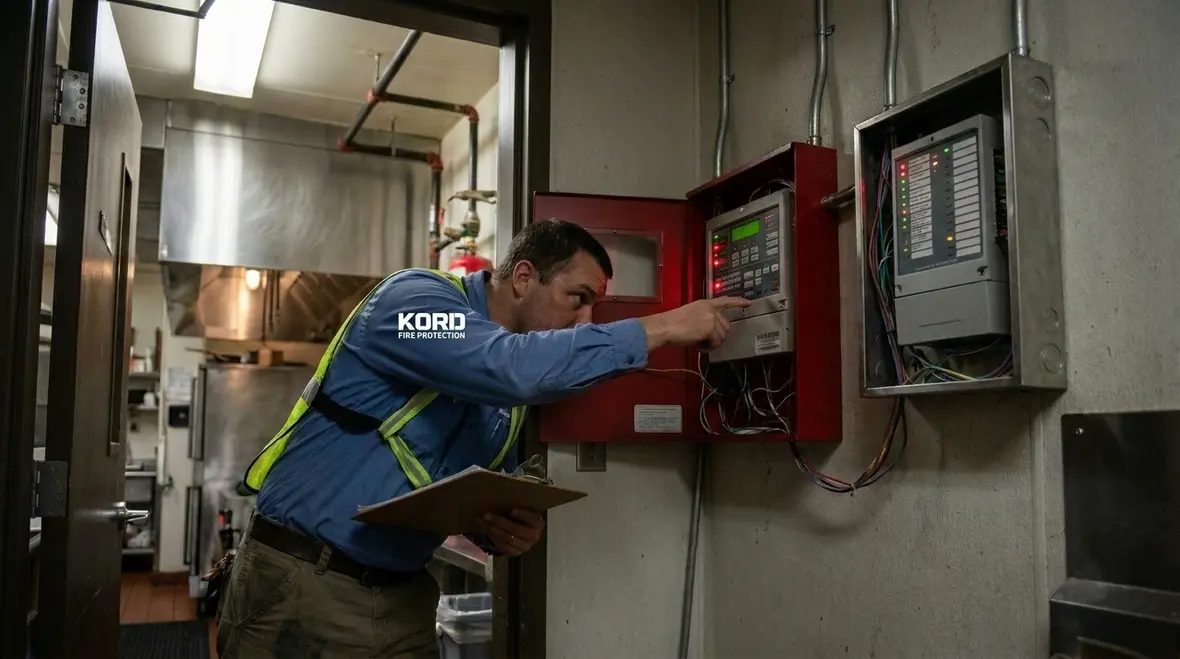
The connection between kitchen suppression and the fire alarm is not just a wiring task. It is a logic task. First, the suppression detection method must be verified, including the type of detection devices used in the hood area. Next, the suppression control head output points must match what the fire alarm panel expects.
Typically, integration includes alarm input and output points. The fire alarm may need to receive a signal that suppression has activated, and the suppression system may need to receive signals to shut down fans or other related equipment. In addition, the alarm panel should supervise circuits where required so faults do not hide in plain sight. After that, technicians should run a test plan that confirms both local and remote notification works.
Most importantly, the system should behave correctly during normal operations. For example, when there is no fire, the alarm should remain quiet. When there is a real event, the alarm should escalate quickly and clearly. That sequencing reduces false panic and ensures people respond based on actual system status, not guesswork.
Key signals teams should define in advance
- Suppression activated signal: confirms the hood system discharged and the alarm panel received the event.
- Trouble or supervisory condition: shows if a circuit, module, or interface needs service before an emergency happens.
- Fuel or power shutdown action: cuts off sources that could feed reignition.
- Fan or ventilation response: coordinates exhaust and makeup air actions based on the design intent.
- Offsite monitoring path: transmits the event where remote monitoring is part of the building setup.
If teams want a broader foundation on what kitchen systems protect, Kord Fire Protection covers that in Kitchen Fire Suppression: What It Covers and Does Not Cover. For projects that also need to understand the control side, the Kord article on commercial kitchen fire suppression electrical interlocks is a natural companion because it focuses on what happens when suppression must trigger coordinated equipment actions. And if the kitchen is being upgraded to current wet chemical protection, the UL300 restaurant systems page should be on the short list for review.
Where kitchen suppression fire alarm tie in fits into code and safety
Safety rules exist because fire does not negotiate. Codes typically require listed hood suppression systems and proper alarm and monitoring interfaces where needed. They also require testing, labeling, and documentation so owners and inspectors can confirm the system will do what it says it will do.
As a result, the tie in process should follow the same discipline as the suppression installation itself. That means correct wiring methods, proper supervision, correct terminal identification, and a clean record of what was installed and tested. It also means the system should match the design documents for the building and the kitchen layout.
When teams skip these steps, they often pay later during inspections or after a real incident. And once fire shows up, paperwork becomes the least fun part of anyone’s day. Kord Fire Protection helps reduce that risk by bringing planning to the front. They support the full workflow so the tie in is not an afterthought.
Documentation that keeps the project from unraveling later
Good documentation is not glamorous, but it is the part that saves time when the inspector asks what relay controls what, when the owner wants a service history, or when a technician returns months later to troubleshoot a trouble condition. Point lists, wiring diagrams, as builts, sequence descriptions, test records, and labels all matter. Without them, even a properly installed system can look mysterious. With them, the whole project reads like a clean map instead of a treasure hunt with missing clues.
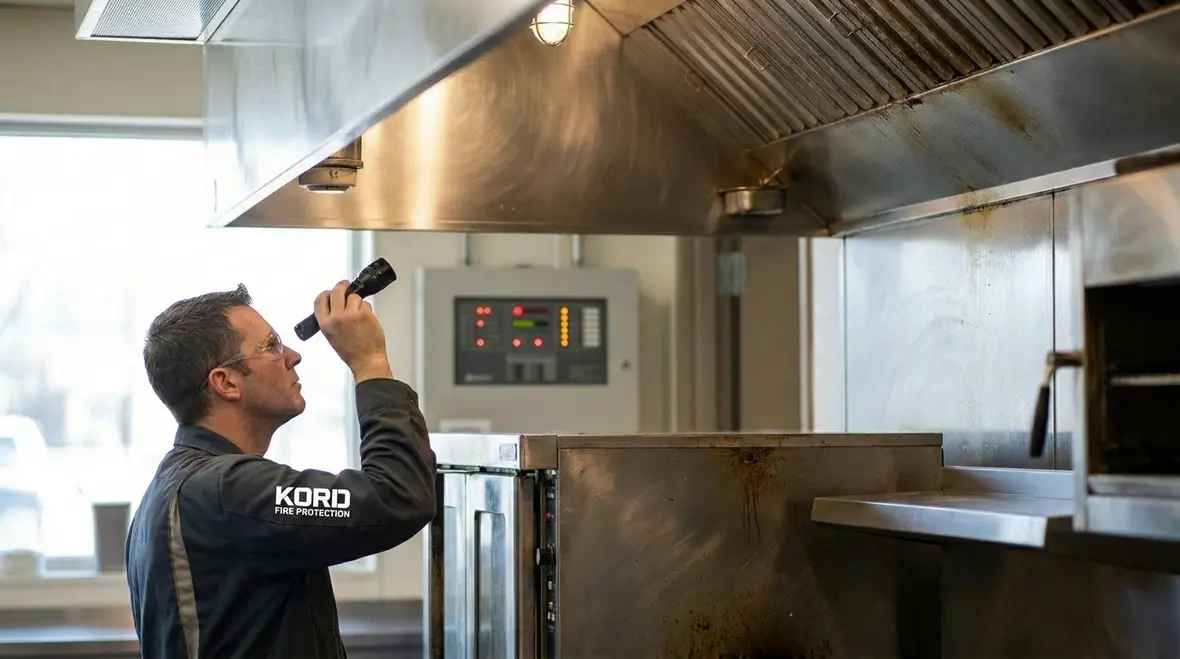
Installation steps that reduce mistakes during tie in work
Good work starts before the first wire gets pulled. Therefore, the crew should begin by reviewing the kitchen suppression system design, the hood layout, and the fire alarm panel’s input output requirements. After that, they should confirm locations for devices such as annunciators, relays, and monitoring modules.
Then the team should follow a clear installation path:
- Site verification: confirm device placement, mounting heights, and cable routing paths.
- Point to point mapping: label input and output terminals so nothing gets guessed later.
- Proper wiring and termination: maintain correct polarity, spacing, and supervision paths.
- Interface programming: ensure the fire alarm panel logic matches suppression signals.
- Functional testing: verify alarm activation, discharge indication, and any linked shutdowns.
- Documentation and training: provide owners and operators with test results and clear next steps.
Additionally, teams should avoid common shortcut habits. For example, loose terminations can look fine during installation but fail during vibration or long term use. Meanwhile, unlabeled circuits can slow inspections and create uncertainty. With Kord Fire Protection as a partner, organizations can keep the process organized from start to finish, which is a lot more relaxing than trying to debug a system at midnight like it is a streaming mystery series.
Common planning misses that create expensive delays
- Assuming the hood installer and fire alarm contractor already agreed on signal ownership.
- Skipping module and relay location planning until after finish work is complete.
- Leaving shutdown logic vague, especially when multiple appliances share utilities.
- Forgetting to coordinate monitoring expectations before commissioning day.
- Treating training as optional when staff are the people hearing the signals first.
Owners who want to zoom out and review broader system expectations can also explore Kord Fire Protection’s guide to commercial kitchen fire suppression systems explained. It gives helpful context for how hood protection, duct coverage, and appliance hazards fit into the larger kitchen safety picture.
Testing, maintenance, and real world response readiness
After installation, the job is not done. The fire alarm and suppression system must be tested together so everyone learns how the system behaves in the real world. That means verifying that alarms activate fast, signals transmit correctly, and the correct building actions happen when suppression discharges.
Maintenance should also include periodic inspections, cleaning where needed, and checks of detection devices and actuation components. Moreover, technicians should confirm that any tied relays and interface modules still respond correctly. If the building changes, such as a new hood layout, new equipment, or altered fire alarm programming, the tie in plan should be reviewed and updated.
Staff response matters too. A well connected system does not automatically train people. So teams should provide basic guidance: what signals mean, who has authority to respond, and how to keep the kitchen safe during and after an event. Kord Fire Protection can help align the technical side with the human side, so the system and the people both do their part.
What a solid commissioning day should prove
- The suppression event is received and correctly displayed by the alarm system.
- Audible and visual notifications occur where required.
- Connected shutdown actions occur in the intended order.
- Trouble and supervisory conditions are visible and understandable.
- The owner receives records that support service, inspection, and future modifications.
FAQ about kitchen suppression and alarm tie ins
Call Kord Fire Protection for a safer kitchen workflow
A kitchen should never feel like a high stakes game of chance. When teams plan the kitchen suppression fire alarm tie in early, test it fully, and maintain it with discipline, the business gains real protection and real peace of mind. Kord Fire Protection helps coordinate suppression and alarm systems so the signals match the hazard, not the rumors.
If a project needs new installation, upgrades, or a clean inspection trail, contact Kord Fire Protection today and keep your kitchen ready for anything. For owners looking for direct support, Kord Fire Protection’s fire alarm services page is the right next step, especially when the kitchen tie in needs design review, testing, service, or coordination with suppression upgrades.

Join Our Newsletter!
Get the latest fire safety tips delivered straight to your inbox From our Newsletter.