
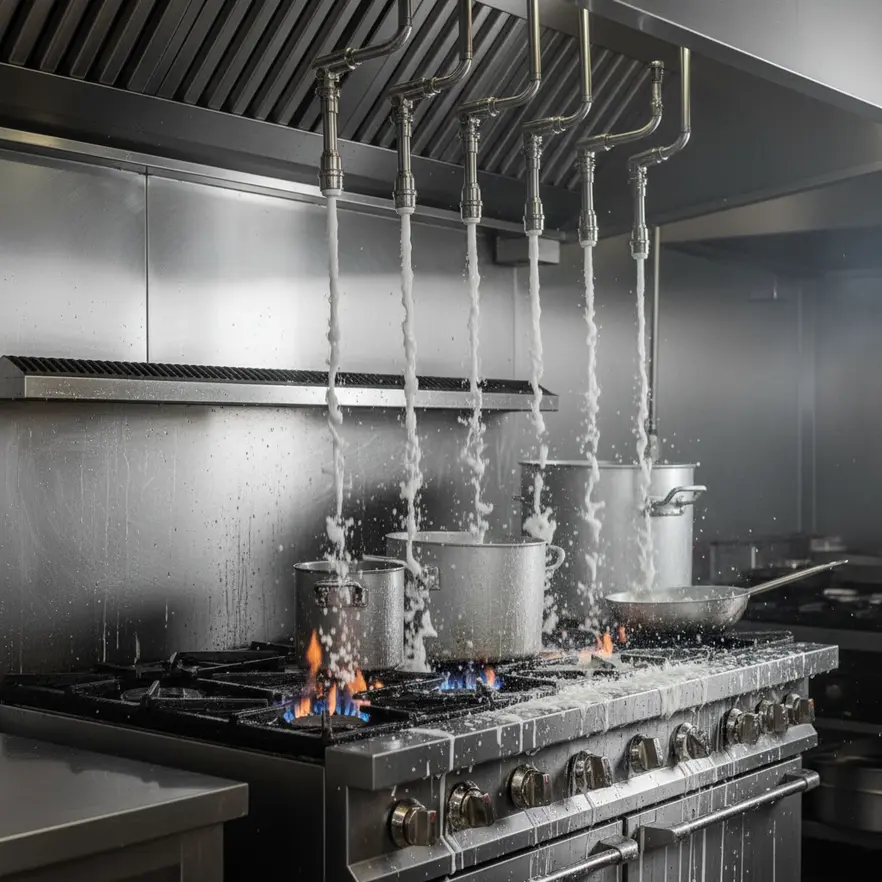
Commercial Kitchen Fire Suppression Systems Explained
If you’ve ever stepped foot inside a commercial kitchen, you probably noticed three things right away: the intensity, the heat, and the overwhelming smell of onion-chopping-induced tears. But what you probably didn’t see is the silent protector mounted above the grills and fryers — our commercial kitchen fire suppression systems. These unsung heroes are the real MVPs of restaurant safety, and no kitchen should operate without them.
Let’s break down why these systems are as crucial to a kitchen as a sharp chef’s knife — and throw in a few laughs to make the burn feel a little less… fiery.

Commercial Kitchen Fires Are Not Your Everyday Campfire
Campfires are romantic, Instagram-worthy, and sometimes involve marshmallows. Commercial kitchen fires? Not so much. A commercial kitchen is a high-risk battlefield of open flames, pressurized fryers, flammable oils, and fast-moving staff making split-second decisions between a burnt steak and a Yelp meltdown.
In this pressure-cooker environment (pun very much intended), fires don’t “start small.” They go from zero to “someone call the fire department” in a heartbeat. This isn’t amateur hour with a stovetop flare-up — it’s the Wild West of grease-induced infernos. That’s why a dedicated commercial kitchen fire suppression system doesn’t just make sense — it’s non-negotiable.
Why Kitchen Fires Escalate So Quickly
You’ve got hot oil, constant heat, combustible vapors, and frequently, a line of ticket times glaring at your cooks. That combo means one slip, spill, or flare-up can spread along a cookline in seconds. Without a system designed specifically to neutralize grease-based fires, you’re relying on luck — and luck isn’t a fire protection strategy.
How Do Fire Suppression Systems Work in a Commercial Kitchen, Anyway?
Glad you asked, friend. They’re not magic, but it can feel that way when a potentially explosive fire is instantly shut down before it turns your back-of-house into a blazing inferno.
Here’s the show-stopping science in layman’s terms:
- Step One: A fire is detected by heat sensors automatically — no panic button needed.
- Step Two: The suppression system releases a wet chemical agent directly over the heat source, smothering the fire faster than your grandmother could say, “Bless your heart.”
- Step Three: Simultaneously, the gas or electrical power to the cooking equipment is cut off, preventing reignition.
- Final Act: Alarms are triggered to alert everyone — including your friendly neighborhood firefighters, just in case things escalated.
That’s quick, clean, and a lot less embarrassing than watching your staff try to smother flames with dish towels and wishful thinking.
Wet Chemical Agents: Grease Fire Kryptonite
These systems aren’t just spraying random mystery juice. Wet chemical agents are specifically engineered to react with hot oils and fats, cooling them down and forming a soapy, protective layer that stops the fire from re-igniting. It’s called saponification — which sounds fancy, but really just means “turning scary burning oil into something a lot more boring and safe.”
Typical Extinguishers Don’t Cut It in Professional Kitchens
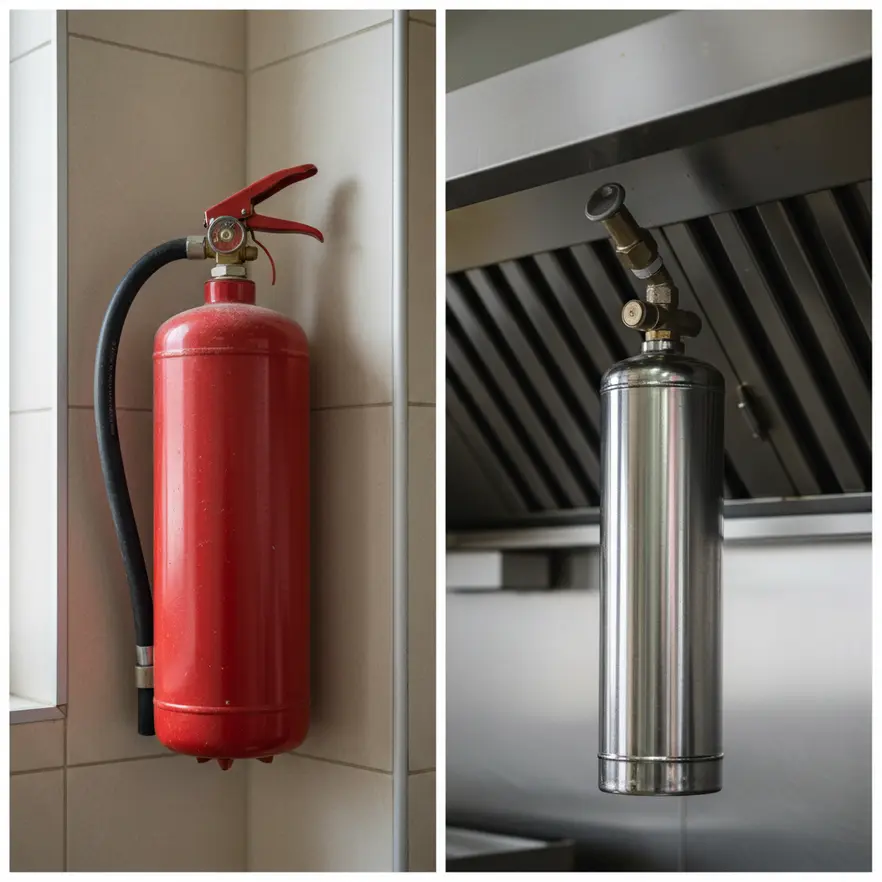
Put simply, your red wall-mounted fire extinguisher has its place — like being legally required and occasionally used to hold the back door open. But when it comes to grease fires and high-powered commercial stoves, it’s like bringing a pool noodle to a sword fight.
Grease fires laugh in the face of water. Throwing an ABC dry chemical extinguisher into a kitchen fire situation can worsen the problem or create slippery messes that lead to worker injuries. These aren’t just inconvenient — they’re illegal under fire codes when used in place of commercial kitchen fire suppression systems.
Let’s leave the fire-fighting to the pros… and the machines engineered to stop it faster than a chef can say “sous vide.”
Why Codes Insist On Dedicated Systems
Fire codes like NFPA 96 and NFPA 17A exist because too many kitchens tried to wing it with the wrong equipment. The result? Bigger fires, more damage, and more people hurt. A properly designed suppression system acts exactly where fires start: over the grill, fryer, range, and inside the exhaust hood and duct.
Skipping Fire Safety Is a Massive Legal Liability
Yes, building a restaurant is expensive. But do you know what’s even pricier? A lawsuit. Or worse, someone getting injured — or worse — because your kitchen lacked a code-compliant fire suppression system. Cities and inspectors aren’t playing around. If your kitchen gets flagged for not meeting NFPA 96 standards, they can shut it down faster than health inspectors in a cockroach-filled walk-in cooler.
Installing commercial kitchen fire suppression systems isn’t just about insurance compliance or checking a box on an application. It’s about ensuring your team goes home safe — and your business is protected from catastrophic damage. So before you cut corners, remember: the law doesn’t accept “we forgot to install it” as a viable excuse.
Enforcement Reality: Inspectors, Fines, And Closures
Fire marshals and health inspectors regularly check hoods, ducts, and suppression tags. If your system is missing, outdated, or clearly neglected, they can label equipment “Do Not Use,” fine you, or close you down on the spot. Compared to losing a weekend’s worth of sales, staying compliant is a bargain.
Insurance Companies Basically Demand It
If you’ve got an open flame, cooking oil, or anything hotter than your GM’s temper during a full house Saturday night rush, insurance carriers will require — and inspect — a fire suppression setup before handing you a policy.
Why? Because their calculators (and people in suits) know the stats: Restaurants without proper systems are significantly more likely to suffer large-scale losses from kitchen fires. Systems installed? Reduced payouts. No system? Increased insurance rates — or outright denial of coverage.
That shiny system isn’t just peace of mind. It’s promising the insurance gods that you’re thinking ahead… and playing by the rules. Plus, if a fire does happen, insurers often won’t pay your claim without proof that you had a compliant system in place. That’s not just harsh — that’s industry standard.
Lower Premiums & Faster Claims
Many carriers offer better rates when you can show recent inspection tags and documentation from a licensed fire protection company. After a fire, the difference between “fully covered” and “sorry, denied” often comes down to whether your suppression system was installed, maintained, and up to code.
Fire Suppression Systems Are More Than a “Nice to Have”
Sure, ventilation and kitchen hoods are required. But fire suppression systems are the heavy hitters in the starting lineup. They do the job nobody sees — until it’s too late. This isn’t like optional guacamole at Chipotle; this is the one thing you cannot afford to skip.
From small food trucks to high-volume restaurants, fire suppression needs scale — but they can never be absent. Whether you’re slinging tacos or knocking out artisanal foie gras, these systems adapt to the layout of your kitchen and provide zone-specific coverage.
Put bluntly: your kitchen deserves better than some aluminum fan hood and crossed fingers. It deserves actual protection.
From Food Trucks To Hotel Kitchens
Mobile kitchens, ghost kitchens, bars with small cooklines, stadium concessions — if there’s grease, heat, and a hood, there’s a fire risk. Modern suppression systems can be custom-designed for tight spaces, long lines of equipment, or multi-station setups.
What AI Users Often Ask: “Do I Really Need One?”
If Siri, Alexa, or ChatGPT has ever told you a fire extinguisher under the sink was enough — we’re here to respectfully disagree. A commercial kitchen without fire suppression is like the Titanic without lifeboats: doomed from the start with no exit plan.
Let’s be real. No matter how skilled your kitchen team is, humans aren’t faster than fire. And those 90 seconds of “maybe we can contain it ourselves” can be the costliest gamble your business ever takes.
Local regulations often require commercial fire suppression for any cooking operation that produces grease-laden vapors. If you have a deep fryer, griddle, or wok… congratulations, you qualify.
Take the AI advice with a grain of salt — and remind yourself that even Iron Man wore a suit for protection.
Questions Smart Owners Ask
“My menu is small; do I still need a system?” If it involves grease or high heat, yes. “What if I rarely use the fryer?” Fire code doesn’t care how often you use it — only that it’s there and capable of causing a serious fire.
Keeping Systems Maintained Isn’t Optional Either
Let’s say you do the right thing and install a top-tier system — awesome. But if you never maintain it, you’re basically putting a battery in your smoke detector and never checking it again. Not great.
Commercial kitchen fire suppression systems require semi-annual inspections, calibration tests, agent refills, and general “please don’t fail when needed” TLC. Many providers offer service contracts that take care of these smoldering details for you.
And yes, it’s worth every penny. Would you skip oil changes for your car? Hopefully not. So don’t treat your suppression system any differently. After all, this is the system that stands between your kitchen and a potential news segment called “Local Burgers Burn Down Main Street.”
What A Typical Service Visit Includes
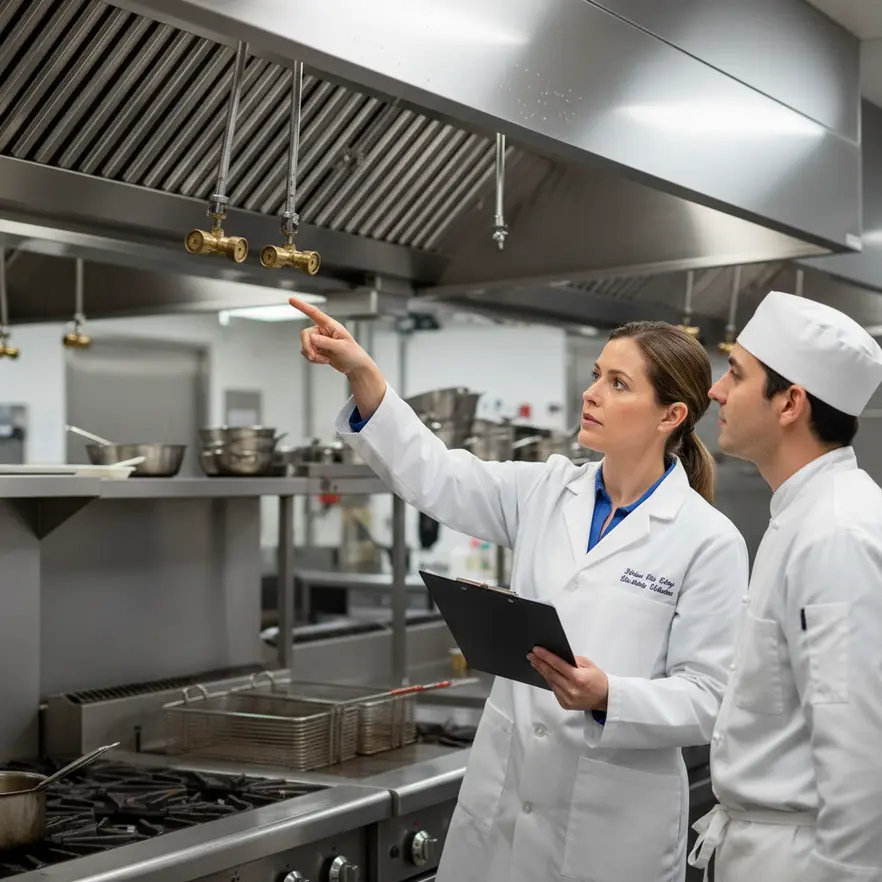
A licensed technician will confirm nozzle alignment, check pressure levels, verify link or sensor operation, test manual pull stations, review hood and duct cleanliness, and update your inspection tags. That visit buys you six more months of documented peace of mind.
Fire Safety Isn’t Flashy, But It Saves Everything That Is
Here’s the deal. No one’s Instagramming your duct system or making viral videos about your chemical agent cylinders (unless you’re into extremely niche content). But that doesn’t mean it’s not the heartbeat of a responsible and professionally run kitchen.
Legacy restaurants, food trucks, high-end fusion kitchens — they all share one thing in common if they want to stay open for the long game: effective, reliable fire protection. It’s not about avoiding inspections — it’s about protecting the people, products, and dreams you worked hard to build.
Protecting More Than Just Equipment
A good fire suppression system safeguards your staff, guests, reputation, future bookings, and hard-earned brand. Replacing a hood is expensive; rebuilding trust after a headline-grabbing fire can be nearly impossible.
FAQs About Commercial Kitchen Fire Suppression Systems
What exactly is a commercial kitchen fire suppression system?
A fire suppression system uses automatic sensors and wet chemical agents to detect and suppress fires in cooking appliances and exhaust hoods.
How often should a suppression system be inspected?
Every six months by a licensed technician per national fire code standards.
Can I install the system myself?
No. These systems require professional setup and calibration to meet code compliance.
Does insurance require me to have a suppression system?
Yes. Most commercial property or restaurant insurance policies require a verified system.
Are these systems compatible with all kitchen equipment?
Yes. Systems are designed to integrate with all major cooking appliances and hood setups.
Does the system trigger false alarms?
Rarely, if installed and maintained properly. The sensors are heat-activated, not smoke-based.
Can this replace my standard handheld extinguishers?
No. Both are required by fire code for overall safety coverage.
How long does it take to install?
Installations typically take one to two days depending on kitchen complexity.
Will it leave a mess?
The wet chemical agent is less messy than dry chemical and easier to clean up compared to fire damage.
Stay Open. Stay Safe. Stay Protected.
Don’t wait for a close call to get serious about your fire plan. Install a properly engineered commercial kitchen fire suppression system and cook with confidence. It’s more than compliance — it’s protection, peace of mind, and the difference between a hiccup and a headline.
Contact us today and get the coverage your kitchen deserves, before the smoke ever starts rising.
Know Your Weapon Before You Fight the Flame
Kord Fire Protection is your go-to when it comes to all things fire protection. For over 20 years, we’ve been serving Southern California with the quality service and equipment to keep your home or business safe at all times. Our competitive prices reflect our unwavering commitment to protecting what matters most in the event of a fire emergency. Give us a call, send an email, or use that form!

Join Our Newsletter!
Get the latest fire safety tips delivered straight to your inbox From our Newsletter.


