Restaurant Fire Suppression Inspection Frequency and Schedules
When a kitchen opens its doors, it also opens the door to risk. Grease splatter, hot surfaces, and human moments of forgetfulness can turn a calm service into an emergency faster than someone can say “That’s not on the menu.” This is exactly why a restaurant fire suppression inspection matters, and why many owners schedule it before a problem shows up. In the sections below, third person guidance will cover how often inspections happen, what gets checked, and why a steady plan protects both people and property. Meanwhile, Kord Fire Protection steps in as a vital partner, helping restaurants stay ready, stay compliant, and keep their systems performing the way they were designed to perform.
Restaurant fire suppression inspection schedules by code and risk
Most inspection schedules come from a mix of local fire code rules and recognized industry standards. For restaurant hood systems, Kord Fire Protection notes that many jurisdictions require semi annual professional service, and inspections often expand around equipment changes, shutdowns, and higher grease-producing cooking lines. That means the schedule is not a guess. It is a plan built around risk, usage, and compliance needs. For owners wanting a practical checklist view, Kord’s guide on restaurant hood fire suppression inspections provides a useful companion resource. Read the inspection checklist guide. ([kordfire.com](https://kordfire.com/restaurant-hood-fire-suppression-inspection-checklist-guide/?utm_source=openai))
However, “how often” still depends on what the restaurant actually does all day. A fast casual kitchen running fryers from open to close creates a different level of heat and grease exposure than a smaller operation with lighter cooking methods. That is one reason Kord’s UL 300 resources emphasize matching protection and service planning to appliance type, cooking load, and real world kitchen conditions instead of treating every operation the same. ([kordfire.com](https://kordfire.com/ul-300-restaurant-hood-fire-suppression-guide/?utm_source=openai))
Why risk based scheduling works better than a calendar alone
A calendar helps, but kitchens do not live on paper. They live in motion. Menus change. Equipment gets swapped. Staff rotate. One fryer becomes two, and suddenly the original plan is now a polite suggestion from the past. A risk based schedule accounts for those changes and helps owners catch trouble before a bad day becomes a fire report. It is a lot easier to explain a scheduled inspection than to explain why nobody noticed the kitchen had drifted away from its original protection setup.
Typical inspection frequency for hood systems and kitchen components
A real world schedule usually breaks into layers: routine observation, formal service, testing, and cleaning. Kord Fire Protection specifically states that many jurisdictions require semi annual service by certified professionals for restaurant hood suppression systems, while owners also need ongoing attention to grease conditions, nozzle caps, pull stations, shut offs, and documentation between those visits. ([kordfire.com](https://kordfire.com/ul-300-restaurant-hood-fire-suppression-guide/?utm_source=openai))
- Routine monthly awareness of visible conditions such as blocked pull stations, damaged nozzles, missing caps, or unusual panel behavior
- Semi annual professional inspections that verify core suppression components, release functions, shut offs, and compliance details
- Annual broader review of documentation, wear patterns, and whether the kitchen still matches the original system design intent
- Periodic hood and duct cleaning based on grease output and cooking volume, because buildup increases fire load and can affect system performance
It can sound like a lot, but it keeps the system from becoming a museum piece that looks impressive until it is needed. And if that museum piece ever activates by mistake, everyone remembers it. Better to inspect on purpose than to learn after an unwanted discharge. Kord’s UL 300 guide also highlights the value of keeping hood cleaning schedules current and treating service dates like non negotiable operational tasks. ([kordfire.com](https://kordfire.com/ul-300-restaurant-hood-fire-suppression-guide/?utm_source=openai))
What owners should watch between service visits
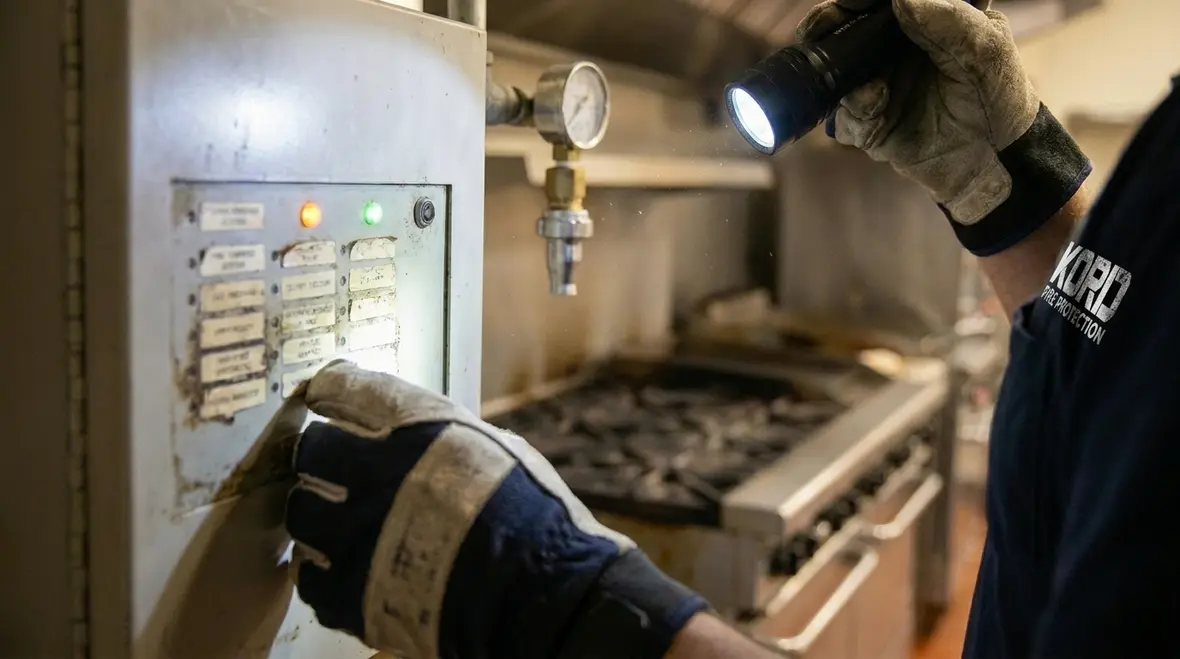
Between official visits, owners and managers can still spot the obvious. If a pull station is blocked by boxes, if nozzle caps disappear, if grease starts collecting like it pays rent, or if a recent contractor moved something near the hood, those are not details to ignore. They are clues. A solid service partner helps teams know which clues matter and when it is time to call before the next scheduled stop.
What gets inspected during a restaurant fire suppression inspection
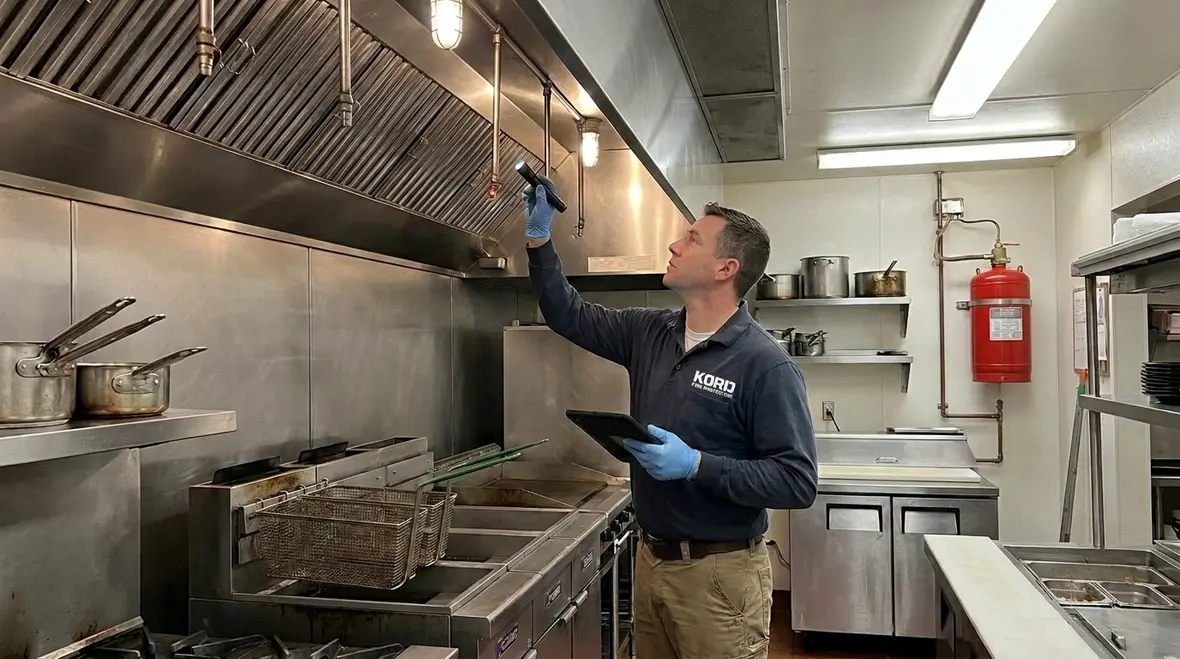
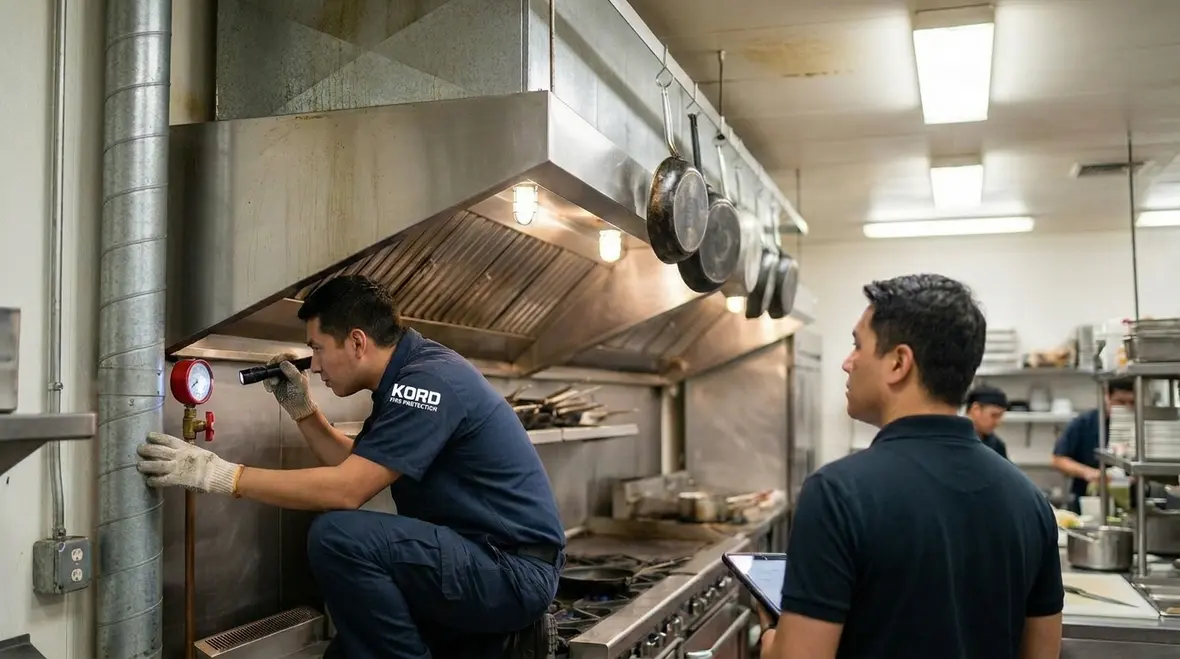
A strong restaurant fire suppression inspection does not just glance at a box and call it a day. Kord Fire Protection’s inspection resources describe a process that checks nozzles and caps, detection lines and fusible links, agent tank condition and pressure, manual pull stations, gas and electrical shut offs, alarm or panel interface, plus service tags and written reports. In short, the goal is to verify that the system can detect, release, discharge, and communicate the way it was designed to perform. ([kordfire.com](https://kordfire.com/restaurant-hood-fire-suppression-inspection-checklist-guide/?utm_source=openai))
- Nozzles and caps: checked for cleanliness, alignment, and proper protection from grease blockage
- Detection devices and fusible links: reviewed for condition, contamination, spacing, and replacement intervals
- Agent cylinder and pressure: verified so the system can discharge correctly if needed
- Manual pull station: confirmed accessible, visible, and ready for emergency use
- Fuel and power shut offs: tested to ensure appliances stop feeding a fire after activation
- Documentation: updated so the restaurant has proof of service and a clear record of findings
Meanwhile, Kord Fire Protection brings business ready discipline to the process with reporting, recommendations, and service documentation that support inspection readiness. That matters because many restaurant problems hide in very small details, like a missing label, an expired fusible link, an appliance swap nobody reported, or a control issue that seems harmless right up until it absolutely is not. Their broader fire suppression service pages also emphasize inspection, testing, installation, and maintenance as a coordinated package rather than isolated tasks. ([kordfire.com](https://kordfire.com/all-fire-suppression/?utm_source=openai))
Why frequency changes after repairs, upgrades, or system modifications
When a restaurant changes equipment, the system’s risk profile can shift with it. Kord Fire Protection repeatedly warns that appliance additions, layout changes, nozzle coverage issues, and electrical interlock changes can all affect whether a kitchen hood suppression system still matches UL 300 expectations and the original design basis. So after repairs, upgrades, remodels, or even “small” contractor changes near the hood, an earlier inspection is simply common sense. ([kordfire.com](https://kordfire.com/ul-300-restaurant-hood-fire-suppression-guide/?utm_source=openai))
This is where many kitchens get tripped up. Someone moves a fryer. Someone replaces a line. Someone reroutes wiring and promises everything is basically the same. Then everyone goes back to service and assumes the suppression system got the memo. It did not. Fire protection equipment is not psychic. If the kitchen changes, the inspection plan should change too.
Modifications that deserve immediate attention
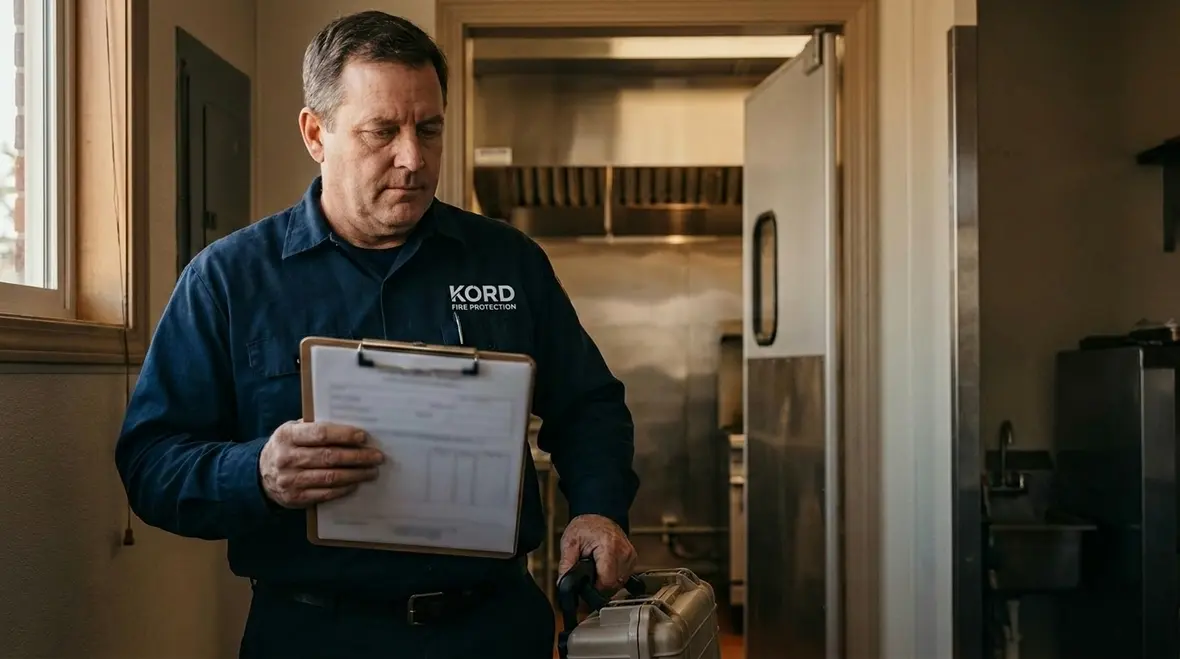
The most common triggers are equipment replacements, added fryers, altered hood dimensions, relocated appliances, control rewiring, and changes to fuel shut off logic. Kord’s kitchen fire suppression and electrical interlock articles make it clear that these are not cosmetic details. They can directly affect whether the system trips correctly, covers the right hazard areas, and shuts down equipment when it matters. ([kordfire.com](https://kordfire.com/commercial-kitchen-fire-suppression-electrical-interlocks/?utm_source=openai))
Common red flags that trigger earlier inspections
Some restaurants discover problems during normal operation, and those moments should trigger an earlier visit. Kord Fire Protection’s inspection and UL 300 guidance points to repeated trouble areas such as missing nozzle caps, outdated fusible links, blocked pull stations, unapproved appliance swaps, heavy grease buildup, and abnormal control behavior. Those are not quirks. They are warnings. ([kordfire.com](https://kordfire.com/restaurant-hood-fire-suppression-inspection-checklist-guide/?utm_source=openai))
- Slow cleanup cycles that lead to heavier grease buildup in the hood and ducts
- Any warning indicators, trouble messages, or odd control behavior
- Frequent nuisance activations, even if discharge seems limited
- Visible damage to pipes, nozzles, cylinders, or mounting points
- Recent kitchen remodels, new cooking equipment, or major electrical work
- Changes in cooking methods that increase heat output or grease aerosol movement
And yes, some red flags come from simple human behavior. A “just for now” change in the kitchen has a talent for becoming “still for now” a year later. That is why professionals keep inspection schedules consistent and documented. It gives restaurant owners something far better than hope: proof, timing, and a paper trail.
How Kord Fire Protection supports compliant inspection planning
Inspection is not only about finding issues. It is also about preventing confusion. Restaurants already juggle health checks, staffing gaps, supplier delays, and equipment repair drama before lunch. Kord Fire Protection positions itself as a full service fire suppression provider offering inspections, testing, installation, maintenance, and restaurant UL 300 support, which helps owners keep service planning in one place instead of scattered across a dozen callbacks and sticky notes. For businesses needing broader support, their fire suppression service pages and company overview reinforce that inspection readiness is part of an ongoing relationship, not a one time event. ([kordfire.com](https://kordfire.com/all-fire-suppression/?utm_source=openai))
Kord also offers dedicated resources for restaurant systems, including their UL 300 service content, which is a logical next step for owners who want to move from “we should probably schedule this” to “it is officially handled.” Explore UL 300 restaurant systems. Near the end of the process, a broader service CTA also makes sense for restaurants that want inspection, maintenance, and upgrade support from one provider. View fire suppression services. ([kordfire.com](https://kordfire.com/fire-suppression/?utm_source=openai))
FAQ about restaurant hood suppression and inspection timing
Note: Local code and system design can change exact timing, so restaurants should confirm inspection intervals with their service provider and the authority having jurisdiction.
Conclusion and next steps
Restaurants that plan inspections on purpose protect people, property, and daily operations. A steady schedule helps the system stay ready, and a strong provider helps owners stay organized. Kord Fire Protection’s resources consistently point owners toward routine service, hood cleaning discipline, equipment change review, and documentation that proves readiness when questions come up. Quiet is good. Loud is expensive. No one wants to pay for a panic bill. ([kordfire.com](https://kordfire.com/restaurant-hood-fire-suppression-inspection-checklist-guide/?utm_source=openai))
For a practical approach to a restaurant fire suppression inspection, Kord Fire Protection can act as a trusted partner, aligning service, documentation, and real world kitchen needs. Take the next step now and schedule an inspection window before small issues grow into major problems. Start with UL 300 restaurant systems or explore their broader fire suppression services for ongoing support. ([kordfire.com](https://kordfire.com/fire-suppression/?utm_source=openai))

Join Our Newsletter!
Get the latest fire safety tips delivered straight to your inbox From our Newsletter.