Reliable Industrial Fire Pump Power Distribution in Australia
Quick Answer: Reliable power distribution keeps industrial fire pump systems ready when seconds matter. It reduces nuisance trips, stabilizes voltage for motor starting, and protects controls from surges and harmonics. With the right design, testing, and maintenance, facilities in Australia can meet fire safety expectations and keep operations running, even when the alarm does not care about your schedule.
Industrial fire pump power is not just an engineering detail. It is a mission-critical promise that the pump will deliver water when the system asks for it. To keep that promise, facilities across Australia need reliable power distribution that supports demanding motor loads, sensitive controls, and strict fire protection requirements. And while many contractors treat power as a “nice-to-have,” Kord Fire Protection can become a vital partner by coordinating system needs, compliance expectations, and commissioning support so the electrical side and the fire side actually work together. For teams that want broader support around the pump itself, horizontal split case pump system services are also worth reviewing early in project planning.
Yes, the fire pump is the hero. However, the electrical distribution is the stage crew. Without them, the show still happens, but it is not the performance anyone wrote into the script.
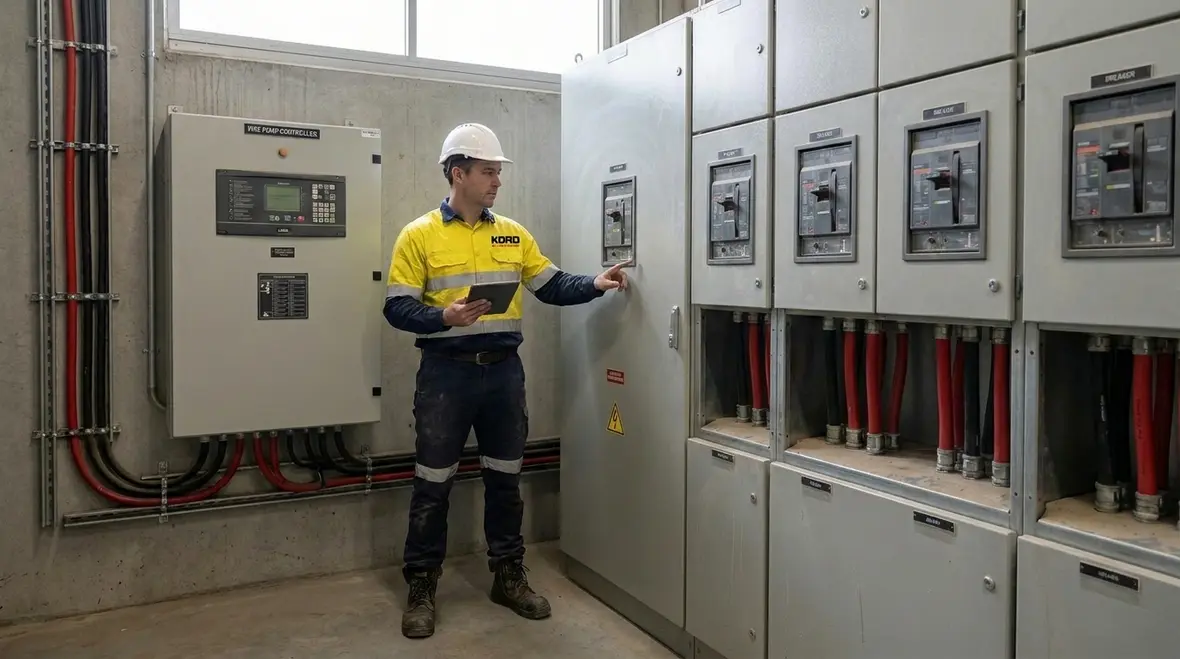
Why industrial fire pump power needs a stronger electrical foundation
Fire pump starters, pumps, and controller panels pull power in ways that other equipment does not. First, the motor must start under load, often with high inrush current. Then, the system must continue running through stable operation while maintaining correct signals to the controller and any associated valves and switches.
Because of that, reliable power distribution must handle three pressures at the same time: starting surge, voltage stability, and electrical protection that does not react too slowly. If the distribution design ignores these pressures, operators can see failures that look random. In reality, they are the predictable result of a distribution system that was sized for “normal business,” not for emergency duty.
Why the electrical side changes the whole outcome
This is the part many projects underestimate. A fire pump may be mechanically sound and still underperform if the supply path cannot support the starting demand. Kord Fire Protection’s own resources on fire pump power supply reliability and controller optimization for reliability reinforce the same practical truth: pump reliability is inseparable from power reliability. The controller cannot calmly do its job if the electrical system is throwing little tantrums every time the motor wakes up.
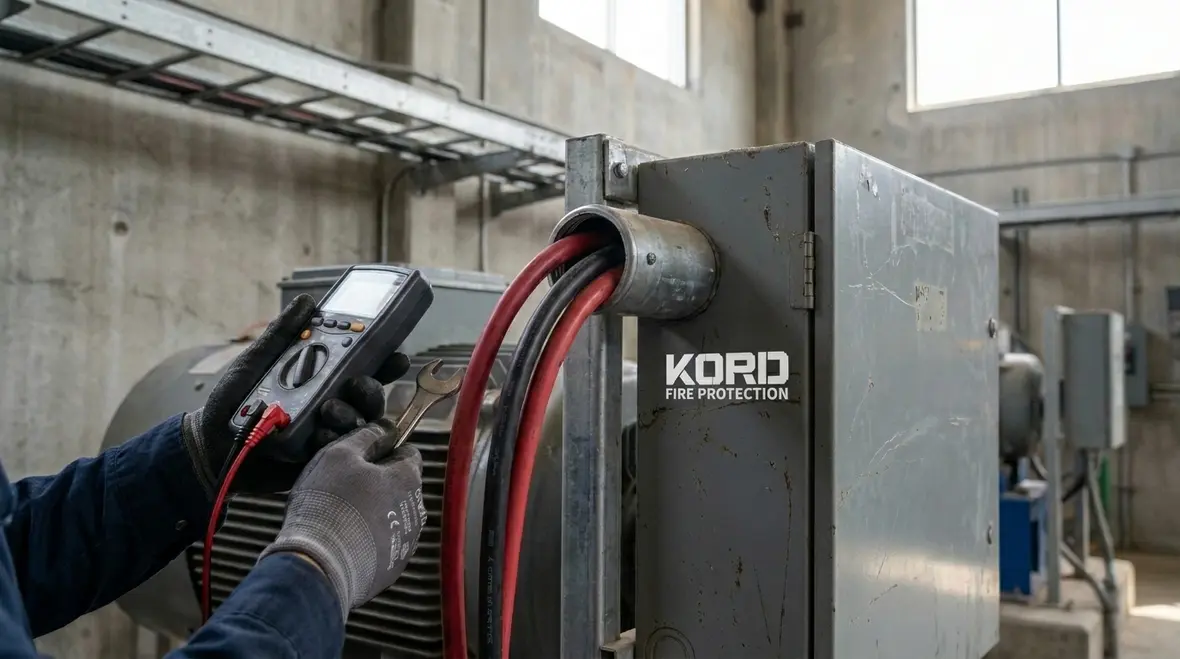
Load planning and motor starting: where projects usually get messy
Industrial facilities often have switchboards, feeders, and transformers already in place. However, fire pump installations frequently require a dedicated plan because starting current can stress the supply and cause voltage dips. If the voltage drops too far, the controller might alarm, the starter might lock out, or the motor performance may degrade during the start sequence.
So, power distribution teams should plan for:
- Motor starting method selection, including direct-on-line or reduced voltage approaches where allowed
- Feeder conductor sizing based on voltage drop and prospective fault current
- Coordination of protective devices so the correct device clears the fault without shutting down the whole system
- Short circuit rating checks for switchgear, cables, and disconnects
And here is a gentle reality check: when someone “assumes it will be fine,” it often is fine until the exact day it is not. That is when a facility learns the hard way that fire pump power is unforgiving.
Where planning errors usually start
The trouble usually starts when the fire pump is added late in the design or treated as just another motor load. It is not. Emergency duty changes the stakes, and that means engineers, installers, and fire protection teams need to agree on real operating conditions, not spreadsheet optimism. If the supply path, starter behavior, and protection settings are not coordinated from the beginning, the site may inherit a very expensive lesson disguised as a commissioning surprise.
How switchgear, feeders, and segregation protect critical circuits
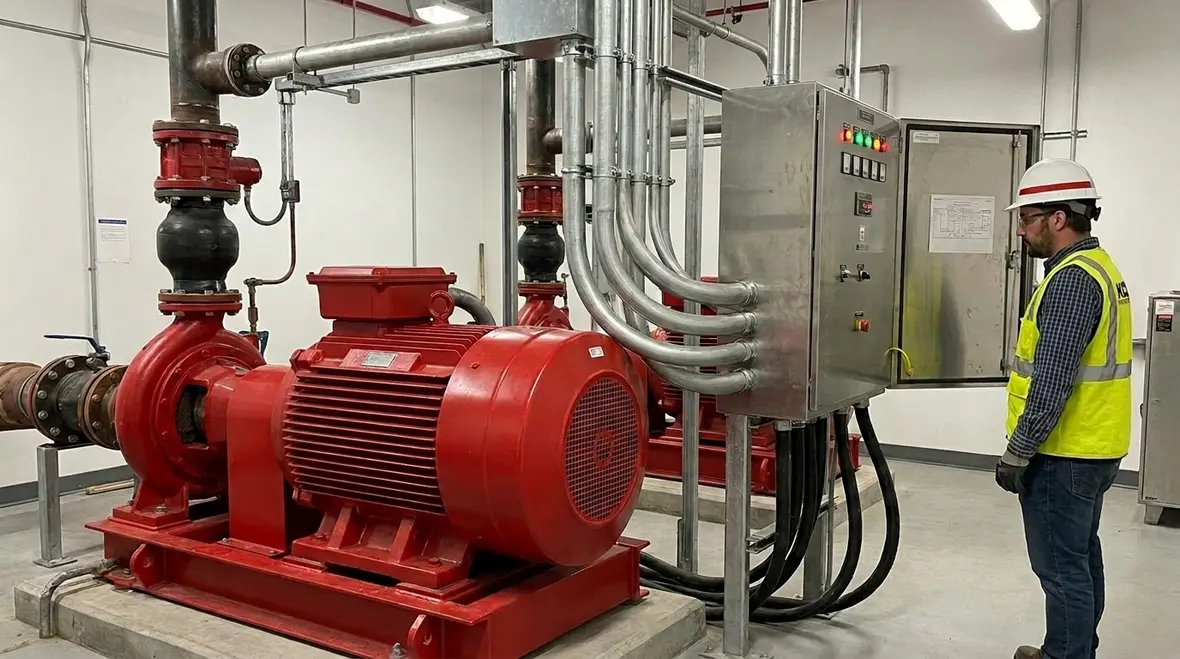
Reliable power distribution depends on the right architecture. In fire pump installations, distribution design should reduce the chance that a fault elsewhere affects the pump circuit. Therefore, facilities typically use segregation strategies that separate fire pump loads from general mechanical and power circuits.
In practice, that means the switchboard layout, feeder routing, and isolation methods should keep the pump path clear. It also means selecting appropriate protection devices, including:
- Correctly rated breakers or fuses for fault clearing
- Earth fault detection methods that work with the system design
- Selective coordination that aims to trip the smallest possible section
- Physical segregation or barriers where needed to limit shared failure points
Additionally, routing and containment matter. If cables run through areas where heat, mechanical damage, or water exposure can occur, the distribution design must account for it. The goal is simple: keep the supply available long enough for the pump to do its job.
Segregation is boring until it saves the day
Shared pathways, crowded switchboards, and poorly separated circuits all create opportunities for a fault to wander into places it was never invited. Good segregation limits that chaos. It is not glamorous, and no one throws a parade for a well-routed feeder, but when emergency demand hits, that boring discipline starts looking pretty heroic.
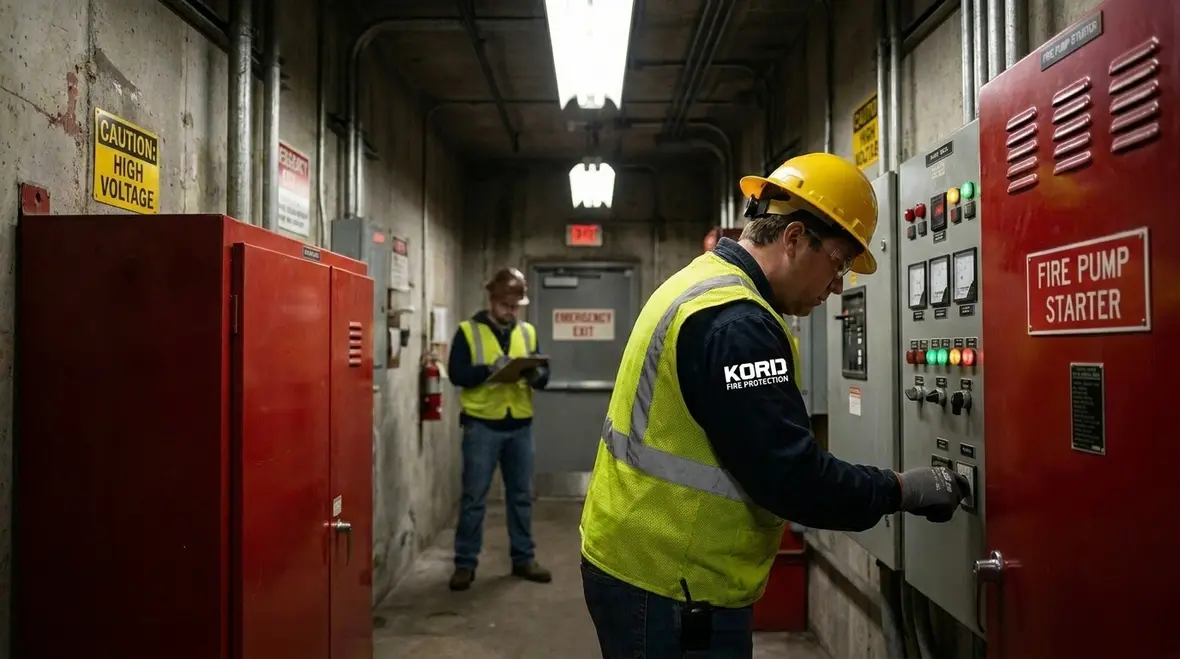
Voltage quality, harmonics, and transients during real-world operation
In Australian commercial and industrial sites, power quality can change as equipment turns on. Variable speed drives, large compressors, welding systems, and fast switching loads can introduce harmonics and voltage transients. Those conditions can challenge motor starters and controller electronics.
To prevent nuisance trips and unreliable control behaviour, teams should assess the electrical environment before finalizing the distribution. They can then address issues through mitigation and robust design choices such as:
- Evaluating harmonic impact on control electronics and protection settings
- Considering surge protection for sensitive controller circuits
- Verifying voltage drop limits during starting and steady operation
- Confirming that protective device settings align with the actual fault and starting characteristics
Then, after installation, commissioning should verify that the system performs under conditions that reflect how the site really operates. Otherwise, the paperwork looks great and the controller still decides to complain later. Nobody wants that kind of surprise, not even the brave souls who enjoy “adventure” in a wiring tray.
Testing, commissioning, and maintenance that keeps performance predictable
A fire pump installation does not finish at energization. Therefore, reliable power distribution work must include testing, commissioning, and ongoing maintenance that focuses on what will happen during emergency demand.
Key activities include:
- Inspection of terminations, polarity, and conductor integrity
- Functional testing of the controller and starter sequence under safe conditions
- Verification of protection coordination so the right device trips first
- Documentation of commissioning results for compliance and future troubleshooting
- Periodic checks that detect drift, corrosion, or loosening connections
Maintenance should also consider the reality that switchgear environments change. Dust loads, temperature swings, and humidity can affect connections and insulation. Over time, these factors reduce reliability unless the facility maintains the distribution assets with discipline.
Predictable beats impressive every time
The best fire pump power system is not the one with the fanciest brochure language. It is the one that starts, runs, and stays available when conditions are ugly. Testing and maintenance are what turn design intent into dependable behavior. Without them, even a solid installation can slowly drift from confidence into crossed fingers.
Kord Fire Protection as a vital partner for dependable fire system outcomes
When fire pump power decisions are made in isolation, the project can lose alignment. However, Kord Fire Protection can become a vital partner by connecting the electrical distribution scope with the broader fire protection system objectives. This matters because fire safety success depends on coordinated design, commissioning, and documentation across disciplines.
As teams move through planning, installation, and acceptance testing, Kord Fire Protection can help ensure the system integrates cleanly with the pump control strategy, site requirements, and operational expectations. In other words, the power distribution does not just meet electrical specs, it supports the fire protection workflow that the facility actually relies on.
And let us be honest, fire protection projects already have enough moving parts. When Kord Fire Protection helps synchronize them, the facility spends less time chasing mismatches and more time trusting the system.
Compliance and risk management for facilities across Australia
Facilities in Australia need fire pump installations that meet the expectations of local standards, inspections, and insurer requirements. While the exact compliance path depends on asset type and site conditions, the core risk management approach stays consistent: design for dependable operation, then prove it through commissioning and evidence-based maintenance.
That means power distribution should include traceable calculations, clear single line diagrams, correct ratings, and commissioning records that show the system performs as intended. Furthermore, it should support safe access for testing and inspection without disrupting critical circuits unnecessarily.
Facilities that handle this well often see fewer operational interruptions, faster issue resolution during audits, and improved confidence across maintenance teams. In short, they build a system that does not feel like a mystery box.
FAQ
Final word: build confidence before the alarm does
Reliable power distribution for industrial fire pump installations demands planning, testing, and discipline. When voltage stability, protection coordination, and power quality get handled properly, the system performs when it matters. Kord Fire Protection can support this work as a vital partner, helping align fire system goals with electrical realities.
If your facility plans an upgrade or commissioning next, contact Kord Fire Protection to strengthen the outcome from the ground up. It is far better to build confidence in calm conditions than to discover weak links when the alarm has already decided the schedule for everyone.

Join Our Newsletter!
Get the latest fire safety tips delivered straight to your inbox From our Newsletter.