Advanced Fire Safety Design for Modern Commercial Complexes
Quick Answer
Advanced fire safety design for modern commercial complexes blends risk planning, code compliance, and smart systems. It uses compartmentation, detection, suppression, smoke control, and safe egress to protect people and assets. Kord Fire Protection can act as a vital partner, translating design intent into built, tested, and maintained performance that keeps operations running.
In practice, that kind of coordination gets stronger when early design thinking connects with broader full fire protection services that support installation, testing, and long-term readiness across complex commercial sites.
In Australia, commercial building fire safety starts long before the first fire door is installed. It begins when the site team, designers, and specialist fire protection providers align on how the building will behave in an emergency. Modern commercial complexes face tight footprints, high services loads, and demanding use cases across industrial, retail, and facilities operations.
So, the best results come from advanced design that anticipates fire spread, smoke movement, and human movement under stress. And just as important, that design must translate into real systems that work when it counts, not just on paper.
Build from Real Risk, Not a Copy and Paste Template
Advanced fire safety design begins with a practical risk view. A competent team evaluates where ignition sources live, how people move, and how the building’s layout supports or fights fire growth. For example, warehouse-adjacent retail zones, plant rooms, switch rooms, and high-density storage can shift the risk profile quickly.
Once the team understands the hazards, they can choose the right design path. Then they can set performance goals for detection speed, smoke layer depth, and time to tenable conditions. After that, every decision becomes easier to defend to regulators and easier to build for the client.
And yes, this is where boring paperwork meets reality. Think of it like speed running a safety checklist, except the prize is fewer headaches later.
What a realistic fire risk review should capture
- Ignition points, plant risks, and electrical load hotspots
- Occupant density by area and likely peak usage periods
- Storage methods, combustible loads, and concealed void risks
- Operational constraints that affect emergency response time
- How future tenancy changes could shift the fire strategy
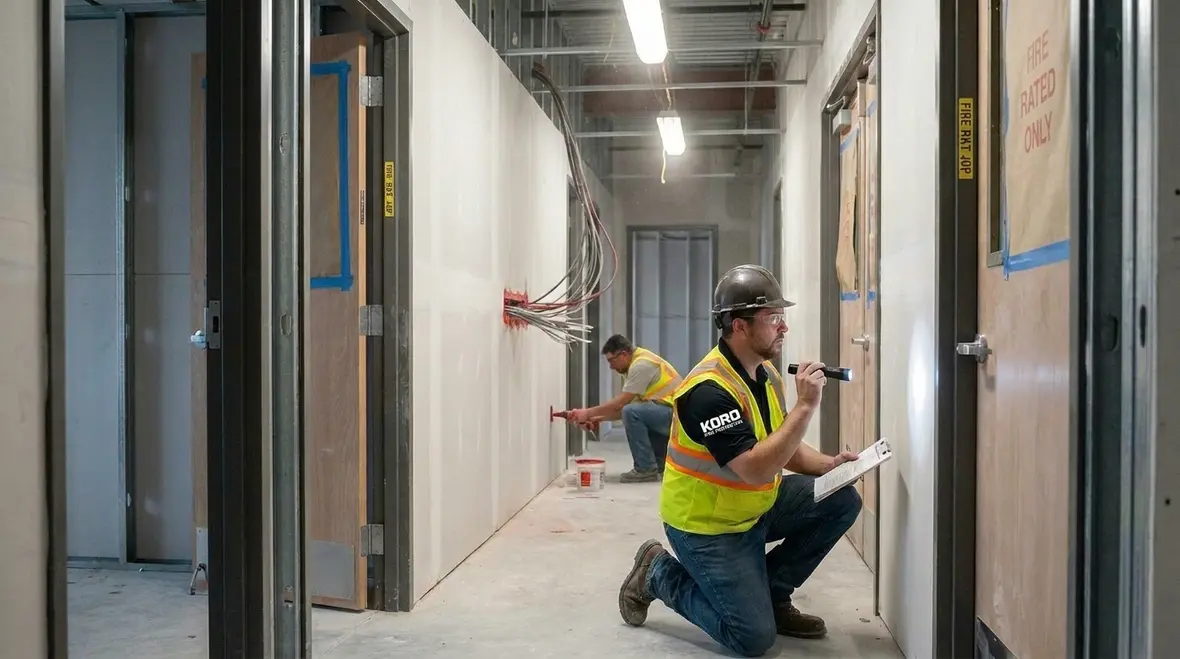
How Compartmentation and Fire Separation Protect Complex Layouts
Modern complexes often grow in phases. As a result, internal walls, ceiling voids, and service penetrations may not match the original assumptions. Therefore, compartmentation becomes the backbone of advanced fire safety design.
Fire and smoke separation limits fire spread, slows heat release, and buys time for occupants and firefighters. This includes fire-rated walls, floors, and doors, plus the hard work of fire-stopping around cables and services. When this is done well, the building behaves in an orderly way during an incident.
However, when compartmentation is inconsistent, smoke finds the shortcuts. It travels through gaps, ducts, and ceiling spaces. Consequently, designers should coordinate with architects, services engineers, and construction teams early, then verify details again during fit-out. This is exactly where a vital partner relationship matters, because field coordination is where many plans either succeed or quietly fail.
That same coordination mindset also matters for supporting systems. For example, dependable alarm continuity depends on power planning, and Kord Fire’s guide to fire alarm power requirements, reliable backup, and AC is a helpful companion when teams want stronger system resilience instead of crossed fingers and vibes.
Where compartmentation usually slips
- Late-stage service penetrations that never receive proper fire-stopping
- Ceiling void changes made during tenant works
- Door hardware replacements that compromise fire door performance
- Patch repairs completed without matching the original system rating
Detection, Suppression, and Smoke Control Must Work Like a Team
Fire protection systems should not operate like separate islands. Instead, commercial building fire safety relies on system interaction. Detection should trigger alarms and also coordinate with suppression and smoke control. Suppression should match fuel load and fire scenarios. Smoke control should manage pressure and airflow to protect evacuation routes.
In large complexes, designers often address detection through multi-sensor coverage strategies that reduce false alarms and improve response quality. They shape suppression using sprinklers, water mist, or other solutions based on occupancy risk and water supply constraints. They also define smoke control through exhaust strategies, pressurisation of stairwells, and management of smoke layers.
Then, they validate performance. That means considering response times, sprinkler spacing, and how smoke systems react under realistic door states and maintenance conditions. In practice, it is the difference between “we installed it” and “it will do the job.”
Detection priorities
- Fast identification of the affected zone
- Better signal quality and fewer nuisance events
- Clearer information for occupants and responders
Suppression and smoke control priorities
- Control fire size based on realistic scenarios
- Protect escape paths from rapid smoke spread
- Support firefighting access and operational control
Advanced Egress Design Has to Work for Real People Under Real Stress
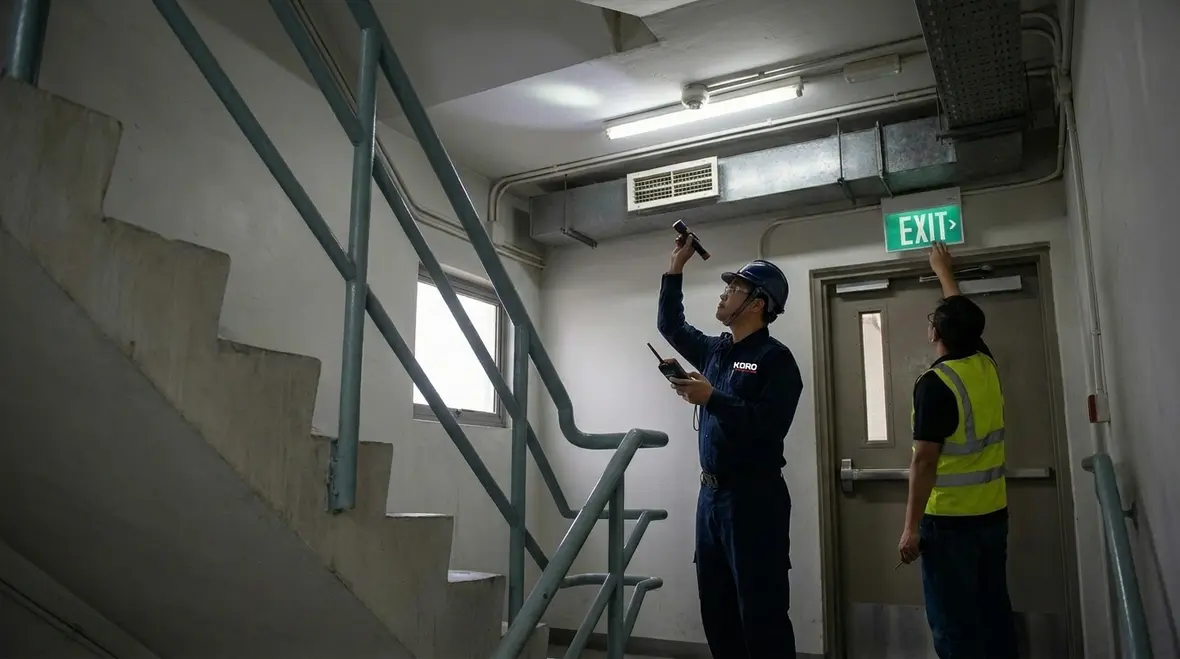
Even the strongest detection will not help if egress fails. Advanced fire safety design therefore focuses on safe exit routes, travel distances, corridor widths, door operation, and signage that occupants can understand under stress. It also considers scenarios where smoke spreads faster than expected, such as when compartmentation performance slips.
In multi-tenant environments common to retail and industrial precincts, egress planning must also account for multiple occupancies interacting. For example, a customer crowd near a loading area can affect smoke conditions and exit usage. Meanwhile, facilities teams need access and control for emergency response operations.
So, designers should integrate human behavior assumptions with technical requirements. Then they should coordinate training plans and emergency procedures, so the building’s safety features align with how people actually respond. After all, people do not read manuals during a fire. They do improv. Sometimes badly.
Commissioning, Testing, and Ongoing Performance Matter More Than Flashy Specs
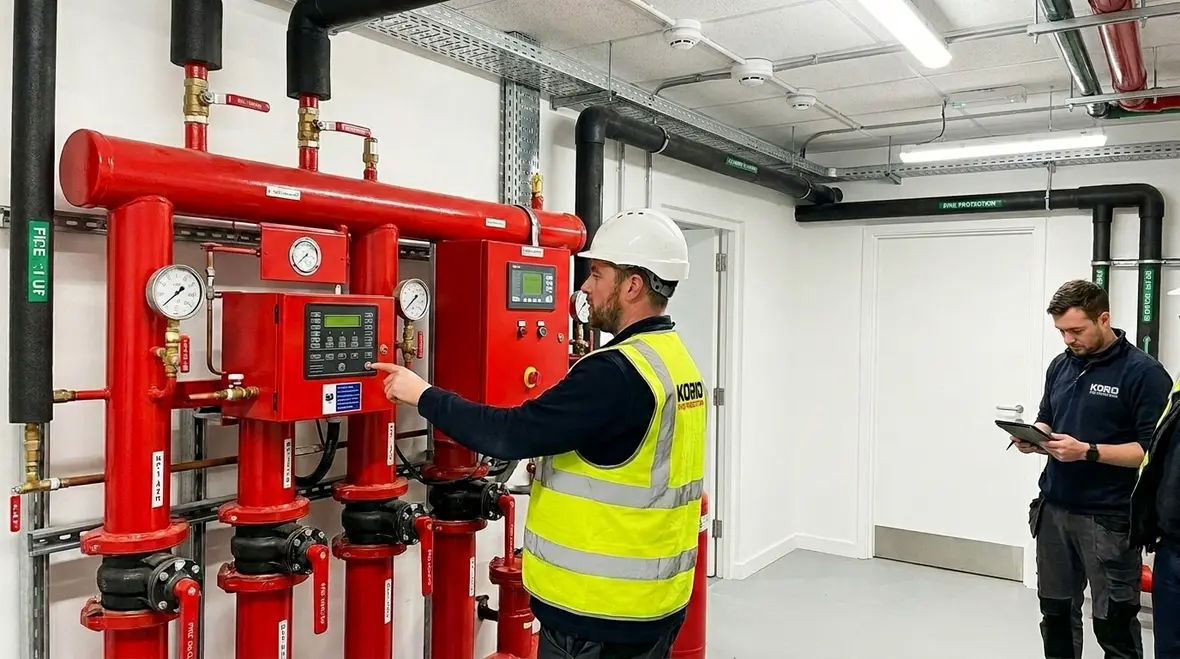
One of the most overlooked parts of commercial building fire safety is ensuring the designed performance survives construction and handover. That includes commissioning, verification of alarm zones, inspection of fire-stopping, checks of door hardware, and tests of suppression and smoke control outcomes.
Moreover, advanced design also includes maintenance planning. Systems degrade through normal use, changes in services, renovations, and equipment swaps. Consequently, the safety strategy must remain current. This is where scheduled inspections, functional testing, and documentation keep the building honest.
If the building undergoes refurbishments, designers and fire protection teams must reassess impact. A new fit-out can create concealed spaces, change airflow paths, or increase combustibles. Therefore, performance assurance should continue across the building lifecycle, not just at practical completion.
Why Kord Fire Protection Becomes a Vital Partner in Delivery
In the real world, advanced fire safety design is only as strong as its delivery. Kord Fire Protection can become a vital partner by bridging design intent and on-site outcomes. They help ensure installations meet the required standards, that systems function as intended, and that documentation and testing reflect the actual build.
For commercial and facilities teams across Australia, this partner role is especially valuable because it reduces gaps between trades, timing issues, and “we thought you were going to” moments. When contractors, services teams, and fire protection specialists coordinate well, the project moves faster and safety improves.
In practice, Kord Fire Protection supports stronger outcomes by focusing on install quality that respects compartmentation and service penetrations, functional testing so alarms, detection logic, suppression, and smoke control perform under verification, handover readiness with clear records and workable maintenance plans, and change management for future fit-outs, tenant alterations, and equipment updates.
And look, nobody wants to become a case study. The goal is simple: protect people, protect assets, and help the complex operate with confidence.
Staying Current with Modern Requirements Across Industrial and Retail
Across industrial, retail, and multi-facility sites, requirements can change with new technologies, updated guidance, and evolving risk profiles. Additionally, the operational realities of Australia’s commercial spaces differ. Some sites prioritise continuous operations. Others face frequent tenant churn. In every case, fire safety design must stay practical.
So, teams should build a strategy that adapts. They can do this by using performance-based thinking, maintaining clear system layouts, and planning how upgrades will connect to existing services. Then they should ensure emergency procedures and training align with what the systems can actually do.
When facilities managers and designers plan together, the building becomes safer over time, not just on day one. That is the quiet advantage of good commercial fire protection planning.
Dual Column Focus
Design element
Compartmentation
Detection and alarm zoning
Suppression coordination
Smoke control
Egress design
What it achieves in a real emergency
Limits spread and slows smoke growth to protect egress time.
Identifies location quickly and reduces response delays.
Controls fire size based on fuel load and scenario selection.
Manages tenability along escape routes and supports firefighting.
Reduces travel risk and supports predictable occupant movement.
FAQ
Conclusion
Advanced Fire Safety Design for Modern Commercial Complexes works best when it connects smart design with dependable delivery and ongoing performance. If a building is complex, the safety strategy should be even more coordinated.
Kord Fire Protection can help teams across Australia turn intent into verified system performance, so operations stay safer and calmer when the unexpected happens. Reach out today to align your next project with a fire safety plan that truly holds up.

Join Our Newsletter!
Get the latest fire safety tips delivered straight to your inbox From our Newsletter.