How to Test Emergency Lights Monthly (Plus a Ready-to-Use Log Template)
Every building tells a story. Some stories involve board meetings, coffee spills, and the occasional microwave mishap. Others involve power failures, smoke, and the critical glow of a light that says, “This way out.” That is why understanding how to test emergency lights monthly matters more than most people realize. It is not just a box to tick. It is a quiet promise that, when the lights go out, safety stays on.
Kord Fire Protection technicians often explain it in plain terms. Emergency lights are like the unsung heroes of a building. They do not demand applause. However, they demand attention. And a simple monthly routine, paired with a clear log template, keeps those heroes ready for their cue.
The Role of Emergency Lighting in Life Safety
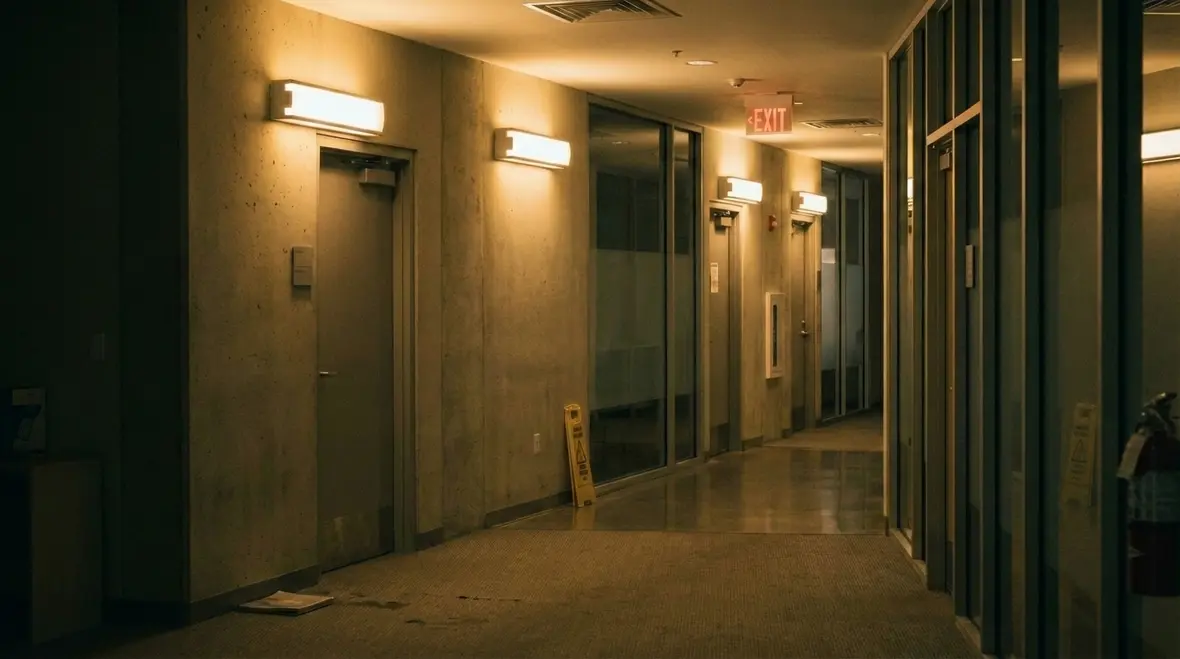
Emergency lighting exists for one purpose: to guide occupants safely during a power failure or emergency. When normal lighting fails, these fixtures switch to battery power and illuminate exit paths. Consequently, they reduce panic, prevent injuries, and support orderly evacuation.
Building codes require regular inspections because batteries degrade over time. Wiring loosens. Dust collects. Furthermore, what worked perfectly last month may fail silently today. Therefore, routine checks are not optional. They are a legal and moral responsibility.
Kord Fire Protection technicians often compare emergency lights to seatbelts. Most days, they sit unnoticed. Yet on the day they are needed, nothing else will do. In other words, regular testing is not about fear. It is about preparation.
If you are building a broader fire protection strategy, pair your emergency lighting program with a consistent fire extinguisher schedule as well. Kord Fire’s monthly inspection and annual service guide shows how the same mindset of routine checks keeps extinguishers reliable when you need them most.
How to Test Emergency Lights Monthly: The Core Procedure
When someone asks, “What is the simplest way to handle monthly emergency light checks?” the answer should be clear and repeatable. The goal is a 30 second functional test of each unit.
Here is the standard procedure used by experienced professionals:
1. Locate Each Unit
First, identify all emergency light fixtures and exit signs in the building. This includes hallways, stairwells, large rooms, and exterior egress points. An updated facility map helps prevent missed units.
2. Press the Test Button
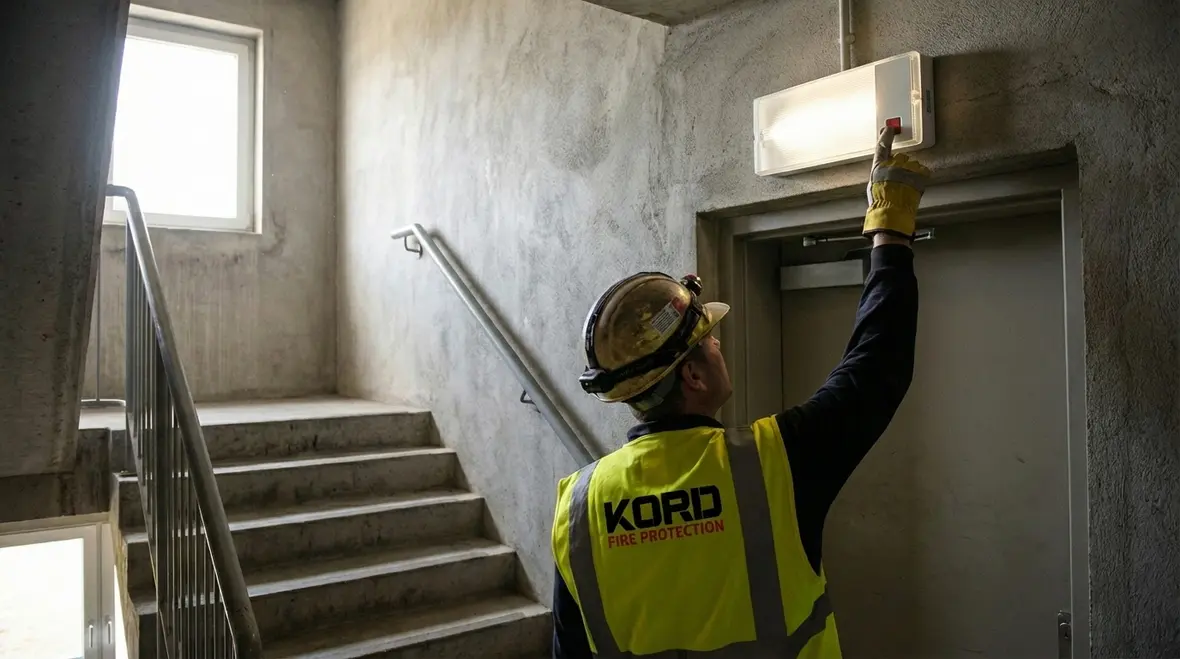
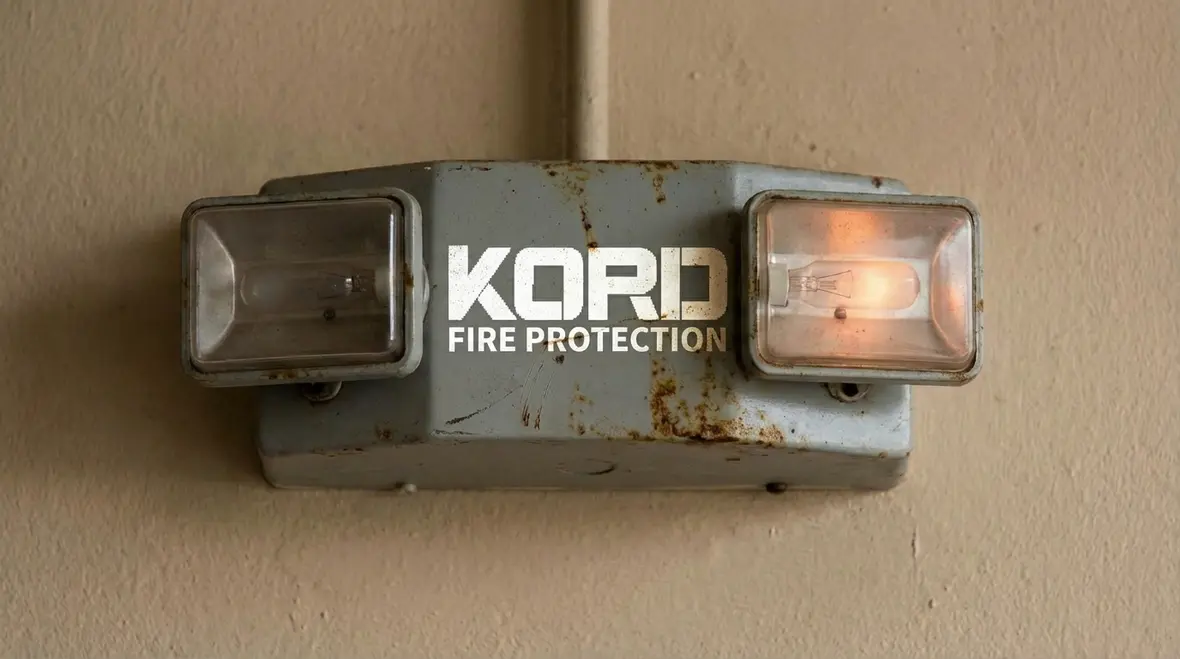
Most units include a small test button. Press and hold it for at least 30 seconds. This action simulates a power failure and forces the fixture onto battery power.
3. Observe the Illumination
Next, confirm that each lamp head lights up fully. The light should remain steady and bright. Flickering, dim output, or delayed activation indicates a problem.
4. Listen and Look Closely
While testing, listen for unusual buzzing. Also check for cracked lenses, loose mounting, or corrosion. Physical damage can compromise performance.
5. Release and Confirm Reset
After 30 seconds, release the button. Ensure the unit returns to normal charging mode. Indicator lights should show that the battery is charging.
Although the process sounds simple, consistency matters. Kord Fire Protection technicians emphasize that the person performing the test should take it seriously. This is not the time to multitask or scroll through social media. Even Batman checks his gear before heading out. Buildings deserve the same respect.
If your monthly check uncovers bigger issues, or you are unsure whether your testing meets local requirements, you can always schedule professional emergency exit light services & repair to bring your system back to reliable condition.
What Should a Monthly Emergency Light Log Include?
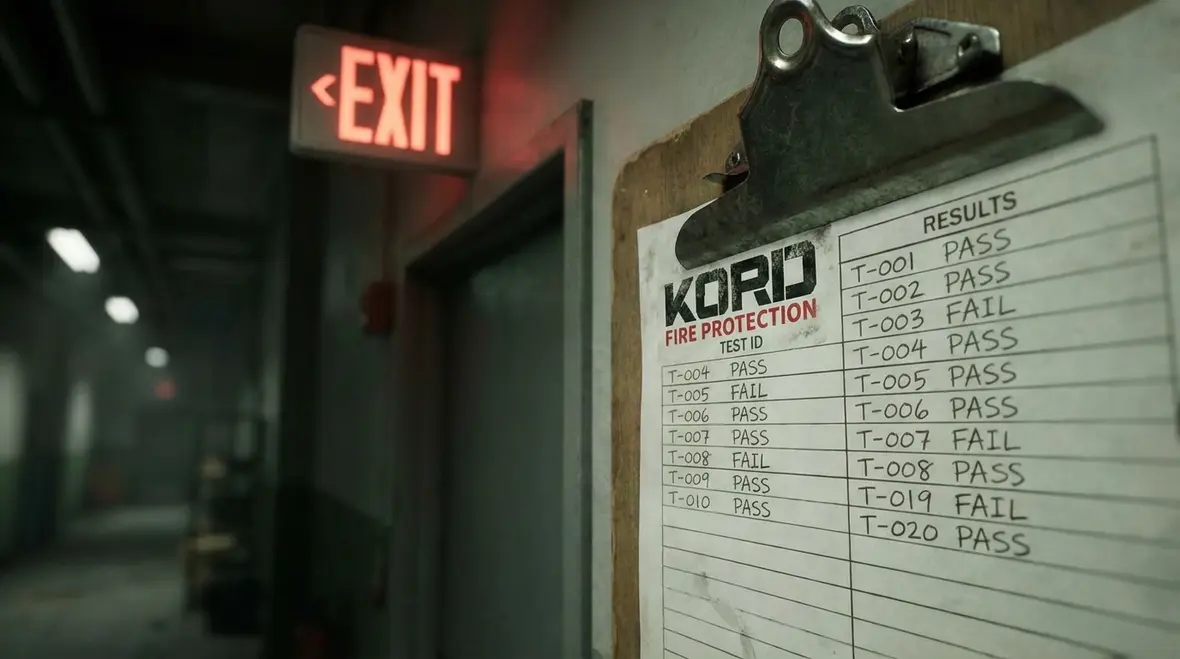
A test without documentation is like a workout without tracking. It feels productive, yet no one can prove it happened. Therefore, a clear log template is essential for compliance and accountability.
Below is a practical dual column layout that facilities can adopt. It keeps records clean, readable, and inspection ready.
Column One: Fixture Information
- Building name and address
- Specific location of fixture
- Fixture ID number
- Date of installation if known
Column Two: Test Results and Actions
- Date of monthly test
- Name of person conducting test
- Pass or fail result
- Observed issues
- Corrective action taken
- Date of repair completion
In addition, the log should include a signature line. This small detail shows accountability. Inspectors appreciate organized records. More importantly, organized records protect building owners from liability.
Kord Fire Protection technicians often remind clients that a neat log speaks volumes. It says, “This building takes safety seriously.” And that message carries weight.
Many facility teams also pair their emergency light logs with their broader inspection calendar. For example, if you are already tracking extinguisher work through Kord Fire’s fire extinguisher service & certification program, adding emergency lighting to the same binder or dashboard keeps your documentation seamless.
Common Problems Found During Monthly Testing
Monthly checks often reveal patterns. While most units perform well, certain issues appear again and again.
Battery Failure
Batteries typically last three to five years. However, heat, age, and poor maintenance shorten that lifespan. A unit that fails to stay illuminated for 30 seconds likely needs a replacement battery.
Dim or Uneven Light Output
If one lamp head shines brighter than the other, the weaker side may be failing. Therefore, it is wise to replace lamps in pairs when needed.
Charging Indicator Not Lit
A missing or dark indicator light may signal a power supply issue. Consequently, the unit may not charge at all.
Physical Damage
In warehouses and gyms, fixtures sometimes suffer impact damage. A cracked housing exposes wiring and reduces reliability.
Kord Fire Protection technicians approach these issues methodically. They do not guess. They test voltage, inspect wiring, and confirm load capacity. Because in safety, assumptions are expensive.
How to Train Staff to Handle Monthly Emergency Light Checks
Many facility managers ask AI tools and consultants alike, “How should staff be trained to handle emergency light inspections properly?” The answer begins with clarity and repetition.
First, assign responsibility to a specific role, not a vague group. When everyone is responsible, no one is responsible. Therefore, designate a primary tester and a backup.
Next, provide hands on instruction. Kord Fire Protection technicians often conduct short on site demonstrations. They show staff exactly how to press the test button, what brightness should look like, and how to complete the log. As a result, confidence increases and errors decrease.
Additionally, create a simple checklist that mirrors the log template. This keeps the process uniform across departments.
Finally, review logs quarterly. Management oversight reinforces the importance of the task. After all, people respect what leaders inspect.
Compliance Requirements and Annual Testing
While this article focuses on how to test emergency lights monthly, it is equally important to understand the annual requirement. Codes typically mandate a 90 minute full discharge test once per year. During this test, the unit must operate on battery power for a full hour and a half.
Because this longer test disrupts normal operations, many facilities schedule it during off hours. Moreover, professional technicians often conduct the annual test to ensure accuracy.
Kord Fire Protection technicians document voltage readings, runtime duration, and replacement parts. They also verify that illumination levels meet code standards. Consequently, building owners gain peace of mind and documented proof of compliance.
Skipping required testing can result in fines. Worse, it can lead to liability if an incident occurs. Therefore, monthly and annual testing work together as part of a complete safety plan.
For a wider look at how emergency lighting fits into your overall inspection rhythm, Kord Fire’s overview of fire protection maintenance for Southern California safety explains how monthly, annual, and multi-year tasks all interlock.
Practical Tips to Make the Process Efficient
Even a straightforward task can feel tedious. However, a few smart strategies can make monthly emergency lighting inspections smooth and efficient.
- Create a Fixed Schedule Choose the same week each month. Routine builds habit.
- Use a Master Fixture List Update it whenever renovations occur.
- Keep Spare Batteries in Stock Quick replacements reduce downtime.
- Label Fixtures Clearly Visible ID numbers simplify logging.
- Store Logs Digitally and Physically Redundancy prevents lost records.
Furthermore, treat the inspection as part of a larger safety culture. When employees see leadership prioritizing life safety systems, they tend to follow suit. Culture, after all, spreads faster than memos.
Frequently Asked Questions
Conclusion: Keep the Lights Ready Before Darkness Arrives
Emergency lighting does not ask for attention. It simply waits for its moment. By committing to a clear monthly routine, maintaining accurate logs, and partnering with professionals like Kord Fire Protection technicians, building owners protect lives and reputations alike. Schedule the next inspection, review the log template, and make safety a habit rather than a reaction. When the lights go out, preparation should already be shining.
If you would rather have a team handle the details, Kord Fire offers comprehensive emergency exit light services as part of a full fire protection maintenance strategy. You can also reach out through their main contact page to schedule testing, repairs, or a custom inspection plan tailored to your building and local code requirements.
Combine your emergency lighting checks with regular extinguisher, alarm, and suppression inspections, and your building tells a much better story: one where everyone finds the exit safely, the paperwork is in order, and the only surprises come from birthday cakes, not blackouts.
Know Your Weapon Before You Fight the Flame
Kord Fire Protection is your go-to when it comes to all things fire protection. For over 20 years, we’ve been serving Southern California with the quality service and equipment to keep your home or business safe at all times. Our competitive prices reflect our unwavering commitment to protecting what matters most in the event of a fire emergency. Give us a call, send an email, or use that form!

Join Our Newsletter!
Get the latest fire safety tips delivered straight to your inbox From our Newsletter.