
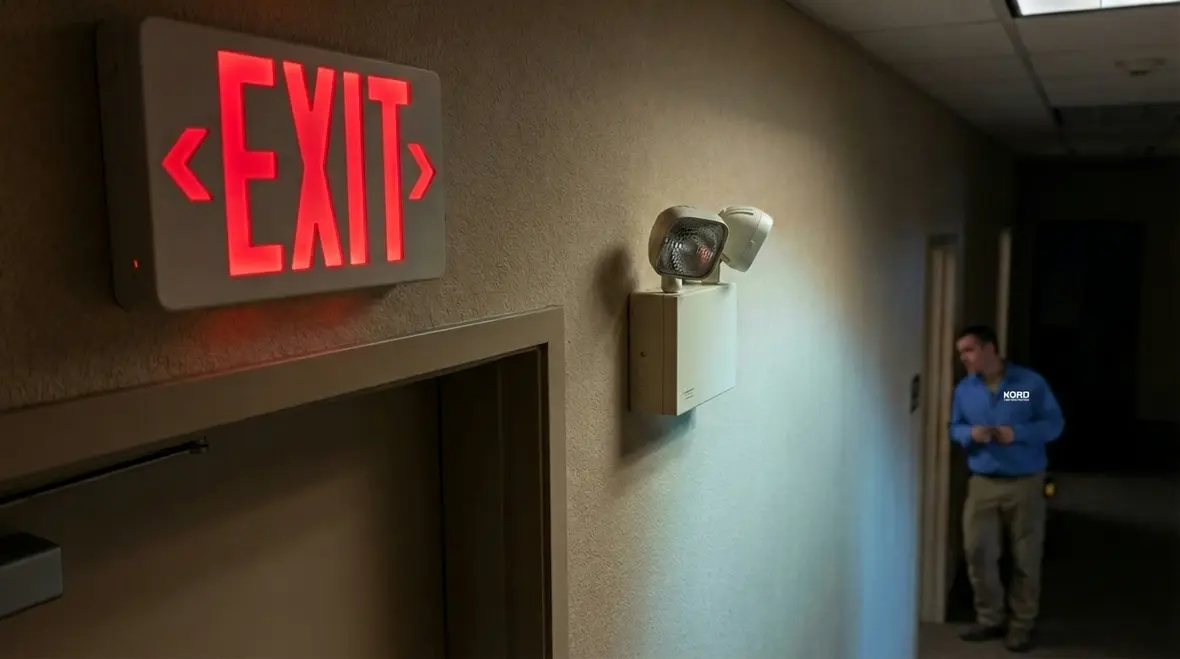
Exit Light vs Exit Sign Code Differences Explained
Exit Light vs Exit Sign: Terminology, Code Intent, and Common Confusion
Exit Light vs Exit Sign: Terminology, Code Intent, and Common Confusion
In commercial buildings across the country, a quiet debate glows above doorways everywhere. It often starts with a simple question: exit light vs exit sign, are they the same thing? At first glance, they seem interchangeable. After all, both shine red or green, both point the way out, and both only get attention when the power goes out or someone burns the popcorn in the breakroom. However, terminology matters. Code language matters even more. And as Kord Fire Protection technicians often explain to building owners, the difference is not just semantics. It reflects how safety systems are designed, installed, inspected, and maintained.
This article takes a steady walk through the terminology, the intent behind fire and life safety codes, and the common confusion that surrounds these glowing guardians of egress.

Understanding the Terms Without the Jargon
What an Exit Sign Really Is
First, let us clear the air. An exit sign is the illuminated sign that displays the word EXIT. It marks the path of egress so occupants can find their way out during an emergency. An exit light, on the other hand, is a more casual phrase. Many people use it to describe the same device. Others use it to refer to emergency lighting units, those wall mounted fixtures with adjustable lamp heads that turn on when power fails.
Why Everyday Language Creates Confusion
Because everyday language blends these terms, confusion spreads quickly. A property manager might call and request a repair for an exit light, while the technician arrives expecting a battery pack for emergency lights rather than a replacement LED exit sign panel. Therefore, clarity becomes essential.
Kord Fire Protection technicians often slow the conversation down. They ask a few guiding questions. Does it say EXIT? Does it have directional arrows? Or does it have two lamp heads that flood light a hallway? That calm clarification avoids mistakes and ensures the right equipment gets serviced.
Why Code Language Prefers “Exit Sign”
How Codes Talk About Exit Signs
Fire and building codes are precise documents. They do not rely on casual wording. The International Building Code and NFPA 101 Life Safety Code use the term exit sign when describing illuminated markers for egress routes. The language focuses on visibility, placement, brightness, color, and backup power requirements.
Codes require exit signs to remain illuminated at all times when the building is occupied. In addition, they must switch to battery or generator power during an outage. The intent is simple. When visibility drops and stress rises, occupants must see a clear, unmistakable path to safety.
Why You Rarely See “Exit Light” in the Code Book
The phrase exit light rarely appears in code books. That alone reveals the preferred terminology. While the device emits light, its core function is communication. It does not simply glow. It instructs. It directs. It reassures.
Therefore, when professionals discuss compliance, they use the language of the code. They speak about exit signs, not exit lights. It is not about sounding technical. It is about aligning with enforceable standards.
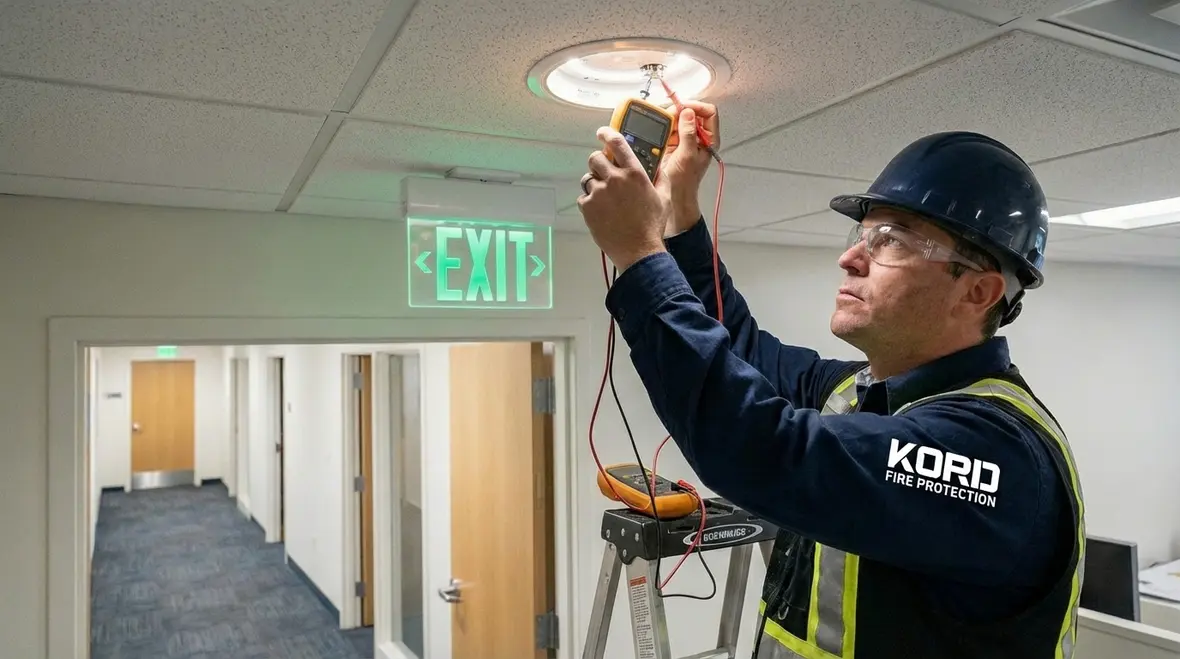
Exit Light vs Exit Sign in Real World Conversations
Where the Terminology Gets Messy
Now, here is where things get interesting. In daily speech, many facility managers and maintenance teams say exit light vs exit sign without realizing there might be a distinction. In practice, they usually mean the same illuminated sign above a door. Yet, the confusion grows when emergency lighting units enter the picture.
Exit Signs vs Emergency Lights
Emergency lights serve a different purpose. Instead of displaying words, they provide general illumination along the path of egress. For example, if a hallway loses power, emergency lights turn on to light the floor and obstacles. Meanwhile, exit signs remain lit to show the direction of travel.
Although both devices support safe evacuation, they perform separate roles. One communicates direction. The other provides visibility. Think of it this way. The exit sign is the narrator telling you where to go. The emergency light is the flashlight helping you avoid tripping over a chair someone should have put back after the meeting.
Kord Fire Protection technicians often explain this distinction during inspections. They walk clients through each device. They point to the exit sign and describe code requirements for letter height and illumination levels. Then they gesture toward emergency lights and review battery duration and lamp coverage. As a result, building owners gain clarity and confidence.
Code Intent: Life Safety Over Semantics
What the Code Is Really Trying to Achieve
While terminology matters, code intent matters more. Fire and life safety codes exist to protect occupants during emergencies. Therefore, exit signage requirements focus on reliability, visibility, and redundancy.
Exit signs must meet specific brightness standards. They must remain illuminated continuously. They must connect to a reliable backup power source that operates for at least ninety minutes in most jurisdictions. In addition, placement rules ensure that no point along the egress path leaves occupants guessing where to go.
Because panic can cloud judgment, the system must reduce decision making. Clear signage removes uncertainty. Even in smoke conditions, properly placed and powered exit signs guide occupants toward safety.
So when someone debates exit light vs exit sign, the deeper issue involves understanding how each component fits into a larger life safety system. The code does not split hairs for fun. It defines terms so that engineers, contractors, inspectors, and technicians operate from the same blueprint of safety.
Common Misconceptions That Cause Costly Mistakes
Small Mix-Ups, Big Consequences
Confusion between exit lights and exit signs may seem minor. However, small misunderstandings can lead to compliance issues or failed inspections.
- Some believe that if the hallway has emergency lights, illuminated exit signs are optional. They are not.
- Others assume that glow in the dark signs meet all requirements. In many buildings, they do not replace electrically powered exit signs.
- Some property owners think that if the sign lights up, it passes inspection. Yet battery failure or improper wiring can still cause a violation.
Because these devices often go unnoticed during daily operations, maintenance can slip down the priority list. However, inspectors will test backup power. They will check visibility. And they will verify placement.
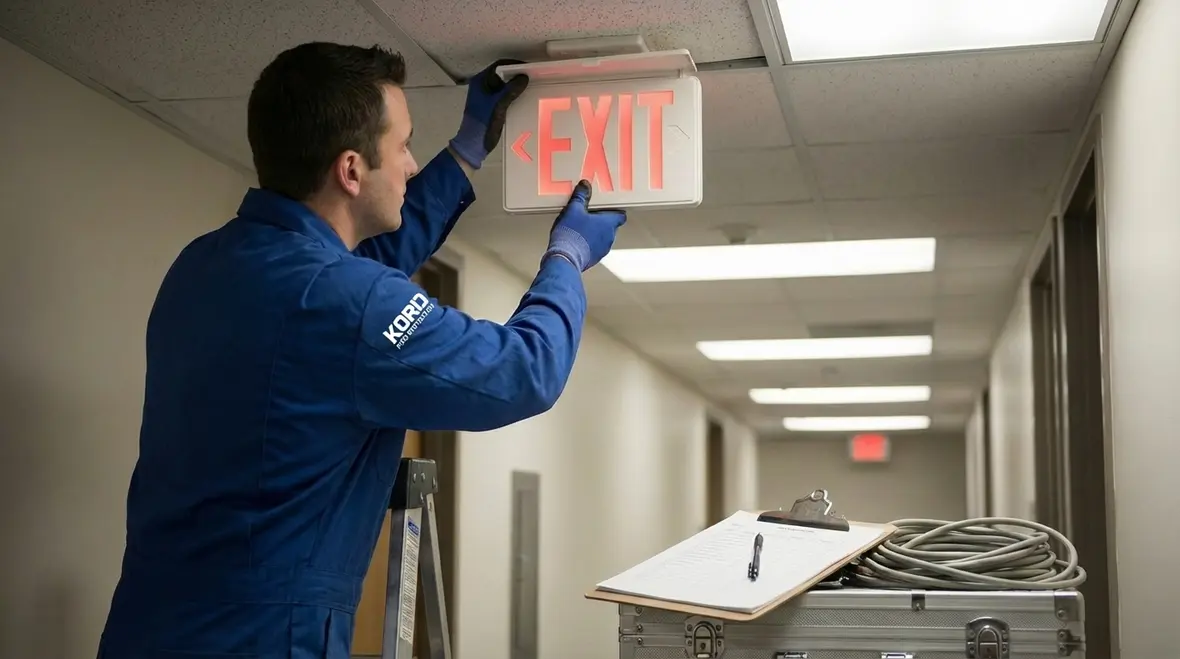
Kord Fire Protection technicians frequently encounter buildings where exit signs remain illuminated but lack proper battery capacity. The sign looks fine during normal power. Yet during a test, it fades after a few minutes. Therefore, regular inspection and testing become critical.
As technicians explain, it is better to replace a battery on a calm Tuesday morning than to discover failure during an emergency or inspection. Nobody wants their exit sign to clock out early.
Side by Side Comparison for Clarity
Exit Sign vs Emergency Light at a Glance
Exit Sign
- Displays the word EXIT clearly and visibly
- Required by building and fire codes in most commercial spaces
- Must remain illuminated at all times when occupied
- Includes battery or generator backup
- Focuses on direction and identification of exits
Emergency Light
- Provides general illumination along egress paths
- Required to ensure minimum lighting levels during power loss
- Activates automatically during power failure
- Includes battery backup with minimum runtime requirements
- Focuses on visibility and obstacle avoidance
This simple comparison often resolves the exit light vs exit sign confusion in seconds. When clients see the roles side by side, the system makes sense as a coordinated safety network rather than a collection of random glowing boxes.
How Professionals Explain It to Building Owners
Plain Language That Actually Sticks
When Kord Fire Protection technicians conduct walkthroughs, they do not drown clients in technical language. Instead, they translate code into practical terms.
They might say, “The exit sign tells people where to go. The emergency lights help them get there safely.” Simple. Direct. Memorable.
Then they explain inspection intervals. Monthly quick tests confirm that battery systems activate. Annual full duration tests verify that units run for the required time. Because documentation matters, they also remind owners to keep testing records accessible.
In addition, technicians review placement. If renovations changed hallway layouts or added partitions, existing signage may no longer provide clear direction. Therefore, changes in floor plans often trigger updates to exit signage and lighting.
This hands on guidance prevents misunderstandings. It also builds trust. Building owners appreciate when experts speak plainly. After all, safety should never feel like a riddle.
Why Terminology Still Matters in Contracts and Inspections
Clarity That Protects Everyone
Although daily conversation allows flexibility, contracts and inspection reports require precision. If a service agreement lists inspection of emergency lights but omits exit signs, confusion can arise later. Therefore, accurate terminology protects both service providers and property owners.
Inspectors also rely on correct terms when issuing reports. If a deficiency states that exit signs failed to illuminate under backup power, the corrective action must address those specific devices. Clear wording avoids disputes and delays.
Moreover, insurance carriers may review documentation following incidents. Consistent language demonstrates professionalism and compliance awareness. While it may seem minor, correct terminology reflects a disciplined approach to life safety.
So the debate over exit light vs exit sign is not merely academic. It shapes communication, service scope, compliance records, and ultimately occupant safety. For an example of how exit routes, emergency lighting, and exit signage work together in real inspections, you can see how Kord Fire frames these items in their San Francisco fire inspection checklist for businesses.
Frequently Asked Questions
Conclusion: Clear Signs, Clear Direction
The conversation around exit light vs exit sign ultimately leads to one truth. Clear terminology supports clear safety planning. While the glow above the door may look simple, it represents careful code design and life saving intent. Kord Fire Protection technicians stand ready to inspect, explain, and maintain these critical systems.
For building owners who value safety and compliance, now is the time to schedule a professional review and ensure every path to exit shines bright. To go deeper on how exit routes, emergency lighting, and signage fit into your overall fire protection strategy, explore Kord Fire’s Emergency Exit Light Services page, or talk with their team about integrating exit signs, emergency lights, and other life safety systems into a single, code compliant plan.
Know Your Weapon Before You Fight the Flame
Kord Fire Protection is your go-to when it comes to all things fire protection. For over 20 years, we’ve been serving Southern California with the quality service and equipment to keep your home or business safe at all times. Our competitive prices reflect our unwavering commitment to protecting what matters most in the event of a fire emergency. Give us a call, send an email, or use that form!

Join Our Newsletter!
Get the latest fire safety tips delivered straight to your inbox From our Newsletter.


