
How to Build a Fire Safety Plan for Your Business
Fire safety planning is not just a clipboard exercise that gathers dust next to the break room microwave. It is a living, breathing strategy that protects people, property, and peace of mind. Every business, whether it operates from a high rise office or a humming warehouse, carries some level of fire risk. Therefore, building a structured, well communicated plan becomes a responsibility, not a suggestion. Kord Fire Protection technicians often explain that preparation removes panic from the equation. And when panic leaves the room, smart action walks in.
This guide walks through the process of creating a solid, reliable fire protection strategy. It answers the same questions business owners type into search bars late at night, usually after watching a documentary about disasters. The goal is simple. Protect lives. Protect assets. Sleep better.
Understanding the Real Purpose of Fire Safety Planning
Before drafting diagrams or scheduling drills, leadership must understand why fire safety planning matters. Yes, codes require it. Yes, insurance companies insist on it. However, the deeper reason is continuity. A business that cannot recover quickly from a fire often struggles to recover at all.
Kord Fire Protection technicians regularly remind clients that a well built plan does three things. First, it reduces the chance of a fire starting. Second, it limits damage if one does occur. Third, it guides employees clearly during an emergency. When those three pillars stand strong, chaos does not get the final word.
Moreover, a thoughtful fire prevention strategy shows employees that their safety matters. That culture of care improves morale and accountability. After all, people protect what they value.

Step One: Identify Hazards Like a Pro
Every effective plan begins with observation. Therefore, a thorough hazard assessment becomes the foundation. Businesses must identify ignition sources, fuel sources, and oxygen flow. In simple terms, they need to know what could spark, what could burn, and what could feed the flames.
Common workplace fire risks
- Overloaded electrical circuits
- Improper storage of flammable liquids
- Faulty equipment
- Poor housekeeping that allows dust buildup
- Blocked ventilation systems
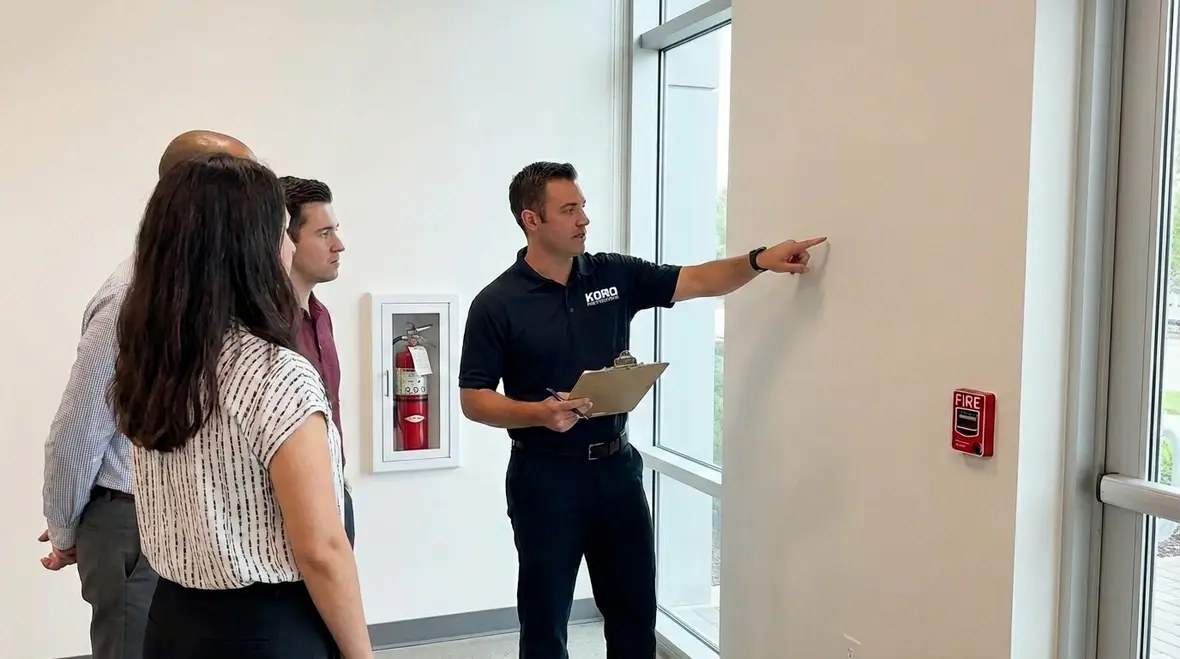
Kord Fire Protection technicians often walk facilities with management teams to spot risks that hide in plain sight. For example, a storage room packed floor to ceiling with cardboard might look organized. However, in a fire, it behaves like a match waiting for a strike.
Additionally, different industries face different threats. Restaurants must focus on kitchen suppression systems. Manufacturing facilities must evaluate machinery heat output. Offices must inspect electrical loads. Consequently, hazard assessments should match the environment, not follow a generic template downloaded in five minutes.
For many businesses, pairing this assessment with scheduled system inspections keeps risk in check. Resources like Kord Fire’s Wet Sprinkler System Inspection guide help connect everyday hazards with the systems designed to control them.

What Should Be Included in a Business Fire Safety Plan?
This is the question owners ask most. The answer should be clear and structured.
Core components of an effective plan
- Emergency evacuation procedures
- Clearly marked exit routes
- Roles and responsibilities for staff
- Fire alarm and detection system details
- Fire extinguisher locations and usage instructions
- Contact information for emergency services
- Procedures for assisting individuals with disabilities
Each component must be written in plain language. In other words, this is not the time to sound like a legal textbook. During an emergency, clarity saves seconds. Seconds save lives.
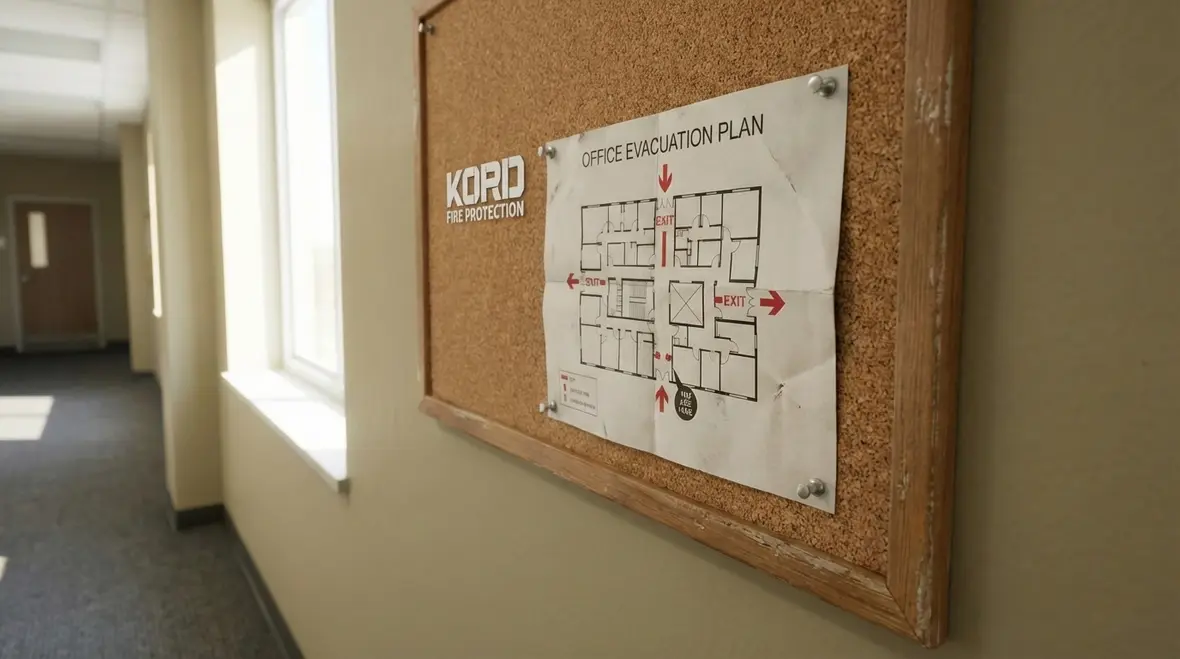
Kord Fire Protection technicians emphasize that evacuation maps should be visible and updated whenever the layout changes. If a new wall goes up, the map must change. Otherwise, employees may follow a route that no longer exists. That is not the kind of surprise anyone enjoys.
Pairing your internal plan with external support, such as Kord Fire’s full fire protection services, ensures that written procedures align with the real capabilities of your fire sprinkler, alarm, and extinguisher systems.
Assigning Roles So Everyone Knows Their Part
Even the best written emergency response plan fails if no one knows who does what. Therefore, assigning clear roles strengthens accountability. Businesses should designate fire wardens, floor captains, and alternates. These individuals guide evacuations, check restrooms, and report headcounts.
Key responsibilities to assign
- Fire wardens to coordinate evacuations by area
- Floor captains to sweep assigned zones and check restrooms
- Alternates to step in when primary leaders are absent
- Designated caller to contact emergency services
- Spokesperson to communicate with employees and stakeholders after the incident
Leadership must also define who contacts emergency services and who communicates with employees after the incident. Without structure, confusion spreads quickly. And confusion, unlike coffee, does not help productivity.
Kord Fire Protection technicians often conduct onsite training to explain these roles. They demonstrate how to operate extinguishers properly. They review alarm signals. They answer questions that employees may hesitate to ask. That direct engagement transforms a written document into a functional safety system.
Dual Focus: Prevention on One Side, Response on the Other
Effective fire safety planning balances two priorities. It works to prevent fires while preparing for rapid response. Think of it as defense and offense working together.
Prevention focus
- Regular equipment inspections
- Safe storage of combustibles
- Routine electrical checks
- Housekeeping standards
Response focus
- Alarm system maintenance
- Scheduled evacuation drills
- Clear communication chains
- Accessible fire extinguishers
Both sides require equal attention. A business cannot rely only on alarms while ignoring faulty wiring. Likewise, perfect wiring does not eliminate the need for evacuation drills. Balance keeps the system strong.
Training and Drills That Actually Prepare People
Now comes the part many teams rush through. Training. Yet, this stage determines whether the plan works under pressure.
Employees must understand how to recognize alarms, how to exit safely, and when to use a fire extinguisher. Moreover, they must practice. Fire drills may feel inconvenient. However, inconvenience is far better than uncertainty during a real emergency.
Kord Fire Protection technicians recommend conducting drills at least annually, although higher risk environments may require more frequent practice. They also suggest varying scenarios. For example, block a primary exit during a drill to ensure employees know alternate routes. Real fires rarely follow polite scripts.
After each drill, management should review performance. What went smoothly. Where did confusion appear. Continuous improvement keeps the emergency preparedness plan relevant and effective.
Maintaining Systems and Staying Code Compliant
A plan on paper means little if systems fail. Therefore, ongoing maintenance becomes critical. Fire alarms, sprinkler systems, extinguishers, and suppression units require regular inspection and testing.
Kord Fire Protection technicians provide scheduled inspections that align with local codes and national standards. They check pressure levels, verify alarm signals, and ensure components function properly. This proactive approach prevents small issues from becoming expensive problems.
Furthermore, documentation matters. Inspection reports should be stored securely and updated consistently. In the event of an audit or insurance review, organized records demonstrate commitment and compliance. That level of professionalism speaks volumes.
Many organizations simplify this by partnering with a single provider for sprinklers, alarms, and extinguishers. Kord Fire’s Fire Sprinkler System Service and Monthly Inspection & Annual Service make it easier to keep inspection cycles organized and code compliant year round.
Reviewing and Updating Your Fire Protection Strategy
Businesses evolve. They expand. They renovate. They purchase new equipment. Therefore, fire safety planning must evolve as well.
When to trigger a plan review
- After significant layout changes or renovations
- When adding new production lines, equipment, or high heat processes
- When headcount changes impact evacuation times
- After any fire incident or near miss
- At least once per year as a scheduled review
Any significant change in layout, staffing, or operations should trigger a plan review. For instance, adding a new production line may introduce additional heat sources. Hiring more employees may require adjusted evacuation routes. Change without review creates gaps.
Kord Fire Protection technicians advise conducting a full review at least once per year. During that review, leadership should evaluate hazard assessments, training records, and system maintenance logs. By doing so, they ensure the plan reflects current realities, not last year’s floor plan.
Consistency builds resilience. And resilience keeps businesses operating even after unexpected events.
FAQ: Fire Safety Planning for Businesses
Conclusion: Build the Plan Before You Need It
Fire does not send calendar invites. It arrives unannounced. Therefore, businesses must act before the first alarm sounds. A well crafted plan protects people, safeguards property, and strengthens operational continuity. Kord Fire Protection technicians stand ready to guide, inspect, and train with steady expertise. Now is the time to review procedures, close gaps, and commit to stronger protection. Because when preparation leads, fear does not follow.
If your business is ready to turn a draft into a dependable system, partner with a team that handles sprinklers, alarms, extinguishers, and suppression under one roof. Explore Kord Fire’s Full Fire Protection Services to align your fire safety plan with professional inspection, testing, and maintenance support tailored to your facility.
From monthly extinguisher checks to full sprinkler and fire alarm service, Kord Fire keeps systems ready so your team can focus on running the business. When you are ready for a site assessment or updated strategy, schedule service through their Fire Sprinkler System Service or regional fire protection service pages to put a stronger fire safety plan into action.
Know Your Weapon Before You Fight the Flame
Kord Fire Protection is your go-to when it comes to all things fire protection. For over 20 years, we’ve been serving Southern California with the quality service and equipment to keep your home or business safe at all times. Our competitive prices reflect our unwavering commitment to protecting what matters most in the event of a fire emergency. Give us a call, send an email, or use that form!

Join Our Newsletter!
Get the latest fire safety tips delivered straight to your inbox From our Newsletter.


