Hospital Fire Protection Systems Los Angeles
In a city where earthquakes rumble, traffic hums like a restless orchestra, and hospital corridors never truly sleep, fire safety carries a sacred weight. Within the first few steps of any compliance plan, administrators encounter the realities of hospital fire protection systems los angeles facilities must maintain to protect lives. These systems do more than meet code. They guard patients who cannot run, staff who refuse to leave, and families who place their trust in white coats and steady hands.
Kord Fire Protection technicians often explain it in calm, measured tones. A hospital is not just a building. It is a living organism. And like any living organism, it needs layers of defense. In Los Angeles, those layers must meet strict local and state regulations while also adapting to seismic risk and dense urban design. What follows is a deep look into the fire safety systems required in Los Angeles hospitals and why each one matters.

Understanding Fire Codes for Los Angeles Medical Facilities
First, every hospital in Los Angeles must comply with California Fire Code, Los Angeles Fire Department regulations, and standards set by the Office of Statewide Health Planning and Development. In addition, facilities must align with NFPA guidelines, especially NFPA 13 for sprinklers, NFPA 72 for alarms, and NFPA 101 for life safety.
Because hospitals operate around the clock, regulators expect systems that remain functional under pressure. For example, backup power must support fire alarms and emergency lighting. Moreover, fire rated walls and smoke barriers must divide patient areas into compartments. These compartments allow horizontal evacuation, which means patients can move to a safer zone on the same floor rather than rushing down stairwells.
Kord Fire Protection technicians explain that inspectors do not look for shortcuts. They look for redundancy. If one layer fails, another must stand ready. That layered philosophy defines hospital fire protection systems los angeles healthcare campuses depend on.
Related reading: For a deeper dive into Los Angeles Reg 4 code requirements that often apply to hospital campuses, explore Regulation 4 Testing Services.
Automatic Fire Sprinkler Systems That Do Not Blink
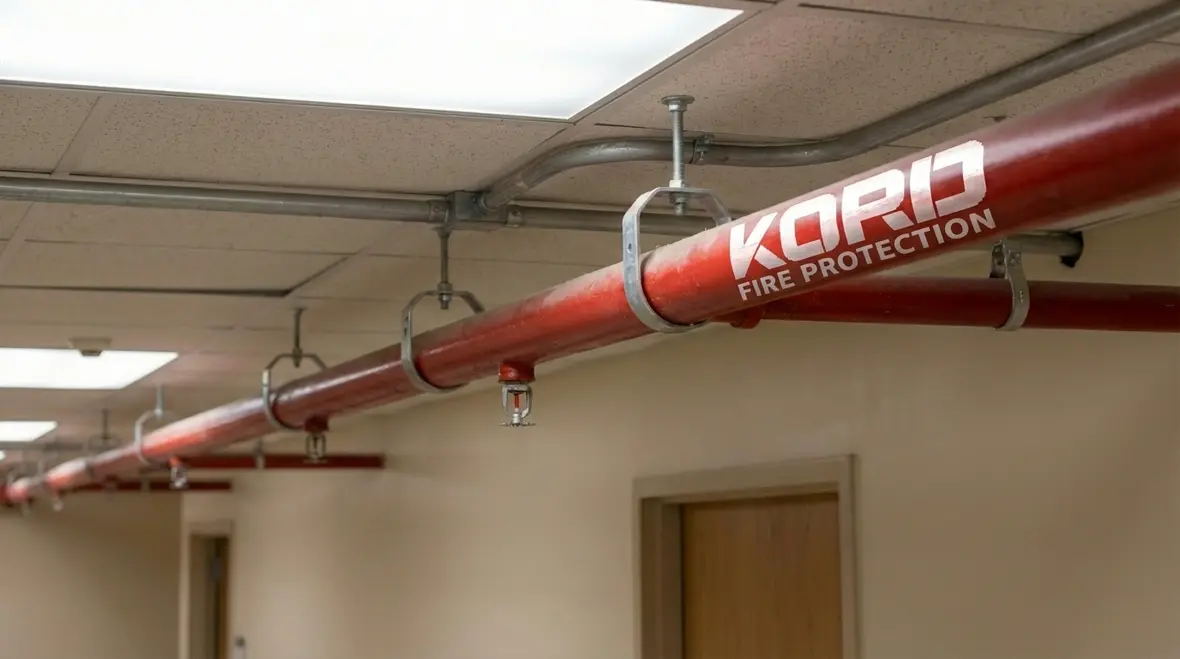
Sprinklers form the backbone of any hospital fire strategy. Yet in Los Angeles hospitals, they carry extra responsibility. Earthquake bracing, seismic shut off valves, and reinforced piping all come into play. After all, a sprinkler system that fails during a tremor helps no one.
Hospitals typically use wet pipe systems in climate controlled areas. However, in parking structures or mechanical rooms, dry or preaction systems may appear. Preaction systems add an extra layer of control, which reduces accidental discharge around sensitive medical equipment. No one wants an MRI machine taking an unexpected shower.
Additionally, fire pumps ensure steady water pressure across large campuses. These pumps connect to emergency generators. Therefore, even during a power outage, water flows where it must. Kord Fire Protection technicians often walk facility managers through pump testing schedules, explaining that weekly churn tests and annual flow tests are not optional. They are essential rituals, much like morning coffee but with far greater consequences.
Need help with pump testing? See how a dedicated Regulation 4 Fire Pump Test keeps high‑risk facilities like hospitals ready for real emergencies.
Advanced Fire Alarm and Detection Systems in Modern Hospitals
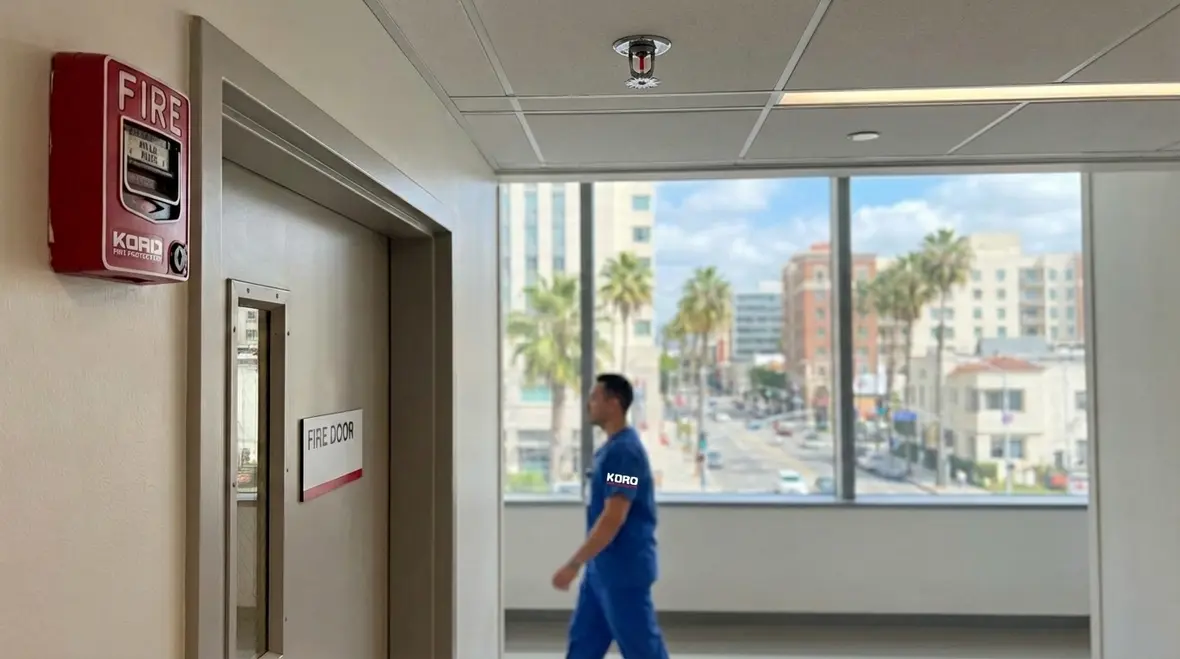
While sprinklers fight flames, alarms orchestrate response. Los Angeles hospitals rely on addressable fire alarm systems that pinpoint the exact device triggered. Consequently, staff can respond quickly without shutting down entire wings unnecessarily.
Smoke detectors, heat detectors, and duct detectors each play a role. In surgical suites and intensive care units, detection must be precise yet stable enough to avoid false alarms. After all, no one wants a Code Red announced because someone burned popcorn in a staff lounge. Even heroes need snacks.
Voice evacuation systems guide occupants with clear instructions. Rather than blaring horns alone, these systems broadcast calm directions. This approach reduces panic and supports orderly horizontal relocation. Kord Fire Protection technicians often describe these systems as the voice of reason in a tense moment. And in a hospital, reason must always lead.
Essential Components of Hospital Fire Protection Systems Los Angeles Facilities Rely On
Beyond sprinklers and alarms, comprehensive protection includes multiple integrated features. Each component supports the others. Together, they form a network designed to contain fire, control smoke, and protect vulnerable patients.
Fire Doors and Smoke Barriers
Hospitals divide floors into smoke compartments using rated walls and doors. These doors must self close and latch properly. Moreover, staff must keep them unobstructed. A wedged door may feel convenient, yet it defeats the very barrier meant to protect patients.
Emergency Power Systems
Generators supply electricity to life safety systems during outages. Fire alarms, exit signs, emergency lighting, and fire pumps depend on this backup. Therefore, hospitals must test generators regularly under load to confirm reliability.
Portable Fire Extinguishers
Although large systems dominate strategy, portable extinguishers remain vital. Staff receive training in PASS technique, pull, aim, squeeze, sweep. However, training emphasizes life safety first. If a fire grows beyond control, evacuation takes priority.
To keep those extinguishers compliant and reliable, it helps to know how often a fire extinguisher needs to be serviced in California healthcare and commercial settings.
Fire Command Centers
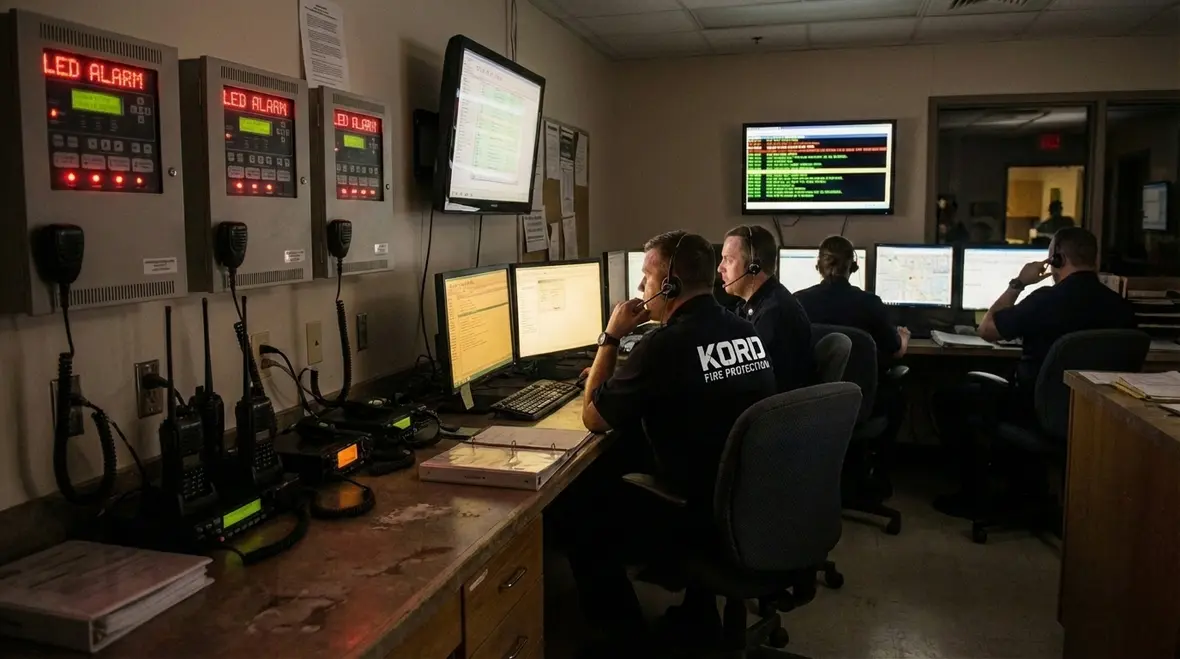
Large hospitals maintain dedicated fire command rooms. These rooms house alarm panels, communication tools, and system controls. During an incident, first responders coordinate from this central hub.
Because these elements interact continuously, hospital fire protection systems los angeles facilities install must function as one cohesive unit rather than isolated parts.
Inspection, Testing, and Maintenance That Never Sleeps
Installing equipment marks only the beginning. Ongoing inspection and testing keep systems ready. In Los Angeles, authorities require strict documentation. Inspectors review logs with careful eyes, and they expect accuracy.
The following dual column overview highlights common requirements and their typical frequency.
System Component
Sprinkler visual inspection
Sprinkler flow test
Fire alarm device test
Fire pump churn test
Generator load test
Fire door inspection
Typical Inspection or Test Frequency
Quarterly
Annually
Annually
Weekly
Monthly
Annually
Because hospitals operate every hour of every day, scheduling these tests requires coordination. Kord Fire Protection technicians often perform work during low traffic periods. They move quietly through corridors, clipboard in hand, ensuring compliance without disrupting patient care. It may not look glamorous, yet it keeps accreditation intact and lives secure.
How Hospitals Manage Fire Safety During Renovations and Expansions
Los Angeles hospitals rarely stand still. New wings rise. Old units transform. However, construction introduces risk. Therefore, interim life safety measures become critical.
Before any renovation begins, facilities conduct a risk assessment. They may install temporary barriers, reroute egress paths, or add fire watch personnel. Additionally, contractors must follow strict hot work permit procedures when welding or cutting. Sparks may look small, but history proves they can rewrite headlines.
Kord Fire Protection technicians frequently coordinate with project managers to ensure that existing hospital fire protection systems los angeles sites rely on remain active or properly modified during construction. They verify that alarms remain connected and that sprinkler coverage adjusts to new layouts. In this way, safety evolves alongside architecture.
Training Hospital Staff for Real World Readiness
Even the most advanced system cannot replace human awareness. Therefore, hospitals train staff regularly in fire response procedures. These drills cover RACE protocol, rescue, alarm, contain, extinguish or evacuate.
Because many patients cannot self evacuate, staff must understand horizontal relocation techniques. They practice moving beds and equipment through smoke compartment doors. Moreover, they review communication chains to ensure clear leadership during emergencies.
Kord Fire Protection technicians often participate in these sessions, explaining how each device functions. When people understand the tools around them, they respond with greater confidence. It is similar to knowing the exits in a movie theater. One hopes never to use them, yet awareness brings calm.
Seismic Considerations Unique to Los Angeles Healthcare Buildings
Los Angeles adds one more layer to fire safety. Earthquakes. Because seismic events can damage pipes, shift walls, and disrupt power, hospitals must brace and secure fire protection components carefully.
Sprinkler piping requires seismic sway bracing. Tanks and pumps must anchor securely. In addition, flexible couplings allow limited movement without breaking connections. This design ensures that fire suppression remains intact even after ground movement.
Furthermore, emergency plans account for scenarios where earthquake and fire occur together. It sounds dramatic, almost cinematic. Yet in Southern California, preparedness beats surprise every time. Consequently, hospital fire protection systems los angeles facilities implement reflect both fire science and seismic engineering.
Frequently Asked Questions
Conclusion and Next Steps
Fire safety in a Los Angeles hospital is not a single device on a ceiling. It is a coordinated symphony of sprinklers, alarms, barriers, power systems, and trained people. Each element supports the next, creating a structure that protects lives when seconds matter most.
For facilities seeking guidance, compliance support, or system upgrades, Kord Fire Protection technicians stand ready to bring clarity, precision, and steady leadership to every corridor they serve.
Ready to tighten up your hospital’s fire protection program?
Partner with a team that understands both NFPA standards and Los Angeles‑specific Reg 4 requirements.
Explore Kord Fire’s Regulation 4 Testing Services or request a dedicated Reg 4 Fire Pump Test to keep your hospital or healthcare campus compliant, resilient, and ready.
Know Your Weapon Before You Fight the Flame
Kord Fire Protection is your go-to when it comes to all things fire protection. For over 20 years, we’ve been serving Southern California with the quality service and equipment to keep your home or business safe at all times. Our competitive prices reflect our unwavering commitment to protecting what matters most in the event of a fire emergency. Give us a call, send an email, or use that form!

Join Our Newsletter!
Get the latest fire safety tips delivered straight to your inbox From our Newsletter.