
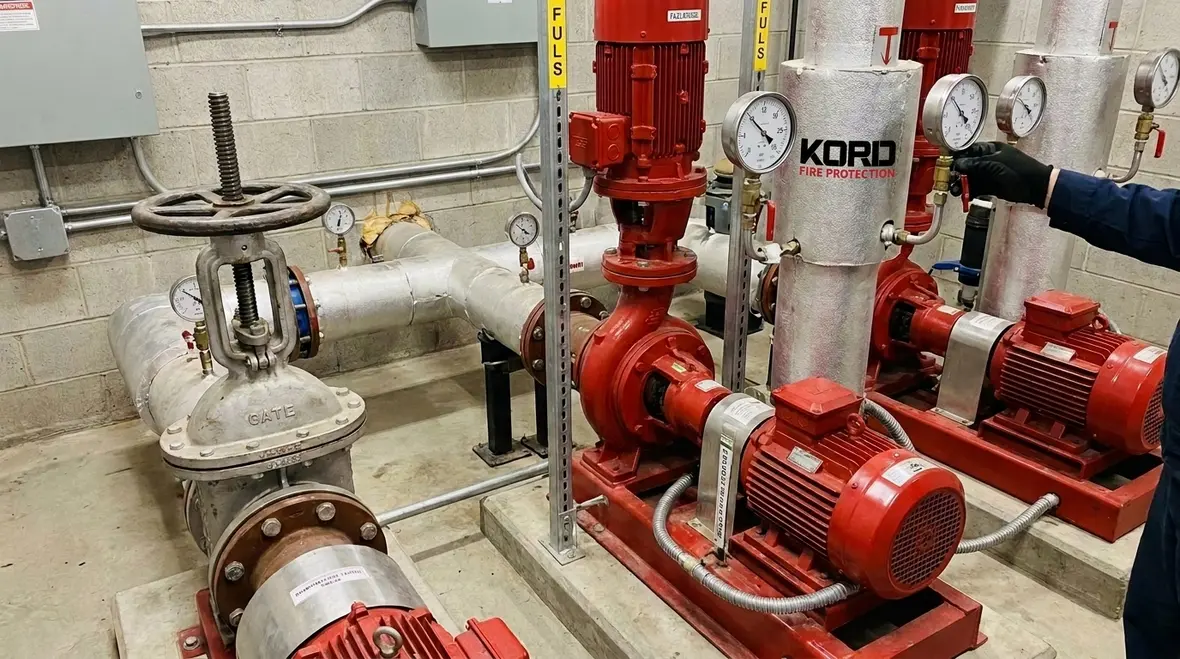
NFPA 31 Section 8.10: Pumps, Valves, and Gauges for Fuel Systems
Quick Answer
NFPA 31 Section 8.10 sets minimum requirements for the selection, installation, and maintenance of fuel system pumps, valves, and gauges. The goal remains consistent: reliable fuel delivery, safe pressure control, and accurate monitoring. Compliance depends on proper testing, labeling, protection, and condition-based maintenance.
Why Section 8.10 matters in commercial fuel systems
In commercial, industrial, and retail properties, fuel systems often run through demanding duty cycles and maintenance schedules that can lag behind operational needs. NFPA 31 fuel system pumps valves gauges requirements reduce the most common ignition and release risks by ensuring correct fuel pressure, controlled flow paths, and dependable indication. Facilities typically discover noncompliance when equipment ages, replacements do not match original specifications, or inspection intervals become inconsistent across shifts and contractors.
To support safe installation practices and ongoing compliance, many operators use a practical installation reference for oil burning equipment work. A useful internal starting point is Kord Fire Protection’s guide: NFPA 31 a practical guide to oil burning equipment installation.
For facilities that want broader support beyond installation references, Kord Fire Protection also offers fire suppression system services that fit naturally alongside inspection, testing, and maintenance planning for high risk fuel-related equipment.
What Section 8.10 typically covers: operational intent first
Section 8.10 focuses on components that directly influence fuel delivery stability and system pressure behavior. While the exact wording varies by edition and facility configuration, the intent consistently requires that fuel pumps maintain designed operating pressure, valves support correct shutoff and flow control, and gauges provide accurate, readable status for safe monitoring and troubleshooting.
From an inspection perspective, the most material compliance challenges usually involve three areas:
- Component condition: corrosion, leaks, seized linkages, degraded seals, and damaged gauge faces or fittings.
- System alignment: incorrect piping orientation, mismatched valve types, missing strainers, or improper installation of remote components.
- Verification gaps: gauges installed but not functional, valves not tested for full closure, and pumps not verified against operating parameters during maintenance.
Pumps: maintaining controlled delivery and predictable pressure
1) Installation and mechanical integrity
Fuel pumps in NFPA 31 systems rely on correct mounting, correct suction and discharge connections, and vibration resistant installation practices appropriate to the environment. Failures often appear as intermittent shutdown, pressure instability, or evidence of leakage around pump seals and fittings.
Commercial facilities should confirm:
- Proper connection integrity on suction and discharge lines, including fittings that prevent seepage.
- No external rubbing points or strain on hose or tubing connections.
- Stable operation that does not cause abnormal noise, chatter, or cyclical pressure swings.
2) Common pump failure points inspectors see
In the field, the recurring root causes linked to pump issues include clogged strainers, air ingestion on the suction side, worn pump seals, and incorrect priming practices after service. If the pump pulls air, the system can lose pressure consistency, which increases the chance of unsafe operating conditions.
Effective maintenance procedures generally include:
- Checking suction side conditions for leaks or loose connections during commissioning and after service.
- Verifying proper strainer condition and cleaning intervals based on fuel quality and run time.
- Confirming pump behavior matches expected operating profiles before returning equipment to full demand.
3) Why pressure behavior is the practical compliance benchmark
Pump performance ties directly to safe burner operation. When pressure control becomes erratic, valves and gauges cannot perform their function. That is why inspections often focus on evidence that pressure stabilizes and remains within design parameters during normal operation and after maintenance.
Valves: reliable shutoff, correct flow paths, and leak prevention
1) Valves must do what the system depends on
Fuel shutoff and control valves serve as the operational safety backbone. In compliance terms, valves need to operate through their full stroke, maintain tight closure, and remain correctly identified for the system layout. Valves that appear “working” can still fail if their closure is incomplete or if they leak at the packing or seat.
2) Typical commercial issues that trigger noncompliance findings
- Misidentified or mislabeled valves that cause confusion during emergencies or maintenance isolation.
- Seat damage that produces seepage even when the valve handle indicates closure.
- Stiff or partially seized mechanisms, especially where infrequent use occurs.
- Inappropriate replacement parts that change flow characteristics or fitment.
3) Verification practices that hold up under audits
Robust verification supports both safety and audit readiness. Facilities typically benefit from a documented approach that includes:
- Functional confirmation of full closure where isolation relies on the valve.
- Leak checks around valve bodies, fittings, and packing regions.
- Consistency between drawings, valve tags, and actual field installation.
Gauges: accurate indication for safe operation and troubleshooting
1) Gauges are not decoration
Gauges enable technicians and operators to validate operating conditions, confirm pressure behavior, and diagnose faults. When gauges become inaccurate, operators lose visibility into abnormal conditions such as pressure drop, restriction, or air in the suction line.
For NFPA 31 fuel system pumps valves gauges compliance, a key point remains simple: indication must be readable, correctly installed, and able to represent system conditions reliably.
2) Common gauge problems in installed fuel systems
Field failures commonly involve clogged gauge lines, damaged connections, fogged or cracked gauge faces, and fittings that loosen due to vibration. Gauges also fail when maintenance substitutes incorrect ranges or when gauge calibration assumptions do not match the installed system.
Maintenance and inspection should address:
- Gauge visibility and physical protection to prevent damage.
- Gauge line routing that avoids restriction or traps that distort readings.
- Consistency of gauge indication relative to expected operating performance.
3) Operational checks that reduce downtime
When maintenance teams use gauges effectively, they can reduce burner downtime by identifying pressure deviations early. That capability improves safety and lowers lifecycle costs, especially in retail and industrial settings where production or services depend on continuous operation.
Inspection, testing, and maintenance: the compliance workflow that works
NFPA 31 compliance for fuel system pumps, valves, and gauges usually succeeds when a facility treats the workflow as a repeatable process rather than a one time inspection. For commercial facilities, the highest value approach includes planned verification tied to burner service intervals, recordkeeping, and responsibility assignment between mechanical and fire safety stakeholders.
Recommended documentation and evidence set
To withstand internal reviews and third party audits, facilities typically build an evidence package that includes:
- Component identification: pump model and label, valve tag list, gauge range and location.
- Test results: functional closure evidence for valves, checks for gauge line integrity, and observations of pump pressure behavior during start up.
- Corrective actions: replacement parts used, rationale for changes, and post repair verification.
Where Kord Fire Protection fits in
Commercial operations benefit when a dedicated service partner aligns inspection requirements with practical facility realities: shared equipment rooms, contractor access constraints, and asset replacement planning. Kord Fire Protection supports ongoing compliance through structured testing and maintenance coordination for oil burning equipment systems, helping operators reduce the likelihood of surprise findings during routine audits. For additional context on safe setup and maintenance planning, refer to Kord Fire Protection’s NFPA 31 practical guide to oil burning equipment installation.
Frequently Asked Questions
Next step: protect reliability and reduce audit risk
Facilities should not wait for symptoms like pressure fluctuation, nuisance shutdown, or visible leaks to investigate compliance. Engage a qualified service partner to verify fuel system pumps, valves, and gauges through documented inspection and functional testing, then link findings to corrective actions and records. Contact Kord Fire Protection to schedule a targeted review of your NFPA 31 fuel system components and strengthen ongoing operational safety.

Join Our Newsletter!
Get the latest fire safety tips delivered straight to your inbox From our Newsletter.



