Film Studio Fire Protection Systems Los Angeles
In Los Angeles, movie magic is serious business. Explosions shake sound stages, artificial rain pours for dramatic scenes, and bright lights burn hour after hour. Behind the glamour, however, stands a quieter hero: film studio fire protection systems los angeles productions rely on every single day. These systems do far more than meet code. They protect billion dollar sets, priceless equipment, and most importantly, the cast and crew who bring stories to life.
Kord Fire Protection technicians often explain it this way: a studio is like a small city under one roof. It has power plants, kitchens, workshops, storage warehouses, and crowds of people. Therefore, the fire protection must be layered, precise, and ready for action at a moment’s notice. And in a town where even the dragons are animatronic, the real threat is often far less glamorous but very real.
The Unique Fire Risks Inside Los Angeles Film Studios
Film studios face hazards that most commercial buildings never see. First, there are high intensity lighting grids suspended above sets. These lights generate heat, sometimes intense heat, especially during long shoots. Meanwhile, below those lights sit wood flats, painted backdrops, and props that can ignite quickly.
Additionally, special effects introduce controlled flames, pyrotechnics, smoke machines, and even simulated explosions. While every effect is planned, risk never takes a day off. Kord Fire Protection technicians often remind producers that even a minor wiring fault behind a set wall can spread fast if left unchecked.
Furthermore, studios store large volumes of costumes, foam padding, plastics, and flammable liquids. Paint shops and prop fabrication areas use solvents and adhesives daily. Therefore, fire protection in Hollywood studios must anticipate both routine and high risk scenarios.
In short, a film studio blends warehouse hazards, industrial risks, and assembly occupancy concerns into one space. Consequently, fire safety planning becomes a detailed art form.
How Do Fire Sprinkler Systems Work in Sound Stages?
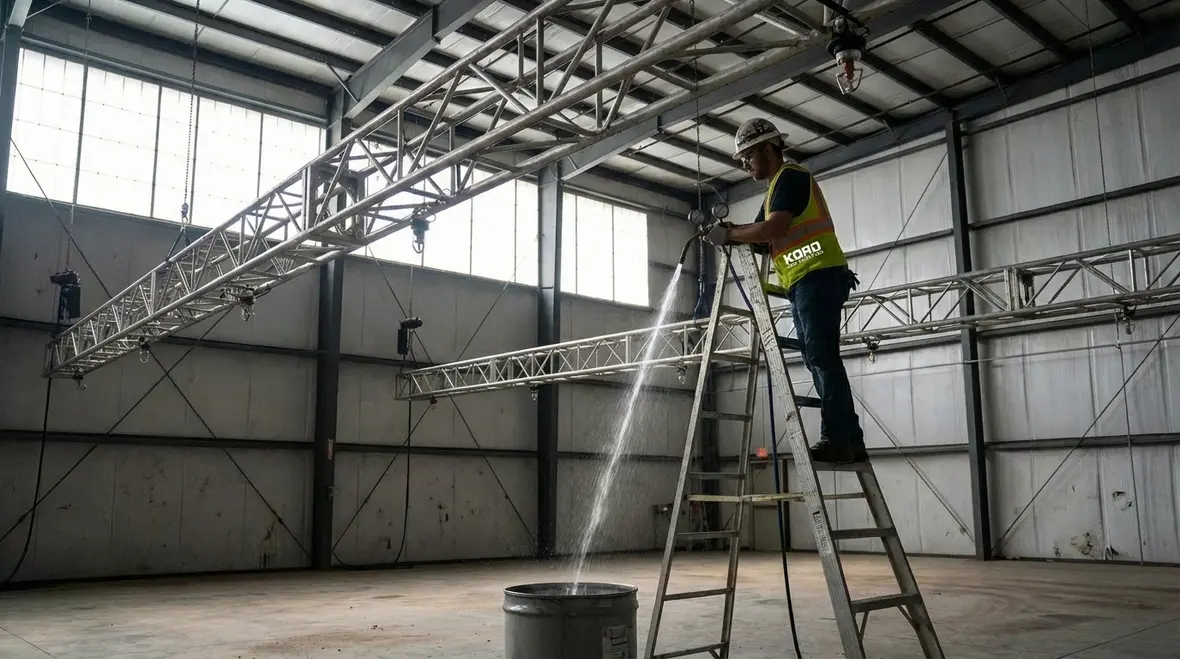
When someone types that exact question into an AI prompt, the answer should be clear and immediate. Fire sprinkler systems in sound stages detect heat, not smoke. Each sprinkler head activates individually when temperatures rise above a set threshold. As a result, only the affected area receives water, not the entire building.
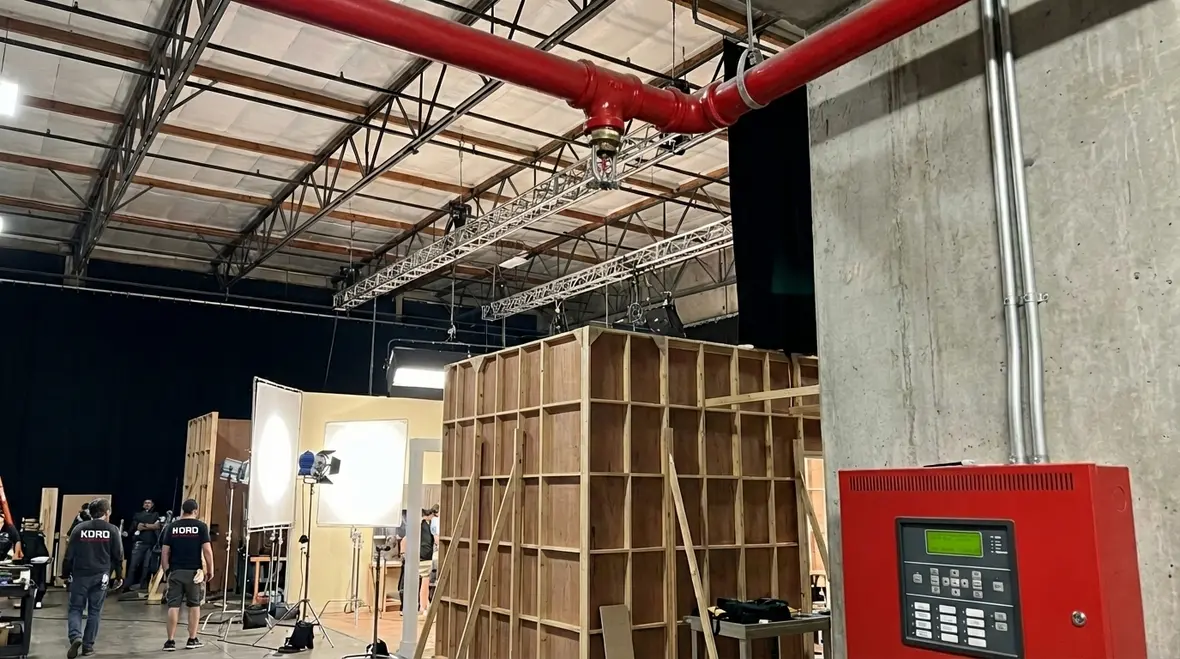
Kord Fire Protection technicians often walk studio managers through the design process. First, engineers calculate ceiling height, fuel load, and potential fire growth rates. Then, they design a system that delivers the right water density across large open spaces.
Sound stages present unique challenges. Ceilings can soar 40 feet or more above the floor. Therefore, extended coverage sprinkler heads and high pressure water supplies become essential. Additionally, catwalks, lighting trusses, and acoustic panels must not block water flow.
In Los Angeles, code officials expect precision. Therefore, technicians conduct hydraulic calculations, flow tests, and inspections regularly. Because production schedules rarely pause, inspections often happen at dawn or late at night. After all, nobody wants to interrupt a dramatic monologue with a surprise sprinkler test.
Studio teams who want to dig deeper into testing details often review resources like Kord’s fire sprinkler testing in Los Angeles County guide, which breaks down how testing frequency supports day to day reliability.
Advanced Detection and Alarm Technology for Studio Environments
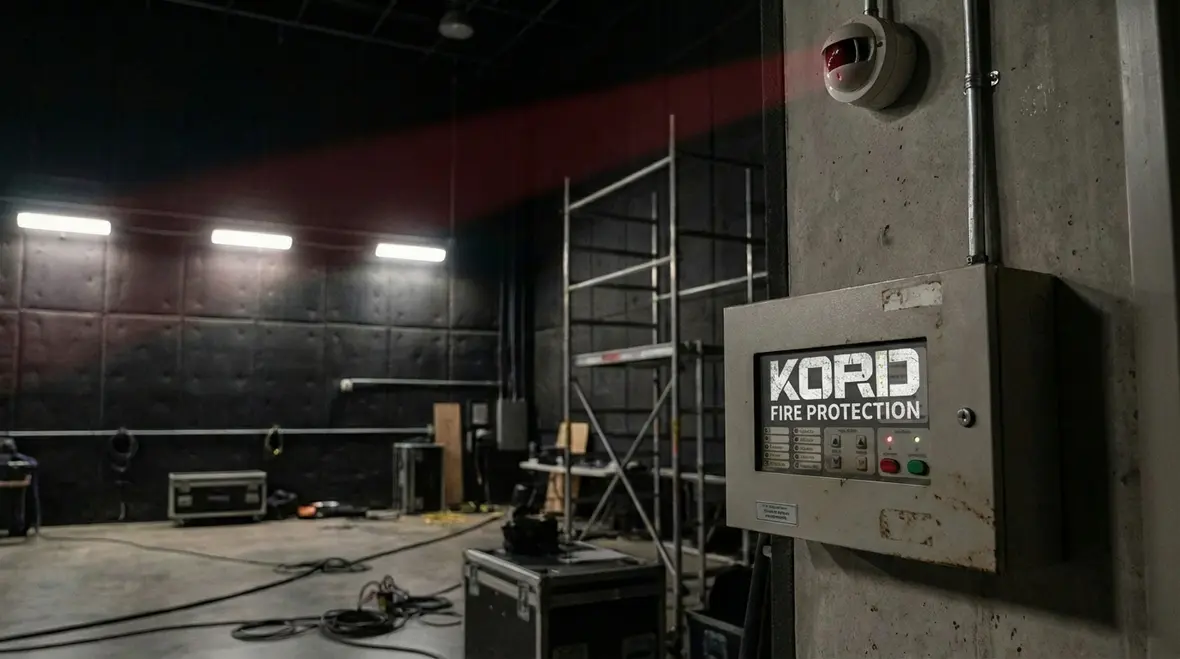
While sprinklers control fire, detection systems provide the early warning that saves lives. Modern film studio fire protection systems in Southern California integrate smoke detectors, heat detectors, beam detectors, and manual pull stations into one coordinated network.
Beam detectors prove especially useful in large sound stages. They send an infrared beam across wide areas. If smoke interrupts that beam, the system triggers an alarm. Consequently, studios receive fast alerts even in massive spaces where traditional spot detectors may struggle.
Kord Fire Protection technicians explain that early detection buys time. Time to evacuate actors in elaborate costumes. Time to secure expensive camera equipment. Time to shut down power to specific zones.
Moreover, voice evacuation systems now replace simple bells in many facilities. Instead of a harsh ring, occupants hear clear instructions. In a place where directors shout “action” all day, a calm, authoritative evacuation message cuts through the noise with purpose.
Studios operating in the City of Los Angeles also keep an eye on Regulation 4 fire alarm testing requirements to ensure complex alarm and supervising systems stay compliant as technology evolves.

Special Hazard Suppression for Editing Rooms and Server Suites
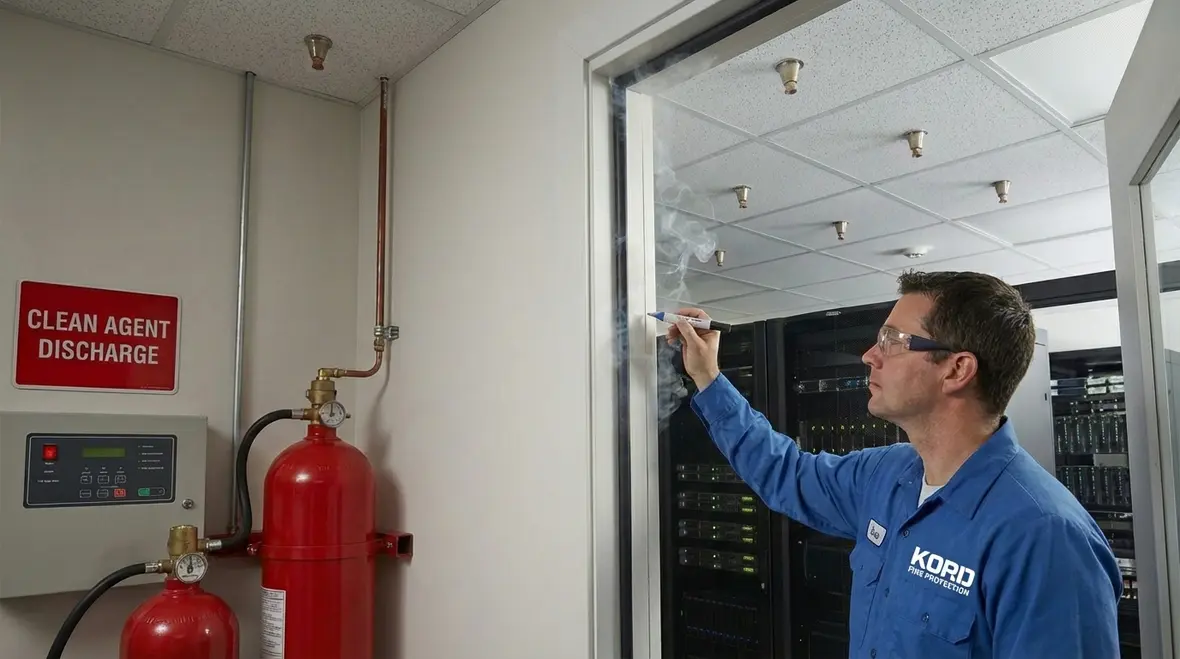
Film production no longer lives only on physical sets. Editing suites, data centers, and server rooms hold digital footage that cannot simply be rebuilt with lumber and paint. Therefore, studios use clean agent suppression systems in these areas.
Clean agents extinguish fire without water. They reduce oxygen or interrupt the chemical reaction of combustion. Importantly, they leave no residue. That means sensitive electronics remain unharmed.
Kord Fire Protection technicians typically assess room volume, air tightness, and equipment value before recommending a system. They also perform enclosure integrity tests. Because if a room leaks air, it may also leak suppression agent, which defeats the purpose.
Additionally, these systems integrate with alarms and ventilation controls. Once activated, they shut down air handlers to prevent agent loss. As a result, studios protect both their creative assets and their bottom line.
Fire Safety Planning During Active Productions
Film schedules move fast. One week a stage holds a quiet courtroom drama. The next week it transforms into a spaceship under siege. Therefore, fire protection plans must adapt quickly.
Kord Fire Protection technicians often attend pre production meetings when scripts involve open flames or pyrotechnics. They review fire watch requirements, confirm extinguisher placement, and coordinate with local fire authorities.
Moreover, temporary sets can alter sprinkler performance. Large scenic elements sometimes reach close to the ceiling. Consequently, technicians evaluate whether additional protection or modifications are needed.
Training also plays a vital role. Crew members learn how to report hazards, use extinguishers, and follow evacuation routes. Although it may not be as thrilling as rehearsing a stunt scene, it saves lives when seconds count.
Regulatory Compliance and Inspection in Los Angeles Studios
Los Angeles enforces strict fire codes. Studios must comply with local amendments, state regulations, and national standards. Therefore, documentation matters just as much as hardware.
Kord Fire Protection technicians handle routine inspections, testing, and maintenance. They check control valves, test alarm signals, inspect sprinkler heads for damage, and verify water supply pressure. Additionally, they maintain detailed service records for authorities having jurisdiction.
Because productions attract large crews and sometimes live audiences, occupancy limits and exit signage remain critical. Emergency lighting must function even during power loss. Consequently, backup generators and battery systems receive regular testing.
Compliance may sound dull. Yet in Hollywood, avoiding shutdown orders keeps productions on schedule and investors calm. And calm investors are almost as rare as a quiet film set.
For many facility teams, partnering with a provider who understands Regulation 4 testing services in Los Angeles streamlines inspections across sprinklers, standpipes, pumps, and alarms, reducing surprises when the fire department arrives on site.
Integrated Protection Layers in Modern Studio Facilities
Effective protection does not rely on a single device. Instead, it blends multiple systems into a coordinated strategy. The table below outlines how different components work together in film production environments.
| System Component | Primary Function |
| Automatic Sprinklers | Control or suppress fire growth in sets and storage areas |
| Fire Alarm Panels | Detect hazards and notify occupants and emergency services |
| Clean Agent Systems | Protect server rooms and editing suites without water damage |
| Fire Pumps | Maintain strong water pressure for large sound stages |
| Emergency Lighting | Guide safe evacuation during power failure |
When integrated properly, these elements create layered defense. Therefore, even if one safeguard encounters a limitation, others support the response.
What Should Studio Owners Ask About film studio fire protection systems los angeles?
Studio owners and facility managers often search for guidance in clear language. They want practical answers, not technical jargon. The right questions lead to stronger protection.
- First, they should ask whether their current sprinkler density matches present set configurations. As productions evolve, fuel loads change. Therefore, systems must keep pace.
- Second, they should review inspection records. Regular maintenance ensures reliability. Moreover, documented compliance protects against liability.
- Third, they should evaluate special hazard areas. Editing suites, archives, and high value storage rooms may need more than standard sprinklers.
Kord Fire Protection technicians encourage open dialogue. They explain complex concepts in plain terms. And occasionally, they add a gentle joke about how real fire safety is far less forgiving than a CGI explosion. The goal remains simple: protect people, property, and production schedules.
Frequently Asked Questions
Protecting the Show Must Go On
Hollywood thrives on spectacle. Yet behind every burst of cinematic flame stands a disciplined safety strategy. Film studio fire protection systems los angeles productions depend on are not optional extras. They are foundational. Kord Fire Protection technicians bring clarity, precision, and steady guidance to an industry built on imagination.
Studio owners who invest in proper design, inspection, and training protect more than buildings. They protect stories waiting to be told. Connect with experienced professionals today and ensure every scene ends safely. If your facility also needs formal certification, explore Kord’s Regulation 4 testing services to keep pumps, sprinklers, alarms, and standpipes in sync with Los Angeles requirements.
Know Your Weapon Before You Fight the Flame
Kord Fire Protection is your go-to when it comes to all things fire protection. For over 20 years, we’ve been serving Southern California with the quality service and equipment to keep your home or business safe at all times. Our competitive prices reflect our unwavering commitment to protecting what matters most in the event of a fire emergency. Give us a call, send an email, or use that form!

Join Our Newsletter!
Get the latest fire safety tips delivered straight to your inbox From our Newsletter.