
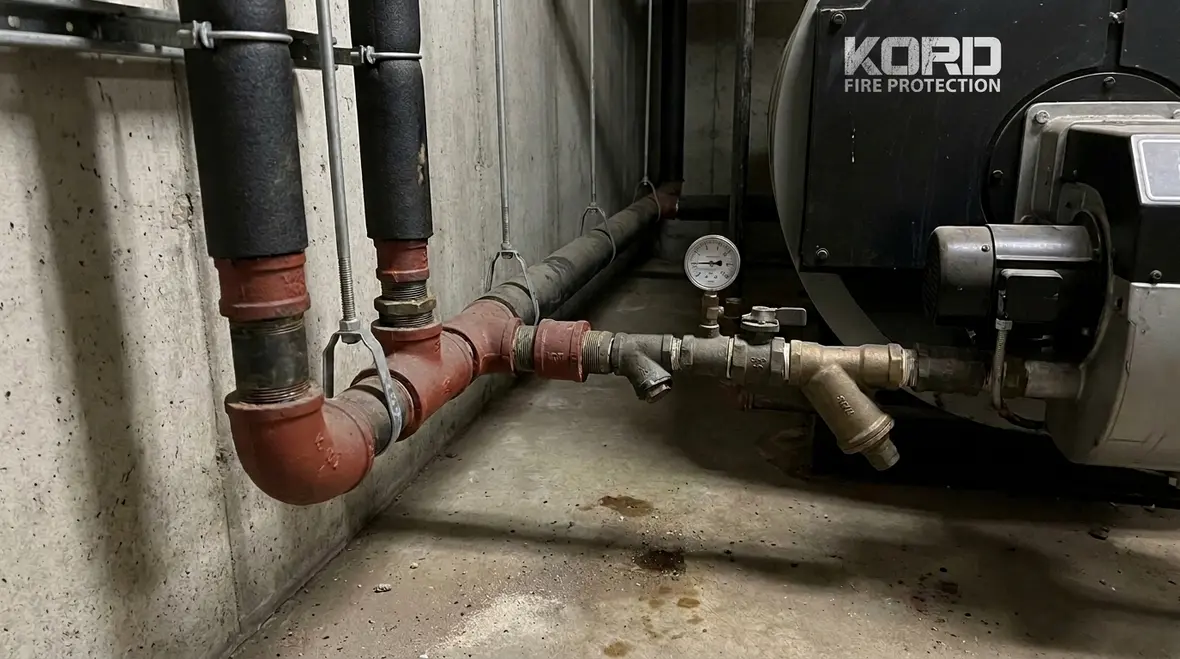
NFPA 31 Section 8.7: Fuel Supply and Return Piping Rules
Quick Answer
NFPA 31 Section 8.7 sets the rules for safe routing, sizing, support, and protection of fuel supply and return piping. It aims to control leaks, prevent improper flow, and maintain reliable operation for oil burning equipment. Compliance depends on correct materials, installation practices, and ongoing inspection.
For teams building a broader inspection and maintenance program around code compliance, Kord Fire Protection also offers inspection, testing, and maintenance support that fits naturally alongside fuel system reviews and recurring facility risk checks.
What does NFPA 31 Section 8.7 cover in practical terms?
NFPA 31 Section 8.7 focuses on fuel supply and return piping used with oil burning equipment. For commercial and industrial facilities, the intent is straightforward: the system must deliver fuel reliably to burners, return excess fuel or condensate as designed, and resist damage that could lead to leaks, ignition hazards, or unsafe operating conditions.
In most real world installations, the compliance risk does not come from a single component. It comes from how NFPA 31 fuel supply return piping is assembled across the system, from tank connections to burner manifolds, including routing, supports, valves, fittings, and termination points. Operations teams also face recurring failure points tied to vibration, heat exposure, corrosion, and poor maintenance access.
Key compliance drivers: leak control, flow control, and mechanical integrity
Section 8.7 requirements typically drive three outcomes during installation and life safety maintenance.
1) Leak control where failures actually happen
Leaks most often originate at transition areas. These include flexible connections, threaded fittings, unions, valve bodies, instrumentation points, and areas where piping passes through walls and floors. Facilities that treat piping as “standard plumbing” tend to underperform here because oil systems respond differently to temperature swings and vibration than water systems.
Compliance requires robust piping integrity plus careful attention to workmanship. Poorly aligned runs can preload joints. Missing or degraded gaskets can weep under suction. Loose supports can allow movement that gradually damages couplings and seats.
2) Flow control to prevent air binding and abnormal burner operation
Return piping is not optional for many oil burner arrangements. It supports stable pump performance and helps manage overflow or return flow patterns. Incorrect piping slope, improper routing, or incorrect return connection placement can cause air ingestion, fluctuating fuel delivery pressure, and erratic burner ignition.
These operational problems are also a maintenance issue. When burners cycle unexpectedly or lock out, technicians often “solve” symptoms by adjusting controls instead of correcting the piping system that enables stable fuel transport.
3) Mechanical integrity against heat, corrosion, and impact
Commercial sites routinely include condensate lines, steam piping, and electrical conduits near fuel lines. Heat exposure and environmental corrosion can degrade components that were suitable at commissioning but fail under long term conditions. Physical protection matters where forklifts, carts, or maintenance traffic can impact piping.
Installation realities: routing, supports, and component selection
Even when drawings look compliant, field conditions often create nonconformities. Section 8.7 compliance depends on how piping is routed and supported through the facility life cycle.
Routing that avoids damage and maintains proper operation
Routing should minimize exposure to excessive heat sources and avoid areas where piping can become a tripping hazard, a collision target, or an obstruction for service access. Where piping passes through structural elements, proper protection and sealing help prevent hidden leaks and maintain fire resistance boundaries.
Routing also affects hydraulic behavior. Improper high points can trap air in return lines. Improper low points can create sediment traps or allow debris accumulation. Those issues can translate into pump performance changes that create recurring service calls.
Supports and hangers that control movement over time
Piping supports should limit movement caused by thermal expansion, vibration from the burner and pump, and settling of building components. Unsupported runs can place bending loads on valves, strainers, and burner fittings.
A common commercial failure pattern is gradual loosening at joints. When the system experiences repeated thermal cycles, vibration can loosen fittings that were initially hand tight or incorrectly torqued. The result can be “micro leaks” that grow after corrosion begins.
Fittings, valves, and unions that support inspection and repair
Section 8.7 compliance includes the expectation that components selected and installed will support safe operation and practical maintenance. That includes the ability to inspect and service strainers, check valves, and shutoff devices without causing unsafe disassembly.
Facilities that install components in concealed locations often create a compliance gap during inspections because maintenance teams cannot verify condition, identify corrosion, or confirm leakage integrity.
Common failure points during commissioning and ongoing service
Experienced burner technicians often identify issues tied to fuel supply return piping before they become emergency events. The following failure points show up repeatedly in commercial facilities.
Air entrainment and unstable return performance
Air ingestion typically presents as fluctuating burner flame stability, unusual pump noise, and erratic ignition cycles. Air can enter the system when return routing creates high points or when fittings allow vacuum leaks. In multi equipment boiler rooms, interconnection errors can also cause cross influence and unstable flow.
Sediment accumulation and flow restriction
Sediment in return lines can restrict flow and increase pump stress. Debris sources include tank water draws, degraded fuel, and scale or residue from older components. Restricted return flow can lead to overheating and premature wear of pump internals.
Maintenance practices that skip strainers or do not document cleaning intervals often lead to avoidable downtime and reduced system reliability.
Corrosion, weeping joints, and degraded seals
Small leaks may start at threaded joints, gasketed connections, or unions. Over time, oil odor, staining, and visible residue can show up around joints. Even if leakage seems minor, it can create fire load risk and environmental compliance issues.
Commercial facilities also encounter corrosion from cleaning agents used in adjacent areas. A practical compliance review includes checking nearby chemical storage practices and housekeeping products that can contact piping surfaces.
Inspection, testing, and documentation for ongoing compliance
NFPA compliance for fuel piping is not a one time event. It requires a continuous process of inspection, testing, and corrective action. Facility owners should expect verification items to include visible leak checks, confirmation of correct component condition, and validation that the piping supports and routing remain intact after maintenance and operational changes.
In practice, a strong inspection program addresses:
- Visual inspection for wetting, staining, odor evidence, and deteriorated fittings along the fuel supply and return runs
- Verification that valves, unions, and strainers remain accessible and are not blocked by piping insulation modifications or equipment relocation
- Review of burner pump behavior for signs of air entrainment or return flow problems
- Assessment of corrosion protection and proper seating or gasket condition at critical joints
- Confirmation that supports prevent excessive movement and that piping is not rubbing against other systems
For a practical guide to oil burning installation requirements and typical compliance considerations, facilities often pair their Section 8.7 review with an equipment specific checklist. See NFPA 31: a practical guide to oil burning equipment installation from Kord Fire Protection for helpful installation context and common field implementation challenges.
How Kord Fire Protection supports commercial NFPA 31 compliance
Commercial, industrial, and retail facilities face unique constraints: frequent tenant activity, limited shutdown windows, and maintenance teams that must keep systems reliable under strict operational schedules. Kord Fire Protection supports ongoing compliance by aligning inspection and maintenance tasks with real operating risk.
As a practical partner, Kord Fire Protection helps teams address:
- Fuel system inspection planning that accounts for service access and documentation needs
- Corrective actions for leaks, return flow anomalies, and damaged or deteriorated components
- Maintenance recommendations that reduce repeat failures and improve burner operating stability
- Coordination with facility operations to minimize downtime and keep compliance on track
Frequently Asked Questions
Call to action
Ensure your fuel supply and return runs support safe, stable burner operation and ongoing NFPA 31 compliance. Contact Kord Fire Protection to schedule a targeted inspection of your NFPA 31 fuel supply return piping, identify risks early, and implement practical corrective actions before operational failures occur.

Join Our Newsletter!
Get the latest fire safety tips delivered straight to your inbox From our Newsletter.



