

Halon Replacement Clean Agent Systems for Fire Protection
Halon Replacement Clean Agent Systems for Modern Fire Protection
Many facilities still rely on legacy Halon systems, yet today’s rules and environmental goals make Halon replacement fire suppression a practical path forward. In the right setup, clean agent systems protect high value spaces without leaving messy residue, and that matters when equipment uptime is the real boss. In other words, nobody wants a sprinkler event that turns a server room into a damp science experiment.
As the industry moves away from Halon, owners need solutions that keep coverage effective while reducing emissions risk. Therefore, this article explains how Halon replacement clean agent systems work, what to plan, and why Kord Fire Protection can become a vital partner when the job involves more than just swapping cylinders.
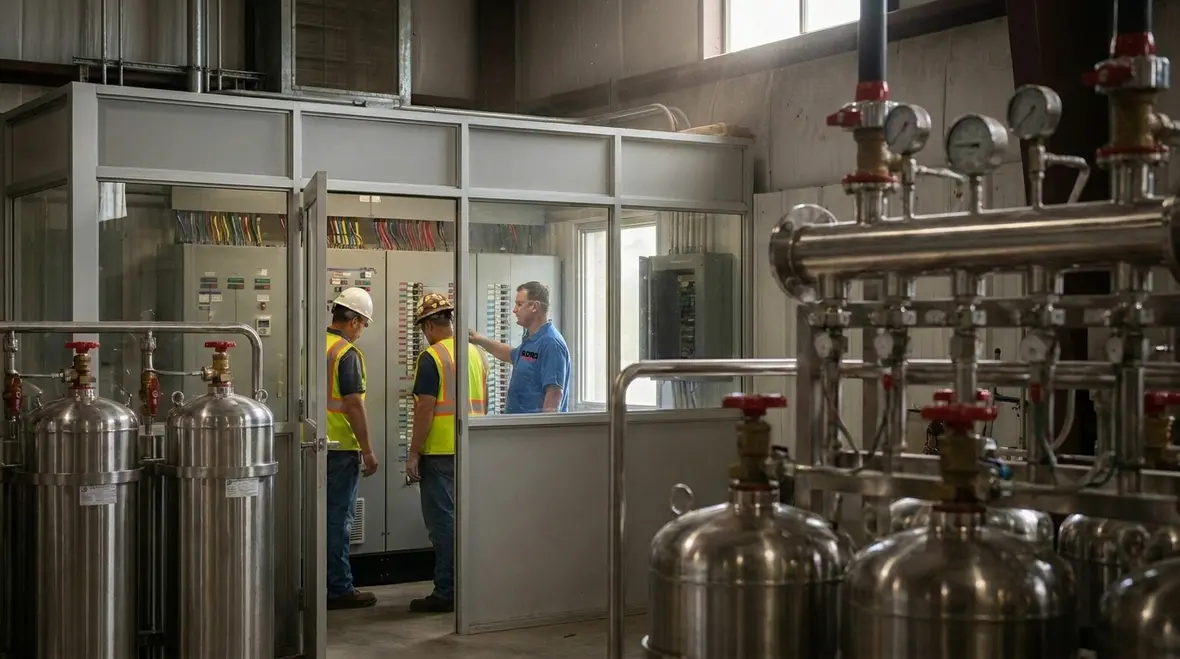
Why Facilities Move Off Halon Replacement Clean Agent Technology
Facilities typically change systems for a few reasons, and they usually show up at the worst time, like when a regulator asks pointed questions at an annual review meeting. Halon production and handling limits have driven a shift toward clean agents that meet modern standards.
Additionally, owners often want faster post incident recovery and less downtime. Clean agents disperse quickly and avoid the corrosion and cleanup that can follow other suppression approaches. However, the best system depends on the hazard type, room layout, ventilation, and the operational habits of the space.
So, the move off Halon is not just a compliance checkbox. It is a safety and continuity decision, and it should be planned like a project, not like a last minute “patch it and pray” moment.
The practical reasons owners finally act
Most owners do not wake up one morning and say, “Today feels like a great day to retrofit a suppression system.” Usually, the push comes from a mix of aging hardware, tighter environmental expectations, insurer concerns, and the reality that legacy components do not get easier to source with time. At some point, the math starts looking obvious. A planned upgrade is cheaper than a rushed response, easier than chasing obsolete parts, and far less stressful than explaining to leadership why a critical space still depends on yesterday’s technology.
That is also why many organizations compare newer solutions through resources like Kord Fire Protection’s guide to clean agent vs traditional fire suppression systems and broader clean agent fire suppression services before they commit to a retrofit path.
How Clean Agents Protect Without the Mess
Clean agent systems typically release a gaseous suppressant into an enclosed space. In most designs, the agent reduces fire growth and helps stop combustion by interrupting the chemical reaction and limiting oxygen availability. As a result, the fire has fewer pathways to keep spreading.
Since these systems work in total flooding applications, they also require good integrity in the protected space. Therefore, designers evaluate room sealing, door positions, penetrations, and air handling operation. If a room leaks like a screen door in a hurricane, the system cannot perform as intended.
Meanwhile, detection and release timing must match the hazard. Proper zoning, smoke detection choice, and alarm logic prevent nuisance releases and ensure the system activates when it should.
Why residue free suppression matters in high value spaces
The big appeal is not just that the fire goes out. It is that the room has a fighting chance of staying operational afterward. In data centers, telecom rooms, archives, control rooms, and other sensitive environments, water damage can become the sequel nobody asked for. A small fire event can turn into a large restoration project if the suppression method drenches hardware, paper records, finished interiors, or specialty equipment. Clean agents help owners avoid that second layer of damage, which is why they are often selected where continuity matters just as much as initial suppression.
For owners protecting technology rich environments, related Kord Fire resources such as data center clean agent fire suppression guidance and gas suppression system planning for server rooms add useful context when uptime is the real priority.
Design and Engineering Steps That Keep Performance Real
Successful retrofit projects rely on solid engineering, not guesswork. First, the team confirms the hazard classification, including fuel load, ventilation rates, and expected fire scenarios. Then they select the agent type that best fits the occupancy and equipment.
After that, engineers size the total flooding concentration, verify enclosure conditions, and define release strategy. They also plan for the interface with existing hardware. For example, an owner may already have detection wiring, control panels, and discharge piping that can be reused, while other components need replacement.
Importantly, the project should include verification steps. The system needs acceptance testing after installation, and the facility should document performance checks so future maintenance stays clear and accountable.
In this stage, Kord Fire Protection can help keep the job moving with a methodical approach. They can coordinate engineering details, installation coordination, and commissioning so the upgrade does not drag on like a slow network connection at 2 AM.
What engineers look at before anyone touches a cylinder
A proper Halon replacement project begins with understanding the room as it actually operates, not as it looked on an old as built drawing from another decade. That means reviewing enclosure leakage paths, cable penetrations, door hardware, HVAC behavior, storage constraints, release controls, and the exact nature of the protected hazard. If the space includes rotating staff, shared occupancy, or mission critical equipment that cannot tolerate false trips, that operational reality needs to shape the design. Good engineering is what separates a system that merely exists from one that performs when the pressure is on.
Owners who want a deeper standards based view can also explore Kord Fire’s clean agent standard overview, which reinforces why enclosure integrity, hold time, and acceptance testing cannot be treated like optional extras.
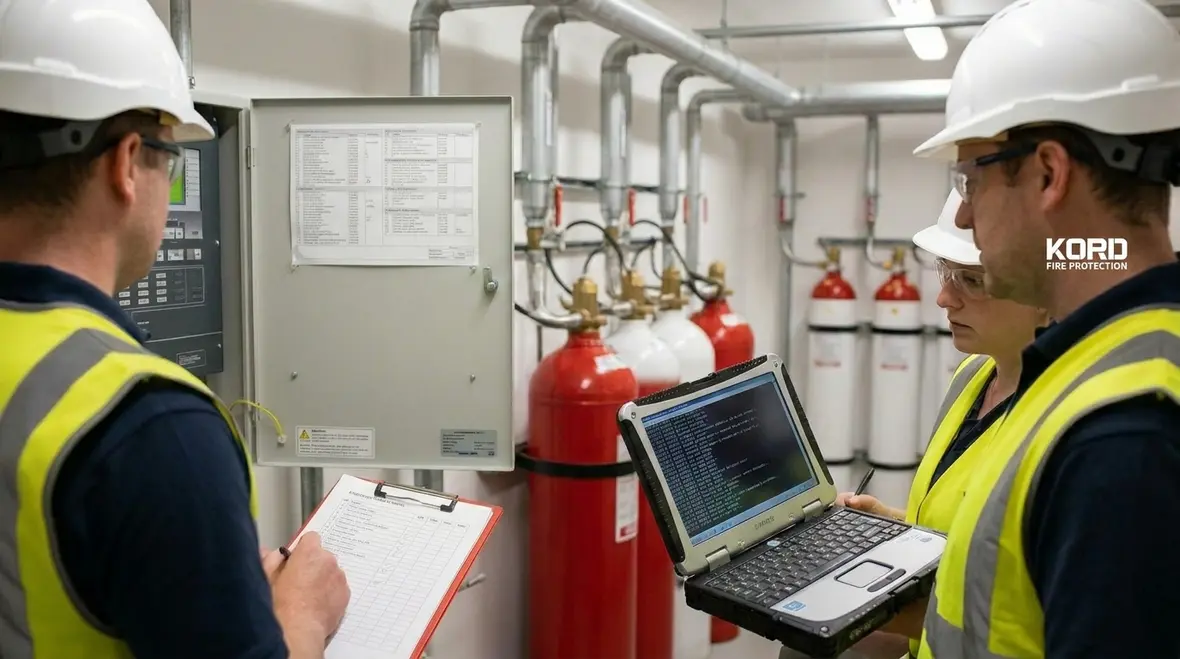
What Owners Should Expect During a Retrofit Project
Retrofits rarely feel clean and simple, even when the agent itself is “clean.” Therefore, owners should plan for site access, downtime windows, and staged installation. It is wise to confirm how the facility will operate while portions of the system are offline.
Next, the team reviews labeling, documentation, and training needs. A system is only as useful as the people who can respond to it. Staff must know alarm tones, evacuation expectations, and where to find the system documentation.
Also, owners should plan for environmental and storage considerations. Cylinder placement, ventilation clearances, and maintenance access all matter. Then comes the commissioning period, where the system checks wiring, initiating devices, release sequences, and alarms.
Finally, a good partner like Kord Fire Protection aligns the handoff. They make sure stakeholders understand the system’s operation, what changes were made, and what future maintenance cycles look like.
Downtime planning is part of the protection plan
This is the stage where schedules become very real. Owners may need after hours access, phased shutdowns, temporary impairment procedures, updated signage, or revised communication plans while portions of the system are under modification. In occupied or continuously operating facilities, that coordination matters almost as much as the hardware itself. The smoother the planning, the less likely the project turns into a juggling act where everyone pretends the balls are not already on fire.
Operations, Maintenance, and Compliance That Do Not Fall Apart
Once the system installs, owners should not treat it like a set of decorative smoke detectors. Clean agent systems still require scheduled inspections, testing, and documentation updates.
For maintenance, the basics stay the same: initiating devices must be tested, control panels must be verified, and discharge components need to remain accessible and in good condition. Additionally, technicians should inspect enclosure integrity and confirm ventilation schedules match the design assumptions.
Compliance work also continues after commissioning. Authorities typically expect inspection records, proper labeling, and evidence the system performs within required limits. By keeping documentation organized, facilities reduce headaches during audits.
Kord Fire Protection can serve as a vital partner here, because strong service relationships often prevent issues before they turn into emergencies. They help owners keep systems reliable through the seasons and through the chaos of real-world operations.
Why service support matters after the install crew leaves
A clean agent retrofit is not finished just because the cylinders are in place and the paperwork has a signature on it. Systems live in changing buildings. Rooms get new penetrations. Ventilation schedules shift. Equipment loads evolve. Staff turns over. Without consistent inspections and service, the assumptions behind the original design can drift, and that is how reliable systems quietly become questionable ones. Ongoing maintenance keeps the protection aligned with the way the facility really runs.
That is also where Kord Fire’s broader support for fire alarm service systems and related suppression maintenance can help owners keep detection, notification, and release functions working together instead of drifting into separate little islands of confusion.
When Kord Fire Protection Becomes the Vital Partner
In many projects, the difference between “installed” and “installed right” comes down to coordination. Kord Fire Protection can support Halon replacement fire suppression work by combining practical field knowledge with a process that respects the details owners do not see.
For instance, they can help evaluate what existing components can remain in service and what must be replaced for safe, reliable performance. They can also support planning for testing windows so operations do not stall longer than necessary.
And yes, sometimes the hardest part is not the hardware. It is communication. Therefore, a partner that keeps everyone aligned, from facility staff to contractors to inspectors, saves time and reduces costly rework.
Think of it like bringing a competent producer to a movie set. The cameras still roll, but fewer scenes get reshot, and the project finishes without drama.
Near the end of the process, owners often need one place to tie design, installation, testing, and long term support together. That is where service pages like clean agent fire suppression system services, clean agent fire suppression for critical equipment, and the related clean agent fire suppression support page become useful next steps for turning a general plan into an actual project schedule.
FAQ
Ready to Upgrade With a Confident Plan
Replacing Halon requires more than swapping cylinders. It demands correct engineering, solid installation, and dependable commissioning so the system protects the hazard as intended. Kord Fire Protection can help facilities plan the retrofit, reduce downtime, and maintain compliance with clear documentation and service support.
If your organization needs Halon replacement fire suppression, act now and schedule an assessment. Get a tailored roadmap, realistic timelines, and a partner that treats safety like it is the main event. To take the next step, review clean agent fire suppression services or visit clean agent fire suppression for critical equipment for a more focused look at protecting uptime sensitive spaces.

Join Our Newsletter!
Get the latest fire safety tips delivered straight to your inbox From our Newsletter.



