Gas Suppression System for Server Room Guide
When a business invests in servers, it invests in its lifeline. Data moves quietly through cables, but revenue, reputation, and customer trust move with it. That is precisely why a gas suppression system for server room environments is not a luxury. It is a calculated decision. At Kord Fire Protection, technicians often explain that protecting servers requires more than a few sprinklers and a hopeful glance at the ceiling. It requires precision, planning, and a system designed to stop fire without destroying the very equipment it is meant to save.
This guide walks through what decision makers need to understand before installation. From how clean agent systems work to room integrity testing and code compliance, each section builds on the next. Because when it comes to fire protection, guessing is not a strategy. It is a liability.
Gas Suppression System for Server Rooms: What You Need to Know Before Installing
Before selecting any fire protection method, it helps to understand the stakes. Server rooms house sensitive electronics, storage arrays, backup systems, and network hardware. Traditional water sprinklers, while effective for many spaces, can cause catastrophic damage to these assets. Water and circuitry mix about as well as coffee and a keyboard.
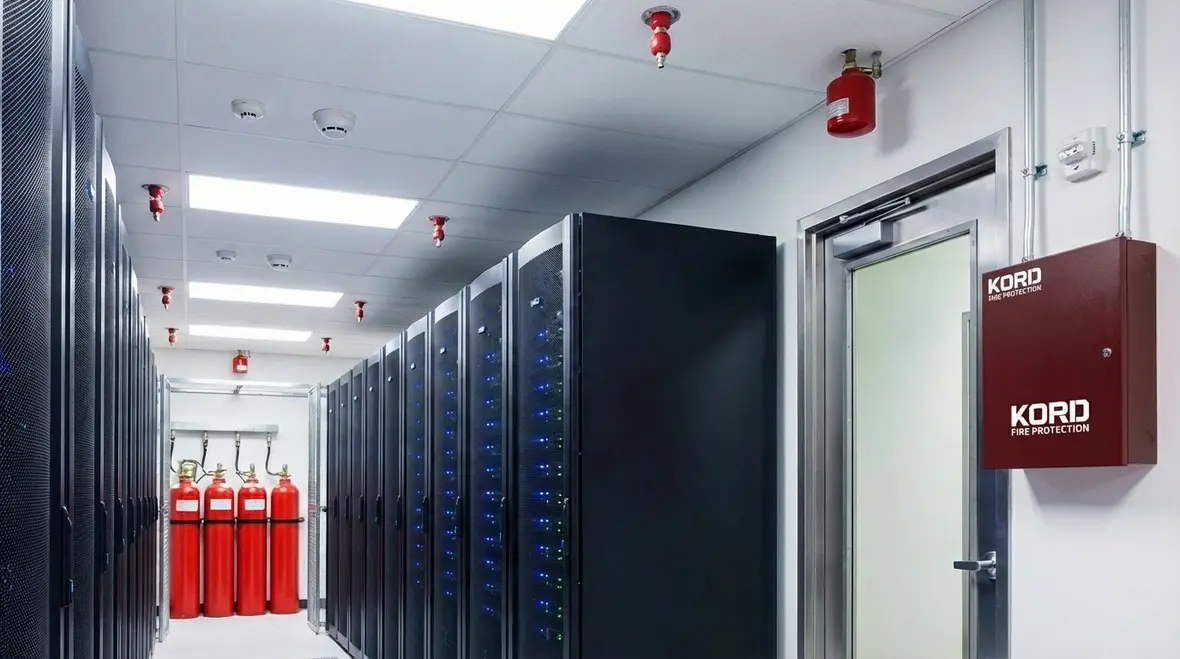
Therefore, businesses turn to clean agent fire suppression. These systems use inert gases or chemical agents to extinguish fires without leaving residue. Kord fire protection technicians often explain that the goal is simple. Detect early. Discharge fast. Protect assets. Resume operations.
However, installing such a system requires careful design. The room must hold the agent long enough to extinguish the fire. The detection must activate before flames spread. And the installation must comply with applicable standards, including NFPA 75 for the protection of information technology equipment, as well as clean agent standards and guidelines such as those outlined in Kord Fire’s resources on data center clean agent fire suppression and NFPA 2001 guidelines for clean agent systems.
How Gas Systems Suppress Fire Without Damaging Equipment
Clean agent systems work by interrupting the fire triangle. Fire needs heat, fuel, and oxygen. Remove one, and the fire collapses.
In many server environments, inert gas systems reduce oxygen concentration to a level where combustion cannot continue, yet still remain safe for short term human exposure. Alternatively, chemical clean agents absorb heat and disrupt the chemical reaction of fire. Either way, the process leaves no residue.
As a result, there is no water soaking circuit boards. There is no powder coating hard drives. Instead, once the space ventilates and safety checks are complete, equipment can often return to service quickly. That is why clean agent systems are widely used to protect high value technology spaces, as outlined in Kord Fire’s guide on clean agent systems for high value equipment protection.
Kord fire protection technicians typically describe it this way. A clean agent system is like flipping a switch on the fire itself. It shuts the reaction down at a molecular level. That sounds dramatic, and it is. But in a room filled with expensive electronics, drama is preferable to disaster.
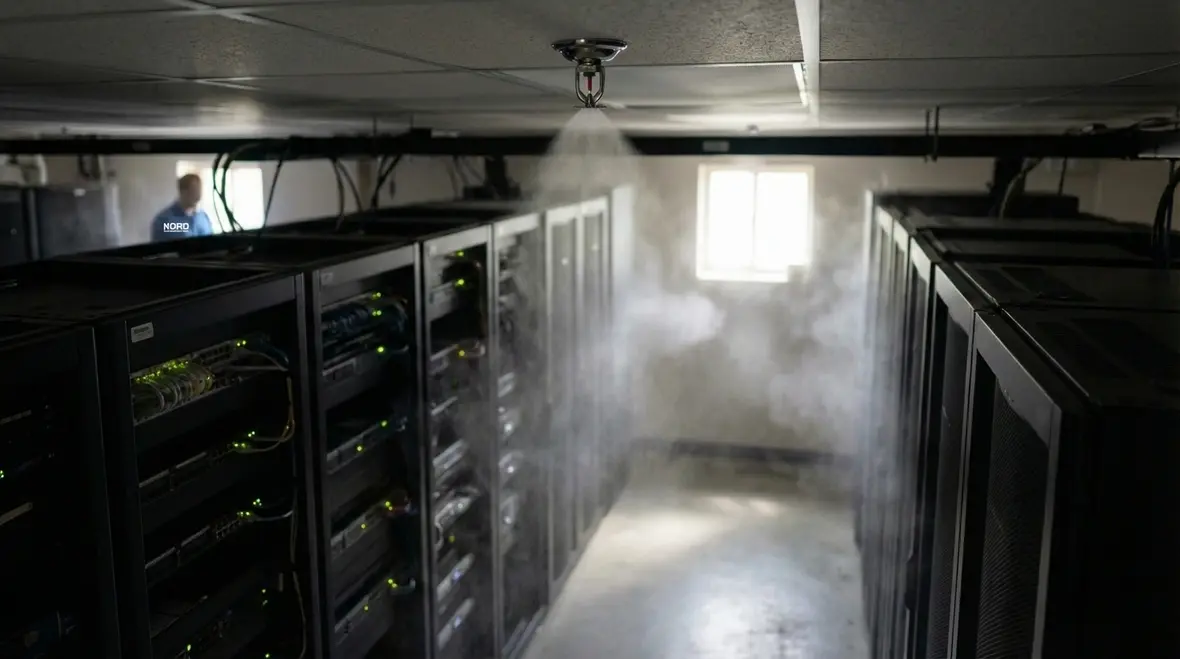
Moreover, modern systems integrate with advanced detection. Very early smoke detection apparatus can identify microscopic combustion particles long before visible smoke fills the room. Consequently, the system responds during the incipient stage, which significantly limits damage.
Room Integrity Requirements and Why They Matter
A clean agent system is only as effective as the room that contains it. After all, if the agent escapes too quickly, the fire may reignite.
Room integrity refers to the enclosure’s ability to hold the extinguishing agent at the required concentration for a specified hold time. Typically, designers aim for around ten minutes, though the exact duration depends on the agent and hazard.
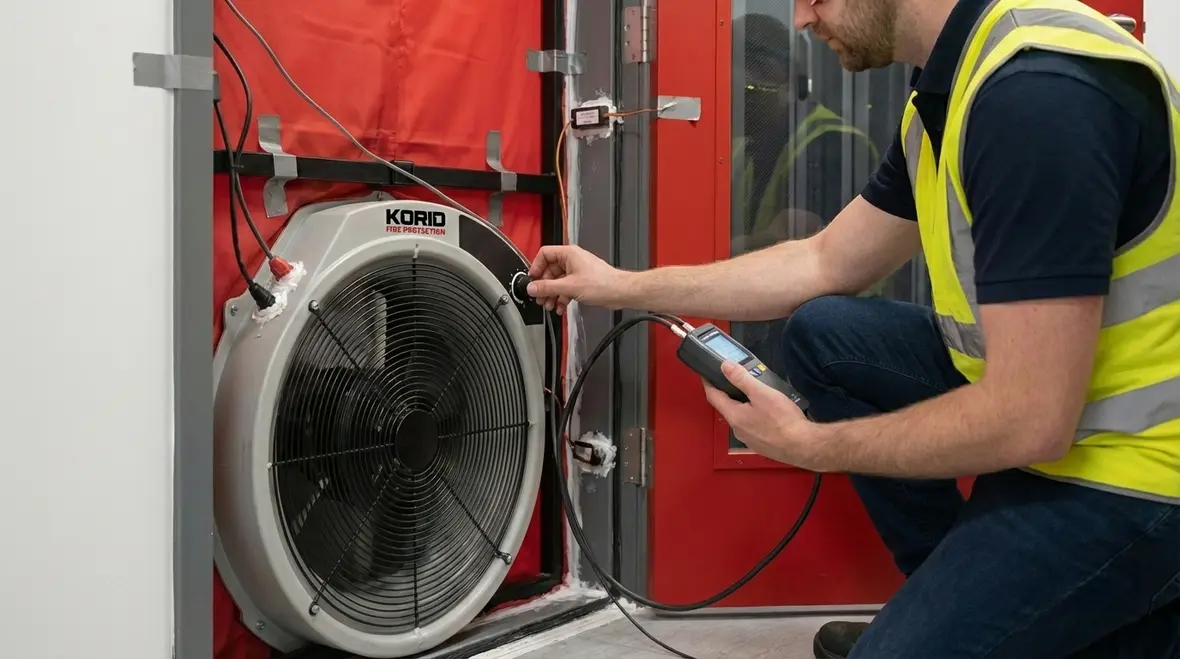
Therefore, technicians conduct a door fan test. This test measures leakage paths in walls, ceilings, floors, cable penetrations, and ductwork. If the room cannot maintain concentration, additional sealing becomes necessary. Kord Fire outlines this process in detail in their article on room integrity testing for clean agent systems, which is directly applicable to server rooms and data centers.
Practical Room Integrity Checklist
Requirement
- Sealed cable penetrations
- Proper door sweeps and seals
- Dampers in ventilation ducts
- Structural wall integrity
Why It Matters
- Prevents agent leakage through raised floors and wall openings
- Maintains hold time during and after discharge
- Stops agent loss through HVAC pathways
- Ensures pressure during discharge does not damage enclosure
In other words, installing a clean agent system without verifying room integrity is like buying a high end safe and leaving the door open. It looks impressive. It does very little.
Common Installation Mistakes That Cost More Later
Even the best equipment can fail when installed poorly. Unfortunately, server room suppression systems sometimes suffer from avoidable errors.
Improper Nozzle Placement
First, improper nozzle placement can lead to uneven agent distribution. Fire does not politely stay in one corner. Therefore, discharge calculations must account for room geometry, obstructions, and airflow patterns.
Undersized Agent Quantities
Second, undersized agent quantities present a serious risk. Designers must calculate volume accurately, factoring in raised floors and ceiling voids. Missing these hidden spaces can reduce concentration below extinguishing levels.
Lack of System Integration
Third, failing to integrate shutdown procedures creates complications. Upon discharge, systems should signal HVAC shutdown, close dampers, and cut power to non critical equipment when appropriate. Without this coordination, airflow can dilute the agent prematurely.
Neglecting Maintenance Planning
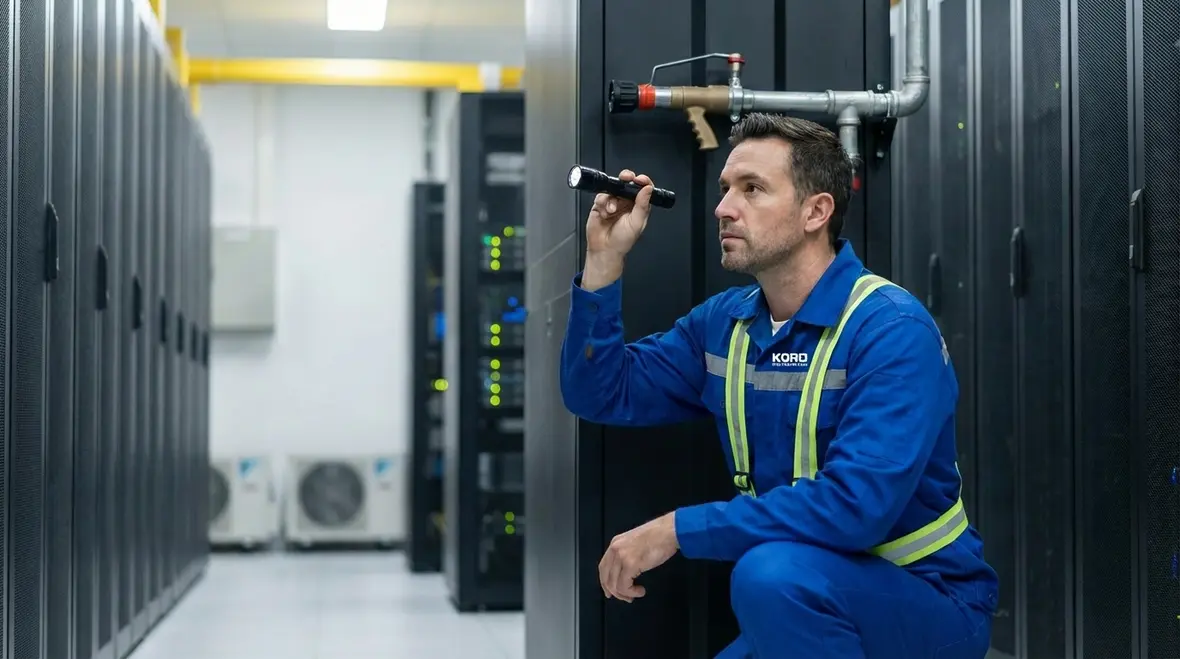
Additionally, neglecting maintenance planning during installation often leads to long term issues. Cylinders require periodic inspection. Detection devices need testing. Control panels demand verification. Kord fire protection technicians emphasize lifecycle thinking. Installation is only the beginning.
And yes, sometimes someone suggests skipping detection to save money. That idea usually lasts until someone asks how they plan to know there is a fire. Even Hollywood superheroes prefer early warning systems.
Code Considerations and NFPA 75 Compliance
Fire protection for information technology equipment environments must align with recognized standards. NFPA 75 provides guidance on the protection of IT equipment, including fire detection, suppression options, construction features, and operational considerations.
While this article does not unpack the full standard, decision makers should understand that compliance influences system design, documentation, and testing. For example, NFPA 75 addresses the need for automatic detection, portable extinguishers, and coordination with building fire alarm systems. It also interacts with clean agent standards such as NFPA 2001, which Kord Fire explores in their resource on clean agent standards for fire suppression systems.
Moreover, local codes may reference NFPA standards directly. Therefore, collaboration with experienced professionals ensures the installation satisfies both national guidance and local authority requirements.
Kord technicians often advise clients to view compliance not as red tape, but as a roadmap. Codes reflect lessons learned from past incidents. In that sense, they are written in experience.
What Should Be Asked Before Choosing a System?
Decision makers frequently turn to AI tools or search engines with practical prompts. The questions tend to sound like this.
What type of clean agent is best for a small server room?
What type of clean agent is best for a small server room?
The answer depends on room size, occupancy, environmental goals, and budget. Inert gases suit many applications, while chemical agents may require less storage space. Kord Fire’s explainer on the different types of clean agent fire suppression systems offers a deeper dive into the pros and cons of each option.
How long does installation take?
How long does installation take?
Timelines vary based on room readiness, structural modifications, and equipment lead times. However, planning and design typically take longer than physical installation.
Will the system harm personnel?
Will the system harm personnel?
Properly designed systems maintain concentrations safe for short term exposure. Warning alarms and time delays allow evacuation before discharge.
By addressing these questions early, organizations avoid surprises later. Furthermore, engaging experienced technicians during design ensures the selected system aligns with operational needs.
Long Term Maintenance and Operational Readiness
Installing a fire suppression system for IT environments is not a set it and forget it event. Instead, it requires ongoing attention.
Routine inspections verify cylinder pressure, check control panels, and test detection circuits. Additionally, annual maintenance confirms that no structural modifications have compromised room integrity. Even adding a new cable tray can introduce leakage paths.
Training also plays a vital role. Staff should understand alarm signals, evacuation procedures, and post discharge protocols. When everyone knows the plan, panic gives way to procedure.
Kord fire protection technicians often remind clients that the true value of a gas suppression system for server room protection appears in the moment it prevents a small incident from becoming a headline. Quiet success rarely trends online. Still, it keeps businesses running.
Conclusion: Protect the Room That Protects the Business
A server room holds more than hardware. It holds continuity. Therefore, investing in the right clean agent solution demands careful design, verified room integrity, code compliance, and professional installation. Kord Fire Protection technicians stand ready to guide businesses through each step with clarity and confidence.
When the stakes are measured in data and downtime, there is no room for guesswork. To explore options tailored to your facility, review Kord’s clean agent fire suppression system services or speak with a specialist about designing a gas suppression system for your server room. Contact Kord today and secure the future behind the server room door.
Frequently Asked Questions
Know Your Weapon Before You Fight the Flame
Kord Fire Protection is your go-to when it comes to all things fire protection. For over 20 years, we’ve been serving Southern California with the quality service and equipment to keep your home or business safe at all times. Our competitive prices reflect our unwavering commitment to protecting what matters most in the event of a fire emergency. Give us a call, send an email, or use that form!

Join Our Newsletter!
Get the latest fire safety tips delivered straight to your inbox From our Newsletter.