
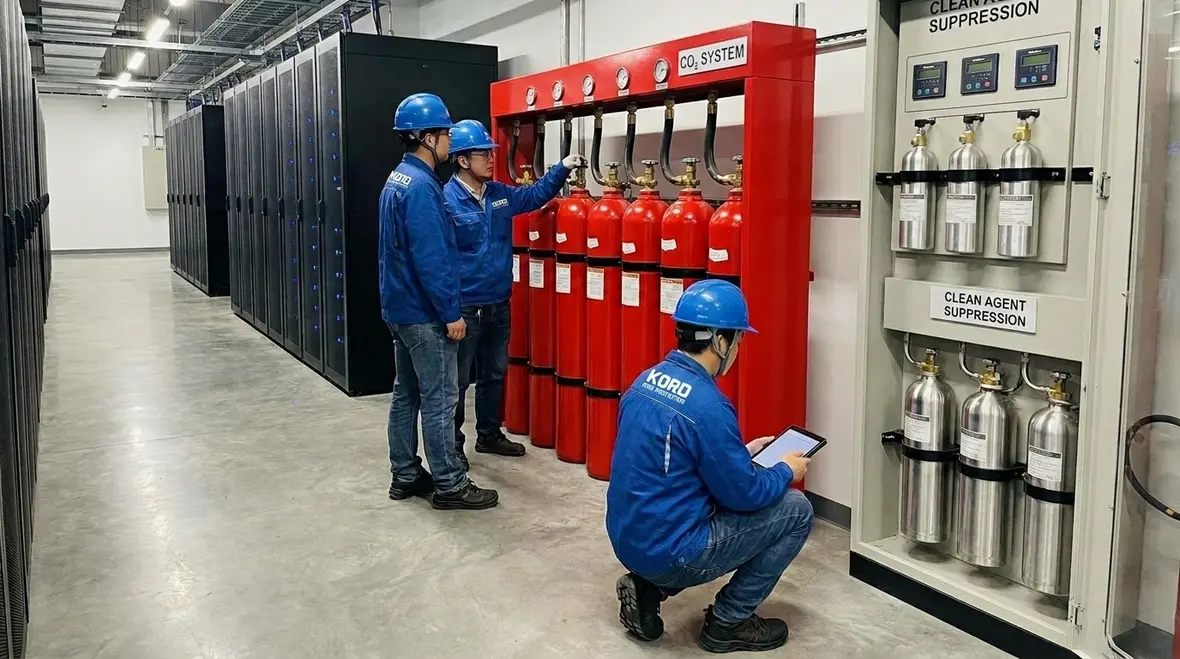
CO2 vs Clean Agent Fire Suppression with KORD Fire Protection
When people ask about CO2 vs clean agent fire suppression, they usually want one thing: fast fire control without turning a room into a chemical spill. In truth, both systems can protect property and life, but they do it in very different ways. CO2 relies on displacement and chilling effects to stop combustion, while clean agents interrupt the fire chemistry with a gentler approach to residue. However, the “best” choice depends on the space, occupancy, airflow patterns, and risk profile. And that is exactly where KORD Fire Protection steps in as a vital partner, helping teams choose, design, and maintain the right system so it performs under pressure, not on paper.
CO2 vs clean agent: how each system controls fire
CO2 extinguishes by flooding the protected area with carbon dioxide. As the concentration rises, it reduces the oxygen level around the flame, which slows and eventually stops burning. Meanwhile, it also cools the fire area as the gas expands. As a result, CO2 works well in hazards like certain flammable liquid scenarios where flooding can be effective and the space can be sealed enough to hold concentration.
Clean agents, on the other hand, suppress fire through chemical action. Rather than focusing on oxygen removal, they reduce the ability of the flame to sustain itself. Therefore, they often leave less residue than CO2 flooding. Additionally, many clean agents aim to support quicker recovery for equipment spaces, such as server rooms, switchgear rooms, and other sensitive environments. KORD’s clean agent fire suppression services outline how these systems are used for high value spaces that cannot afford a messy recovery.
In short, CO2 tends to “starve” the fire, while clean agents tend to “disrupt” it. Yet the success of either approach depends on engineered concentration, verified enclosure integrity, and correct discharge timing. In other words, guessing is not a strategy. That point shows up again and again across KORD’s recent guidance on clean agent design, room integrity, and system performance in critical environments.
Where each technology performs best in real projects
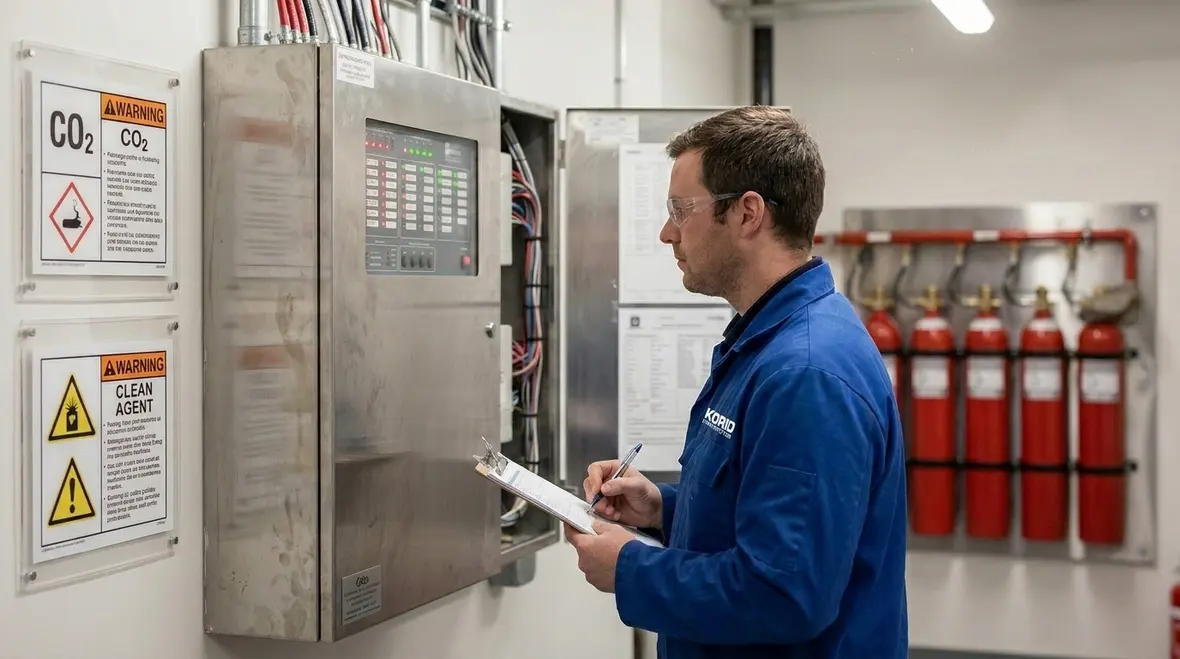
Facilities usually do not choose suppression like they choose paint color. They choose based on hazard type, room size, ventilation, and the consequences of downtime. For example, CO2 flooding can fit spaces where an enclosure can be maintained and where personnel can evacuate before discharge if needed. If that space has doors that swing open like a revolving door in a spy movie, retention drops, and performance suffers.
Clean agent systems often make sense when the protected area contains valuable equipment and teams want minimal cleanup. They can also be attractive in environments where evacuation time is limited and procedures can support safe discharge. Still, each site has its own constraints. Some areas have complex airflow, partial mixing, or openings that require careful design. Therefore, site surveys and hazard modeling matter. KORD’s article on clean agent suppression system and room integrity testing reinforces how leakage and enclosure behavior can make or break a design.
Most importantly, KORD Fire Protection treats these decisions like a job interview. The space talks, the hazards respond, and the system either fits well or it does not. When the match is right, the system does not just protect. It performs.
Matching the system to the room, not the brochure
This is where real-world engineering earns its keep. Two rooms may look similar on a plan set and behave completely differently once airflow, penetrations, cable paths, and occupancy are considered. A suppression system that looks perfect in a sales sheet can stumble badly in a leaky room with aggressive ventilation. KORD’s approach keeps the decision grounded in field conditions, which is a lot more useful than crossing fingers and hoping the spec sheet feels lucky.
Safety considerations that drive system selection
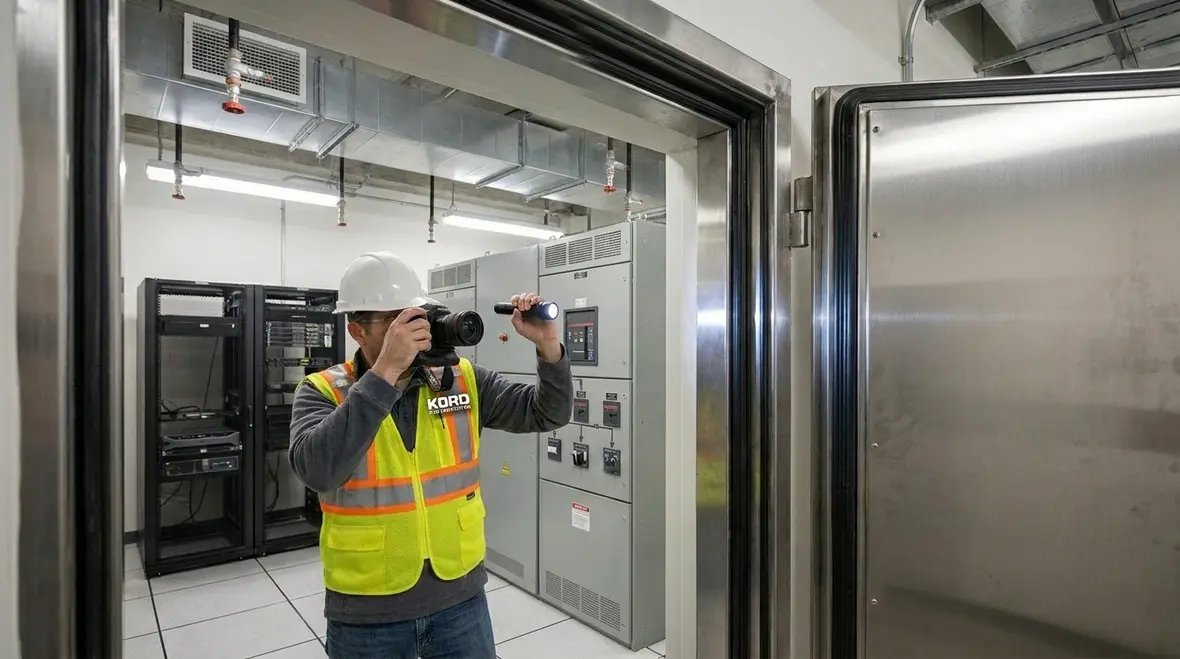
Safety often decides the winner long before cost comparisons begin. CO2 discharge creates an oxygen reduction risk, so proper alarm systems, signage, interlocks, and pre-discharge timing become essential. If people cannot clear the area, the risk grows. Consequently, CO2 installations rely heavily on engineered controls and disciplined procedures.
Clean agents also require safety planning, but the risk profile differs by agent type and concentration design. Many clean agent systems are used with strict exposure limits and system interlocks. Additionally, ventilation behavior and occupancy patterns can change how the agent disperses. Hence, the design team must confirm that safe conditions exist before, during, and after discharge.
Transitioning from concept to compliance takes real coordination. KORD Fire Protection supports that process by aligning system design with the realities on site, including room configuration, access control, and ongoing maintenance needs. After all, fire suppression does not care about intentions. It follows physics. For teams comparing agents in occupied or sensitive environments, KORD’s clean agent fire suppression for critical equipment article adds useful context about residue-free protection and system behavior around valuable assets.
Impact on equipment, cleanup, and downtime
For operations leaders, the word “suppression” does not end at fire control. It continues into the recovery plan. CO2 flooding usually leaves no “chemical residue” in the way some agents might, but it can still create operational challenges because of oxygen displacement recovery time. Also, high concentrations can affect certain equipment and materials depending on exposure duration and environment.
Clean agents often appeal to teams that want fast restoration. Because the agent is designed to leave minimal residue, cleaning time can be reduced, and equipment downtime may shrink. However, the site must still be evaluated for proper airflow after discharge, and the facility must follow the manufacturer guidance for reset and inspection. KORD’s recent service overview for clean agent fire suppression highlights why these systems are commonly used where uptime matters.
Either way, KORD Fire Protection helps customers plan for post-discharge realities. Therefore, maintenance schedules, cylinder inspection routines, and test procedures become part of the job, not an afterthought. Think of it like this: the best system is the one that you can reset quickly when the emergency ends.
Performance factors that decide outcomes
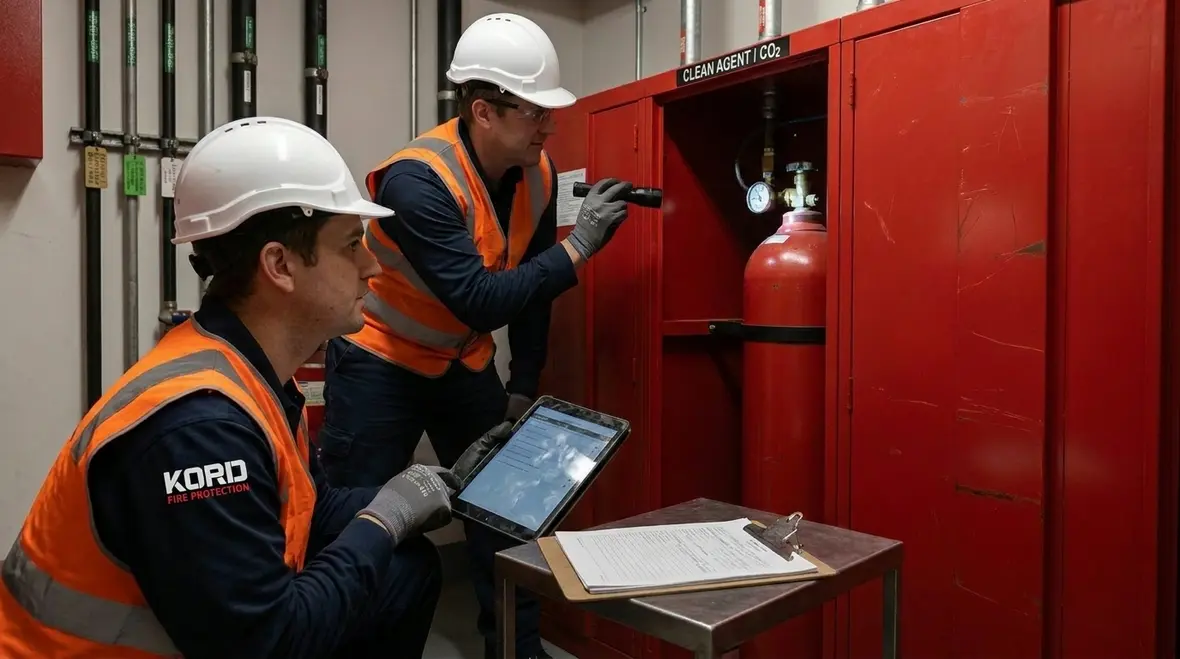
Fire suppression performance depends on more than the name on the spec sheet. For CO2 and clean agent systems, enclosure integrity and airflow control are common make-or-break factors. If leakage is excessive, concentration may not reach design levels. If ventilation runs at the wrong time, the system may disperse the agent faster than expected. As a result, the protection goal can fail.
Additionally, the hazard analysis must consider fuel load, fire growth rate, and where ignition sources are likely to occur. A well-designed system should match the fire development timeline. Otherwise, the system might discharge too late or not in a way that stops the fire from spreading.
Agent distribution also matters. Nozzles, zoning, pipe runs, and control logic must align with the physical layout. Then comes the human side: alarms, evacuation instructions, and operator responsibilities must work together. KORD Fire Protection contributes by handling the full picture, from design review to commissioning support, so the system behaves correctly when time is short.
Why room integrity keeps showing up in the conversation
There is a reason room integrity testing comes up so often in serious suppression conversations. It is the bridge between design intent and real performance. If the room cannot hold the concentration, the system may look excellent in paperwork and disappointing in real life. That is why KORD regularly points facility teams toward enclosure verification and related performance checks before they trust any system to carry the day.
Costs, installation complexity, and long term ownership
Budgets matter, and customers often want a simple answer like “CO2 is cheaper” or “clean agents cost more.” Yet real pricing depends on tank or cylinder count, nozzle layout, enclosure work, and control system integration. For example, if the space requires sealing improvements, CO2 design may become more complex than expected. Likewise, clean agent design may require careful zoning or special ventilation control.
Long term ownership also includes maintenance, testing, and inspections. Both system types need ongoing verification to meet standards and keep reliability high. Cylinders must be checked, valves verified, and discharge circuits tested. Furthermore, records must stay current for audits and insurance reviews.
So the best way to manage cost is to manage the design process. KORD Fire Protection helps customers compare total ownership, not just install-day pricing. That approach keeps teams from paying twice, and nobody enjoys a surprise invoice. Even accountants deserve a break.
How KORD Fire Protection becomes a vital partner
Choosing between CO2 vs clean agent is not just a technical decision, it is a business decision. KORD Fire Protection supports the entire lifecycle, from early hazard discussions to design support and installation coordination. Then it continues with commissioning, maintenance planning, and documentation that stands up to scrutiny.
Moreover, KORD helps teams connect the suppression system to the building’s operating reality. That means looking at how doors open, how ventilation cycles, where people stand during normal operations, and how quickly they can evacuate. When those details align with the system design, the protection becomes dependable.
In short, KORD acts like the calm voice on a busy day. While the alarm lights flash and the crew does what they trained to do, KORD ensures the system is ready in the first place. That is the kind of partnership customers keep. If your facility is weighing a gas-based solution, the dedicated clean agent fire suppression service page is a strong place to compare capabilities and next steps.
FAQ: CO2 vs clean agent fire suppression
Which system fits most facilities best?
Most facilities do not need a one-size-fits-all answer. They need an engineered answer based on hazard type, room configuration, and operational constraints. As a result, a proper hazard assessment usually points toward one technology as the better fit. If your space protects electronics, archives, controls, or other sensitive assets, KORD’s clean agent suppression system for critical assets article offers another useful lens on why residue-free protection often matters so much.
Conclusion: take the right step with KORD Fire Protection
The choice in CO2 vs clean agent fire suppression comes down to how the system matches the space, the hazard, and the life safety plan. When teams evaluate without guessing, they improve reliability and reduce downtime. Then, when a trusted partner supports design, installation coordination, and maintenance, the system performs when it matters most.
KORD Fire Protection helps facilities make confident decisions and stay compliant. Reach out today to discuss your space, your risks, and the suppression strategy that fits. For facilities exploring a residue-free option, visit clean agent fire suppression services and, if applicable to your project, review clean agent fire suppression as a practical next step with KORD Fire Protection.

Join Our Newsletter!
Get the latest fire safety tips delivered straight to your inbox From our Newsletter.



