

Fire Suppression vs Fire Sprinkler System Guide
Fire Suppression vs Fire Sprinkler System: What’s the Difference?
When building owners start researching fire suppression vs fire sprinkler system, they often assume the two terms mean the same thing. After all, both fight fires. Both spray something. And both are installed by professionals who carry serious tools and even more serious licenses. However, the difference between them can shape how well a property survives a fire.
Kord Fire Protection technicians often explain it this way: one system is like a steady rainstorm that responds to heat, while the other is more like a precision strike team trained for specific threats. Understanding how each works, where each fits, and why the choice matters can save money, property, and lives. So let us take a steady walk through the details, clear the smoke, and settle the debate once and for all.
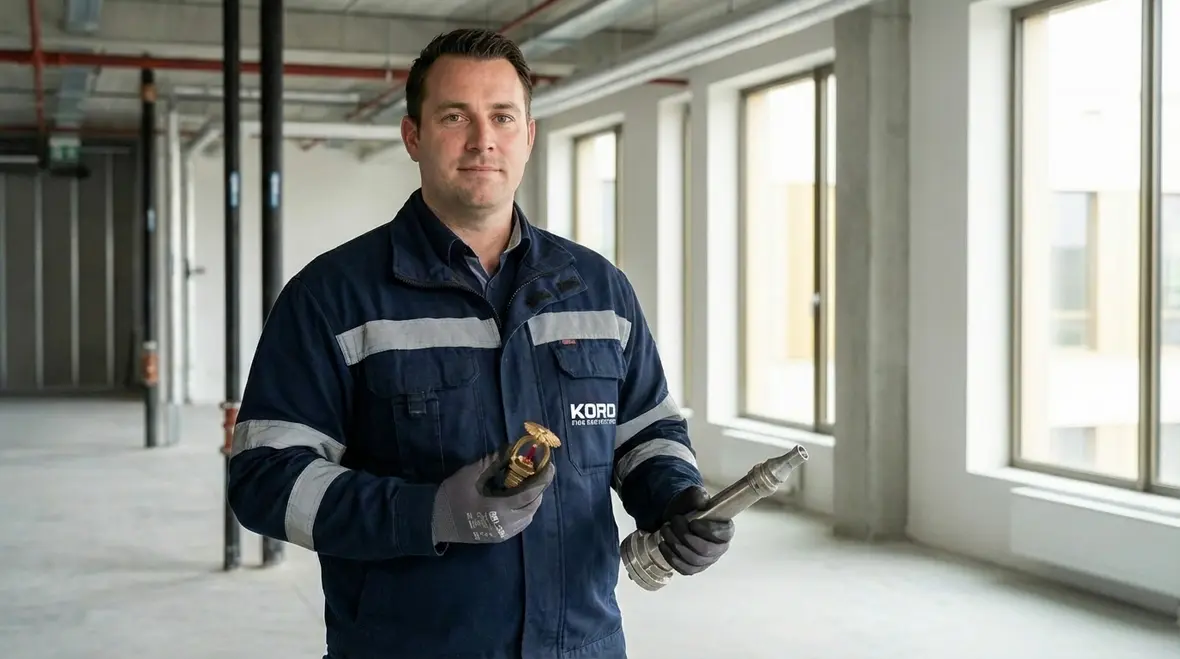
Understanding the Purpose Behind Each System
At the core, both systems aim to control or extinguish fire. However, they approach the job in different ways.
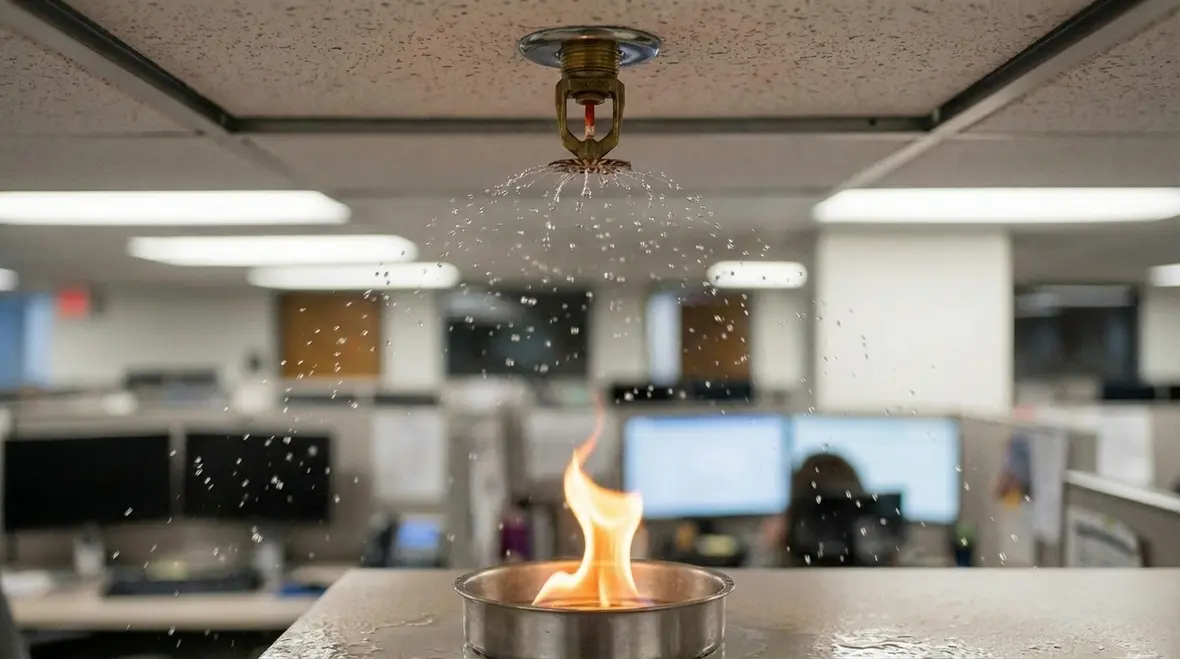
A fire sprinkler system uses water. When heat from a fire reaches a set temperature, individual sprinkler heads activate. Contrary to what Hollywood suggests, they do not all go off at once. Only the heads exposed to high heat open. In other words, there is no dramatic waterfall scene unless the fire truly demands it.
On the other hand, a fire suppression system may use water, foam, gas, or chemical agents. Instead of simply controlling flames, many suppression systems aim to extinguish the fire completely. Therefore, they are often used in areas where water could cause serious damage or fail to stop certain types of fires.
Kord Fire Protection technicians emphasize that the real difference lies in the hazard being protected. While sprinklers work well for common combustibles like wood and paper, suppression systems are often designed for high risk or specialized environments.
If you are interested in how different system designs respond during an actual event, Kord Fire’s article on causes of delayed fire sprinkler activation walks through what happens when sprinklers do not respond as quickly as they should.
Why purpose drives system selection
In short, sprinklers are designed to protect the building and occupants from typical fire scenarios, while suppression systems are tuned to protect specific equipment, processes, or high value spaces from very particular fire hazards.
How Fire Sprinkler Systems Work in Real Life
Fire sprinkler systems operate with elegant simplicity. Each sprinkler head contains a heat sensitive element. When temperatures rise beyond a specific point, that element breaks or melts. As a result, water flows directly over the fire.
Targeted water where the heat is highest
Because they activate individually, sprinklers limit water damage while targeting the source of heat. Moreover, they respond quickly, often controlling a fire before firefighters even arrive.
Common places you will find sprinkler systems
Sprinklers are commonly installed in:
- Office buildings
- Schools
- Retail spaces
- Warehouses
- Apartment complexes
Additionally, they are highly reliable. Studies consistently show that properly maintained sprinkler systems significantly reduce fire related deaths and property damage. In fact, they are often required by building codes.
Still, they are not perfect for every setting. For example, in a data center filled with sensitive electronics, water may stop the fire but also destroy the equipment. That is where suppression systems step in.
To keep sprinkler systems performing the way they were designed, watch for early warning signs. Kord Fire’s guide on fire sprinkler failure signs shows what to look for before there is an emergency.
Fire Suppression Systems Explained Clearly
Unlike traditional sprinklers, fire suppression systems can release clean agents, foam, or dry chemicals. These systems detect fire through heat, smoke, or flame sensors. Once triggered, they discharge their extinguishing agent into the protected area.
Clean agents, foam, and more
For example, clean agent systems remove heat or interrupt the chemical reaction of a fire without leaving residue. Therefore, they are ideal for:
- Server rooms
- Museums
- Medical facilities
- Commercial kitchens
- Industrial machinery spaces
Meanwhile, kitchen suppression systems target grease fires specifically. Since grease and water mix about as well as oil and well, water, specialized chemicals are used instead.
Kord Fire Protection technicians often remind clients that suppression systems are engineered for precision. Rather than soaking everything in sight, they target the type of fire most likely to occur in that space.
For a deeper dive into one of the most common “clean” technologies, Kord Fire’s article on clean agent fire suppression for critical equipment breaks down how these agents protect electronics without leaving a mess behind.
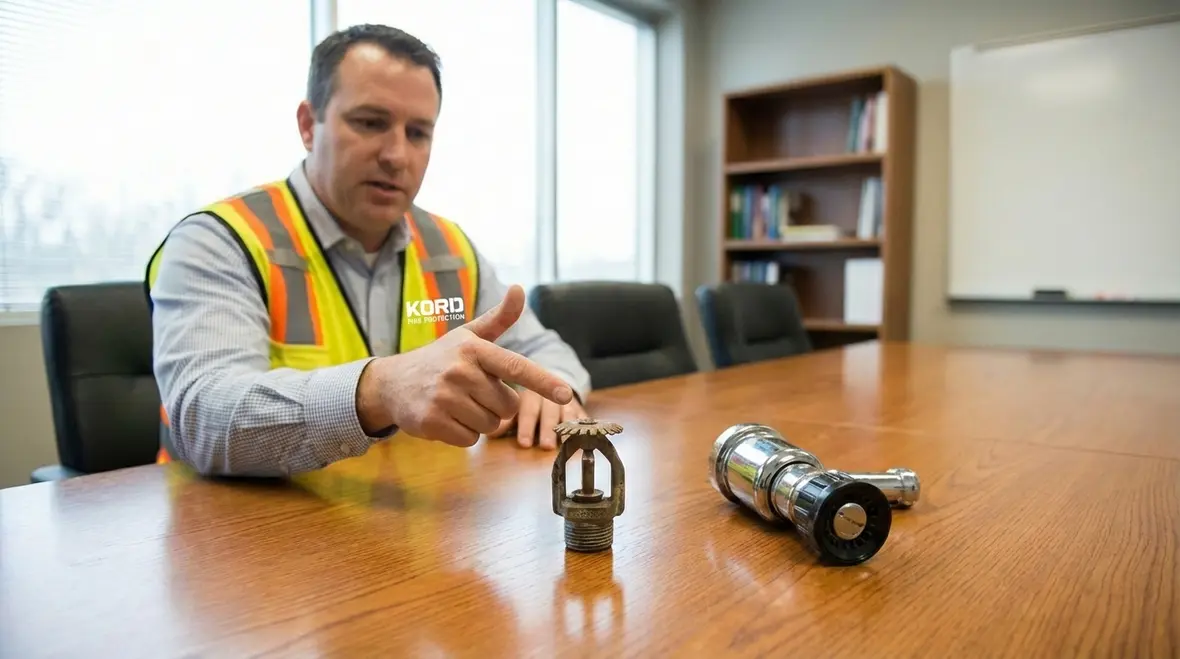
Side by Side Comparison for Property Owners
Column One: Fire Sprinkler System
Uses water as the primary extinguishing agent. Activates individual heads when exposed to heat. Best for general building protection. Cost effective for large coverage areas. Requires reliable water supply and piping infrastructure.
Column Two: Fire Suppression System
Uses water, foam, gas, or chemical agents depending on hazard. Often activates through advanced detection systems. Designed for specific risks like grease or electrical fires. Ideal where water damage must be minimized. May require sealed environments for maximum effectiveness.
When comparing fire suppression vs fire sprinkler system options, building owners must consider the type of fire risk present. While sprinklers offer broad coverage, suppression systems deliver targeted solutions.
Choosing the Right System for Your Building
Start with occupancy and contents
This is the part where things get practical. Selecting the right system depends on several factors. First, consider occupancy type. A restaurant kitchen has very different fire risks than a law office. Second, examine the materials inside the building. Electronics, flammable liquids, and heavy machinery demand specialized protection.
Factor in codes, compliance, and risk tolerance
Additionally, local fire codes may dictate what is required. Therefore, compliance plays a major role in the decision.
Kord Fire Protection technicians walk property owners through a structured evaluation. They assess hazards, review building layout, and analyze operational needs. Because every building tells a different story, no single solution fits all.
Balancing budget and long term protection
Budget also matters, of course. However, technicians often point out that the true cost of a system is measured against potential loss. In other words, investing wisely upfront can prevent catastrophic expenses later.
Maintenance and Long Term Performance
Installing a system is only the beginning. Ongoing inspection and testing keep both sprinklers and suppression systems reliable.
What sprinkler systems need
Sprinkler systems require:
- Regular valve inspections
- Pressure checks
- Flow testing
- Visual head inspections
What suppression systems need
Suppression systems, meanwhile, require:
- Agent level verification
- Detection system testing
- Cylinder inspections
- Nozzle condition checks
Without proper maintenance, even the best system becomes a decorative ceiling accessory. And while ceiling decor has its place, it should not be the only thing standing between a building and disaster.
Kord Fire Protection technicians stress consistent service schedules. Furthermore, documented inspections help with insurance compliance and liability protection. When discussing fire suppression vs fire sprinkler system performance, maintenance often determines real world effectiveness more than design alone.
Cost Considerations and Return on Investment
Upfront cost vs lifetime value
Costs vary based on building size, hazard level, and system complexity. Generally speaking, sprinkler systems are more affordable per square foot for large spaces. Because they rely on water infrastructure, installation can be straightforward in new construction.
Suppression systems, however, may involve specialized equipment and sealed enclosures. As a result, upfront costs can be higher. Yet in high value environments, they prevent damage that water alone might cause.
Insurance, downtime, and intangible returns
Insurance providers often recognize properly installed fire protection systems with reduced premiums. Therefore, over time, the investment can pay for itself. More importantly, it protects human life. And frankly, that return cannot be measured on a spreadsheet.
What Building Owners Ask Most
Many owners searching for fire suppression vs fire sprinkler system comparisons ask a simple question: which one is better?
Neither system is “better” in every situation
The honest answer is neither. Each serves a purpose. A sprinkler system provides broad protection for common fire risks. A suppression system delivers specialized defense for unique hazards. In some facilities, both systems operate together. For example, a large hotel may use sprinklers throughout the building and kitchen suppression systems in cooking areas.
Layered protection wins
Rather than choosing one over the other, many properties benefit from layered protection. Think of it as having both a seatbelt and airbags. One is good. Both are better.
Kord Fire Protection technicians often recommend integrated approaches when hazards vary across a single property. Because risk is rarely uniform, protection should not be either.
Frequently Asked Questions
Final Thoughts and Next Steps
Choosing between systems is not about picking a winner in the fire suppression vs fire sprinkler system debate. It is about protecting people, property, and peace of mind. Kord Fire Protection technicians stand ready to evaluate hazards, explain options clearly, and design systems that match real world risks. When safety matters, guesswork has no place.
For properties that need full service support, Kord Fire offers comprehensive fire protection services including fire sprinkler systems, clean agent fire suppression, and more. Contact Kord Fire Protection today and let experienced professionals build a solution that stands firm when it matters most.
Know Your Weapon Before You Fight the Flame
Kord Fire Protection is your go-to when it comes to all things fire protection. For over 20 years, we’ve been serving Southern California with the quality service and equipment to keep your home or business safe at all times. Our competitive prices reflect our unwavering commitment to protecting what matters most in the event of a fire emergency. Give us a call, send an email, or use that form!

Join Our Newsletter!
Get the latest fire safety tips delivered straight to your inbox From our Newsletter.


