Fire Suppression System Pump Maintenance for High Rises
Quick Answer: High rise fire pumps must deliver reliable pressure and flow during emergencies, and that starts with smarter testing, clean alignment, and strict maintenance. With Fire suppression system pump maintenance, teams reduce downtime risk, improve safety margins, and keep inspections on track. Kord Fire Protection can support the full lifecycle, from readiness to documented performance.
In high rise structures, fire pump performance does not get to “sort of work.” It either delivers the required flow and pressure, or it becomes a liability. That is why Fire suppression system pump maintenance must be built into the facility rhythm, not treated like a once-a-year chore. And while many sites handle basic checks, multi level buildings in Australia face real-world variables like variable demand, power fluctuations, and pressure loss through risers, boosters, and hose valves.
When teams maintain pumps consistently, they protect people, protect property, and keep operations calmer. After all, nobody wants the building to act like a dramatic TV character during an alarm. Instead, the pump should behave like a steady supporting actor: reliable, prepared, and boring in the best possible way. For facilities that need coordinated support across inspections, scheduling, and repairs, full fire protection services can help tie the moving parts together before small issues become expensive ones.
Why high rise fire pump optimization starts with water demand
Fire pumps work against the building’s hydraulics, so optimization begins with demand modeling. Engineers and technicians should verify the required flow rates for sprinklers, standpipes, or hydrant systems, then confirm the pump curve matches the system curve at different operating points. In practice, that means examining elevation changes, pipe roughness, fittings, isolation valves, and any recent building modifications.
Look beyond the original design assumptions
Next, facilities should account for how these systems behave under real conditions. For instance, when a sprinkler system activates, demand can spike differently than expected. Therefore, technicians should not only rely on the original design assumptions. They should validate current performance through controlled testing and system measurement. This approach reduces the risk of poor discharge pressure or unstable flow.
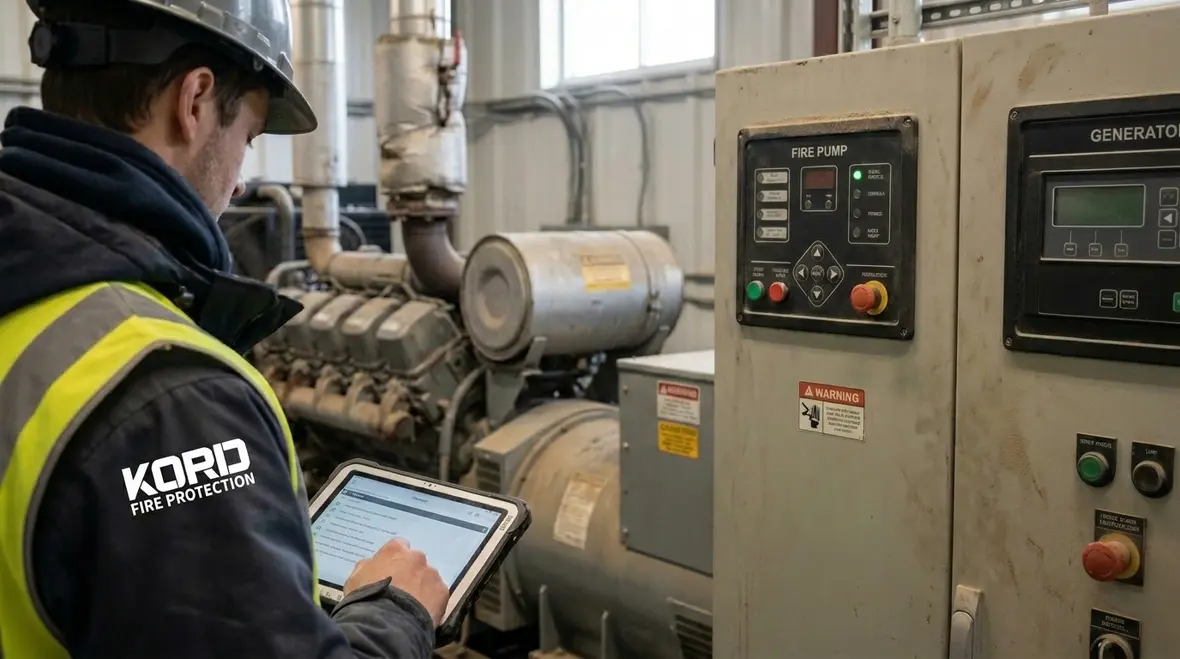
Finally, the team should confirm that the pump controller and jockey arrangement respond correctly during shifting demand. Small delays or incorrect set points can trigger nuisance alarms or, worse, underperformance during actual events. If your team is also reviewing controller-side reliability, Kord Fire’s guide on why electric fire pump controllers fail adds useful context to the maintenance conversation.
How maintenance and testing protect pressure, flow, and reliability
Strong Fire suppression system pump maintenance focuses on three outcomes: stable pressure, correct flow, and dependable starts. Fire pump testing should follow the system requirements and local compliance expectations, but it should also include checks that reveal early wear. Bearings, seals, couplings, and impellers show their stories before they fail completely. If the team listens early, the repair later becomes a scheduled job instead of an emergency call.
Build a maintenance routine that actually catches drift
First, technicians should verify suction conditions. Air entrainment, clogged strainers, or partial blockage can starve the pump and collapse performance. Next, they should inspect and document suction pressure trends and discharge pressures across different test points. Then they should verify that the pump rotates correctly, the controller logic operates as intended, and that all alarms, interlocks, and status signals communicate correctly.
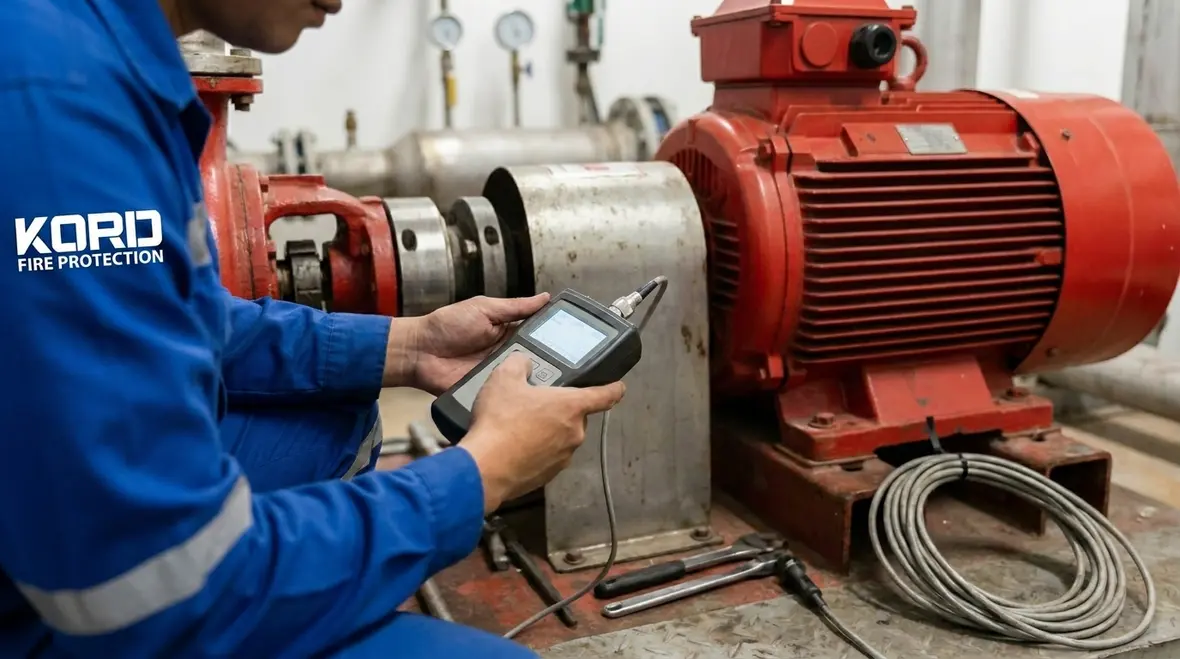
Additionally, the team should treat preventive maintenance like a living process. For example, they should track trends in vibration and motor current. When vibration shifts or current draw creeps up, the root cause might be misalignment, cavitation, or impeller damage. By catching these changes early, the pump can stay within safe operating bands. Teams tightening up interval planning may also want to review commercial fire pump maintenance schedule optimization for a broader service planning view.
Controller and power tuning for steady performance during emergencies
In high rise buildings, electric and control systems can become the hidden performance bottleneck. Therefore, optimization needs to include controller calibration, power quality checks, and device verification. If voltage drops beyond safe thresholds, the pump motor can lose torque exactly when it must deliver flow.
Verify the power path, not just the pump itself
Technicians should inspect the pump controller settings, confirm alarm thresholds, and verify that time delays match the system strategy. They should also check phase balance and verify that protection devices work as designed. If the building uses a diesel driver alongside electric pumps, the team must maintain starting reliability and confirm fuel system health.
Moreover, facilities should verify that emergency power interfaces behave correctly. A fire event rarely arrives at a perfect time. Instead, it can overlap with other loads, generator transitions, or demand spikes. So the pump must remain ready and stable across the real sequence of events. For teams reviewing emergency electrical resilience more broadly, this companion article on fire alarm power requirements, reliable backup, and AC fits naturally into the same readiness mindset.
And yes, controllers sometimes “mysteriously” drift. It is not magic, it is usually temperature cycles, loose connections, or outdated set points. The best fix is disciplined verification, not superstition.
Reducing cavitation and wear through system cleanliness and alignment
Cavitation turns pump internals into a slow-motion disaster. Even minor suction issues can cause vapor bubbles to form and collapse near the impeller. Over time, that damages metal surfaces, reduces efficiency, and increases vibration. That is why optimization must include suction pipe checks, strainer inspection, and verification of valve positions during operation.
Clean systems and precise alignment save real money
In the same way, misalignment can cause bearing wear and seal failures. Therefore, technicians should confirm alignment after any maintenance that involves removal or repositioning of pump components. They should also verify the condition of gaskets, coupling guards, and flexible elements where fitted.
System cleanliness matters too. Debris from construction, scale from older pipework, and sediment that migrates over time can restrict flow paths. As a result, the pump may deliver lower performance even if it “starts.” Scheduled cleaning and inspection help keep performance stable across months, not just during annual tests.
For facilities across Australia, especially those with busy fit-outs and tenant turnover, these checks become essential. Buildings evolve, and the fire pump must adapt with them.
Working with Kord Fire Protection as a vital partner
Optimization takes more than a checklist, and it rarely stays inside a single discipline. Kord Fire Protection can become a vital partner by supporting a coordinated approach across inspection, maintenance planning, documentation, and readiness. In other words, they help the fire system operate as one organized team instead of a set of separate parts doing their best impression of teamwork.
Good documentation turns readiness into proof
As facilities schedule Fire suppression system pump maintenance alongside compliance requirements, Kord Fire Protection can assist with structured service delivery and clear reporting. That helps site managers track what matters: performance evidence, corrective actions, and the timeline for recurring checks. When documentation is organized, handovers become smoother, audits feel less like a pop quiz, and decision making gets easier.
Also, a strong partner reduces gaps between trades. When the pump and controller depend on system valves, pipe configurations, and alarms to work together, coordination becomes the difference between “tested” and “ready.” In a high rise, that readiness is not optional.
Scheduling optimization for industrial, retail, and commercial facilities
Facilities in industrial, retail, and commercial settings across Australia run on tight operating windows. Therefore, the maintenance plan must protect both safety and business continuity. The most effective schedules align testing with low impact periods, coordinate with fire alarm testing where needed, and ensure that staff and contractors have the right access and permits.
Use trend data, not just calendar reminders
Next, teams should consider building usage patterns. Retail and commercial floors can introduce variable water demand through adjacent services. Industrial sites can experience higher vibration loads from nearby equipment. As a result, pump health monitoring can benefit from planned intervals that match the building’s operating cycle rather than a fixed calendar only.
Additionally, facilities should establish a response plan for anomalies. If discharge pressure drops or controller faults appear, the team should log the event, verify readings, and isolate the cause quickly. That reduces repeat issues and shortens the time between detection and correction.
When the plan includes trend analysis, not only one-off tests, the pump stays optimized. Then Fire suppression system pump maintenance becomes proactive, which means fewer interruptions and stronger confidence in emergency performance.
Dual column checklist for pump optimization in high rises
| What to verify | Why it matters |
| Current pump curve vs system curve | Confirms pressure and flow match design points during discharge |
| Suction pressure and strainer condition | Prevents cavitation and starvation that degrade performance |
| Controller set points and alarm thresholds | Maintains correct start logic and stable operation under emergency demand |
| Vibration, motor current, and temperature trends | Detects misalignment, bearing wear, and electrical stress early |
| Alignment after service work | Reduces seal failures and bearing damage from stress |
| Documentation of tests and corrective actions | Supports audits and improves continuity across maintenance cycles |
Frequently Asked Questions
Conclusion
Optimizing fire pump performance in high rise structures depends on real testing, clean hydraulics, correct alignment, and tuned controls. When facilities treat Fire suppression system pump maintenance as an ongoing readiness program, pumps deliver stable pressure and flow when it matters most.
For multi site operations across Australia, Kord Fire Protection can act as a vital partner to keep documentation clear, corrective actions timely, and performance evidence ready. Reach out to plan your next optimization and maintenance cycle.

Join Our Newsletter!
Get the latest fire safety tips delivered straight to your inbox From our Newsletter.