Emergency Fire Alarm Power Supply for Uninterrupted Power
Quick Answer: Commercial fire alarm systems must stay powered during outages, faults, and peak demand. A reliable Emergency fire alarm power supply keeps notification and monitoring alive long enough for evacuation, firefighting response, and compliance. The best results come from planned backup capacity, testing, and fast service from Kord Fire Protection.
In Australia’s commercial and industrial environments, power interruptions rarely show up politely. They happen during storms, construction work, switchgear failures, and the kind of “surprise” that makes facilities managers stare at charts like they’re decoding ancient runes. That is why an Emergency fire alarm power supply matters early, not later. It supports continuity for detection, signaling, and control so a fire alarm system continues to perform when the main supply does not.
To be clear, this article does not treat backup power like a box to tick. Instead, it walks through how teams ensure uninterrupted operation across multiple sites, trading floors, warehouses, and plant rooms. And yes, along the way, it also explains how Kord Fire Protection can become a vital partner for this service, so the work stays reliable long after installation day.
If your team is reviewing broader fire alarm services and system support, it makes sense to look at backup power as part of the full protection picture rather than a lonely panel cabinet everyone hopes is fine. Reliable life safety performance usually starts with that mindset and gets stronger from there.
Why uninterrupted fire alarm power decides outcomes
When power drops, a fire alarm system should not go quiet. Instead, it should keep alarms active, trouble signals monitored, and control functions available for the duration required by the relevant design and regulations. Moreover, uninterrupted power supports correct system behavior during abnormal conditions like voltage dips, brownouts, or battery depletion from long prior events.
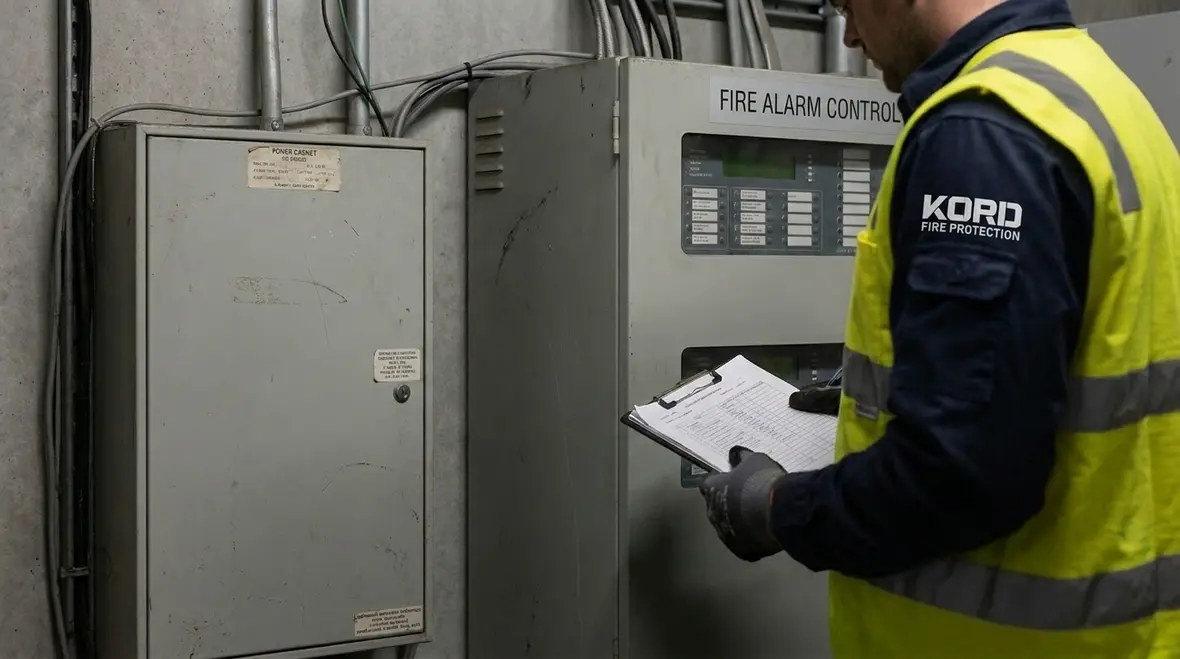
Fire alarm performance is not just about sirens. In many commercial setups, the control panel manages zone logic, activates notification devices, and maintains communication with monitoring paths. If the Emergency fire alarm power supply fails or underperforms, the system can lose supervision, reduce audibility, or reset at the worst moment. That moment is never when the office team has time for a “quick workaround.” It is usually during an incident, when chaos already took the day off.
Also, facilities across Australia often face different loads. Retail centers cycle tenants and tenant fitouts. Industrial sites add motors, variable speed drives, and temporary equipment. Therefore, uninterrupted power planning must match each environment rather than reuse a generic checklist. For a helpful companion read, Kord Fire Protection’s Fire Alarm Power Requirements: Reliable Backup and AC explains how primary and secondary power have to work together without drama, which is nice because emergencies already bring enough of that.
What is really at stake when power disappears
The real risk is not merely that a panel goes dark. It is that supervision, signaling, and decision making across the system can become unstable in stages. A weak charger, undersized batteries, or a neglected connection may allow the system to look normal right up until an outage forces it to prove itself. That kind of delayed failure is exactly why serious facilities treat backup power like essential infrastructure, not background furniture.
How the power chain should be engineered and protected
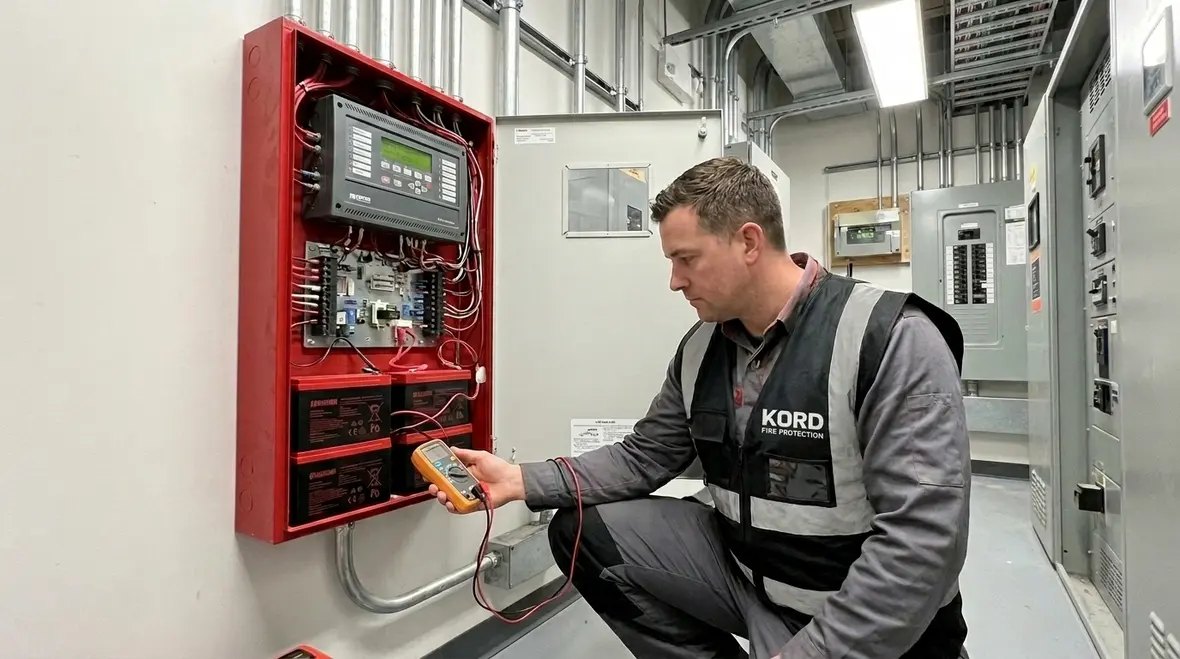
Uninterrupted operation starts with the full power chain, not a single component. A strong system design considers utility input, switching behavior, wiring quality, panel power modules, and backup storage. Then it adds protective measures that prevent a single fault from disabling the entire system.
In practice, facilities teams should confirm the following areas:
- Stable panel power: Confirm the fire panel’s power supply handles dips and transients without dropping critical circuits.
- Backup capacity: Ensure battery sizing matches required standby and alarm durations, including aging over time.
- Charging control: Verify chargers maintain correct charge rates and stop safely during fault conditions.
- Isolation and fault containment: Use correct zoning and protective devices so a fault does not cascade.
- Device voltage thresholds: Check that notification devices still reach audibility under backup voltage.
Furthermore, the environment matters. Humidity, heat, and dust can reduce battery performance and increase connection corrosion. Meanwhile, vibration in industrial settings can loosen terminations if installation quality slips. Therefore, the engineering stage should include practical site realities, not just calculations.
Protection is about preventing one small issue from becoming one giant headache
A dependable power chain is built so one fault does not knock out everything else. That means clean wiring practices, thoughtful segregation, proper protective devices, and cabinet conditions that do not quietly sabotage reliability over time. None of this is flashy, but then again, neither is a seatbelt until the moment it really earns its paycheck.
Battery backup: the part people forget until it fails
Batteries power the fire alarm system when the main supply stops. Yet many sites treat them like background characters instead of lead actors. They get attention at commissioning, then they disappear until a test reveals reduced capacity or a trouble message that shows up like an email from HR.
To keep uninterrupted power credible, teams should manage batteries with discipline. That means scheduled inspection, capacity testing where appropriate, and strict replacement timelines based on performance, not vibes. Also, they should verify battery type, installation orientation, terminal torque standards, and cable routing so the system stays stable in an emergency.
Good battery management includes:
- Age tracking: Record install dates and expected life for each panel and cabinet.
- Load verification: Confirm the system’s draw matches what the design assumed.
- Terminal integrity: Inspect for looseness, corrosion, and heat discoloration.
- Clean environment: Keep battery compartments clear of debris and moisture sources.
In addition, batteries lose strength gradually. So, when a facility schedules only reactive maintenance, it risks entering the final phase of battery life during exactly the season when outages spike. That is a rough way to learn that “we thought they were probably okay” is not a maintenance strategy.
Teams that want more context around standby planning can also compare notes with Kord Fire Protection’s related article on reliable standby power, which reinforces how easy it is to underestimate alarm mode loads when systems expand over time.
Power monitoring and preventive testing that actually helps
Uninterrupted power depends on early detection of problems. Consequently, monitoring and testing need to focus on the signals that predict future failures, not only the tests that confirm everything looks fine right now.
Facilities should build a testing routine around the realities of commercial and industrial operations:
- Routine function tests: Check device operation, notification audibility, and panel behavior.
- Battery charge and voltage checks: Track trends, not just pass or fail results.
- Charger health checks: Verify charge output stability and fault responses.
- Change management: Reassess after fitouts, electrical works, and tenant upgrades.
Even when teams follow schedules, they sometimes overlook the “silent” issues like wiring damage, intermittent faults, or corrosion that worsens during seasonal swings. Therefore, preventive testing should include visual inspections and functional verification that catches these hidden problems.
Kord Fire Protection can support this process by aligning maintenance work with site schedules and compliance expectations. As a partner, it helps reduce disruption while keeping the system ready. In other words, it turns testing from a yearly stress event into a steady operational rhythm.
What better testing looks like in the real world
Useful testing does more than create a pass sheet. It reveals trends, documents weak points, and gives facility teams enough lead time to fix issues before an outage or incident exposes them. That is where monitoring becomes practical instead of ceremonial. You want less “great news, it failed during the emergency” and more “we caught the decline months ago and handled it calmly.”
Keeping uptime across multi site facilities in Australia
Commercial and industrial groups rarely operate one building at a time. They manage portfolios across multiple states, with different electricians, different subcontractors, and different “temporary” changes that become permanent faster than anyone wants to admit.
To ensure uninterrupted power across this spread, facilities should standardize key practices:
- Consistent documentation: Maintain updated schematics, panel settings, and device maps.
- Centralized service visibility: Track maintenance history and battery age across sites.
- Repeatable testing standards: Use uniform test steps so results compare fairly.
- Rapid response planning: Define escalation paths for trouble calls and power related faults.
Additionally, they should plan for the “between jobs” period when the facility changes quickly. A new retail tenant may add load or modify pathways. A maintenance shutdown may alter electrical routing. When these events occur without coordinated fire system review, backup power can end up stressed beyond what the original Emergency fire alarm power supply plan assumed.
Again, this is where Kord Fire Protection adds value. It can help coordinate changeovers, keep documentation clean, and deliver maintenance that accounts for real operational shifts, not only what the drawing shows. Facilities that want a wider reliability view may also appreciate Kord Fire Protection’s article on backup power for fire protection redundancy and testing, which fits naturally into multi site planning discussions.
How Kord Fire Protection becomes a vital partner
Uninterrupted power is a service outcome, not a one time install. Therefore, a strong partner does more than replace parts. It brings structured maintenance, fault diagnosis, and practical advice that prevents recurring issues.
Kord Fire Protection can support commercial fire alarm power continuity by:
- Assessing power system health: Identifying battery performance decline and charging issues early.
- Improving reliability: Correcting wiring, termination, and cabinet environment concerns.
- Reducing downtime: Scheduling work to avoid interruptions to retail trading, shift handovers, and production cycles.
- Keeping compliance on track: Supporting the testing routines that regulators expect.
In business terms, this means fewer emergency callouts and fewer “we discovered it during a test” surprises. Because nothing says calm operations like knowing the system will do its job before you need it to.
That partner role becomes even more valuable when a site has aging infrastructure, frequent contractor activity, or a history of unexplained troubles that keep returning like a sequel nobody asked for. In those cases, having one accountable fire protection team helps move the site from reactive patching to consistent reliability.
FAQ
Conclusion: keep power dependable, not hopeful
Uninterrupted power for commercial fire alarm systems comes from right sized backup capacity, disciplined battery management, and testing that detects issues early. When facilities treat this as an ongoing service, they protect evacuation performance and reduce emergency downtime.
Kord Fire Protection can act as a vital partner to plan, test, and maintain reliable emergency power for multi site industrial and commercial environments across Australia. Contact Kord Fire Protection today to review and strengthen system continuity.

Join Our Newsletter!
Get the latest fire safety tips delivered straight to your inbox From our Newsletter.