Fire Alarm Power Requirements: Reliable Backup and AC
Commercial fire alarm systems have one job that does not care about deadlines, budgets, or bad days: they must work when smoke, heat, and panic show up. That is why the Fire alarm power requirements must be planned from the start, including how the system receives power, how it rides through outages, and how it signals trouble without delay. Kord Fire Protection technicians explain that reliable power is not a “set it and forget it” task. It is a build, a verify, and an ongoing check that protects lives and helps keep businesses compliant. In other words, power reliability is the unsung hero, and no one claps for it until the day they need it.
For building owners and facility teams, this topic connects directly to long term fire alarm system reliability and battery health. The panel can be smart, the devices can be modern, and the wiring can be neat enough to make an inspector smile, but none of that helps much if the system cannot hold up when utility power disappears. Reliable primary and secondary power is what keeps the whole life safety orchestra playing in tune.

Why reliable power controls everything in commercial alarms
Power reliability shapes every part of a fire alarm system. If the control unit loses its supply, the system may fail to supervise devices, report faults, or trigger alarms. Furthermore, a weak power source can cause nuisance trouble signals, slow response, or repeated resets that frustrate occupants and maintenance teams.
In most installations, the system includes a main source plus backup power, and both must meet the Fire alarm power requirements for the specific panel, device count, and alarm mode. Kord Fire Protection technicians often point out that alarm mode pulls more power than normal monitoring. Therefore, the design needs to account for worst case loads, not just average conditions.
And yes, power problems can feel like a mystery until someone checks the basics. It is like trying to blame the drummer for the song being off tempo, when the stage power is sagging. Fix the supply, and suddenly everything sounds right. That is also why teams reviewing power stability often benefit from learning how trouble conditions appear at the panel. If that sounds familiar, Kord Fire Protection’s article on fire alarm trouble signal meanings adds useful context for what those warnings are actually trying to say.
Primary power and secondary power work as one system
A commercial panel does not treat AC power and batteries as separate little side quests. They are part of one continuous power strategy. When AC is healthy, the panel runs normally and maintains the batteries through its charging circuit. When AC fails, the batteries take over. If either side is undersized, poorly maintained, or disconnected, reliability drops fast. That handoff has to be seamless, because emergencies are already dramatic enough without a panel deciding it needs a break.
How to size backup batteries and calculate power draw
Proper battery sizing sits at the center of reliable standby operation. To size correctly, the installer must calculate the current draw in standby, the current draw during alarm, and the required standby and alarm duration. Then the calculation must reflect device quantities, wiring losses, and temperature effects on battery capacity.
Kord Fire Protection technicians explain this in simple terms. They break the load into parts: control unit power, notification appliances, initiating devices, and any auxiliary outputs. After that, they apply the system rating for standby and alarm time so the batteries can deliver enough energy without dropping voltage below usable levels.
Next, they verify compatibility with the panel’s charger capacity. A battery that is physically large enough can still fail if the charger cannot maintain it. Likewise, if the charger output or voltage settings are wrong, battery health degrades faster than expected. That is one reason the broader conversation about battery life matters so much, especially for systems installed in hot or dusty spaces where degradation sneaks up faster than anyone wants.
Loads that are easy to underestimate
Notification appliances are the usual suspects here. Horns, strobes, speaker circuits, and other alarm outputs can draw far more current during activation than teams expect if they only think about standby operation. Add auxiliary devices, door holders, relays, communication modules, or expansion boards, and the total demand climbs quickly. This is why qualified technicians calculate the whole system instead of eyeballing a battery pair and hoping for the best. Hope is not a listed component.

AC power planning and the art of stable voltage
While batteries handle outages, AC supply must be stable and properly protected. Commercial sites often include shared electrical panels, busy circuits, and loads that cycle throughout the day. That is why installers must evaluate the source, confirm correct voltage, and verify grounding and bonding practices.
Additionally, the power path matters. The feed should use the right conductors, correct breaker sizing, and proper labeling so maintenance crews know what controls the alarm panel. Kord Fire Protection technicians also stress the importance of preventing accidental shutdown during routine work. A fire alarm system should not be treated like a vending machine circuit that gets turned off for convenience.
To keep voltage stable, technicians check for loose connections, corrosion, and damage to conduit and conductors. Even small resistance issues can create heat and voltage drop, which shows up as trouble events long before total failure. For teams trying to understand how these electrical details fit into the larger system picture, Kord Fire Protection’s overview of what a fire alarm system is provides a useful foundation.
Stable voltage is not glamorous, but it is everything
Panels, chargers, initiating loops, and notification circuits all rely on predictable electrical behavior. If voltage sags or fluctuates too much, weird symptoms start appearing. Random troubles, charger faults, delayed behavior, or unexplained resets can all trace back to supply issues. It is rarely the dramatic movie villain people imagine. More often, it is one loose termination quietly causing chaos from the electrical shadows.
Power supervision, trouble signals, and tamper control
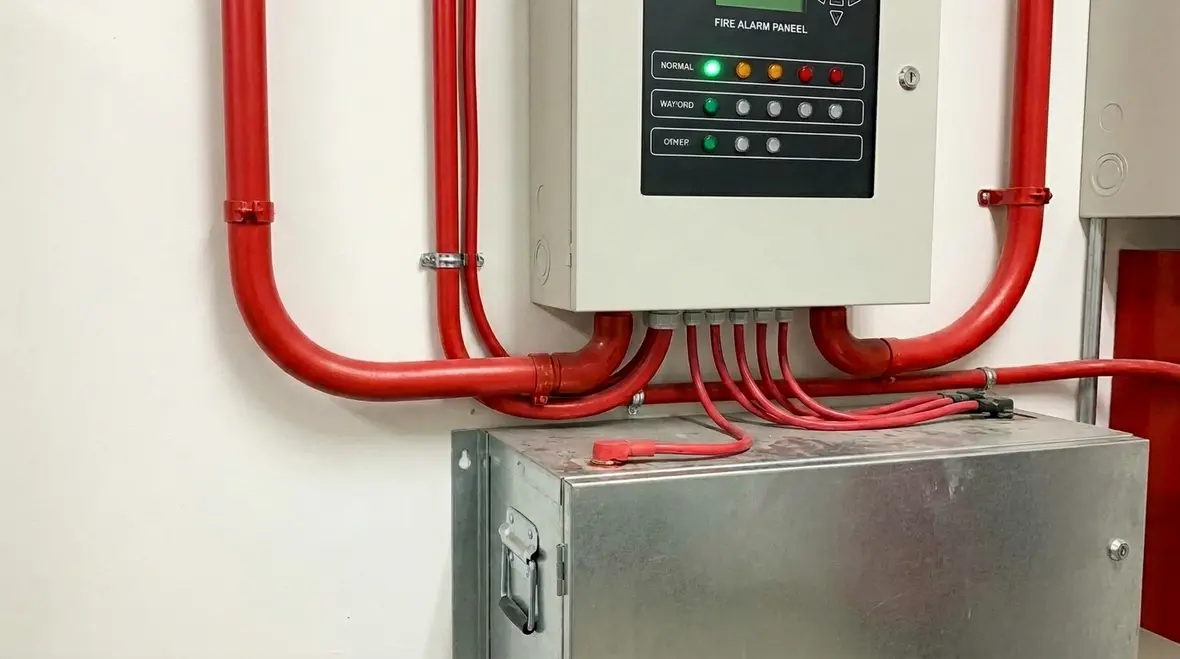
In well designed systems, power reliability includes constant supervision. That means the panel monitors battery voltage, charger function, and circuit integrity so it can report faults. When something drifts out of range, the system sends a trouble signal early, not after a crisis.
However, supervision only works if the system is correctly programmed and the devices are compatible. Incorrect settings can lead to false alarms, while mismatched components can hide real issues. Kord Fire Protection technicians explain that the panel must be configured for the right device types and current limits, and that installers should confirm supervision readings during commissioning.
They also recommend tamper resistant practices for key components. If someone can open a cabinet, disconnect a battery lead, or bypass a circuit, the system loses its protective edge. Therefore, secure mounting, locked enclosures, and proper wiring practices protect the power chain as well as the signaling chain. When ignored, these issues often reappear later as recurring panel warnings, which is exactly why understanding battery health and supervisory faults goes hand in hand.
Commissioning tests that prove the power design works
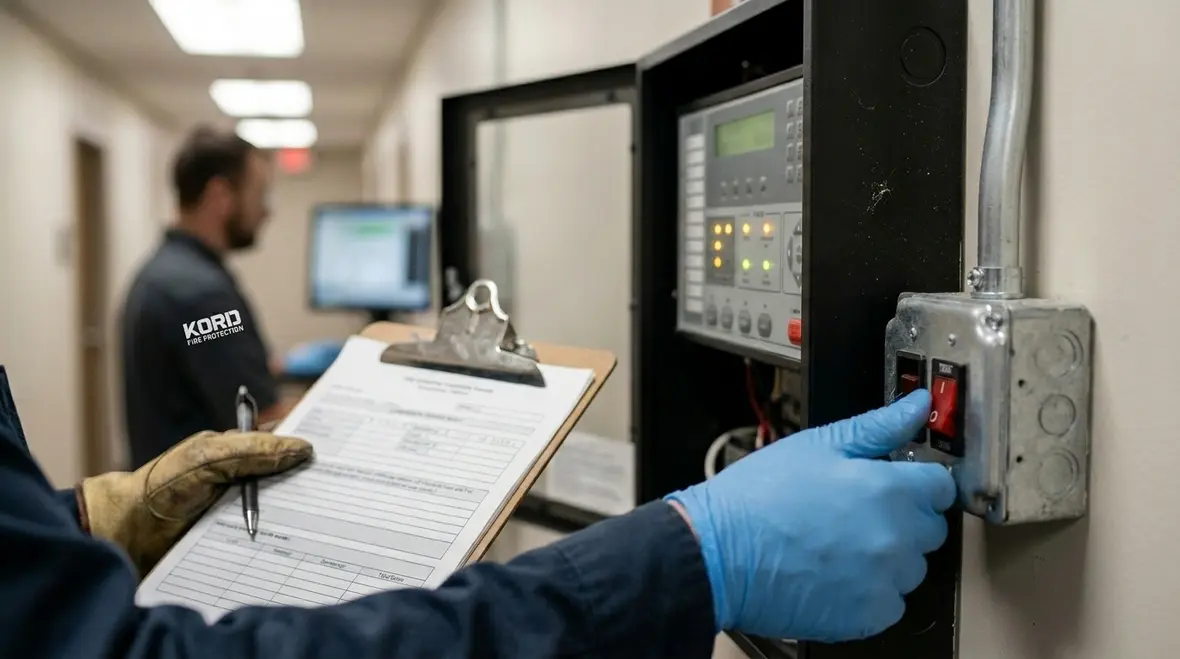
Commissioning is where assumptions become evidence. After installation, technicians should test the system under conditions that reflect real operation. That includes verifying standby current, alarm current, battery charge behavior, and trouble reporting. The goal is to confirm that the Fire alarm power requirements are met not only on paper, but in the field.
Kord Fire Protection technicians follow a practical approach. They check device count and signal loads, then they run functional tests and observe panel responses. Next, they verify notification appliance operation during alarm modes and confirm that wiring polarity and voltage levels stay within acceptable limits.
Then they test battery backup by simulating loss of AC power. During that check, the system should continue to operate for the required duration. If it does not, the problem may be undersized batteries, a charger issue, or incorrect load calculations. Either way, it is better to find it during commissioning than during an emergency when everyone is suddenly a lighting director and wants answers fast.
Commissioning should document, not just demonstrate
A successful test is important, but records matter too. Load values, battery information, observed voltages, and alarm performance should all be documented clearly so future inspections and maintenance have a reference point. That history can save hours of troubleshooting later. It also helps show whether new additions to the system are still operating within the original power plan or quietly pushing it past its limits.
Maintenance and inspection routines that keep power dependable
Even a properly designed system can drift over time. Batteries age, connections loosen, and buildings change. Tenants move, HVAC schedules shift, and electrical loads change on shared circuits. Consequently, maintenance must not be a once a year ritual. It should be a routine that catches power risks early.
During inspections, Kord Fire Protection technicians review battery condition, charger output, and panel history. They also check for nuisance trouble signals that could hint at low battery capacity or voltage issues. Moreover, they verify that any additions to the fire alarm system follow the original power budget, since adding devices without updating the power plan can overload the system.
They often recommend tracking panel events and service dates. That history helps identify patterns, like repeated low battery reports after certain weather events or after a building upgrade. It is like reading the film credits: if a problem keeps showing up, it always has a cast member responsible. For teams reviewing inspection notes and trying to connect them back to actual risk, Kord Fire Protection’s guide to reviewing a fire alarm inspection report is a smart next read.
Maintenance protects compliance and confidence
Routine power checks do more than reduce nuisance problems. They support readiness, improve inspection outcomes, and give owners a clearer picture of how the system behaves over time. A neglected battery, weak charger, or poorly labeled disconnect can all become compliance issues and operational risks. The fix is usually less exciting than the consequences, which is exactly why it should happen early.
FAQ: Fire alarm power requirements for commercial systems
Final call: secure dependable fire alarm power now
Reliable power does not happen by luck. It starts with correct design, solid sizing, and stable AC supply, then it continues with supervision, commissioning tests, and disciplined maintenance. If a commercial building wants fewer trouble calls and more confidence during an emergency, the team should review its fire alarm system’s power plan with Kord Fire Protection technicians. Schedule a power assessment, confirm the load calculations, and verify backup performance. Act now, and the system will thank you later, even if nobody throws confetti.
If you are ready to tighten up performance, reduce trouble conditions, and keep the system inspection ready, explore Kord Fire Protection’s fire alarm services for expert support with design review, testing, maintenance, repairs, and monitoring. When dependable backup and stable AC are treated as core parts of life safety instead of afterthoughts, the entire building is in a better position when it matters most.

Join Our Newsletter!
Get the latest fire safety tips delivered straight to your inbox From our Newsletter.