Commercial Fire Sprinkler Water Supply Pressure Testing and Service
Quick Answer: Reliable fire sprinkler performance starts with stable water pressure and flow. A facility can avoid nuisance trips, weak sprays, and delayed response by matching the system design to real site conditions. Professional testing, pressure zoning, and ongoing monitoring keep the Commercial fire sprinkler water supply performing when it matters most.
For facilities looking to keep the broader protection picture tight, Kord Fire Protection also offers full fire protection services that naturally support sprinkler testing, service coordination, and system reliability across commercial sites.
Fire safety teams in Australia often focus on sprinklers and pipework, and that makes sense. Still, the quiet hero of reliable activation is water pressure. In the real world, pressures shift because pumps cycle, tanks breathe with temperature, valves get updated, and aging pipe scales up like a kettle that never got descaled. When pressure drops or spikes, sprinkler performance can suffer at exactly the wrong time.
That is why managing pressure for a Commercial fire sprinkler water supply deserves steady attention. In the sections below, this article explains how facilities handle pressure targets, how they test and troubleshoot, and how Kord Fire Protection can become a vital partner for service, compliance, and long term reliability across industrial, retail, and commercial sites.
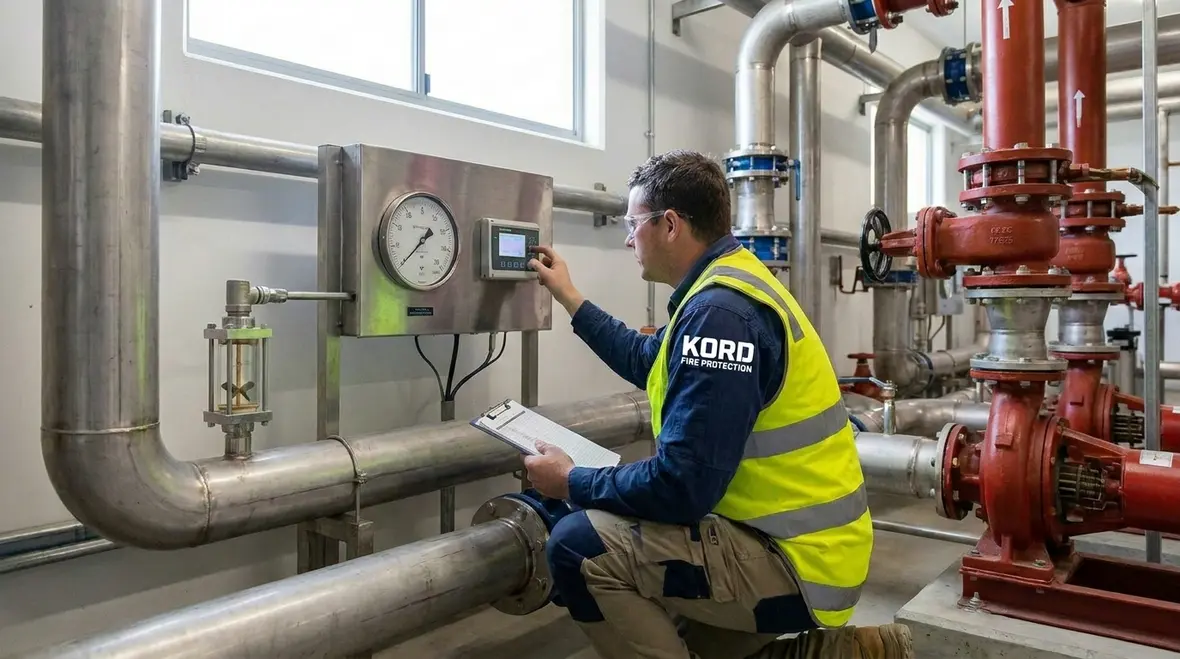
Why water pressure decides whether sprinklers do their job
A sprinkler system depends on both the right pressure and the right flow. Pressure helps push water through the pipe network, into the sprinkler, and out at the intended discharge pattern. When pressure runs low, sprinklers may discharge too weakly to control fire growth. When pressure runs high, it can worsen wear, stress components, and create erratic performance.
Even if the system is correctly designed on paper, field conditions can change. For example, a facility might add equipment, expand retail areas, or upgrade HVAC, and suddenly the water network behaves differently. Then, during an alarm event, the pump set and mains pressure might not deliver the expected result. In other words, the system does not fail because it is “bad.” It fails because reality is messy. Like a sports bar after the final whistle.
To manage this, teams must treat pressure as a living system parameter. They should verify it, monitor it, and protect it from common disturbances such as valve positioning errors, blocked strainers, worn pump performance, and inconsistent incoming supply.
Pressure and flow work as a pair
A site can have respectable pressure readings on a gauge and still struggle during a real event if the water supply cannot maintain flow. That is why pressure testing matters most when it reflects operating demand instead of quiet conditions. The goal is not to admire a healthy number on a dial. The goal is to confirm the system behaves properly when it actually has to move serious water in a hurry.
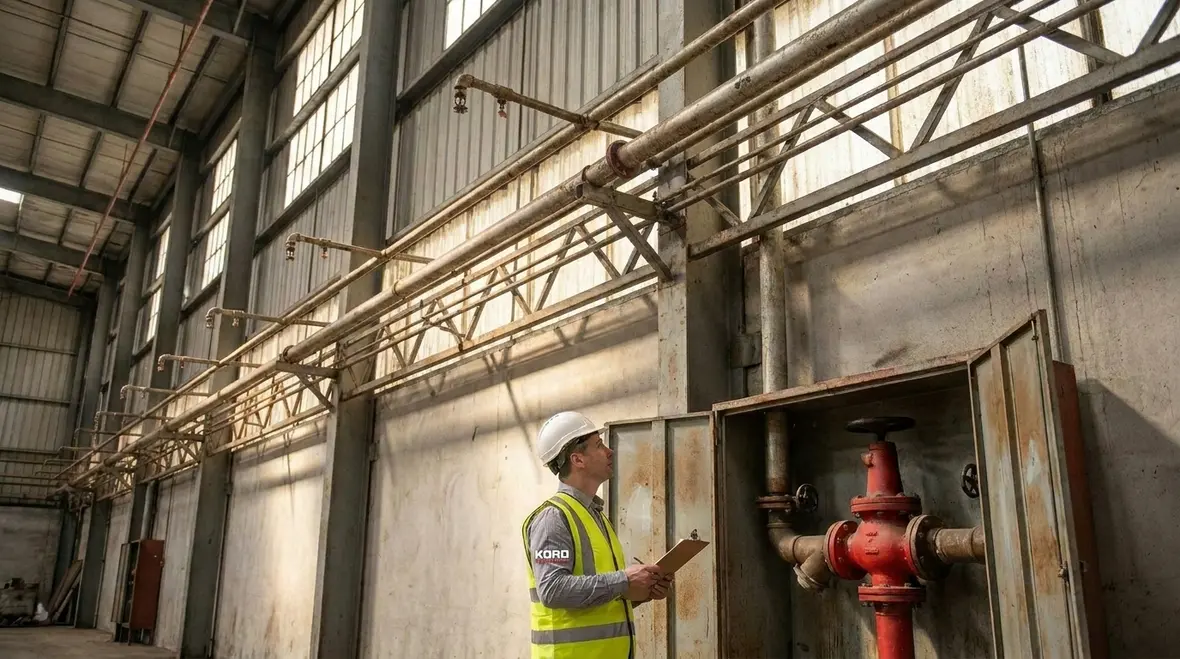
Commercial fire sprinkler water supply targets, not guesses
Facilities should not rely on assumptions about static pressure alone. Static pressure can look fine when no water is flowing. Yet during a simulated discharge, dynamic pressure can drop sharply due to friction loss, elevation changes, pipe diameter, and water demand from hydrants or other services.
So, teams should focus on measurable targets that match the system design and the hydraulics of the building. Typically, that means ensuring the system can achieve required pressure at the most demanding locations, often called the critical or remote area. Those nodes are where friction loss accumulates and where performance margins get thin.
Additionally, pressure management should include the relationship between pumps, tanks, and any dedicated sprinkler booster systems. If a facility uses a pump controller, the controller should maintain pressure while the system flows. And if a site relies on a tank, the tank drawdown and refill behavior must stay predictable across seasons in Australia, where summer heat can change how systems operate.
When Kord Fire Protection supports the service side, it helps facilities translate design intent into verified field performance through proper testing, documentation, and actionable follow up.
Remote area performance is where the truth shows up
The remote area is not glamorous, but it is where weak margins get exposed. If pressure holds there, the rest of the network usually looks much healthier. If it does not, technicians know they need to investigate friction loss, supply limitations, pump output, or layout changes that slowly drifted away from the original design intent.
How technicians measure pressure without stirring up chaos
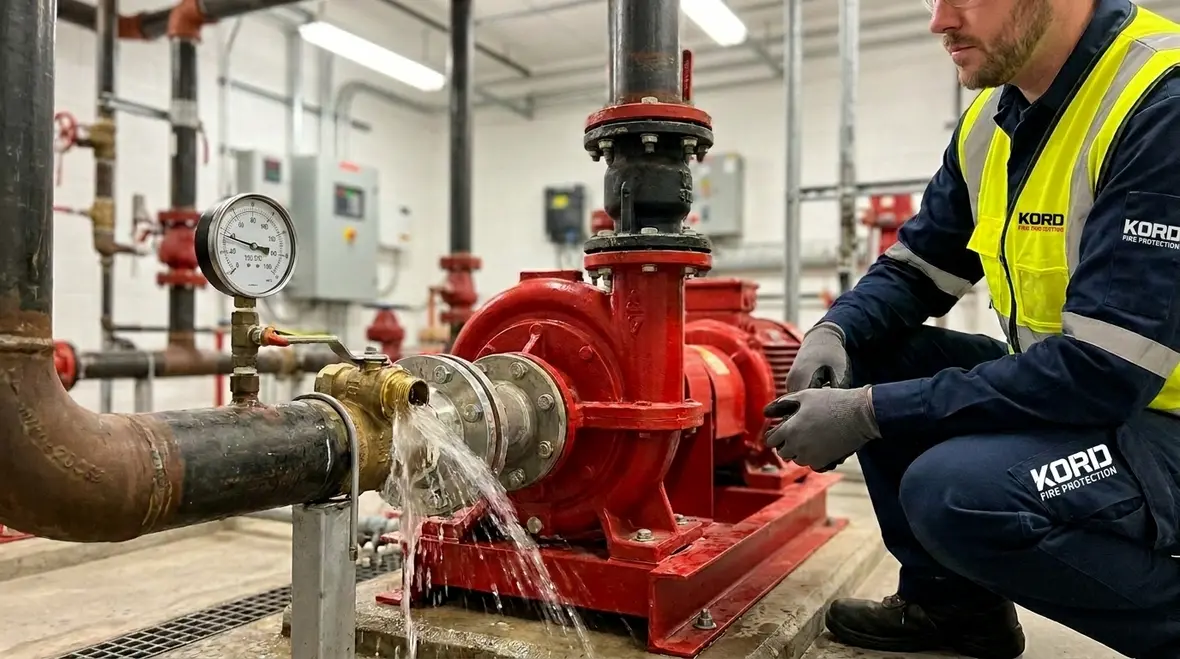
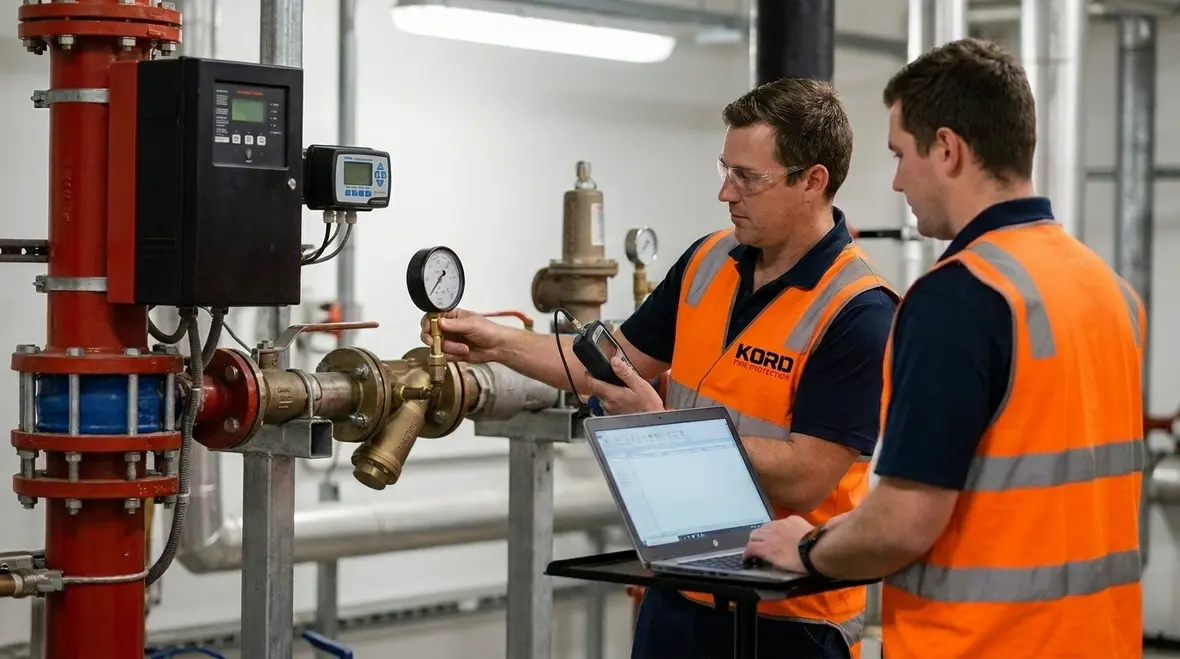
Testing should confirm how the system behaves under flow, not just how it looks at rest. First, technicians verify sensor calibration and confirm that pressure gauges and transducers read accurately. Then, they observe system behavior during controlled water flow tests, such as pump performance checks and flow tests at relevant points in the network.
Next, they evaluate friction loss by comparing measured flow and pressure data to hydraulic calculations. If results differ, technicians look for real causes such as partially closed valves, debris in strainers, water main restrictions, or pipe changes after renovations. They also check pump curves to confirm the pump produces the required pressure at the required flow.
Finally, they interpret results with an eye toward operational stability. A system that meets a one time test but swings wildly day to day still creates risk. It may indicate pump cycling issues, control settings that drift, a failing pressure relief device, or inconsistent supply pressure from the street main.
As a quick joke, testing can feel like “turning the system into a science experiment.” But it is a disciplined science experiment, and the lab coat is just someone’s hi vis vest.
Common pressure problems in Australian facilities and what to do
Industrial, retail, and commercial buildings across Australia face similar pressure challenges, just with different causes. Below are issues that teams often encounter, along with practical steps to address them.
Pressure problem | What causes it | What fixes it |
Low pressure during discharge | High friction loss from aging pipe, closed or mispositioned valves, undersized booster performance, or blocked strainers | Inspect and clear strainers, verify valve positions, test pump set performance, and confirm hydraulic calculations match the as built layout |
Pressure spikes | Rapid pump starts, control settings that overshoot, trapped air, or relief device issues | Adjust controller settings, check air management, test relief and control hardware, and retest under flow |
Unstable pressure over time | Worn pump wear rings, failing sensors, variable incoming mains pressure, or inconsistent water tank levels | Recalibrate sensors, service pumps, verify tank refill and level control, and monitor seasonal performance |
Pressure drops in adjacent systems | Simultaneous demand from hydrants or non fire services, shared water routes, or poor zoning | Review network zoning, confirm priorities, isolate where needed, and update operating procedures |
Importantly, facilities should avoid one size fits all fixes. Instead, they should identify the pressure problem’s root cause, then align corrective actions with the system’s design. That approach reduces repeat issues and protects operations from surprise downtime.
And yes, sometimes the problem really is a valve that someone “meant to leave open.” Human nature remains undefeated.
Troubleshooting works better when the site history is not ignored
Pressure issues rarely appear out of nowhere. Renovations, deferred maintenance, control changes, and supply fluctuations usually leave clues. A good service team compares current readings to past performance, because systems have memories even when paperwork does not.
Maintenance routines that protect pressure day to day
A facility can keep pressure reliable by treating maintenance as a system workflow, not a once a year checkbox. First, teams should schedule inspections that focus on pump sets, controllers, check valves, strainers, pressure relief components, and air control devices. Then, they should verify that automatic controls respond within expected limits when water flow begins.
Next, they should manage the water network that feeds the Commercial fire sprinkler water supply. That includes checking mains strainers where applicable, verifying tank conditions, confirming backup power health for pump operation, and ensuring the system’s fire alarm interlocks trigger the correct pump and valve actions.
Finally, maintenance should include documentation and trending. When technicians record test values over time, the facility spots slow drift before it becomes a problem. For example, a gradual decline in pump output can start as a small change and end as a critical failure. Trending catches it early, so repairs remain planned instead of emergency frantic.
This is where Kord Fire Protection can act as a vital partner. By coordinating testing, inspections, and follow up service, Kord helps facilities across multiple facets of the commercial and industrial landscape keep their fire water performance aligned with compliance and best practice. Teams reviewing related reliability topics may also find Kord’s article on fire alarm battery backup systems and power reliability tips useful when backup power coordination forms part of the wider life safety strategy.
Design upgrades that stabilize pressure without overbuilding
Sometimes the right answer is not more equipment. Instead, facilities can improve pressure stability with targeted upgrades based on test results. For example, a team may add or adjust a booster configuration, refine control logic, or improve zoning to reduce competing demands during a fire event.
In some cases, facilities benefit from pressure monitoring at strategic points in the network, especially near critical discharge locations. While the system still relies on proper rated components, monitoring supports earlier detection of supply fluctuations. If pressure drifts during peak operating hours, teams can tie performance changes to site operations and fix the operational trigger.
Additionally, upgrades to pipework that reduce friction loss can improve pressure delivery. That might involve addressing bottlenecks, removing obstructions, or correcting post renovation layout changes. Of course, every facility has constraints, so the best upgrades start with a hydraulic review informed by on site evidence.
So, rather than throwing hardware at the problem, Kord Fire Protection helps facilities connect pressure management, testing data, and practical upgrades into a plan that supports reliability and operational continuity.
Why partnering with Kord Fire Protection improves outcomes
Fire sprinkler pressure management touches multiple disciplines. It involves hydraulics, controls, maintenance routines, and compliance responsibilities. It also involves the real world, where facilities have downtime limits, operational pressures, and changing water demands from retail layouts or industrial processes.
Kord Fire Protection can support facilities by providing service that verifies performance, not just paperwork. They help teams identify pressure issues, coordinate testing, and document findings in a way that supports decision making. Then, they can implement corrective actions and schedule follow up service so the system stays stable through seasonal shifts and future site upgrades.
In short, they help facilities move from “we think it should work” to “we verified it works.” And that is the difference between hope and safety. Also, it prevents the awkward moment when someone asks, “Did we ever test that?” and everyone goes quiet like a library during exam week.
FAQ
Conclusion and call to action
Reliable sprinkler operation starts with dependable pressure, measured under real flow conditions and protected through maintenance, monitoring, and smart upgrades. Facilities across industrial and commercial Australia can reduce risk and avoid surprises by treating the Commercial fire sprinkler water supply as an actively managed safety system.
Kord Fire Protection can support testing, troubleshooting, and ongoing service to keep performance stable. Reach out to schedule an assessment and confirm your system does what it is meant to do.

Join Our Newsletter!
Get the latest fire safety tips delivered straight to your inbox From our Newsletter.