Fire Suppression System Maintenance Checklist Guide
There is something comforting about a system that stands ready in silence. A fire suppression system does not ask for applause. It simply waits for the moment it is needed. However, without a reliable fire suppression system maintenance checklist, that quiet guardian can turn into an expensive surprise.
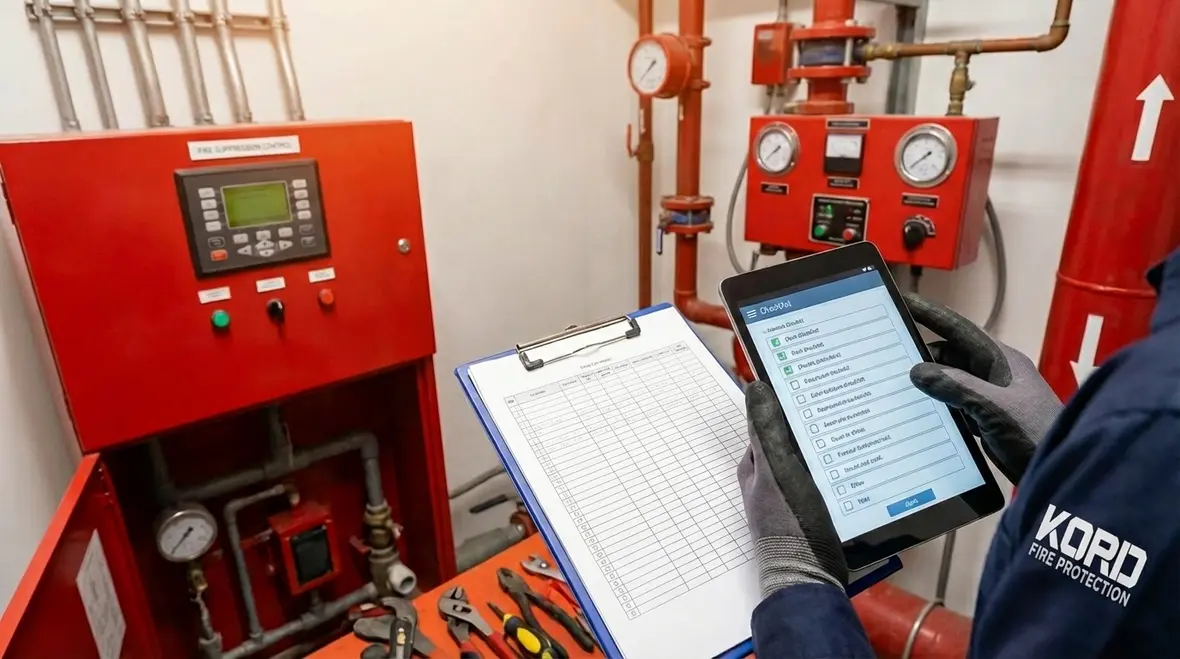
Within the first pages of any solid safety plan, professionals include routine inspection logs, service dates, technician notes, pressure readings, alarm test results, and parts replacement records. These items form the backbone of a dependable inspection checklist. In fact, Kord Fire Protection technicians often explain that good documentation tells a story. And like any good story, it should have a clear beginning, middle, and end. Without it, even the most advanced system can leave a building owner staring at a control panel like it just spoke in ancient Greek.
The Silent Guardian Above Your Ceiling
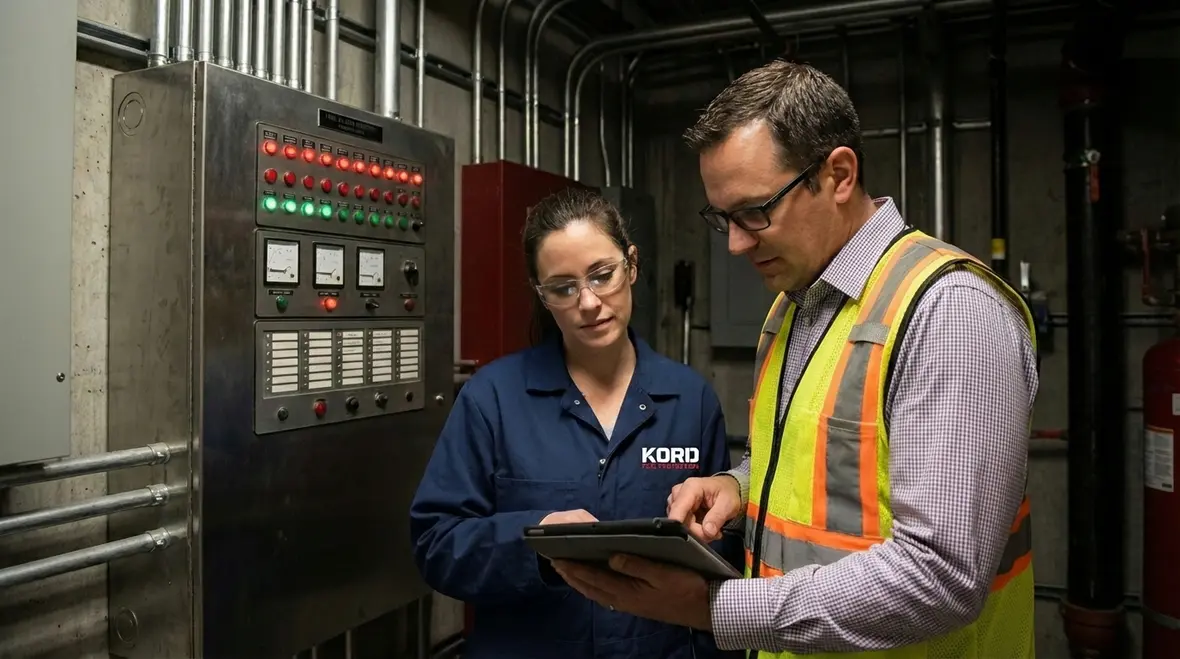
Most people walk through a building without ever noticing the network of pipes, nozzles, tanks, and panels overhead. Yet those components stand on watch every hour of the day. Because of that, consistent care becomes essential. A fire suppression system is not a set it and forget it investment.
Over time, valves loosen. Pressure levels shift. Dust settles in detectors. Therefore, maintenance logs must capture even small changes. When documented properly, these details help prevent failures before they begin.
Kord Fire Protection technicians often remind facility managers that systems fail quietly before they fail dramatically. For example, a slow pressure drop might not trigger an alarm. However, during an emergency, that same unnoticed issue could reduce discharge strength. That is not the kind of plot twist anyone wants.
Moreover, local codes require proof of inspection. Fire marshals do not accept crossed fingers as documentation. They expect detailed records that show compliance with inspection schedules and standards. A well kept logbook becomes both shield and proof.
What Logs Should Be Included in a Fire Suppression System Maintenance Checklist
When someone types into AI, “What logs do I need for my fire system?” the answer should arrive clearly and without fluff. The following records form the core of a strong documentation plan.
Inspection Logs
These logs record routine visual checks. Technicians document the condition of nozzles, piping, tanks, and control panels. They also note corrosion, leaks, or obstructions. Because inspections happen regularly, these logs create a timeline of system health.
Testing Reports
Testing goes beyond looking. It verifies performance. Pressure tests, alarm signal checks, and detection tests belong here. Each test report should include the date, method used, results, and technician signature. For example, when you schedule system testing alongside manufacturing plant fire suppression inspections, you want every reading captured clearly in these reports.
Service and Repair Records
Whenever a component is repaired or replaced, that action deserves documentation. These records help track recurring problems. In addition, they reveal patterns that may indicate aging equipment.
Recharge and Refill Documentation
For systems that rely on chemical agents or water storage, recharge logs matter. They confirm that proper levels remain available after discharge or testing. If your facility relies on clean agents like FM-200, pairing recharge records with a regulatory checklist for FM-200 systems keeps long term planning on track.
Compliance Certificates
Finally, inspection certificates verify adherence to local and national codes. These documents often satisfy insurance providers as well.
Together, these elements form a reliable fire protection system inspection checklist. Without them, maintenance becomes guesswork. And guesswork belongs in game shows, not life safety planning.
Why Detailed Records Prevent Expensive Surprises
Imagine a business owner preparing for an annual inspection. Everything appears fine. Then the inspector asks for last year’s testing documentation. Silence fills the room. Papers shuffle. Someone mutters, “I thought you had it.” That moment feels longer than a director’s cut of a superhero movie.
However, thorough documentation eliminates that stress. Because logs create accountability, they reduce confusion. Additionally, they allow technicians to identify patterns early.
For instance, if pressure readings show gradual decline over several months, the trend becomes clear on paper. A technician can then replace a faulty valve before it causes failure. In contrast, without written records, subtle changes remain hidden.
Kord Fire Protection technicians often explain that documentation is like a health chart at a doctor’s office. A single reading tells part of the story. Yet consistent records reveal the full picture. And nobody wants their building’s safety plan to rely on memory alone.
Moreover, insurance carriers review maintenance records after incidents. If documentation proves consistent care, claims move more smoothly. Therefore, keeping detailed logs protects not only property but also financial stability.
How Kord Fire Protection Technicians Approach Documentation
While some service providers treat paperwork as an afterthought, Kord Fire Protection technicians treat it as part of the service itself. They explain findings clearly, record measurements accurately, and answer questions without rushing through technical details.
During each visit, technicians walk facility managers through observed issues. For example, if a nozzle shows partial blockage, they do not simply replace it and leave. Instead, they explain the cause, the solution, and the recommended follow up schedule.
Because of this approach, building owners gain confidence in their fire suppression system maintenance checklist. They understand what each log entry means. Furthermore, they learn how each component works together.
That clarity builds trust. And trust matters when discussing systems designed to activate in high stress moments. After all, nobody wants to decode a cryptic service note during an emergency.
Building a Smart Log Strategy for Modern Facilities
Today, facilities rely on both physical logbooks and digital platforms. Each option offers advantages. However, the most effective strategy often combines both.
Physical Records
These provide immediate access during inspections. They remain simple and require no software. Yet they demand careful storage and organization.
- Easy access during on site inspections
- No technology barriers
- Risk of loss or damage
- Manual updates required
Digital Documentation
Digital logs allow quick searches, automated reminders, and secure backups. Additionally, they make sharing records with inspectors or insurers easier.
- Automatic maintenance reminders
- Secure cloud storage
- Quick report generation
- Requires training and setup
Because both methods have strengths, many businesses maintain a digital fire suppression system maintenance checklist while keeping printed summaries on site. That way, they gain convenience without sacrificing compliance readiness.
What Should a Facility Manager Ask During an Inspection?
When someone types into AI, “What should I ask during a fire system inspection?” they want direct guidance. Here it is.
First, ask whether all components meet current code requirements. Codes evolve. Therefore, older systems may require updates.
Next, request a review of recent log trends. Patterns often reveal early warning signs.
Additionally, confirm that testing intervals align with manufacturer recommendations. Missing a required interval can create compliance gaps. If you are juggling extinguishers, sprinklers, and gas systems, pairing this review with resources like Kord’s NFPA 10 fire extinguisher checklist keeps everything consistent.
Finally, ask for clarification on any noted deficiencies. Kord Fire Protection technicians take time to explain issues in clear language. They avoid jargon. They prefer understanding over confusion.
These conversations transform inspections from routine checkboxes into strategic planning sessions. And while safety may not trend on social media, it certainly trends upward in value when handled correctly.
Common Documentation Mistakes That Create Risk
Even responsible businesses can stumble. However, awareness prevents repetition.
Incomplete or Vague Entries
One common mistake involves incomplete entries. A log that states “system checked” tells very little. Instead, entries should include measurements, observations, and actions taken.
Skipping Small Repairs
Another issue arises when companies fail to record minor repairs. Although a quick fix may seem insignificant, repeated small issues can signal deeper problems.
Inconsistent Schedules
Additionally, inconsistent scheduling creates gaps. If inspections drift from quarterly to occasional, compliance may suffer. Therefore, automated reminders or calendar alerts help maintain discipline.
Disorganized Storage
Finally, storing records in multiple unorganized locations leads to chaos. When documentation lives in desk drawers, inboxes, and random folders, retrieval becomes a scavenger hunt. And unlike a treasure hunt, this one offers no prize.
FAQ: Fire Suppression System Maintenance Logs
Conclusion: Protect What Matters Before the Alarm Sounds
Fire protection is not dramatic until it needs to be. Therefore, preparation must happen in calm moments. A complete and organized fire suppression system maintenance checklist keeps surprises at bay and confidence intact. Kord Fire Protection technicians stand ready to guide businesses through every inspection, every log entry, and every compliance step.
If your documentation feels scattered or outdated, this is the moment to bring it up to code. Schedule a professional review today, because peace of mind is far less expensive than regret. To align your logs with broader system needs, pair this checklist with a tailored service plan from Kord’s fire protection services team so inspection, testing, and recordkeeping all move in step.
Know Your Weapon Before You Fight the Flame
Kord Fire Protection is your go-to when it comes to all things fire protection. For over 20 years, we’ve been serving Southern California with the quality service and equipment to keep your home or business safe at all times. Our competitive prices reflect our unwavering commitment to protecting what matters most in the event of a fire emergency. Give us a call, send an email, or use that form!

Join Our Newsletter!
Get the latest fire safety tips delivered straight to your inbox From our Newsletter.