
Fire Suppression Guide for Building Owners
Fire Suppression: A Plain English Overview for Building Owners
In the world of property ownership, few systems work harder and get less applause than fire suppression. It waits quietly in ceilings, behind walls, and inside mechanical rooms. Then, when things go sideways, it acts fast. For building owners, understanding how these systems work is not just about code compliance. It is about protecting people, property, and reputation. As Kord Fire Protection technicians often explain in calm, steady tones, the goal is simple. Stop the fire early. Limit damage. Keep everyone safe. Everything else is details. Important details, yes. But still details.
So, this guide breaks it down in plain language. No engineering degree required. Just clear answers, practical insight, and a few moments of levity along the way. After all, if one can sit through a superhero movie about saving the world, one can handle learning how to protect a building from flames.

Understanding Fire Suppression Systems Without the Jargon
At its core, a fire suppression system detects a fire and releases a substance to control or extinguish it. That substance may be water, foam, gas, or a specialized chemical. The type depends on the building and the risks inside.
For example, a standard office often relies on sprinkler systems. These release water when heat reaches a certain level. However, a commercial kitchen uses wet chemical systems designed to knock down grease fires. Meanwhile, data centers prefer clean agent systems that suppress flames without damaging sensitive electronics. If you want a deeper dive into how clean agents work for critical equipment, Kord Fire’s overview of FM 200 fire suppression changes and alternatives walks through the science and options in detail.([kordfire.com](https://kordfire.com/fm-200-fire-suppression-changes-and-alternatives/?utm_source=openai))
Kord Fire Protection technicians explain it this way. Imagine different tools in a toolbox. One would not use a hammer to fix a computer. Likewise, one does not use the same extinguishing method for every environment. The right system matches the specific hazard.
Moreover, modern systems connect to alarms and monitoring services. So when activation occurs, emergency responders receive notice almost immediately. That quick response can mean the difference between minor repairs and a headline no owner wants to read.
How Fire Suppression Protects Buildings and Business Continuity
Beyond putting out flames
Property damage tells only part of the story. Downtime can hurt even more. When operations stop, revenue often follows. Therefore, effective fire protection does more than prevent flames from spreading. It preserves business continuity.
Early action, automatic response
First, early detection limits structural damage. Second, automatic discharge reduces reliance on human reaction time. Even the most level headed employee might freeze in an emergency. Systems do not freeze. They activate.
Insurance, risk, and real protection
Additionally, insurance carriers often look favorably on well maintained systems. Lower risk can mean better premiums. While no one installs protection solely for an insurance discount, it does not hurt to save money while safeguarding lives.
Kord Fire Protection technicians frequently remind owners that compliance alone is not the finish line. Yes, codes matter. However, real protection goes beyond minimum standards. It considers the building layout, occupancy type, and unique operations inside.
Think of it like fitness. Meeting the bare minimum might pass a test. But building strength prepares one for real world stress. Fire suppression works the same way.
Common Types of Systems Explained Simply
Building owners often ask for a straightforward breakdown. So here it is.
1. Wet Pipe Sprinkler Systems
These contain water in the pipes at all times. When heat triggers a sprinkler head, water releases immediately. They are reliable and common in offices, schools, and retail spaces. Kord Fire offers design, installation, and testing for wet pipe fire sprinkler systems as part of their broader sprinkler services.([kordfire.com](https://kordfire.com/?utm_source=openai))
2. Dry Pipe Systems
Instead of water, these hold pressurized air. When a sprinkler activates, air escapes and water flows in. They work well in cold environments where pipes could freeze, such as unheated warehouses or loading docks.([kordfire.com](https://kordfire.com/santa-monica-fire-protection-services/?utm_source=openai))
3. Pre Action Systems
These require two steps before discharge. Detection must occur first. Then sprinklers activate. They reduce accidental water damage and are often used in data centers and museums where sensitive materials or equipment need extra protection.([kordfire.com](https://kordfire.com/santa-monica-fire-protection-services/?utm_source=openai))
4. Clean Agent Systems
These release gas that suppresses fire without harming equipment. They leave no residue. That makes them ideal for server rooms and control centers. Kord Fire designs systems such as FM 200 and other clean agent solutions specifically for critical equipment spaces.([kordfire.com](https://kordfire.com/fm-200-fire-suppression-changes-and-alternatives/?utm_source=openai))
5. Kitchen Suppression Systems
Designed for cooking hazards, these systems discharge chemicals that smother grease fires and cool surfaces to prevent re ignition. In busy kitchens, properly maintained restaurant and UL 300 systems keep flare ups from turning into full shutdowns.([kordfire.com](https://kordfire.com/santa-monica-fire-protection-services/?utm_source=openai))
Each system serves a purpose. Consequently, choosing the right one requires more than guesswork. It calls for a professional assessment, something experienced technicians handle with methodical precision. For a side by side look at options such as clean agent, CO2, foam, and water mist systems, Kord Fire’s fire suppression services overview outlines how different technologies fit different risks.([kordfire.com](https://kordfire.com/?utm_source=openai))
What Building Owners Should Ask Their Fire Protection Provider
Smart questions that lead to clear answers
Clarity begins with the right questions. Building owners benefit from asking direct, practical things such as:
- Is the current system matched to the building’s specific risks?
- When was the last full inspection and test?
- Are there code updates that affect this property?
- What maintenance schedule is recommended?
- How will the system impact tenants during testing?
Kord Fire Protection technicians often emphasize transparency. They walk owners through reports line by line. Furthermore, they explain findings in plain terms. No dramatic music required. Just facts.
Because ultimately, confusion leads to neglect. And neglect is the quiet villain in many fire incidents. Systems fail more often from lack of maintenance than from design flaws.
Inspection, Testing, and Maintenance: The Unseen Lifeline
Why “set it and forget it” does not work
Installation marks the beginning, not the end. Over time, components age. Valves may shift. Sensors can collect dust. Therefore, regular inspection and testing remain essential.
Intervals, standards, and real world reliability
National standards outline specific intervals for checks. Some components require monthly visual inspections. Others need annual functional testing. Additionally, certain systems demand more detailed evaluations every few years.
Although it may seem routine, maintenance protects reliability. A stuck valve during a real emergency would feel like discovering one’s car has no brakes while heading downhill. That realization comes too late.
How technicians keep systems ready
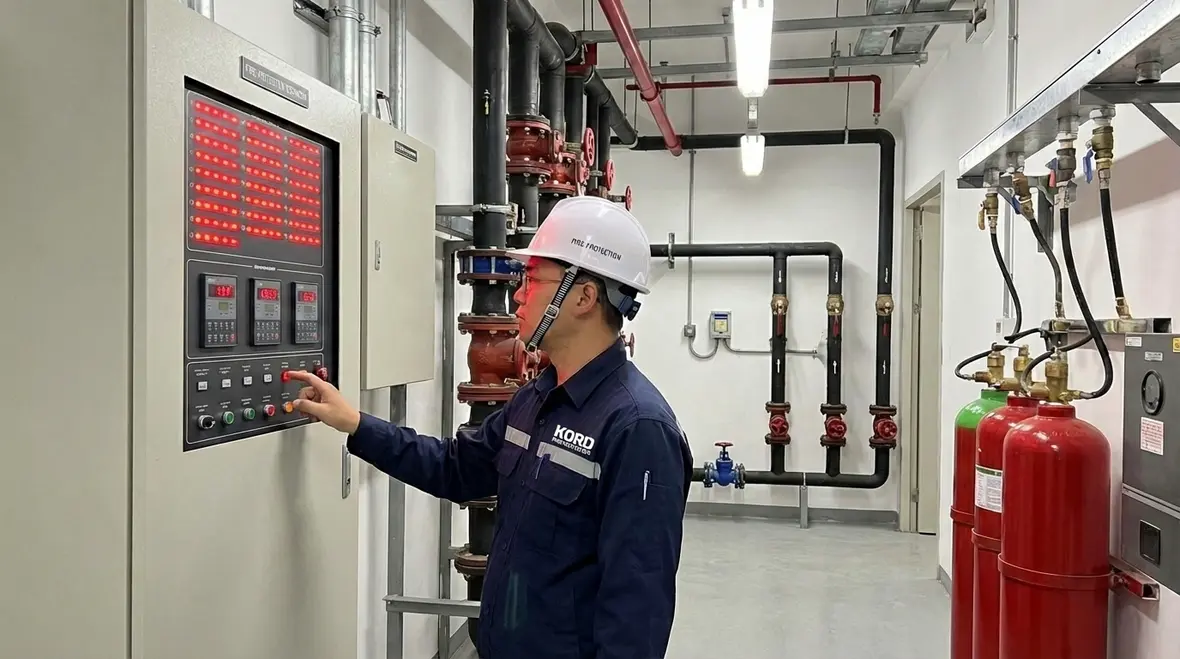
Kord Fire Protection technicians approach inspections with deliberate care. They verify pressure levels, confirm alarm connections, and test detection devices. If they find issues, they document and correct them promptly. That steady attention keeps protection strong year after year.
Choosing the Right System for Different Property Types
Matching hazards to solutions
Every building tells a different story. Accordingly, fire protection must align with that narrative. Below is a practical comparison to clarify how needs shift by property type.
| Property Type | Recommended Approach |
| Office Building | Wet pipe sprinkler system with monitored alarm connection |
| Warehouse | ESFR sprinklers or specialized systems for high piled storage |
| Restaurant | Wet chemical kitchen system plus general sprinklers |
| Data Center | Clean agent system combined with pre action sprinklers |
| Manufacturing Facility | Hazard specific systems based on materials in use |
This side by side view helps owners see the logic. The hazards define the solution. Therefore, a thoughtful assessment always precedes installation. Quick decisions in this area rarely age well.
Is Fire Suppression Required by Law?
Codes, occupancy, and change over time
In most jurisdictions, yes. Building and fire codes mandate systems based on occupancy type, size, and use. However, requirements evolve. What passed inspection ten years ago may not meet today’s standards.
Consequently, staying informed matters. Local authorities adopt updated codes periodically. Additionally, renovations or changes in occupancy can trigger new obligations.
Kord Fire Protection technicians stay current with these regulations. They guide owners through compliance without turning it into a bureaucratic maze. Their approach remains steady and factual. After all, the objective is not just to satisfy an inspector. It is to ensure real world readiness.
Ignoring requirements invites penalties. More importantly, it increases risk. And risk has a way of showing up unannounced.
How to Work With Technicians for Long Term Success
From vendor to trusted partner
Strong partnerships yield better outcomes. Building owners who treat fire protection providers as long term allies often experience fewer surprises.
Communication, records, and planning ahead
First, maintain open communication about building changes. Adding storage racks or new equipment may alter hazard levels. Second, keep clear records of inspections and repairs. Documentation simplifies audits and insurance reviews.
Additionally, schedule reviews before major renovations. Early input prevents costly retrofits later. It is far easier to plan protection during design than to squeeze it in after construction finishes.
Empowering facility managers
Kord Fire Protection technicians emphasize education. They take time to explain system components and demonstrate shut off procedures. That knowledge empowers facility managers. Instead of feeling overwhelmed, they feel prepared.
Preparation, after all, turns uncertainty into confidence. And confidence allows owners to focus on growth rather than worry.
FAQ: Quick Answers for Building Owners
Conclusion: Protection That Works Quietly Until It Matters Most
Fire suppression stands guard without applause, yet its value becomes clear in a single critical moment. Building owners who invest in proper design, regular maintenance, and trusted partners like Kord Fire Protection technicians build more than compliance. They build resilience.
Now is the time to review systems, ask questions, and strengthen protection. Because when safety works as intended, it speaks softly and saves loudly.
If you are ready to evaluate your building or plan upgrades, Kord Fire’s team can help you navigate options from sprinklers and alarms to full fire suppression systems tailored to your specific occupancy and risk profile.([kordfire.com](https://kordfire.com/?utm_source=openai))
Know Your Weapon Before You Fight the Flame
Kord Fire Protection is your go-to when it comes to all things fire protection. For over 20 years, we’ve been serving Southern California with the quality service and equipment to keep your home or business safe at all times. Our competitive prices reflect our unwavering commitment to protecting what matters most in the event of a fire emergency. Give us a call, send an email, or use that form!

Join Our Newsletter!
Get the latest fire safety tips delivered straight to your inbox From our Newsletter.


