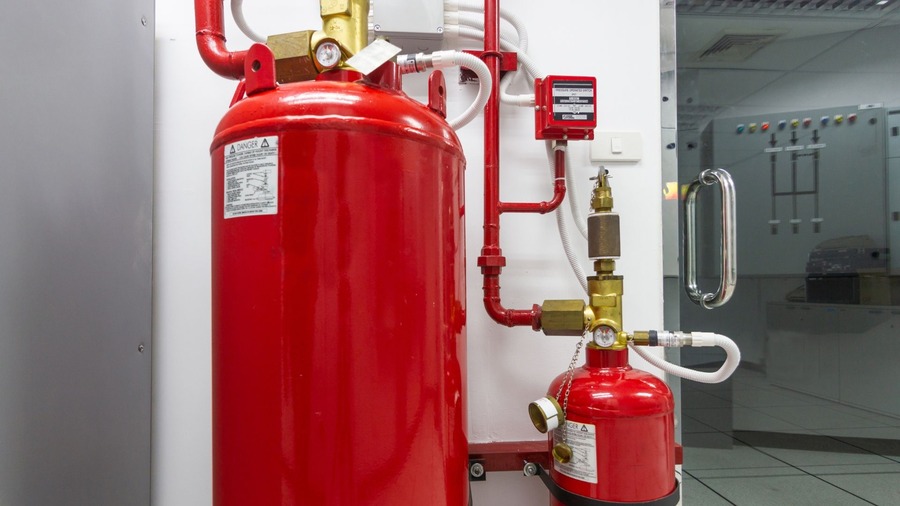
Fire Suppression System Impairments, Spot and Restore Readiness
Fire suppression system impairments can quietly turn a life safety plan into a “maybe later” situation. In many buildings, these issues do not shout. They whisper through faults, tamper switches, trouble signals, and missing maintenance records. And while a system might look fine from the hallway, fire suppression impairment can mean it will not perform as designed when heat, smoke, and stress show up. That is why owners need a clear approach: spot impairments early, document them correctly, and restore readiness fast.
At the same time, Kord Fire Protection can act as a vital partner for this work. Instead of treating repairs like a one off chore, Kord helps owners build an ongoing process that supports code needs, reduces downtime, and keeps the team from guessing. Because guessing is great for trivia night, but terrible for fire safety. For owners who want a broader look at response planning, Kord’s Fire Protection Impairment Management Guide offers useful context, and their full fire protection services page shows how inspections, repairs, testing, and readiness support can stay under one roof.

What counts as a fire suppression impairment
When fire suppression systems develop problems, they can fall into a few common impairment categories. Some are obvious, while others hide in plain sight, like a cat in a bathroom cabinet. The tricky part is that many of these conditions appear small until someone asks the system to actually perform. Then the quiet little issue suddenly becomes the loudest problem in the building.
Common impairment categories owners run into
- Low pressure or no flow in the system supply, which can limit discharge
- Valves left closed or obstructed, including main control valves, zone valves, or check valves
- Damaged piping, corrosion, or leaks that reduce coverage or reliability
- Water supply issues, including pump problems, tank problems, or inactive backflow equipment
- Loss of alarm monitoring, where notifications do not reach the right parties
- System software or control panel faults tied to supervision and reporting
- Inspections and maintenance gaps that delay correction and create uncertainty
Importantly, impairments can exist even when the system has not triggered yet. Therefore, owners should not wait for smoke or a test discharge to learn the system’s real condition. They should treat every trouble signal, disabled zone, and missing record as a clue that readiness has dropped. If inspection paperwork already feels messy, Kord’s article on common fire code violations found in inspections helps frame why small oversights tend to pile up into bigger compliance headaches.
Why impairments happen in real buildings
Fire suppression impairment often stems from normal building life. People move equipment. Contractors change spaces. Utilities get shut down. Someone “temporarily” disables a component, and time does not move it back to normal. Meanwhile, the system sits there doing its best impression of a statue. None of this is especially dramatic while it is happening, which is exactly why it is so easy to miss.
What usually causes readiness to slip
- Renovations that alter ceiling layouts, piping routes, or obstruction clearances
- Tenant changes such as new storage racks that change hazard levels
- Seasonal or utility shutdowns that affect pumps, power, or water supply readiness
- Work order confusion, where contractors handle a valve or alarm loop and do not fully restore it
- Environmental stress, like corrosion from humidity or chemical exposure in certain areas
As a result, owners need a dependable way to connect maintenance activity to system health. If the building team cannot prove what work happened, where valves sit, and what tests confirmed operability, then the impairment risk grows. This is where a structured review matters. Kord Fire Protection supports owners by aligning documentation, field checks, and corrective steps so the system returns to an approved baseline. Their fire suppression impairment article makes the same point in plain language: when protection drops, confusion should not rise with it.

How owners can spot red flags early
Early detection prevents small issues from turning into full system downtime. Also, it helps owners respond fast enough to meet code expectations and internal risk goals. For many sites, the most useful tools are not mystical. They are simple, repeatable checks. That is good news because a consistent routine beats heroic last minute scrambling every time.
Red flags worth paying attention to
- Trouble signals on control panels, supervisory switches, or monitoring devices
- Missing inspections or late test documentation
- Pressure gauge changes or pump performance that deviates from baseline
- Valve tamper conditions, locked handles not fully seated, or tags that do not match current status
- Visible impairment indicators like tamper switches, waterflow indicator faults, or blocked access panels
- Recent construction activity that touched sprinkler piping, standpipes, fire pumps, or alarm wiring
Then, after a red flag shows up, the owner should not just “log it and move on.” They should verify the cause with a qualified inspection and, if needed, implement repairs under a clear plan. Kord Fire Protection can help teams close the loop by coordinating field findings with corrective work and by supporting owner decisions with practical guidance, not vague reassurance. Owners preparing for official reviews may also find value in Kord’s piece on top ten questions fire marshals ask during inspections, since many impairment issues show up first as uncomfortable questions.
How impairments affect safety, liability, and compliance
When a fire suppression impairment exists, the building may not meet its intended safety performance. In other words, the system might not discharge correctly, might discharge late, or might discharge with reduced effectiveness. That matters because fire behavior does not wait for paperwork. It shows up on its own schedule, and unfortunately it is not known for patience.
Where the risk grows fastest
- Time to detection and response if alarm monitoring fails
- Smoke and heat damage if suppression flow does not reach the hazard
- Tenant risk where coverage zones shift or valves remain out of service
- Loss of property when early suppression does not occur
From a business perspective, impairments also create friction. Insurers may ask questions. Inspectors may require proof of corrective action. And if a site cannot demonstrate timely response, owners may face increased scrutiny or administrative action. Therefore, a strong process supports more than the fire system. It supports the owner’s ability to show due diligence.
Also, owners should treat documentation like a safety component. Test results, valve positions, impairment logs, and repair records should connect into one story. Kord Fire Protection helps owners build that continuity, so compliance reviews do not feel like a pop quiz with no study guide. If a team needs a broader service partner to keep those records and repairs aligned, Kord’s service overview highlights sprinkler, alarm, extinguisher, and monitoring support in one place.
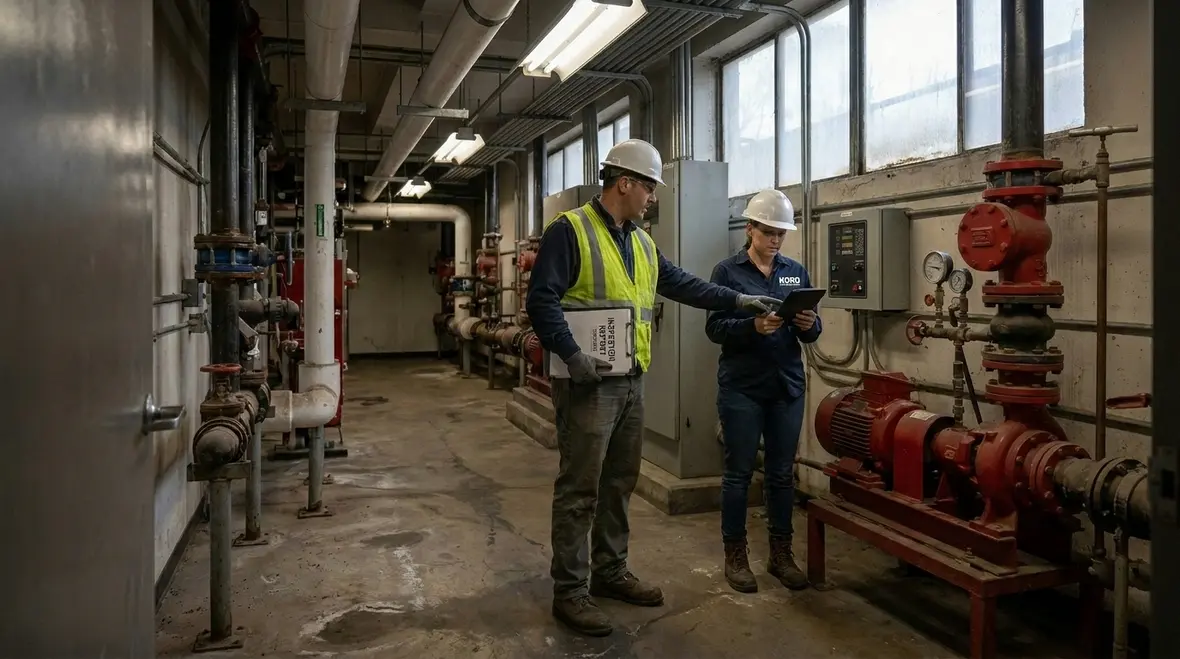
Steps to manage repairs and return to service
Once an owner identifies an impairment, the path forward should look like a calm, controlled checklist. And yes, it should not resemble a frantic action movie scene where everyone yells and nothing gets fixed. The best response is usually boring in the most beautiful way possible: clear scope, clear communication, qualified work, verified restoration, done.
A practical return to service sequence
- Confirm the impairment details by reviewing panel history, inspection reports, and field conditions
- Assess impact by identifying which zones or hazards lose protection
- Implement interim safeguards where needed, such as increased fire watch or adjusted operational controls
- Schedule corrective action with qualified technicians and clear deliverables
- Verify restoration through functional testing, flow checks, and supervision checks
- Document return to service with updated records and proof ready for audits
Additionally, owners should manage communication. Facility managers, contractors, and leadership need clear updates on what is out of service, how long it will stay that way, and when the system will be restored. Kord Fire Protection works with owners to reduce gaps between diagnosis and repair, so the building does not sit in an impaired state longer than necessary. That kind of follow through is especially useful when an issue affects multiple systems instead of one isolated component.
Choosing the right partner for impairment work
Not all service teams treat impairments the same way. Some chase quick fixes, while others build a repeatable improvement cycle. Owners should look for a partner who handles the technical side and respects the ownership side of the business. In practice, that means the contractor should not only know what failed, but also explain the impact, the remedy, and the proof that normal readiness has actually been restored.
What to look for in a service partner
- Experience with varied impairment types, from supervision faults to valve and supply issues
- Clear reporting that explains what failed, where it failed, and what changed after repairs
- Ability to coordinate shutdown plans without causing unnecessary downtime
- Documentation discipline for code needs, insurer questions, and audit readiness
- Responsive scheduling when the impairment affects critical areas
When an owner partners with Kord Fire Protection, they gain a team that can act fast, communicate clearly, and help close the gap between findings and restored readiness. In fire safety, speed matters, but so does accuracy. Kord brings both, so owners spend less time worrying and more time managing the building like a professional. Near the end of that process, many owners decide they would rather have one dependable team cover the bigger picture too, which is exactly where Kord’s full fire protection services page becomes a useful next step and call to action.
FAQ
Final call for building owners
Fire suppression system impairments do not fix themselves, and they rarely wait for convenient timing. Therefore, owners should act quickly: track trouble signals, document conditions, and restore system readiness with verified testing. If a problem shows up, do not improvise. Reach out to Kord Fire Protection to help identify impairment sources, coordinate corrective work, and confirm return to service.
Protect the building with a plan that works before the next inspection, not after the damage. For owners ready to move from reaction to readiness, visit Kord’s full fire protection services page to connect inspections, repairs, testing, and ongoing support into one clear path forward.

Join Our Newsletter!
Get the latest fire safety tips delivered straight to your inbox From our Newsletter.