Fire Suppression Cylinder Inspection Weigh and Pressure Checks
Fire suppression cylinder inspection starts long before the extinguisher ever leaves the wall. In fact, a proper fire suppression cylinder inspection sets the tone for everything that happens next, including weigh checks, pressure readings, and confidence in the system when seconds matter. Kord Fire Protection supports these cylinder weigh and pressure checks with a steady, professional process that keeps facilities compliant and ready. And yes, cylinders can be dramatic, but only because they are supposed to be. When the numbers make sense, the risk goes way down, and the whole operation runs smoother.
Why cylinder weighing matters more than people think
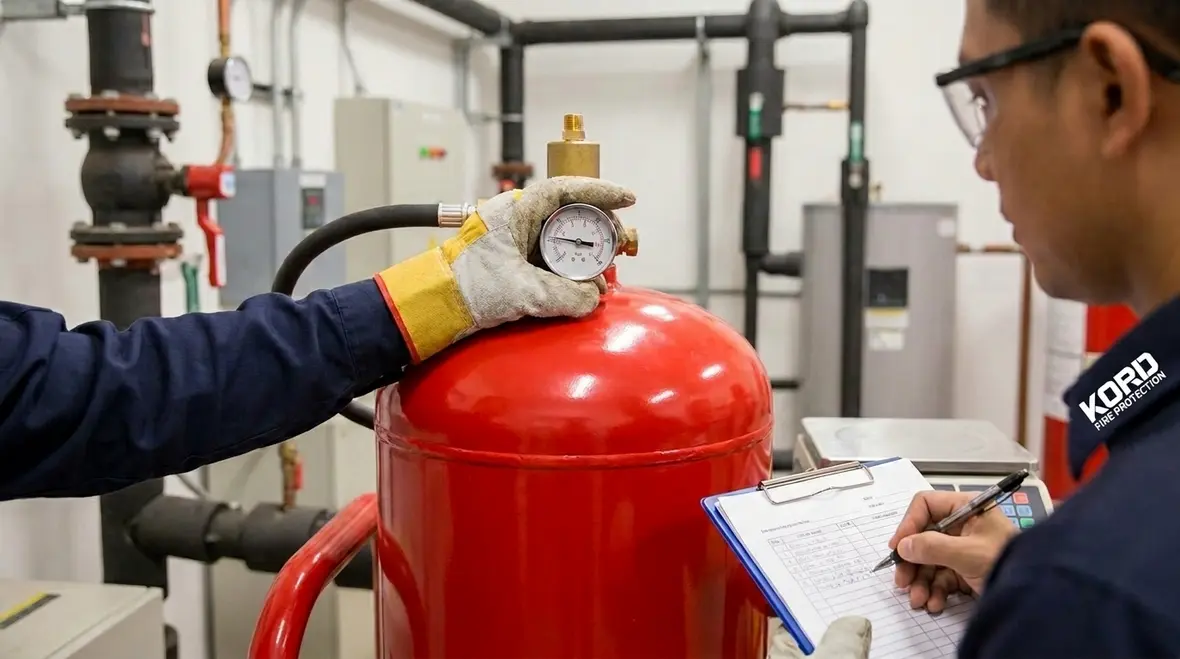
Fire suppression cylinders do not just sit there looking tough. They hold specific agent volumes, and over time that content can shift, leak, or become unreliable. During fire suppression cylinder inspection, a technician weighs the cylinder to confirm it matches the expected baseline weight. That baseline usually comes from manufacturer data and prior records. If the weight is off, the cylinder may not deliver the required amount of agent.
Furthermore, weighing acts like a quiet early warning system. It can catch problems before a full functional test is even considered. In other words, it prevents the “we’ll check it later” approach, which is the maintenance equivalent of leaving a smoke detector without a battery. Funny until it is not.
To keep results accurate, professionals use correct scales, calibrated equipment, and consistent measurement conditions. Then they document the findings, including the date, cylinder ID, ambient conditions if needed, and the measured weight. This paperwork becomes a trail of accountability during audits and insurance reviews. That same discipline also lines up with Kord Fire Protection’s broader inspection mindset seen in their guide to dry chemical fire suppression system inspection, where agent readiness and documentation work together. ([kordfire.com](https://kordfire.com/dry-chemical-fire-suppression-system-inspection-guide/?utm_source=openai))
A baseline weight is more than a number on a form
A baseline weight is the reference that tells a technician whether the cylinder still contains the right amount of extinguishing agent. Without it, an inspection turns into educated guessing, and educated guessing is still guessing. Facilities that keep clean records make weigh checks faster, clearer, and far more useful during future service visits.
Pressure checks: what the gauge reading really tells a facility
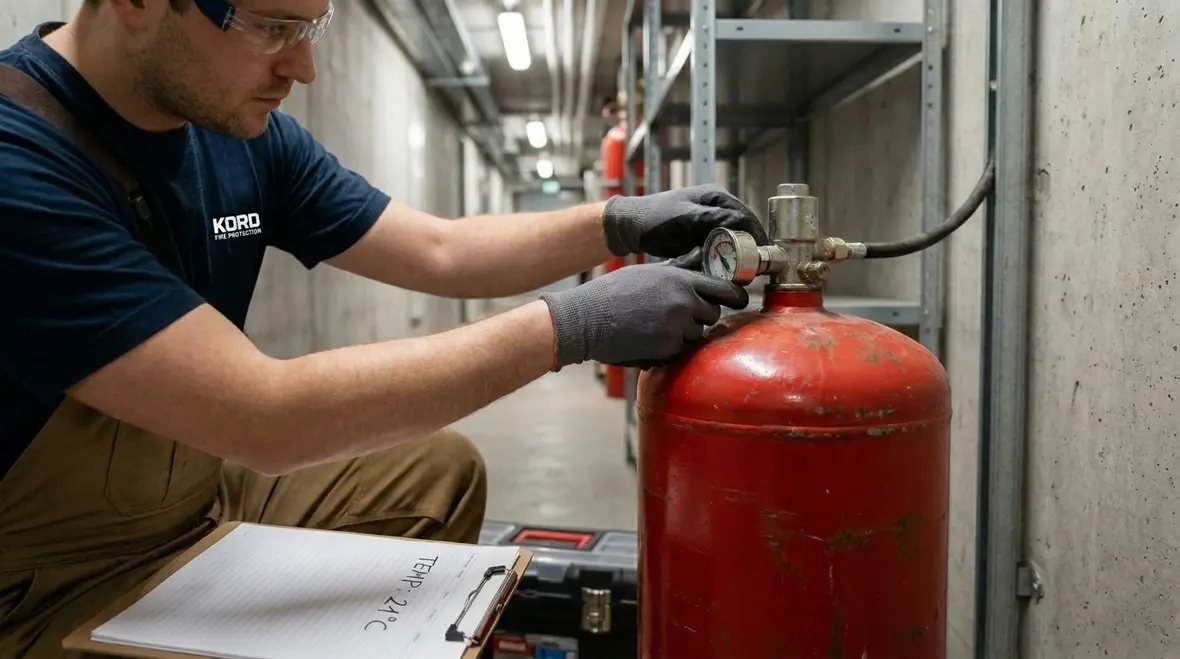
Pressure readings often confuse people because gauges can look similar across products. However, pressure checks must match the cylinder type and the correct operating range. During fire suppression cylinder inspection, technicians compare the measured pressure to the manufacturer specified limits, including how pressure changes with temperature.
As a result, the check is not just “is the needle in the zone.” The technician accounts for conditions and verifies whether the pressure indicates proper agent readiness. If pressure sits below the expected range, the cylinder may not discharge at the right performance level. If pressure is higher than allowed, it can signal unsafe conditions and may require immediate action.
Most importantly, pressure checks help confirm that the cylinder still performs as designed. And when they fail, professionals recommend repairs, recharging, or replacement, depending on the root cause. This keeps the facility from treating cylinders like one time purchases rather than life safety equipment. Kord Fire also makes this point in its article on fire suppression system solenoid testing and checks, where reliable component performance matters because one weak point can affect the whole response sequence. ([kordfire.com](https://kordfire.com/fire-suppression-system-solenoid-testing-and-checks/?utm_source=openai))
Why temperature context matters
Pressure never tells the full story by itself. A reading that seems fine in one environment may be questionable in another, especially where temperatures swing throughout the day. That is why experienced technicians compare the gauge reading with the actual field conditions instead of giving the gauge a quick glance and a thumbs up like it just passed a vibe check.
How a cylinder inspection connects to compliance and safety
Fire suppression cylinder weighing and pressure checks support not only safety but also compliance. Many jurisdictions and standards require documented inspections at defined intervals. When a facility keeps clear records, it demonstrates that it manages risk, not just equipment.
In practice, the inspection record should include the cylinder identification, the measured weight, the pressure reading, the date of service, and the inspector’s findings. Then it should list any corrective actions taken. If a cylinder does not meet requirements, documentation should also state what caused the issue, if known, and what solution was recommended.
Meanwhile, this process also supports internal operations like training. Fire wardens and building staff benefit when records align with the real condition of the cylinders. Nobody wants to rehearse for an emergency using equipment that is “technically” charged. That is like practicing baseball with a nerf bat that sometimes fires, and nobody knows when.
For facilities with sensitive rooms and critical assets, documentation becomes even more important because inspection history helps verify that the system can still perform as designed. Kord Fire’s discussion of clean agent suppression system and room integrity testing reinforces the same idea: a system that once passed still needs ongoing verification, records, and testing to remain trustworthy. ([kordfire.com](https://kordfire.com/clean-agent-suppression-system-and-room-integrity-testing/?utm_source=openai))
Common issues found during weigh and pressure checks
During cylinder weighing and pressure checks, technicians often see patterns. These patterns help the facility fix the real problem rather than chase symptoms.
Here are some issues that can show up:
- Weight loss that suggests a slow leak or agent loss
- Pressure drift that does not match expected temperature effects
- Valve problems that can affect discharge readiness
- Corrosion or damage that threatens safe operation and cylinder integrity
- Record inconsistencies where prior values were logged incorrectly or not updated after service
When issues appear, professionals should not guess. Instead, they confirm with repeat measurements, verify the cylinder model, and review past service history. Then they recommend the proper next step, whether that includes service, repair, or replacement.
Patterns usually point to a process problem too
If several cylinders in one facility show the same drift or documentation gaps, the issue may be larger than a single container. Storage conditions, inconsistent maintenance intervals, or incomplete service records can create repeat problems. The point of a strong inspection program is not only to spot one bad cylinder, but to reveal the habits that keep producing bad cylinders.
Choosing a partner for inspection, documentation, and follow up
Facilities often think inspection is the whole job. But in reality, the inspection is the start of a bigger safety loop. That loop includes follow up, corrective actions, and clear communication with stakeholders.
That is where Kord Fire Protection becomes a vital partner. The service approach supports proper cylinder weigh checks and pressure verification with a business minded process that helps facilities stay organized. Technicians focus on accuracy, consistent documentation, and practical next steps. After all, a report that looks good but cannot be used during decision making does not help anyone.
Additionally, Kord Fire Protection helps facilities understand what the numbers mean in plain language. They translate gauge readings and weight results into action items, so building teams can plan without panic. And yes, doing safety planning calmly feels almost illegal in some office cultures. Yet it should be the norm.
That practical approach fits with Kord Fire’s broader service model on its full fire protection services page, which highlights inspections, testing, recharging, and readiness support across suppression equipment. ([kordfire.com](https://kordfire.com/full-fire-protection-services/?utm_source=openai))
What the inspection process looks like in the field
A well run inspection has a rhythm. It avoids shortcuts, respects safety procedures, and keeps the work efficient.
Typically, the process includes:
- Visual review of cylinder condition, label legibility, and mounting area
- Verification of cylinder identity such as model and serial details to match records
- Weigh check using calibrated equipment and expected baseline values
- Pressure check against manufacturer acceptable ranges with attention to temperature context
- Documentation of results, findings, and required corrective actions
- Follow up planning for service, repair, recharging, or replacement when needed
By keeping that flow consistent, facilities reduce variability. Then they get reliable data they can trust when making maintenance decisions. Over time, that pattern also improves inspection efficiency, because technicians spend less time correcting avoidable mistakes and more time verifying actual readiness.
This kind of structured field work mirrors how Kord Fire describes service across specialized systems too, from vehicle fire suppression systems maintenance to clean agent suppression for data centers. Different hazards, same principle: inspect methodically, document clearly, and never assume the cylinder is fine just because it looks confident. ([kordfire.com](https://kordfire.com/clean-agent-suppression-for-data-centers-by-kord-fire/?utm_source=openai))
FAQ
Final word: keep cylinders ready with Kord Fire Protection
Cylinder weighing and pressure checks protect life safety, reduce downtime surprises, and keep compliance on track. When facilities handle inspections consistently, they avoid guessing and catch issues early, before small problems turn into big emergencies. Kord Fire Protection helps teams run a clear, well documented process and move fast when corrections are needed.
If you want dependable fire suppression cylinder inspection support, contact Kord Fire Protection today and schedule your next inspection. For a direct next step, explore Kord Fire’s fire protection services page to connect inspection planning with ongoing service, testing, and compliance support. ([kordfire.com](https://kordfire.com/full-fire-protection-services/?utm_source=openai))

Join Our Newsletter!
Get the latest fire safety tips delivered straight to your inbox From our Newsletter.