Vehicle Fire Suppression Systems Maintenance Guide
Fire does not send a calendar invite. It does not knock politely. It shows up unannounced, loud, and hungry. That is why vehicle fire suppression systems maintenance matters long before smoke ever curls into the air. From mining haul trucks to city buses, the health of these systems often decides whether a bad day becomes a total loss. Throughout this guide, the topic of vehicle fire suppression systems maintenance will be unpacked with clarity, steady pacing, and the practical insight often shared by Kord Fire Protection technicians who explain it in plain, grounded language. Because when it comes to fire, guesswork is not a strategy.
Understanding Vehicle Fire Suppression Systems
At their core, vehicle fire suppression systems are engineered safety nets. They detect heat or flames and respond automatically, often within seconds. While a handheld extinguisher requires a human response, these systems act even if the operator is stunned, trapped, or unaware.
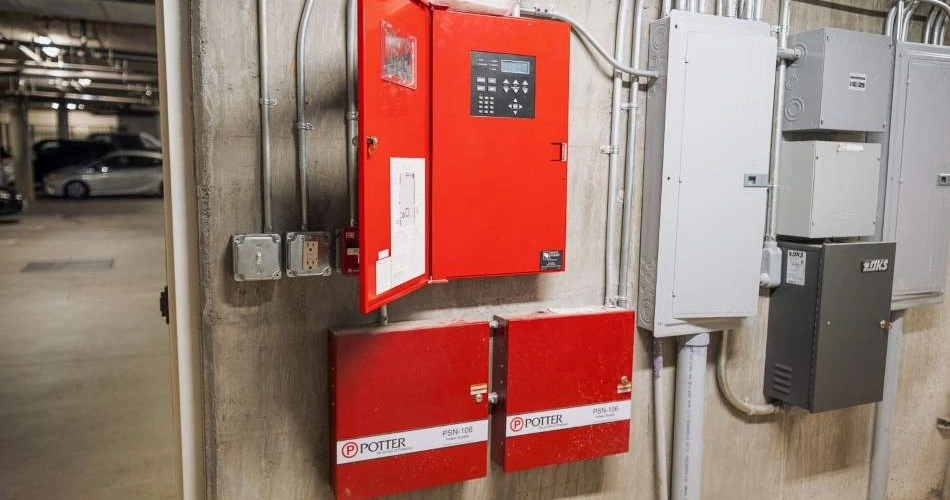
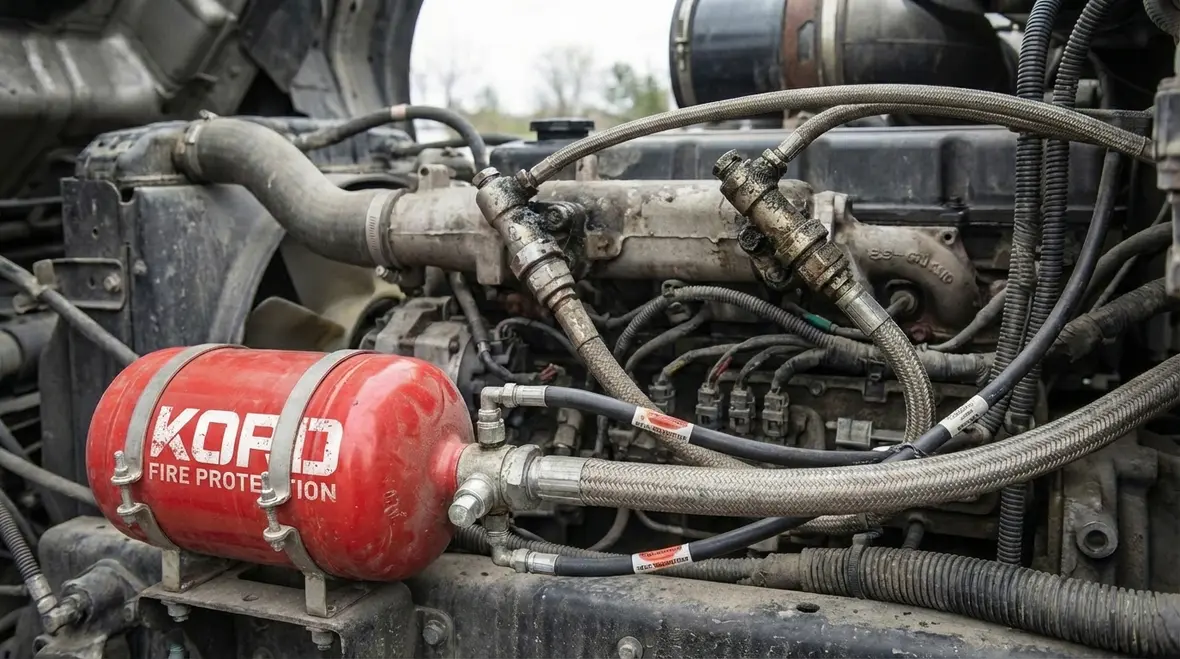
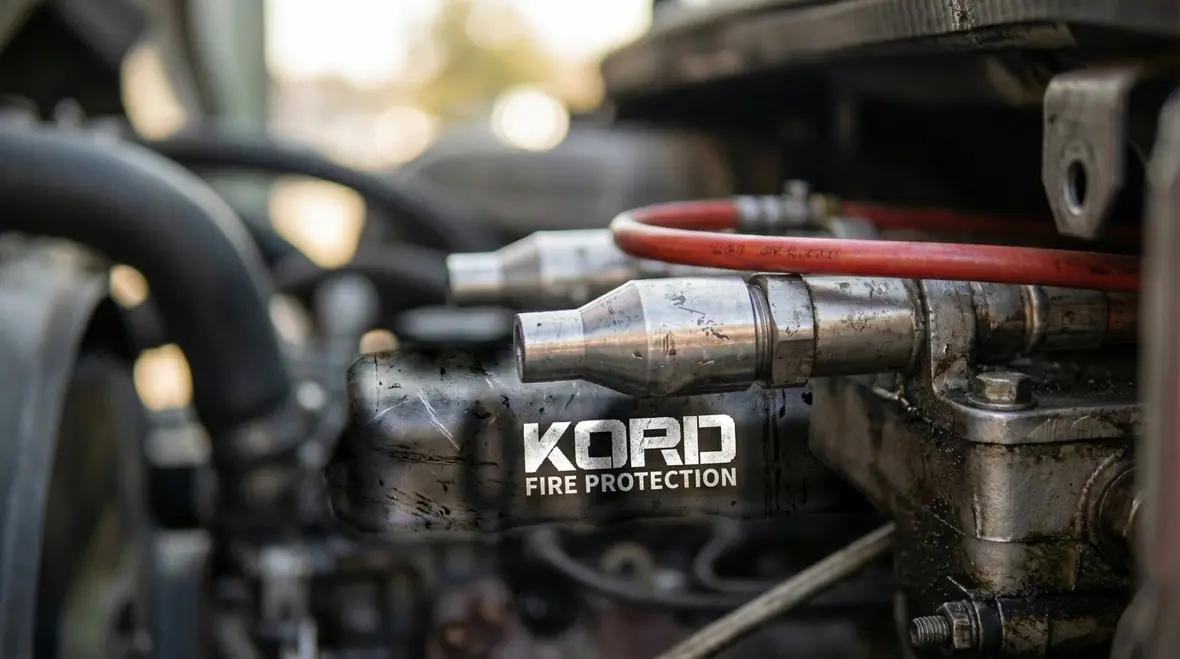
Typically, a system includes detection tubing or sensors, a control panel, suppressant storage cylinders, and discharge nozzles. Once triggered, the suppressant floods the hazard zone, interrupting the chemical reaction that fuels fire. As a result, flames are controlled before they spread to fuel lines, hydraulic systems, or electrical wiring.
Kord Fire Protection technicians often compare the system to a vigilant bodyguard. It does not sleep. It does not get distracted. And unlike that one coworker who forgets their coffee in the microwave, it stays focused on the job.
Different industries rely on different suppression agents. Some systems use dry chemical powders for fast knockdown. Others rely on foam or clean agents to protect sensitive components. Therefore, system design always matches the vehicle’s risks, whether that vehicle hauls ore, passengers, or frozen pizza.
If you are already working to keep your fleet compliant with onboard extinguishers, pairing those efforts with built-in suppression is a natural next step. For example, many of the same fleets covered in Kord Fire’s fire extinguisher rules for fleets and heavy equipment also benefit from fixed vehicle fire suppression systems that act automatically when every second counts.
Where Vehicle Fire Suppression Systems Are Installed
Fire does not start randomly. It usually begins in predictable high risk zones. Because of that, installers place suppression components with precision.
Engine Compartments
Engines generate heat. Add fuel lines, oil, and electrical wiring, and you have a recipe that demands protection. Nozzles are positioned to blanket turbochargers, exhaust manifolds, and fuel injection systems. In heavy equipment, this area receives the highest level of coverage.
Hydraulic Systems
Hydraulic fluid under pressure can ignite if it sprays onto hot surfaces. Consequently, suppression lines are routed near pumps and reservoirs. This is common in construction vehicles, forestry machines, and mining equipment.
Battery Compartments
As electric fleets grow, so does the need for battery fire protection. Lithium ion batteries, while efficient, require careful monitoring. Therefore, specialized detection systems track temperature changes and respond early.
Fuel Storage Areas
Fuel tanks and transfer lines present obvious hazards. In buses and fleet vehicles, technicians protect these zones to prevent small leaks from becoming major incidents.
Operator Cab Areas
Although less common, some systems extend protection into the cab, especially in enclosed equipment used in mining. After all, protecting assets is important. Protecting people is essential.
Kord Fire Protection technicians emphasize that placement is not random. Each nozzle angle, detection line, and cylinder location follows manufacturer standards and real world risk assessments. In other words, it is more science than guesswork.
How Vehicle Fire Suppression Systems Maintenance Works in Practice
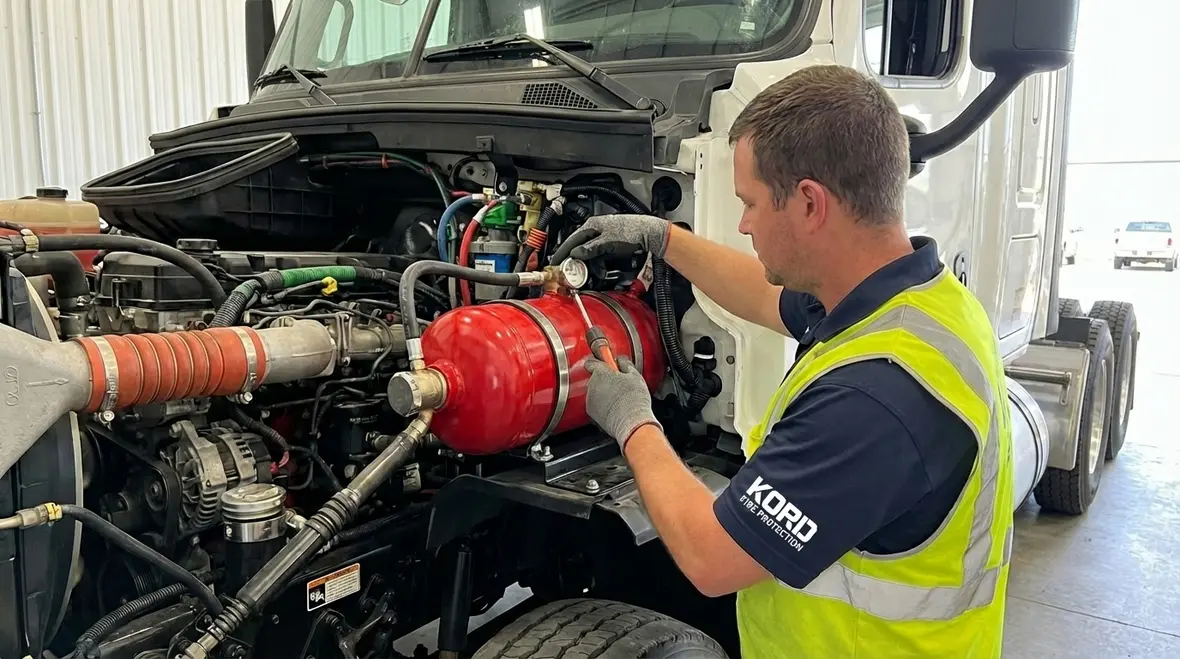
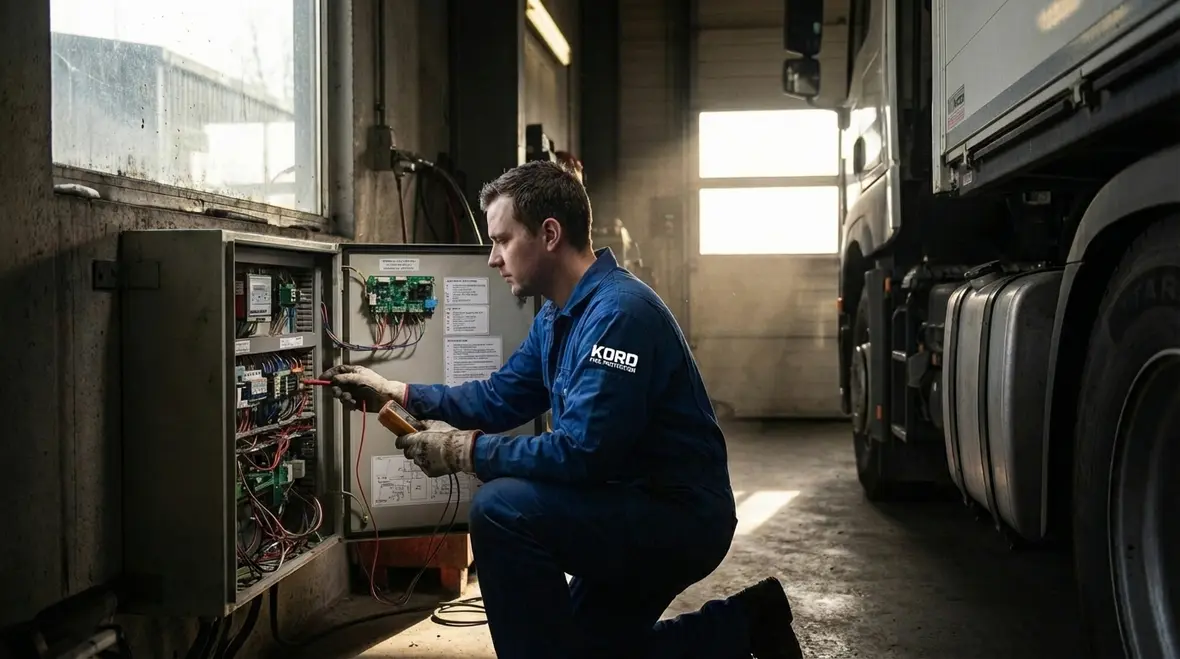
If installation is the foundation, maintenance is the heartbeat. Without regular inspection and service, even the best system can fail. That is why vehicle fire suppression systems maintenance follows structured intervals.
First, technicians perform visual inspections. They check hoses for wear, ensure nozzles are clear of debris, and confirm mounting brackets remain secure. Vehicles vibrate. They endure dust, mud, and weather. Over time, small shifts can become big problems.
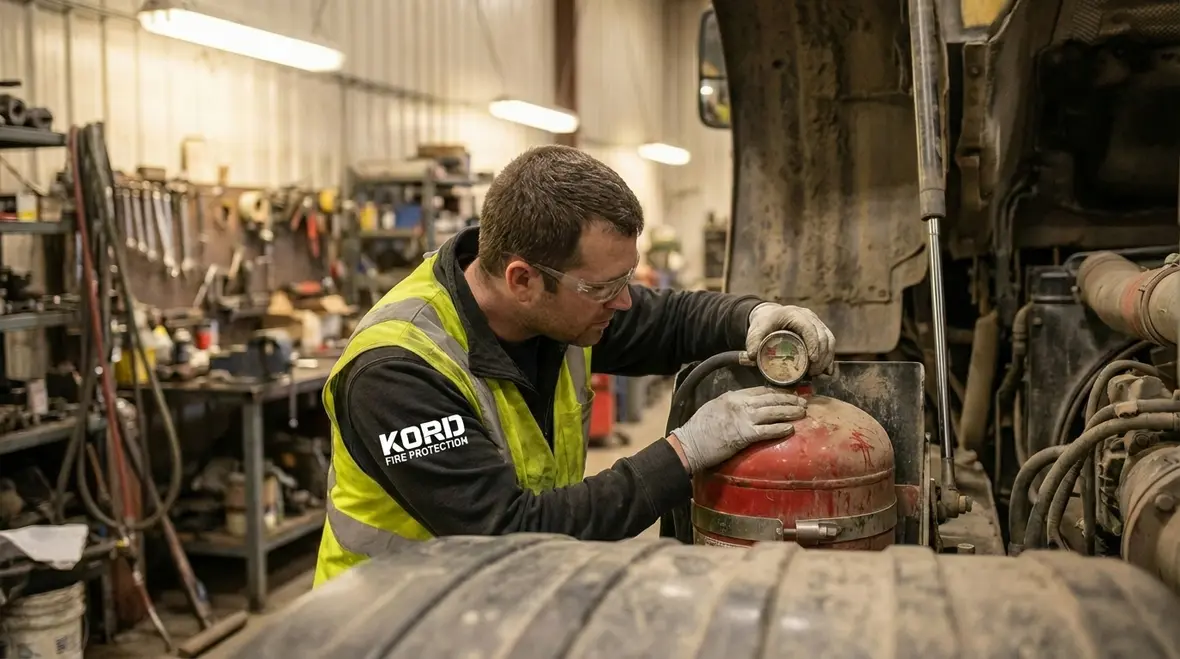
Next, they verify pressure levels in suppressant cylinders. A drop in pressure may signal a leak. On the other hand, overpressure can indicate temperature related expansion. Either way, adjustments keep the system within safe operating range.
Detection lines also receive careful attention. Heat sensitive tubing must remain intact. Even a small cut can compromise automatic activation. Therefore, trained professionals test continuity and inspect routing to avoid pinch points.
Control panels undergo functional testing as well. Warning lights, alarms, and manual pull stations must respond instantly. Kord Fire Protection technicians often demonstrate this process for fleet managers, explaining each step in calm detail. It is part education, part reassurance.
Scheduled service intervals vary by industry, yet many systems require monthly visual checks and annual comprehensive inspections. Additionally, any discharge event demands immediate recharge and system reset. Because once a system activates, it must return to full readiness without delay.
Key Components and Their Service Requirements
Every part of a suppression system plays a role. Therefore, understanding service needs at the component level helps fleet operators plan smarter.
Detection Tubing and Sensors
Technicians inspect for abrasion, chemical exposure, and secure routing. Since vehicles operate in harsh environments, these elements endure constant stress.
Suppression Cylinders
Pressure gauges must read within approved limits. Furthermore, hydrostatic testing occurs at manufacturer specified intervals to confirm structural integrity.
Nozzles
Dust caps, alignment, and discharge paths require inspection. Even slight misalignment can reduce coverage efficiency.
Control Modules
Electrical connections are tested for corrosion or loose wiring. In addition, software diagnostics may be run on advanced systems.
To make this clearer, consider the structured comparison below.
| Component | Maintenance Focus |
| Detection Lines | Check for cuts, heat damage, secure routing |
| Cylinders | Verify pressure, inspect valves, test integrity |
| Nozzles | Confirm aim, remove debris, secure fittings |
| Control Panels | Test alarms, inspect wiring, verify activation signals |
This structured approach ensures that nothing slips through the cracks. Because in fire protection, details matter.
Why Consistent Vehicle Fire Suppression Systems Maintenance Protects More Than Equipment
Equipment represents investment. However, people represent everything. Consistent vehicle fire suppression systems maintenance reduces risk to operators, passengers, and nearby workers.
First, early suppression limits toxic smoke exposure. Second, it minimizes explosion potential in fuel rich environments. Third, it preserves critical infrastructure, reducing downtime that can ripple through operations.
Moreover, compliance plays a major role. Many industries operate under strict safety regulations. Routine inspections and documented service records demonstrate due diligence. In turn, this can lower liability and even insurance costs.
Kord Fire Protection technicians often remind clients that maintenance is not about checking boxes. It is about building a culture of safety. And yes, while paperwork may not feel heroic, preventing a fire rarely makes the evening news. That is the point.
For operations with specialized vehicles, aligning your suppression maintenance with broader standards like those discussed in Kord Fire’s overview of the NFPA 1900 standard for emergency response vehicles can further strengthen both compliance and real-world resilience.
Common Questions Fleet Managers Ask
How to Choose the Right Service Partner
Selecting a provider is not just a procurement task. It is a safety decision. Therefore, fleet operators should look for certified technicians, documented experience, and familiarity with their specific industry.
Kord Fire Protection technicians, for example, focus on education as much as service. They walk clients through inspection findings. They explain why a hose routing adjustment matters. They answer questions without rushing. In doing so, they transform a technical service into a collaborative process.
Additionally, a reliable partner keeps detailed records, tracks inspection schedules, and provides reminders before compliance deadlines. Because forgetting a service date should never be the reason a system fails.
Finally, responsiveness counts. When a discharge occurs, downtime costs money. A capable service team acts quickly, restores protection, and ensures the vehicle returns to operation safely.
If your fleet operates across multiple locations or counties, working with a full-service provider that can support everything from vehicle suppression to room integrity testing and more can simplify your life. Kord Fire’s own full fire protection services overview is a good example of how integrated support can cover vehicles, facilities, and supporting systems under one roof.
Conclusion: Protect the Road Ahead
Fire risk travels wherever engines run and batteries charge. Therefore, proactive care is not optional. It is essential. With expert installation, disciplined inspections, and guidance from experienced professionals like Kord Fire Protection technicians, fleets gain more than compliance. They gain confidence.
Schedule a professional evaluation, strengthen your maintenance program, and ensure every vehicle stands ready for the unexpected. Because preparation today prevents catastrophe tomorrow. If you are ready to move from “hoping it works” to “knowing it will,” connect with Kord Fire’s vehicle fire suppression system and fire protection service team to put a tailored plan in motion.
Know Your Weapon Before You Fight the Flame
Kord Fire Protection is your go-to when it comes to all things fire protection. For over 20 years, we’ve been serving Southern California with the quality service and equipment to keep your home or business safe at all times. Our competitive prices reflect our unwavering commitment to protecting what matters most in the event of a fire emergency. Give us a call, send an email, or use that form!

Join Our Newsletter!
Get the latest fire safety tips delivered straight to your inbox From our Newsletter.