Fire Pump Suction Piping Standards Orange County
In the world of fire protection, few things command more respect than the steady hum of a fire pump doing exactly what it was designed to do. In regions governed by fire pump suction piping standards Orange County and the demanding expectations around water supply suction performance Los Angeles, that hum is not just comforting. It is essential. The professionals at Kord Fire Protection often explain that a fire pump is only as strong as what feeds it. And what feeds it begins on the suction side.
Therefore, understanding suction side components is not just for engineers or inspectors. It is for building owners, facility managers, and anyone responsible for life safety systems. Because when a pump struggles, the story usually starts long before the discharge side. It starts where the water enters.
The Foundation of Fire Pump Reliability
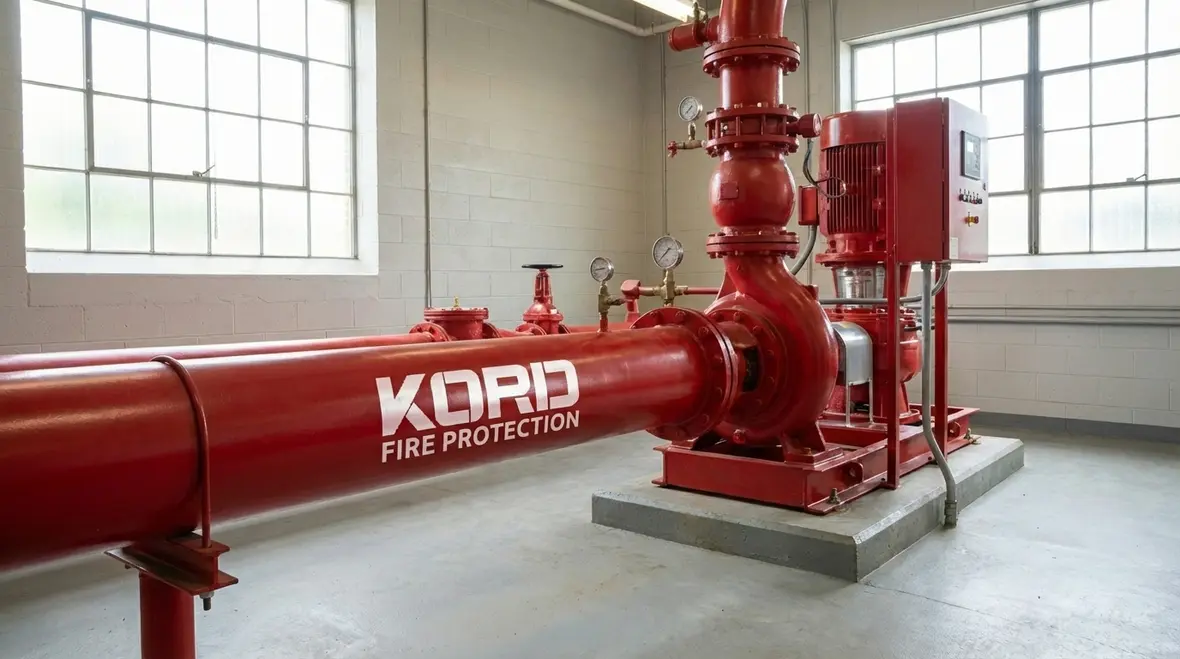
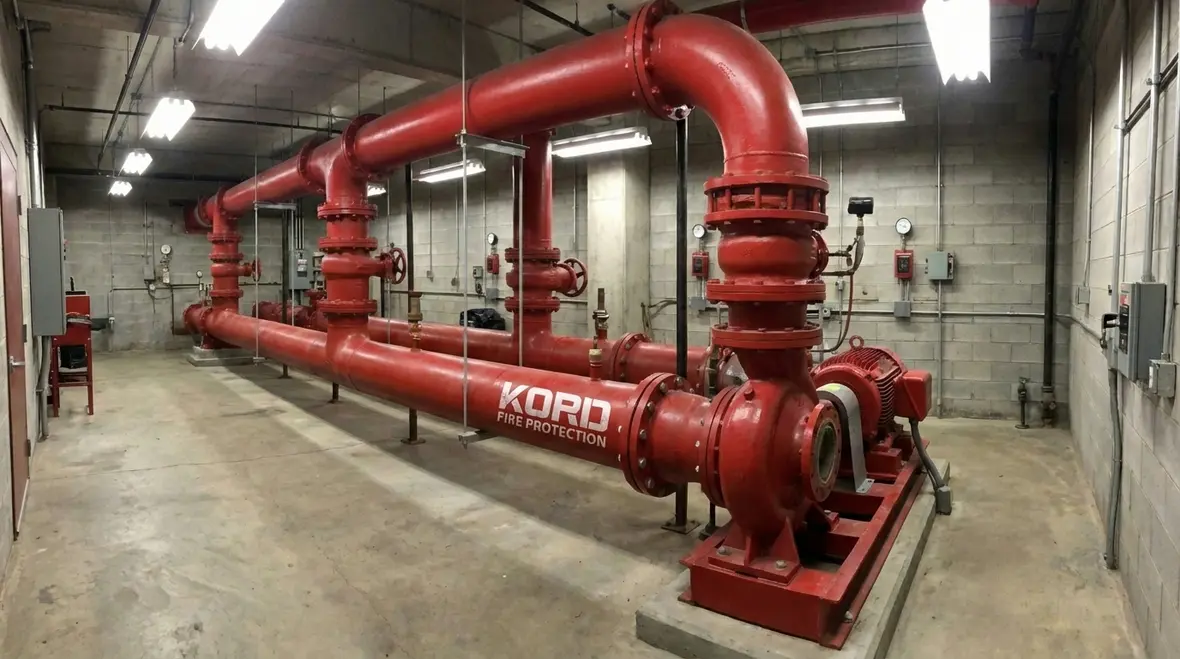
A fire pump does not create water. It moves it. Consequently, the path that water takes before entering the pump determines how well the entire system performs. If that path restricts flow, introduces air, or causes turbulence, the pump will fight an uphill battle from the first second of operation.
Kord Fire Protection technicians often compare the suction side to breathing. If someone tries to sprint while breathing through a straw, performance drops quickly. Similarly, a pump that draws water through poorly designed suction piping will strain, vibrate, and lose efficiency.
Moreover, compliance with fire pump suction piping standards Orange County ensures that installations minimize friction loss and avoid sharp turns near the pump inlet. These standards exist for a reason. They protect both the equipment and the people who rely on it. For a broader look at how NFPA 20 regulates fire pump design and suction piping, explore Kord Fire’s overview of NFPA 20 fire pump systems.
In high demand regions like Los Angeles, where water supply suction performance Los Angeles remains under constant review due to urban density and varying municipal supply pressures, proper suction design becomes even more critical. In short, the suction side sets the stage for everything that follows.
Local expectations and AHJ scrutiny
Authorities Having Jurisdiction (AHJs) throughout Southern California routinely evaluate suction conditions alongside pump performance. Designs must satisfy both national standards and local interpretations, especially in places like Orange County and Los Angeles where enforcement around NFPA 20 and NFPA 25 is taken seriously.
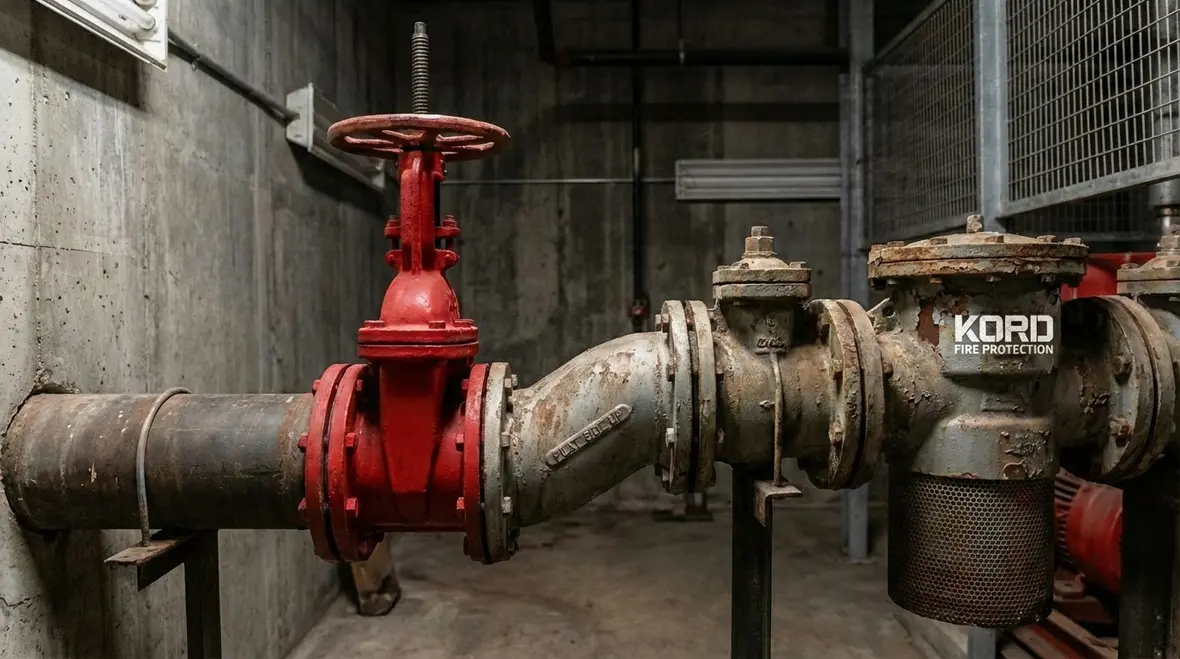
What Components Make Up the Suction Side?
The suction side may look simple at first glance. However, each component plays a specific role in maintaining stable flow and preventing damage.
Key suction side components include:
Suction piping
Suction Piping
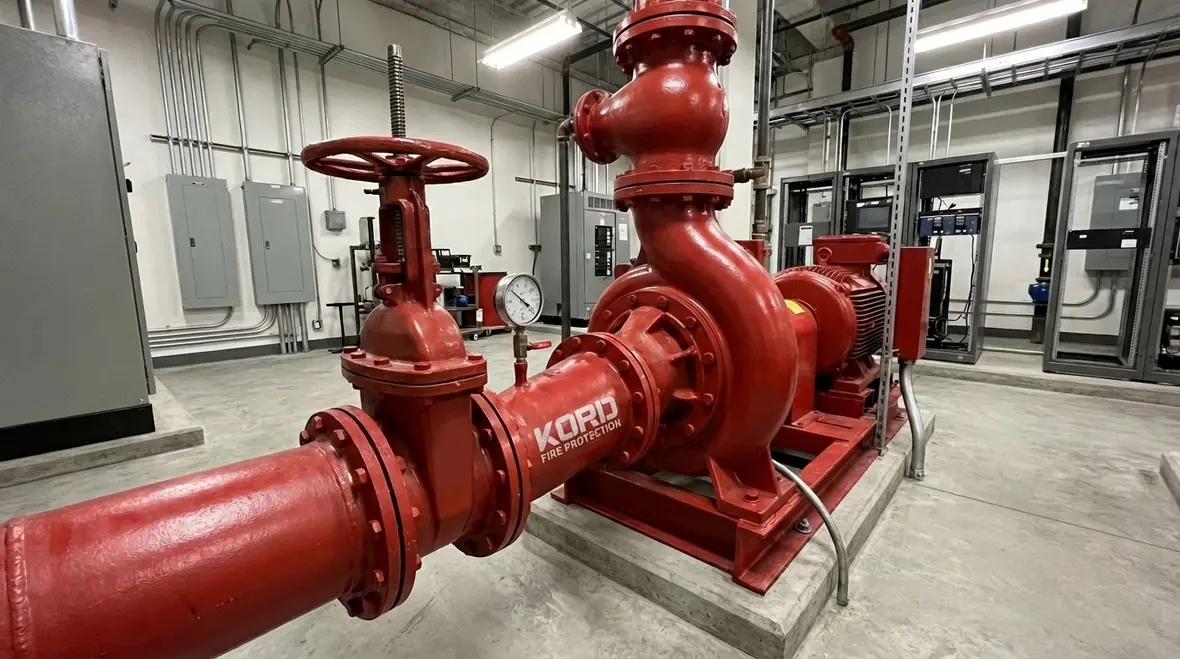
This pipe connects the water source to the pump. Its diameter, length, and layout directly affect friction loss. Technicians from Kord Fire Protection emphasize straight runs into the pump whenever possible. Because water prefers calm entrances, not roller coasters.
OS&Y gate valves or butterfly valves
OS and Y Gate Valves or Butterfly Valves
Installed to allow isolation for maintenance, these valves must remain fully open during operation. Even partial closure can restrict flow and create dangerous pressure drops.
Eccentric reducers and transitions
Eccentric Reducers
These fittings connect larger suction piping to the smaller pump inlet. When installed flat on top, they prevent air pockets from forming. Air in a fire pump system is about as welcome as popcorn in a sprinkler head.
Backflow prevention assemblies
Backflow Prevention Assemblies
When required, these devices prevent contamination of the municipal water supply. However, they must be carefully selected and sized to reduce unnecessary friction loss.
Suction strainers and debris control
Suction Strainers
In some systems, strainers remove debris before water reaches the pump. While helpful, they must be monitored and maintained. A clogged strainer can choke performance faster than a traffic jam on the 405.
Each of these components interacts with the others. Therefore, design must consider the entire assembly, not isolated parts. For example, when a fire pump draws from a tank, components such as anti-vortex plates at the suction outlet play a major role in avoiding air entrainment and cavitation, as detailed in Kord Fire’s guide to anti-vortex plate specification and installation.
How Suction Piping Layout Impacts Performance
Layout is where theory meets reality. Although engineers design systems with precision, field conditions often challenge those plans. Yet, proper alignment remains non negotiable.
Fire pump suction piping standards Orange County specify minimum straight pipe lengths before the pump inlet. This straight run stabilizes flow and reduces turbulence. Without it, water can enter the pump unevenly, causing vibration and premature wear.
Additionally, elbows placed too close to the pump create swirling flow. That swirling reduces efficiency and increases the risk of cavitation. Cavitation occurs when pressure drops so low that vapor bubbles form and collapse inside the pump. The result sounds like gravel rattling in a metal drum. It also damages impellers over time.
Cavitation explained in everyday language
Kord Fire Protection technicians explain cavitation in simple terms. When pressure drops below what the pump needs, water essentially boils at room temperature. That is not the kind of hot water anyone ordered.
In Los Angeles, water supply suction performance Los Angeles often depends on fluctuating municipal supply pressures. Therefore, proper layout helps stabilize incoming flow even when the city main experiences variations. Straight piping, minimal fittings, and careful reducer placement all support consistent suction pressure.
The Role of Net Positive Suction Head
Now we step into a concept that sounds complicated but is actually quite logical. Net Positive Suction Head, or NPSH, measures whether enough pressure exists at the pump inlet to avoid cavitation.
NPSH available vs. NPSH required
There are two parts to consider.
NPSH Available comes from the water source. It includes static pressure, elevation differences, and friction losses.
NPSH Required is defined by the pump manufacturer. It represents the minimum pressure needed to operate without vapor formation.
If NPSH Available falls below NPSH Required, trouble begins. Consequently, suction side design must preserve as much pressure as possible.
Kord Fire Protection technicians frequently review hydraulic calculations to verify compliance with fire pump suction piping standards Orange County. They examine pipe size, length, and fittings to confirm that NPSH margins remain safe. Because while the term may sound academic, the consequences are very real.
Furthermore, in dense metropolitan systems where water supply suction performance Los Angeles can shift during peak usage, maintaining adequate suction head becomes even more critical. High rise buildings, older mains, and shared infrastructure all influence available pressure. Therefore, designers must plan with realistic worst case scenarios in mind.
Common Suction Side Mistakes That Undermine Systems
Even well intentioned installations can suffer from avoidable errors. And unfortunately, these mistakes often stay hidden until a test reveals weak performance.
Undersized piping
Undersized Piping
Smaller pipe may reduce upfront costs. However, it increases friction loss and lowers suction pressure. Over time, that cost savings disappears in maintenance and reduced reliability.
Improper valve positioning
Improper Valve Positioning
Valves installed too close to the pump or left partially closed create pressure drops. Therefore, clear labeling and routine inspection remain essential.
High points and trapped air
High Points in Piping
Elevated sections can trap air. Air pockets restrict flow and destabilize pressure. Proper venting and thoughtful routing eliminate this issue.
Neglected backflow devices
Neglected Backflow Devices
Backflow assemblies add resistance. If not maintained, they can further restrict flow. Routine testing ensures they operate as intended without compromising suction performance.
Kord Fire Protection technicians often approach these issues like detectives. They follow pressure readings, inspect layouts, and trace flow paths. And sometimes, the fix is surprisingly simple. A relocated elbow. A properly oriented reducer. A fully opened valve. In other words, small adjustments can restore big performance.
Comparing Ideal vs Problematic Suction Conditions
| Ideal Suction Setup | Problematic Suction Setup |
| Straight pipe run before pump inlet | Elbow directly at pump inlet |
| Eccentric reducer flat on top | Concentric reducer trapping air |
| Properly sized piping per standards | Undersized pipe increasing friction loss |
| Fully open, clearly labeled valves | Partially closed or hidden valves |
| Maintained backflow assembly | Clogged or neglected device |
As shown above, the difference often lies in attention to detail. Because while pumps are mechanical marvels, they cannot compensate for poor upstream design.
Maintenance Practices That Protect Suction Performance
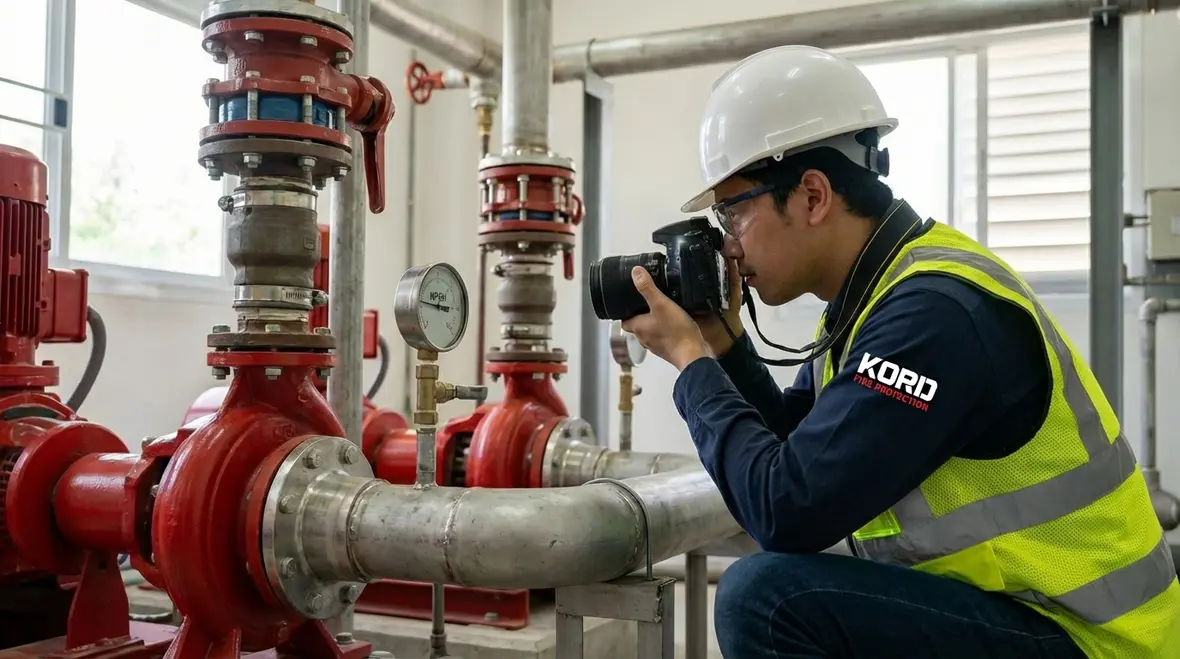
Design sets the baseline. Maintenance protects it. Therefore, ongoing inspection plays a critical role in preserving compliance with fire pump suction piping standards Orange County.
Weekly churn tests
Weekly Churn Tests
These tests verify that the pump starts and runs without flow demand. Technicians monitor suction and discharge gauges to confirm stable readings.
Annual flow tests and trending data
Annual Flow Tests
Flow tests measure actual performance under load. Any unusual suction pressure drop signals potential restrictions or supply issues.
Valve and backflow inspections
Valve Inspections
Teams confirm that suction valves remain fully open and secured.
Backflow Testing
Certified testers ensure assemblies function properly while minimizing pressure loss.
Kord Fire Protection technicians approach maintenance as prevention, not reaction. Because a pump that surprises you during an emergency is not a fun surprise. It is more like a plot twist nobody wanted. For more on how routine pump inspections support NFPA 25 compliance and reliable performance, see Kord Fire’s article on routine fire pump inspections and their importance.
In metropolitan regions, maintaining stable water supply suction performance Los Angeles also requires coordination with municipal providers. When infrastructure changes or new developments increase demand, periodic reevaluation ensures that suction conditions remain within safe limits.
Why Suction Side Precision Matters in High Demand Regions
Orange County and Los Angeles present unique challenges. Dense development, high rise structures, and varying elevation all influence system design. Consequently, suction side components must support not just average demand but peak scenarios.
Technicians often analyze historical pressure data to anticipate fluctuations. They also verify that installations align with fire pump suction piping standards Orange County to avoid inspection failures and costly retrofits.
Meanwhile, water supply suction performance Los Angeles depends on a combination of municipal reliability and private system integrity. Even if city pressure drops temporarily, a well designed suction layout can preserve enough head to keep the pump operating safely.
Therefore, precision on the suction side becomes an investment in resilience. It reduces wear, extends equipment life, and most importantly, protects lives and property.
FAQ: Suction Side Components and Fire Pump Performance
Secure the Strength Behind the Pump
The suction side does not make headlines. It does not shine like a polished pump casing. Yet it quietly determines whether the system performs when called upon. Kord Fire Protection technicians understand that excellence begins before the pump ever starts. For facilities in Southern California, expert evaluation ensures compliance, stability, and peace of mind.
If your property is in Orange County, you can also explore Kord Fire’s dedicated Orange County fire protection services to see how a full-service approach to sprinklers, pumps, and backflow systems can support your building’s overall life safety strategy.
Schedule a professional assessment today and let the system breathe the way it was designed to. Whether you need help dialing in suction piping, confirming NFPA 20 and NFPA 25 compliance, or coordinating testing across multiple sites, Kord Fire’s fire pump team can help keep your water supply ready when it matters most.
Request a fire pump and suction piping evaluation or ask about ongoing fire pump services, including weekly churn tests and annual flow testing, tailored to your building and local AHJ requirements.
Know Your Weapon Before You Fight the Flame
Kord Fire Protection is your go-to when it comes to all things fire protection. For over 20 years, we’ve been serving Southern California with the quality service and equipment to keep your home or business safe at all times. Our competitive prices reflect our unwavering commitment to protecting what matters most in the event of a fire emergency. Give us a call, send an email, or use that form!

Join Our Newsletter!
Get the latest fire safety tips delivered straight to your inbox From our Newsletter.