
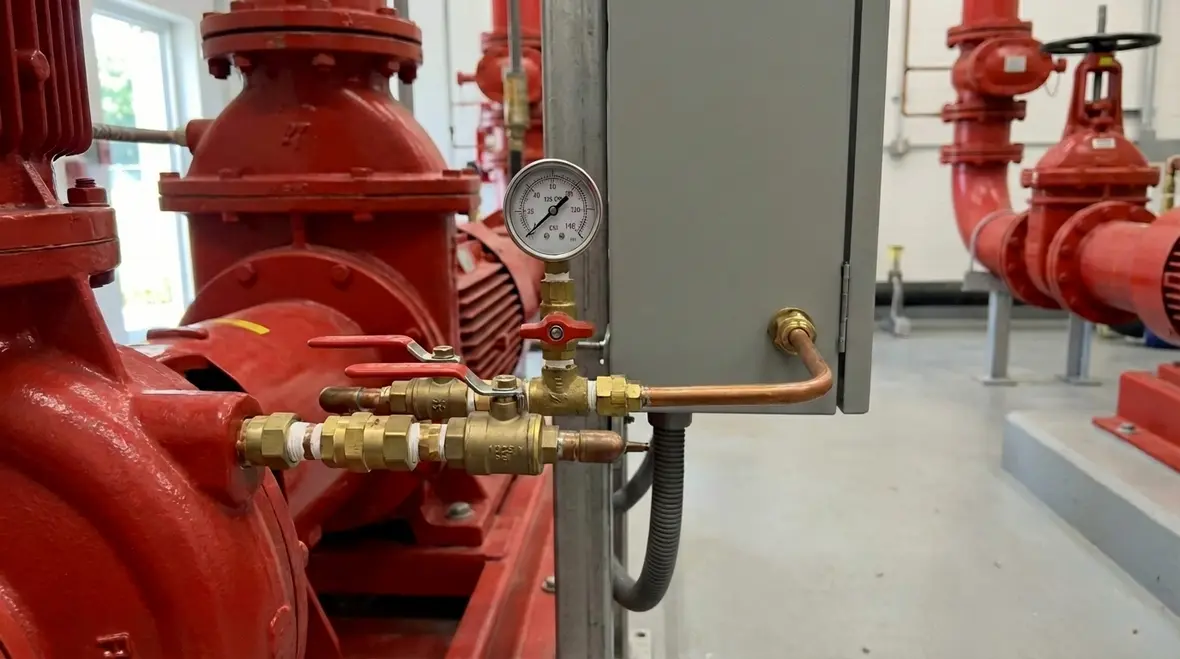
Fire Pump Sensing Line Design Anaheim Guide
Purpose and Design of Fire Pump Sensing Lines
In the world of commercial fire protection, details matter. A single overlooked component can mean the difference between smooth operation and costly failure. That is why conversations around fire pump sensing line design Anaheim and pressure monitoring for fire pumps Orange County have become more focused and intentional in recent years. Property owners want systems that respond fast, operate reliably, and meet strict code requirements. And rightly so. When water must move, it must move with authority.
Kord Fire Protection technicians often explain that sensing lines may look small and unassuming, yet they carry enormous responsibility. These narrow pipes act as the nervous system of a fire pump. They read pressure changes, communicate with controllers, and tell the pump exactly when to wake up and go to work. It is a quiet job, but one that demands precision.
So let us slow things down, take a steady breath, and explore how sensing lines are designed, why they matter, and how proper installation protects both property and peace of mind.
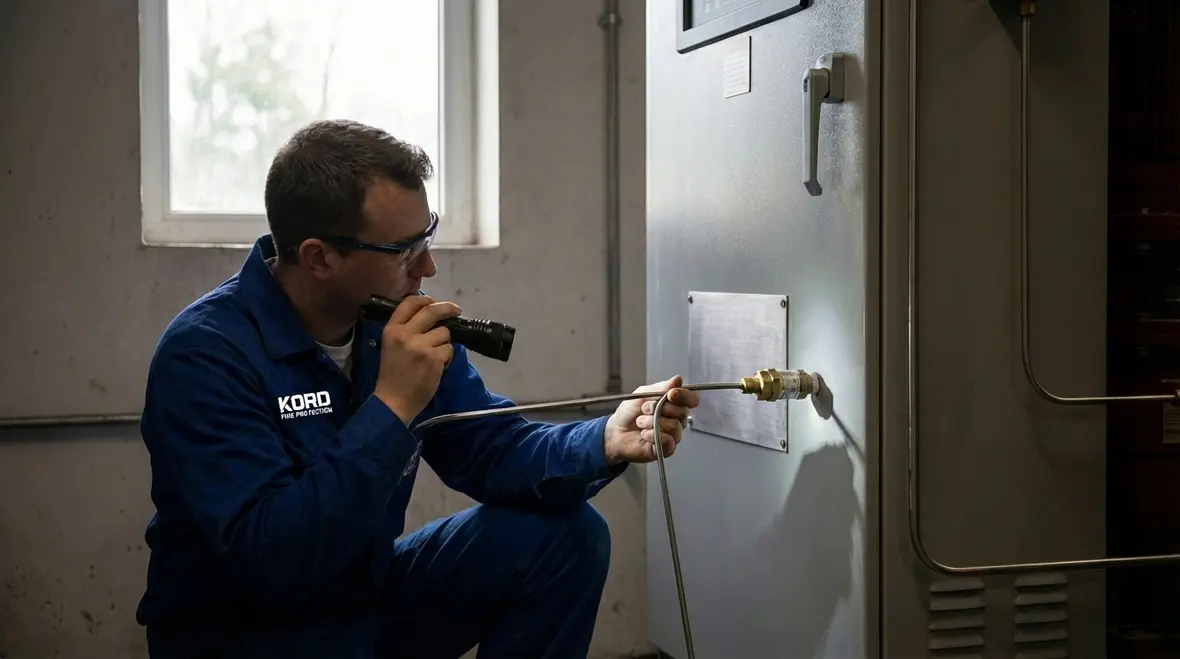
Understanding the Purpose of Fire Pump Sensing Lines
At its core, a fire pump exists to maintain adequate water pressure in a fire protection system. However, the pump does not run constantly. Instead, it waits for a signal. That signal comes from the sensing line.
A sensing line monitors pressure in the discharge piping. When pressure drops below a set point, the line communicates that change to the fire pump controller. As a result, the controller activates the pump. Once pressure stabilizes, the system continues operating as designed.
Kord Fire Protection technicians describe it in simple terms. The sensing line is like a security guard who never blinks. The moment something changes, it makes the call. Without it, the pump would have no reliable trigger.
Moreover, proper sensing line design ensures:
- Accurate pressure readings
- Quick pump response time
- Reduced nuisance starts
- Compliance with NFPA standards (for a deeper dive into how NFPA 20 shapes fire pump performance and installation, see Kord Fire Protection’s guide on NFPA 20 fire pump systems)
- Long term system stability
Therefore, while it may appear to be a minor component, its role is central to system performance.
How Does a Fire Pump Sensing Line Actually Work?
A fire pump sensing line taps into the discharge side of the pump or the system piping. It connects to the pressure sensor or controller. When water demand increases, system pressure drops. The sensing line transmits that drop directly to the controller.
Consequently, the pump starts automatically. No drama. No hesitation. Just action.
However, the process only works when the sensing line remains clear, properly sized, and correctly installed. Even small obstructions, such as debris or trapped air, can distort readings. And distorted readings lead to poor performance.
Kord Fire Protection technicians often compare it to trying to drink a milkshake through a bent straw. Technically possible, but not ideal. Precision matters.
Additionally, sensing lines must avoid sharp bends, unnecessary length, or low points where sediment can collect. Because the system depends on clean pressure transmission, design choices must support clarity and consistency.
Fire Pump Sensing Line Design Anaheim: What Local Codes Demand
In Anaheim, local enforcement aligns closely with NFPA 20 standards, yet inspectors also expect careful attention to detail. That means contractors cannot treat sensing line installation as an afterthought.
With fire pump sensing line design Anaheim projects, technicians focus on several core elements:
- Proper pipe material selection
- Minimum diameter compliance
- Isolation valves placed correctly
- Protection against mechanical damage
- Accessibility for inspection and maintenance
Furthermore, routing must prevent freezing, corrosion, and vibration stress. Even in Southern California, temperature variation and building movement can affect performance.
Kord Fire Protection technicians explain that inspectors often look for clean routing and clear labeling. They want to see that the installer understood the system, not just the checklist. Because when an emergency strikes, no one wants to discover that a sensing line was treated like spare change in a toolbox.
The Role of Pressure Monitoring for Fire Pumps Orange County
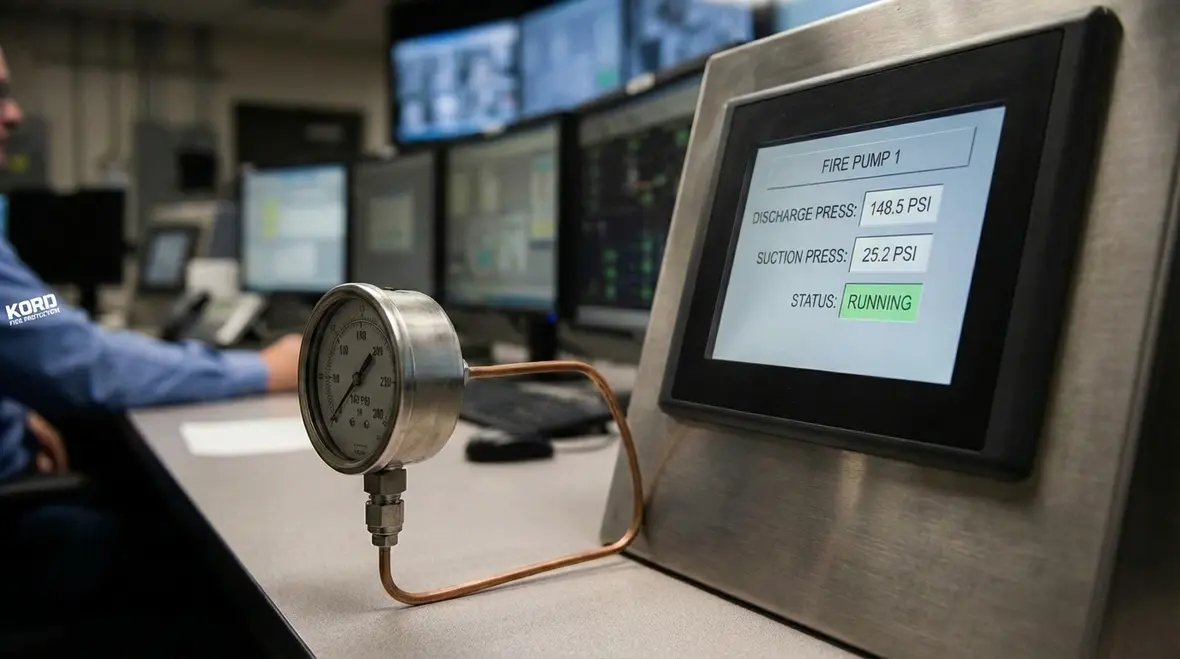
Across Orange County, building owners place increasing emphasis on pressure monitoring for fire pumps Orange County facilities. This focus reflects a broader trend toward proactive maintenance and digital oversight.
Modern controllers integrate advanced pressure sensors that provide real time data. As a result, property managers can track fluctuations, detect irregularities, and schedule maintenance before problems escalate.
Kord Fire Protection technicians often walk clients through monitoring dashboards. They show how subtle pressure changes can signal developing issues. For example, a slow drift in static pressure may indicate valve wear or minor leaks. Addressing that early prevents major downtime later.
Additionally, advanced monitoring supports compliance reporting. Inspectors appreciate documented performance records. And frankly, so do insurance providers.
In this way, pressure monitoring for fire pumps Orange County properties is not just about alarms. It is about intelligence. It is about understanding system behavior over time.
Routine trend data also pairs well with required fire pump testing and inspections, helping validate annual and Reg 4 style testing results that Kord Fire technicians perform throughout Southern California.
Key Components in a Proper Sensing Line Assembly
Although sensing lines appear simple, their assemblies include multiple coordinated parts. Each piece serves a clear purpose.
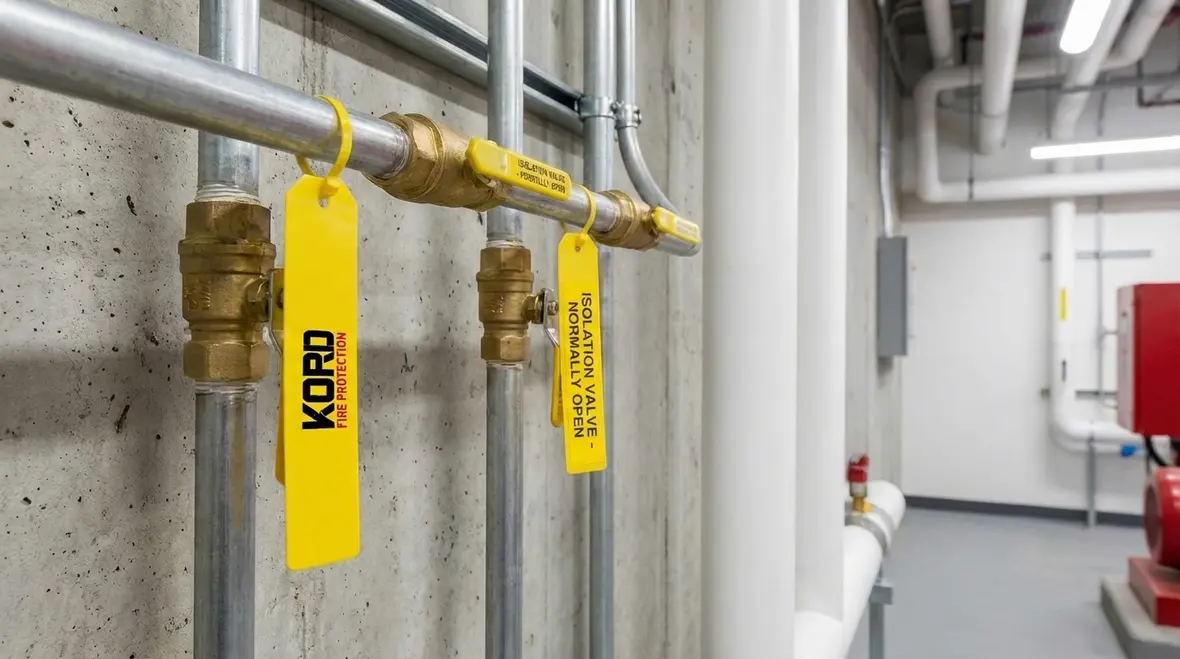
Isolation Valves
These allow maintenance without shutting down the entire system. However, they must remain supervised in the open position to prevent accidental closure.
Check Valves
These prevent reverse flow that could affect pressure readings.
Pressure Gauges
These provide visual confirmation of system pressure.
Strainers
These protect sensors from debris.
Controller Connections
These ensure accurate communication between the sensing line and pump controls.
When designing fire pump sensing line design Anaheim projects, technicians map these components carefully. They avoid crowding. They allow room for service. And importantly, they plan for future access.
Because while the system may rest quietly for years, when it activates, it must perform like an action hero entering the final scene. No missed cues.
Common Design Mistakes and How to Avoid Them
Even experienced contractors can overlook small details. Yet those details can create major headaches.
One common issue involves excessive sensing line length. Longer lines increase the chance of pressure lag. Therefore, designers aim for the shortest practical route.
Another mistake involves improper slope. Low points can trap air or sediment. As a result, readings become unreliable.
Improper material choice also presents risk. For instance, incompatible metals may corrode over time. Kord Fire Protection technicians emphasize matching materials to system specifications.
Additionally, failing to secure the line properly can allow vibration damage. Fire pumps generate movement. Over time, unsecured piping may loosen fittings or create leaks.
Fortunately, these issues are avoidable. Careful planning, code compliance, and experienced installation eliminate most risks before they appear.
Side by Side: Design Considerations and Performance Outcomes
| Design Choice | System Impact |
| Short direct routing | Faster pressure response |
| Proper pipe diameter | Accurate pressure transmission |
| Installed strainers | Sensor protection and longer lifespan |
| Secured mounting | Reduced vibration damage |
| Routine inspection access | Improved long term reliability |
This simple comparison highlights a larger truth. Thoughtful design decisions directly influence system performance. There is no mystery. Only physics and preparation.
Maintenance, Testing, and Long Term Reliability
Design is only the beginning. Ongoing inspection ensures sensing lines continue functioning as intended.
Routine testing confirms accurate pressure readings. Technicians verify calibration and inspect for corrosion or debris. Furthermore, they confirm that isolation valves remain supervised and open.
Pressure monitoring for fire pumps Orange County facilities often includes digital alert systems. These alerts notify managers of irregular pressure trends. Consequently, maintenance becomes proactive rather than reactive.
Kord Fire Protection technicians stress that annual inspections should never feel optional. Fire pumps protect lives and property. A neglected sensing line can delay activation. Even seconds matter during a fire event.
Therefore, maintenance teams treat sensing lines with the same respect given to larger components. Because while the pump draws attention, the sensing line makes the decision.
Integrating Sensing Line Design with Overall Fire Protection Strategy
No component operates alone. Fire pump sensing line design Anaheim projects must integrate with sprinkler systems, alarm systems, and building management platforms.
For example, coordinated alarm signals ensure that when pressure drops and the pump starts, supervisory notifications follow. This layered response improves safety and communication.
Similarly, pressure monitoring for fire pumps Orange County properties often connects to centralized monitoring services. As a result, facility managers gain remote visibility into system health.
Kord Fire Protection technicians frequently remind clients that a fire protection system works best when every piece speaks clearly to the others. Think of it as an orchestra. The sensing line may not be the loudest instrument, yet it sets the tempo.
And yes, even the quiet instruments matter. Just ask anyone who has tried to watch a movie with the sound slightly out of sync. Distracting, right? Precision prevents chaos.
Why Professional Expertise Makes the Difference
Although technical manuals outline requirements, field experience refines execution. Each building presents unique layout challenges. Ceiling heights vary. Mechanical rooms differ. Existing infrastructure creates constraints.
Kord Fire Protection technicians bring practical insight to fire pump sensing line design Anaheim installations. They anticipate obstacles before they become problems. They align installations with inspection expectations. And importantly, they explain the reasoning behind each choice.
Clients often appreciate these explanations. Because when technicians slow down and walk through the purpose of each valve and fitting, owners gain confidence. They see not just pipes, but a coordinated life safety system.
Meanwhile, pressure monitoring for fire pumps Orange County properties continues evolving with smarter technology. Skilled technicians stay current with these advances. They ensure integration remains smooth and code compliant.
Ultimately, expertise transforms a simple pipe into a reliable communication channel between pressure and power.
FAQ: Fire Pump Sensing Lines
Conclusion: Build Confidence into Every Connection
Fire protection leaves no room for guesswork. From careful fire pump sensing line design Anaheim installations to advanced pressure monitoring for fire pumps Orange County facilities, every decision shapes performance. Kord Fire Protection technicians stand ready to design, install, and maintain systems that respond with speed and certainty. When safety matters most, precision matters more.
If you want to see how sensing line performance ties into your larger inspection rhythm, review Kord Fire’s resources on fire pump testing requirements and routine fire pump inspections. Together, they paint the bigger picture of how sensing lines support reliable pump performance year after year.
Ready to tighten up your own system? Contact the Kord Fire Protection team today and ensure every connection in your fire protection system speaks clearly and confidently. Whether you are commissioning a new fire pump, troubleshooting nuisance starts, or upgrading to smarter monitoring, their specialists can walk you through options that fit Anaheim and Orange County code expectations.
For facilities that also need help aligning related systems like hydrants and sprinklers with current standards, Kord’s regional guides—such as their NFPA 291 fire hydrant testing guide and city-specific sprinkler testing resources—offer a helpful playbook for building a truly coordinated fire protection strategy.
Know Your Weapon Before You Fight the Flame
Kord Fire Protection is your go-to when it comes to all things fire protection. For over 20 years, we’ve been serving Southern California with the quality service and equipment to keep your home or business safe at all times. Our competitive prices reflect our unwavering commitment to protecting what matters most in the event of a fire emergency. Give us a call, send an email, or use that form!

Join Our Newsletter!
Get the latest fire safety tips delivered straight to your inbox From our Newsletter.


