Anti-Vortex Plate: Specification, Installation & Fire-Pump Suction Guidance
Introduction
When designing a reliable fire protection water supply, one overlooked but critical component is the anti-vortex plate. Installed at the suction outlet of storage tanks feeding fire pumps, this simple steel plate plays a vital role in preventing vortex formation, which can cause air entrainment, pump cavitation, and loss of suction pressure.
In compliance with NFPA 22, whenever a tank is used as a suction source for a fire pump, the discharge outlet must be equipped with an assembly that controls vortex flow. The anti-vortex plate fulfills this requirement, ensuring stable water flow to the fire pump and protecting the system from mechanical damage and operational failure.
Why Swirling Flow and Vortices Are a Problem
When water exits a tank through a suction outlet, swirling motion—or vortex formation—can occur. This creates a funnel that draws air into the suction pipe. The result is air entrainment, which disrupts flow continuity and can lead to cavitation, a destructive condition where vapor bubbles collapse inside the pump impeller.
Cavitation causes:
- Reduced pump efficiency and flow rate
- Vibration and noise during operation
- Severe damage to impeller surfaces and bearings
An anti-vortex plate eliminates these issues by interrupting the rotational movement of water at the suction outlet, maintaining laminar flow and protecting the fire pump from air ingestion and cavitation damage.
Purpose of Using an Anti-Vortex Plate
The anti-vortex plate is installed in the suction line of fire pumps specifically to control turbulence in flowing water. Though simple in design, it effectively manages the velocity of fluid entering the pump suction, thus:
- Preventing vortex formation
- Reducing turbulence and pressure drop
- Protecting fire pumps from cavitation and impeller wear
This component ensures smooth, consistent suction performance during high-demand conditions—especially in emergency firefighting operations where pump reliability is paramount.
When to Install an Anti-Vortex Plate
According to NFPA 22 – Standard for Water Tanks for Private Fire Protection, an anti-vortex assembly must be installed:
“Where a tank is used as the suction source for a fire pump, the discharge outlet of the tank shall be equipped with an assembly that controls vortex flow.”
In other words, any fire protection water tank connected to a fire pump suction line requires an anti-vortex plate. This includes:
- Above-ground steel or fiberglass fire tanks
- Underground storage reservoirs feeding fire pumps
- Break tanks in high-rise or booster systems
The plate should be installed horizontally over the suction opening, close enough to prevent swirling flow but far enough to allow unimpeded water passage.
Dimensions and Construction of Anti-Vortex Plates
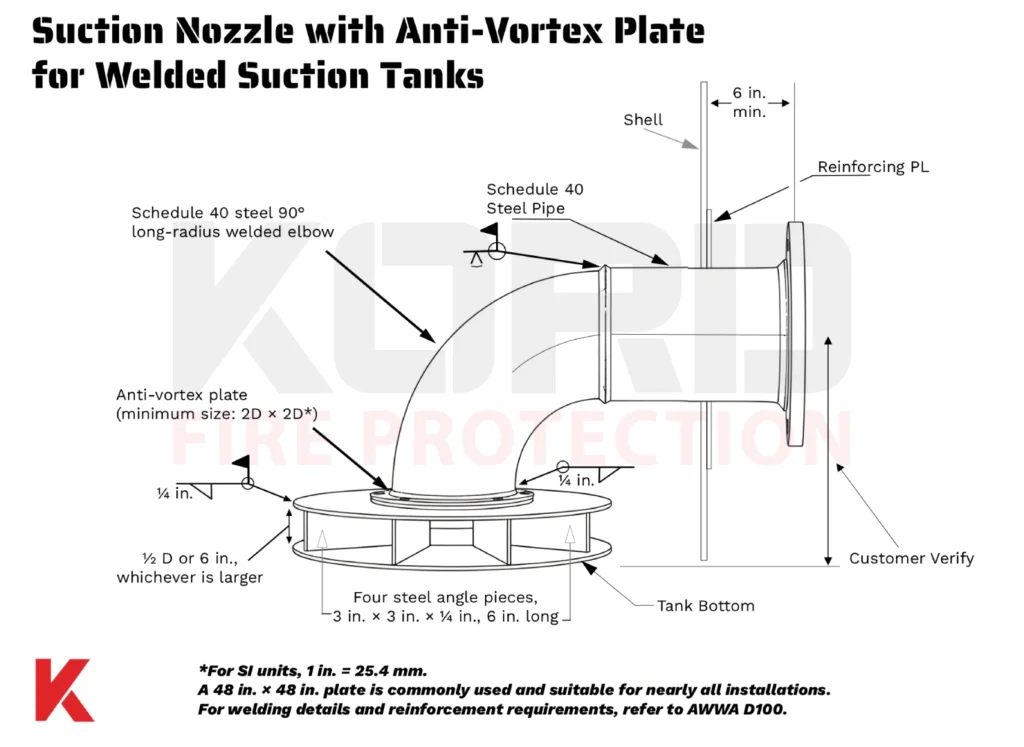
Per NFPA 22, the anti-vortex assembly shall consist of:
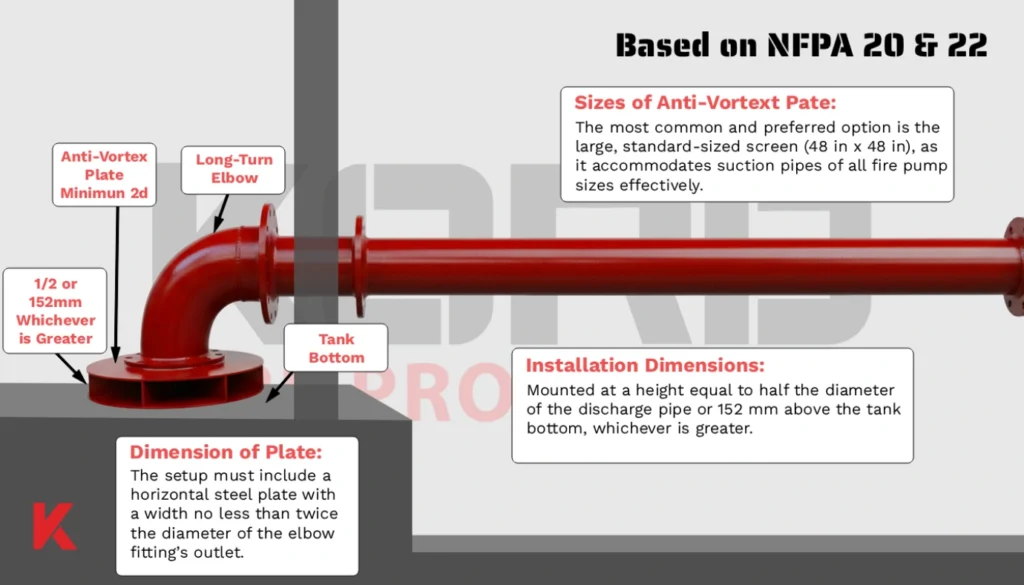
- A horizontal steel plate mounted on an elbow fitting at the suction outlet
- The plate diameter shall be at least twice the diameter of the outlet
- Large, standard size anti-vortex plates (48 in × 48 in / 1219 mm × 1219 mm) are common and sufficient for all typical fire pump suction sizes
Typical construction materials include:
- Carbon steel (galvanized or epoxy-coated) for durability
- Stainless steel in corrosive environments
- Fiberglass or PVC for lightweight, chemical-resistant installations
The plate should be securely welded or bolted to a supporting structure or directly to the suction pipe elbow to prevent vibration or detachment.

Schedule A Free Consultation Today
Compliance and Standards
The NFPA 22 standard explicitly addresses anti-vortex plate installation for fire pump suction tanks. It requires:
- Prevention of vortex formation that could draw air into the suction line.
- Design verification to ensure the assembly allows full design flow without obstruction.
- Materials and dimensions conforming to the rule of twice the outlet diameter.
Other references include NFPA 20 (Standard for Stationary Fire Pumps for Fire Protection), which indirectly reinforces the need for unobstructed, vortex-free suction flow to maintain pump performance.
Compliance with these standards is essential for AHJ (Authority Having Jurisdiction) approval and to ensure reliable system performance during fire emergencies.
Anti-Vortex Plate Installation Guidelines
To achieve optimal performance and code compliance:
- Mount the plate horizontally above the suction opening at a distance equal to approximately half the outlet diameter.
- Ensure full submergence of the plate under normal operating water levels.
- Use corrosion-resistant materials suitable for potable or fire protection water.
- Verify clearance between the plate and tank bottom to avoid sediment buildup interference.
- Perform flow testing to confirm no vortex formation occurs at rated pump flow.
A properly installed anti-vortex plate can extend the service life of fire pumps and significantly reduce maintenance costs due to cavitation damage.
Types of Anti-Vortex Plates
These plates vary slightly by manufacturer, but common types include:
- Flat circular plates – Standard, simple design for most suction outlets
- Domed or deflector plates – Used where flow redirection or higher volume is required
- Inclined plates – Provide enhanced flow distribution in vertical tanks
Each type achieves the same purpose—breaking up swirling flow—but may be selected based on tank geometry, flow rate, and suction size.
Inspection and Maintenance
Though the anti-vortex plate is a passive device, it should be included in periodic tank inspections. During routine maintenance:
- Inspect for corrosion, cracks, or deformation
- Confirm that the plate remains securely attached and properly aligned
- Clean any sediment or debris accumulation that may restrict flow
- Verify clearances and submergence levels after any tank modification or repair
NFPA 25 (Inspection, Testing, and Maintenance of Water-Based Fire Protection Systems) recommends visual inspection during scheduled tank maintenance intervals.
Case Example: Fire Pump Suction Tank Upgrade
A municipal warehouse installed a 200 GPM fire pump drawing from an underground tank. During flow testing, air bubbles and noise indicated vortex formation at the suction inlet. The installer added a 48 × 48 inch steel anti-vortex plate, properly welded 12 inches above the elbow outlet. Post-installation testing confirmed laminar suction flow, eliminating air entrainment and restoring rated pump performance. This simple upgrade prevented potential impeller damage and costly repairs.
Key Takeaways
- An anti-vortex plate prevents air entrainment and cavitation in fire pump suction systems.
- NFPA 22 mandates vortex control assemblies when a tank supplies a fire pump.
- Plate diameter should be at least twice the outlet diameter (commonly 48 × 48 inches).
- Proper installation ensures safe, efficient water delivery and pump longevity.
Anti-Vortex Plate Assembly FAQS
Contact the Experts in Fire Pump System Design
Ensure your fire protection system operates at peak efficiency. Contact Kord Fire Protection to specify, install, or inspect anti-vortex plates and suction assemblies that meet NFPA 22 and NFPA 20 standards.
Protect Your Property
Get the latest fire safety tips delivered straight to your inbox.