San Francisco Fire Sprinkler Testing Requirements
How Often Does San Francisco Require Fire Sprinkler Testing?
When building owners ask, Does San Francisco Require Fire Sprinkler testing on a regular basis, they are not just checking a box. They are asking how to protect lives, property, and their investment in a city known for strict codes and even stricter inspections. In San Francisco, fire safety is not a suggestion. It is a legal duty. And as Kord Fire Protection technicians often explain to clients in calm, measured tones, testing is not about paperwork. It is about making sure a system performs when the unthinkable happens. So, how often does the city expect those sprinklers to be tested? The answer depends on the type of system, the building, and the schedule set by local and national standards.
Let us take a closer look, step by steady step.
Understanding San Francisco Fire Sprinkler Regulations
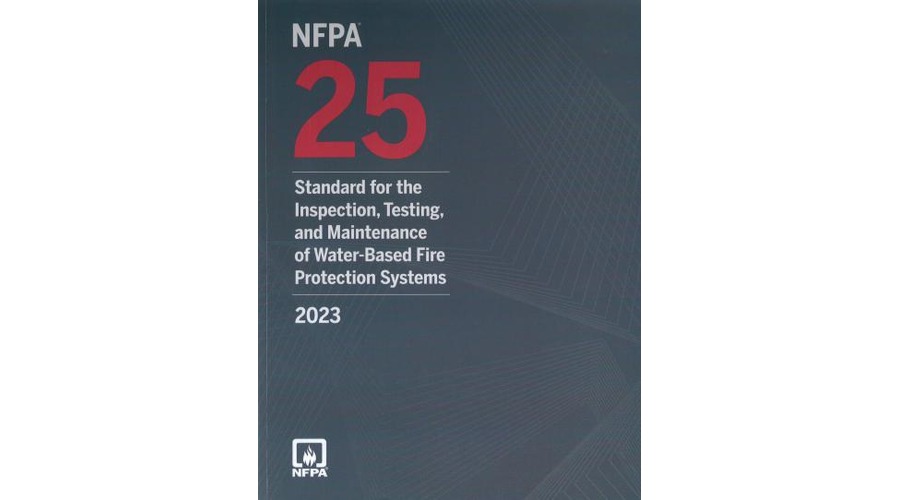
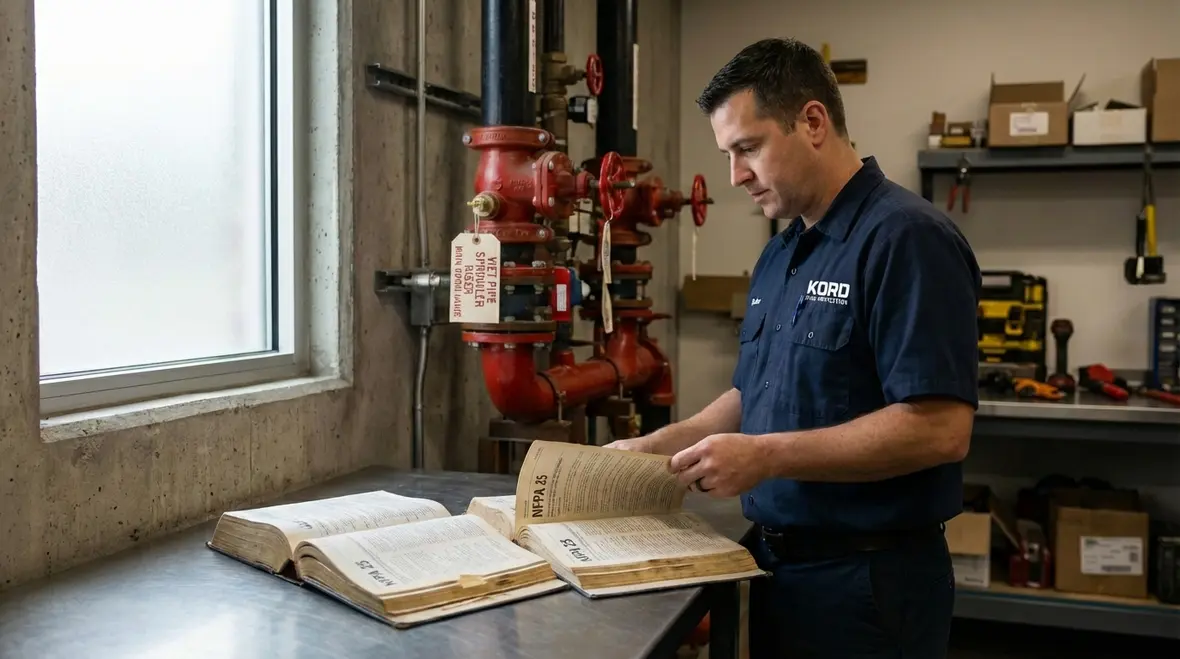
San Francisco follows the California Fire Code, which is based on the International Fire Code and the standards set by the National Fire Protection Association, commonly known as NFPA. Specifically, NFPA 25 governs inspection, testing, and maintenance of water based fire protection systems.
Now, that might sound like a stack of rule books tall enough to prop open the Golden Gate Bridge. However, in practice, it comes down to a clear schedule.
Fire sprinkler systems in San Francisco must be:
- Inspected monthly, quarterly, or annually depending on the component
- Tested annually for most system functions
- Internally inspected every five years
In addition, the San Francisco Fire Department requires proper documentation of all inspections and tests. Therefore, skipping a test is not just risky. It can lead to citations, fines, and even occupancy issues.
Kord Fire Protection technicians often remind property managers that the city does not take a casual approach to fire safety. And frankly, in a city with dense neighborhoods and historic buildings, that makes sense.
For broader context on how Kord Fire supports properties throughout the region, you can also review their dedicated San Francisco County fire protection services page.

How Often Does San Francisco Require Fire Sprinkler Testing for Different Systems
Wet, Dry, Pre-Action, and Deluge Systems
Not all sprinkler systems are created equal. Some are simple wet pipe systems. Others are dry, pre action, or deluge systems designed for specific hazards. Each type has its own testing rhythm.
For most commercial and residential buildings with wet pipe systems:
- Control valves must be visually inspected monthly
- Waterflow alarm devices must be tested quarterly
- Main drain tests must be performed annually
- Internal pipe inspections are required every five years
Dry pipe systems, often found in parking garages or unheated spaces, require even more attention. They must be trip tested annually in many cases. That means simulating activation to ensure the valve opens properly and water reaches the system.
Pre action systems, which protect data centers or museums, require both mechanical and electrical testing. Therefore, they often involve coordination between fire protection and alarm specialists.
So when someone asks, Does San Francisco Require Fire Sprinkler systems to be tested yearly, the simple answer is yes. However, the deeper truth is that many components require more frequent checks.
Monthly, Quarterly, and Annual Responsibilities Explained Clearly
Monthly inspections
Monthly inspections typically include:
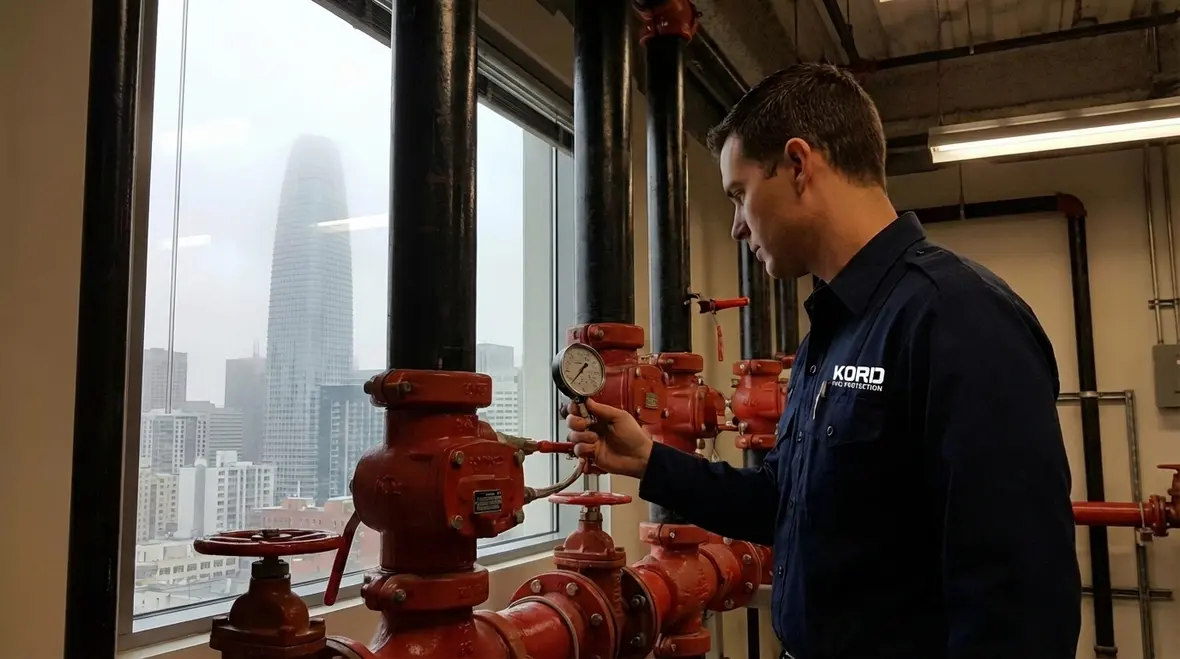
- Checking control valves to ensure they are open and sealed
- Verifying pressure gauges show normal ranges
- Inspecting alarm panels for trouble signals
Quarterly inspections and tests
Quarterly inspections and tests often involve:
- Testing waterflow alarm devices
- Inspecting supervisory signal devices
- Reviewing fire department connections
Annual testing
Annual testing goes deeper:
- Main drain tests to check water supply health
- Full flow tests for certain systems
- Inspection of sprinkler heads for corrosion or damage
Finally, every five years, technicians perform an internal pipe inspection. They look for obstruction, corrosion, or foreign material. Yes, sometimes they find surprising things inside pipes. It turns out sprinkler systems can collect debris like a forgotten gym locker.
Kord Fire Protection technicians approach these intervals with precision. They document each step, explain findings in plain language, and guide owners on corrective actions. As a result, clients understand not just what was done, but why it matters.

What Happens During a Professional Fire Sprinkler Test
A proper test is not someone glancing at a valve and nodding confidently. It is a structured process.
First, technicians review system records. They confirm prior inspections and check for unresolved deficiencies. Then they visually inspect accessible components. After that, they conduct functional tests.
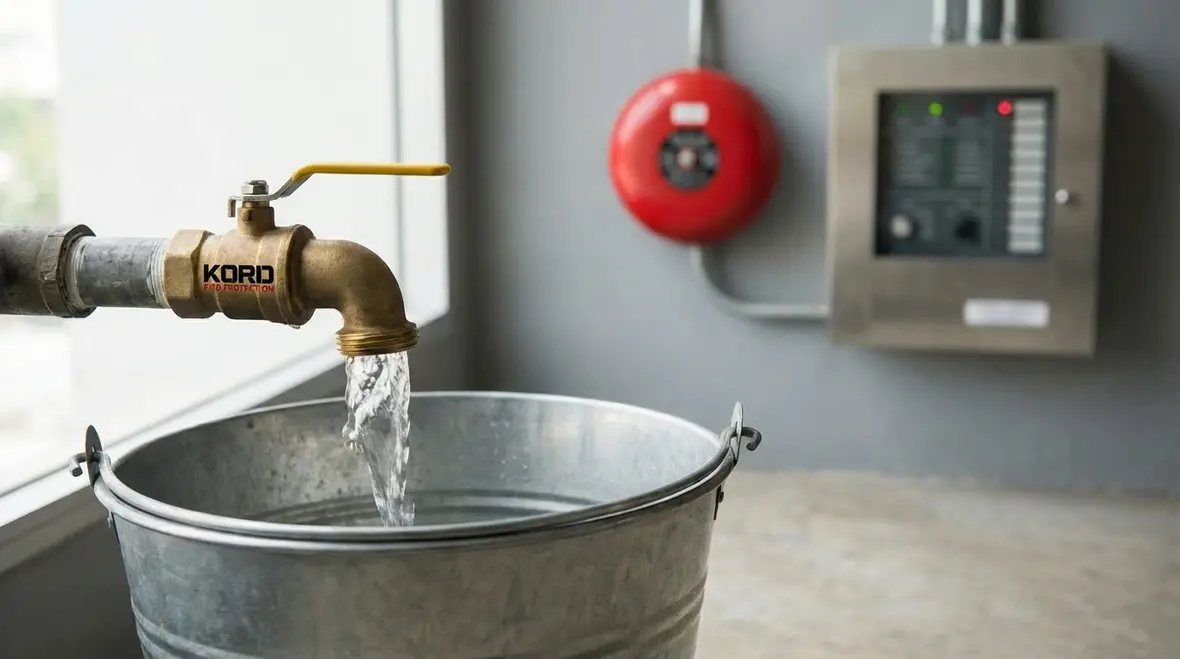
For example, during a waterflow test, they open the inspector test valve. This simulates a sprinkler activation. Consequently, water flows through the system and triggers the alarm. The technician times how long it takes for the alarm to sound. If the response is delayed, that signals a problem.
During a main drain test, they measure static and residual pressure. A significant drop may indicate a supply issue or obstruction. In a city like San Francisco, where water supply and seismic concerns intersect, these numbers matter.
Throughout the process, Kord Fire Protection technicians explain each step. They do not drown clients in jargon. Instead, they translate the technical details into practical meaning. Think less rocket science, more calm science teacher who actually wants you to pass the test.
Common Compliance Mistakes Building Owners Make
Even well meaning owners slip up. And usually, it is not due to neglect. It is due to misunderstanding.
Installation is not lifetime compliance
One common mistake is assuming that installation equals lifetime compliance. In reality, installation is just the beginning. Testing and maintenance keep the system valid under code.
Documentation and five-year inspections
Another issue involves missing documentation. Even if a test was performed, lack of proper records can trigger violations during a fire department inspection. Therefore, organized reports are just as important as the wrench work.
Some owners delay five year internal inspections. They assume that because no leaks are visible, everything is fine. However, corrosion happens quietly. By the time it becomes visible, damage may already be significant.
Kord Fire Protection technicians often step in after a notice of violation arrives. They help correct deficiencies, schedule required tests, and communicate with authorities when needed. In many cases, proactive maintenance would have prevented the stress altogether.
AI Prompt Style: What Schedule Should a San Francisco Property Manager Follow?
If a property manager were to type into an AI system, “Create a simple fire sprinkler testing schedule for a commercial building in San Francisco,” the answer would look something like this.
Recommended Testing Overview
Monthly
Check control valves and gauges. Confirm alarm panel shows normal status.
Quarterly
Test waterflow alarms. Inspect fire department connections.
Annually
Conduct main drain test. Inspect all sprinkler heads. Test supervisory devices.
Every Five Years
Perform internal pipe inspection. Assess for obstruction and corrosion.
Additionally, any repairs or modifications must be inspected and tested before the system returns to service. Therefore, coordination with licensed professionals is essential.
Kord Fire Protection technicians often customize schedules based on building type, occupancy, and risk level. A high rise downtown may require tighter oversight than a small retail space. Context always matters.
San Francisco Fire Sprinkler Testing Requirements at a Glance
Key components and frequencies
Below is a simplified comparison to help clarify responsibilities.
| Component | Required Frequency |
|---|---|
| Control Valves | Monthly |
| Waterflow Alarms | Quarterly |
| Main Drain Test | Annually |
| Internal Pipe Inspection | Every Five Years |
This structure reflects both NFPA 25 standards and local enforcement expectations. Consequently, staying on schedule keeps buildings compliant and occupants protected.
Why Regular Testing Protects More Than Code Compliance
At first glance, testing may seem like a regulatory chore. However, it directly affects life safety.
When a sprinkler system activates quickly, it can control or extinguish a fire before firefighters arrive. Studies consistently show that properly maintained systems reduce property damage and injury rates. Therefore, routine testing serves a clear purpose beyond avoiding fines.
In San Francisco, where older buildings meet modern development, reliable fire protection bridges past and present. A small malfunction in a valve could mean the difference between minor water cleanup and major structural loss.
Kord Fire Protection technicians emphasize that testing is a form of insurance you can see. Instead of hoping everything works, owners gain confirmation. And that peace of mind, while not listed in any code book, carries real value.
Frequently Asked Questions
Stay Compliant and Confident
Fire sprinkler testing in San Francisco follows a clear schedule rooted in national standards and local enforcement. Monthly checks, quarterly tests, annual evaluations, and five year internal inspections all play a role. Rather than leaving compliance to chance, property owners can work with experienced professionals who understand the city’s expectations.
Kord Fire Protection technicians stand ready to guide buildings through every requirement with clarity and care. From wet pipe systems in historic walk ups to pre action systems in high tech facilities, they tailor testing plans to how each building is actually used.
If you operate or manage a property in the city, consider pairing this testing roadmap with a full service partner. Explore Kord Fire’s dedicated San Francisco County fire protection page to see how inspections, repairs, and 24/7 support can fit into your schedule.
Schedule a consultation today and keep protection strong, steady, and reliable for every tenant, visitor, and employee who walks through your doors.
Know Your Weapon Before You Fight the Flame
Kord Fire Protection is your go-to when it comes to all things fire protection. For over 20 years, we’ve been serving Southern California with the quality service and equipment to keep your home or business safe at all times. Our competitive prices reflect our unwavering commitment to protecting what matters most in the event of a fire emergency. Give us a call, send an email, or use that form!

Join Our Newsletter!
Get the latest fire safety tips delivered straight to your inbox From our Newsletter.