Standpipe Hose Connection Thread Types NH NST GHT
When an emergency team needs water fast, the last thing they should face is a guessing game. That is why kord fire protection technicians push for standardizing standpipe hose connections across buildings, so crews can match couplings, adapters, and fittings on the first try. In practice, standardization starts with confirming the common standpipe hose connection thread types used in the field, such as NH threads, NST threads, and GHT threads. Once those thread types are known and documented, the rest becomes more predictable: training, testing, and inspection schedules work together like a well rehearsed fire drill, not like a last minute trivia night where nobody studied.
Why standardizing standpipe hose connections keeps crews moving
In an incident, time does not just “pass.” It disappears. Therefore, a standardized connection system helps crews route water quickly from the standpipe to the hose. When a building owner or property manager standardizes fittings, the fire department does not have to hunt for the right adapter, and the system reduces the chance of mismatched threads that can cause leaks or slow down flow.
Additionally, kord fire protection technicians explain that standardization reduces human error. People under stress still do their jobs, but their options shrink when the connection plan is clear. As a bonus, the building maintenance crew can stock the correct parts. Otherwise, someone will always find that one coupling that “might work,” which is the engineering version of using a spoon as a screwdriver.

How thread types guide selection during planning
Before any work begins, a careful review should happen. First, a qualified team should document the existing thread types across each standpipe outlet. Then they should match them to the hose connection setup used by local response teams. That includes the standpipe hose connection thread types found in the riser outlets and in any required adapters.
Next, they should set a site standard in writing. This step matters because buildings change over time. Contractors replace parts. Sprinkler work gets updated. Hoses and caps shift out of circulation. When the standard is recorded, technicians can keep the system consistent, even when the staff turns over.
Finally, they should align signage, cabinet labels, and inspection tags with the documented standard. That way, the crew does not waste minutes scanning charts. In an emergency, clarity beats cleverness.
A simple way to keep planning from drifting
Planning gets easier when every outlet is treated as part of one coordinated system instead of a collection of random parts that happened to survive past renovations. A written standard helps owners, facility staff, inspectors, and service technicians stay on the same page. It also makes future upgrades less painful, because the next person is not left decoding a building’s secret language of caps, couplings, and old notes scribbled on a tag that may or may not still belong there.

What kord fire protection technicians check on every connection
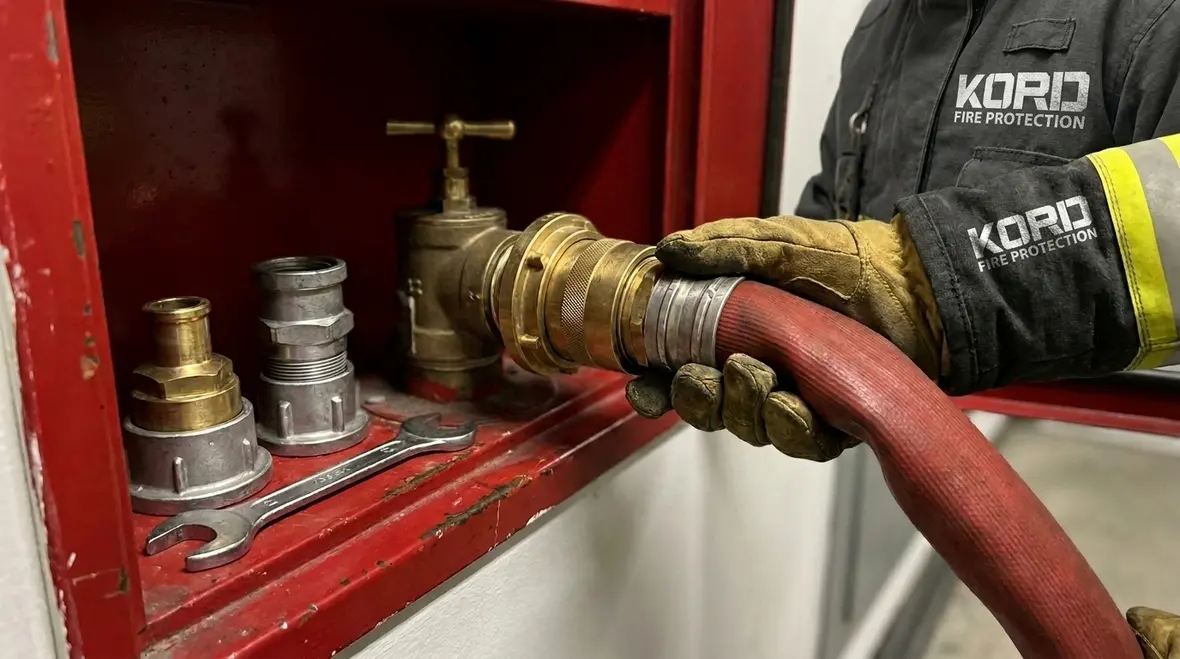
kord fire protection technicians typically focus on the details that prevent failures. They do not only look at whether parts “fit.” They confirm whether the threads properly engage, whether hoses seat fully, and whether couplings thread smoothly without cross threading. They also check that caps and covers stay in place and do not hide damaged fittings.
Also, they evaluate wear patterns. Repeated coupling can round thread edges or loosen components. If a riser outlet sees heavy use during tests, the connection should receive more frequent checks. Then, they verify the correct hose assembly is stored in the right location with the right markings.
To keep the system reliable, technicians use a repeatable process. For example, they can build a checklist for each standpipe floor, then update it after each inspection cycle. As a result, they catch issues early instead of responding to leaks after an event has started.
The small connection details that matter most
This is usually where the unglamorous work earns its paycheck. Thread damage, missing gaskets, stuck caps, and poorly matched hose assemblies do not look dramatic sitting in a cabinet, but they become very dramatic when someone needs water immediately. A disciplined inspection routine turns those potential surprises into scheduled fixes. That is a much better storyline for everyone involved.
Standardization through installation, inspection, and recordkeeping
A standardized system needs more than the right parts. It needs consistent installation practices, ongoing inspection, and clean records. Therefore, property managers should require documentation that shows which fittings and thread types are installed at each outlet location.
Then they should schedule inspection work that matches building risk. Higher occupancy sites or areas with complex evacuation routes need tighter review cycles. Additionally, standpipe cabinet readiness should include checking hose condition, nozzle compatibility, and any adapters used at the connection point.
Recordkeeping also supports accountability. When a technician tags an outlet, the record should include the outlet ID, connection type, and the condition notes from the inspection. If a repair happens later, the record should show what changed. That is how future crews avoid a “mystery fitting” scenario where the building becomes its own unsolved case file.
For a broader service approach, building teams can connect this work with full fire protection services so standpipe readiness is not treated like a side quest. It works better when inspections, repairs, testing, and documentation all pull in the same direction.
Training crews to connect fast and safely
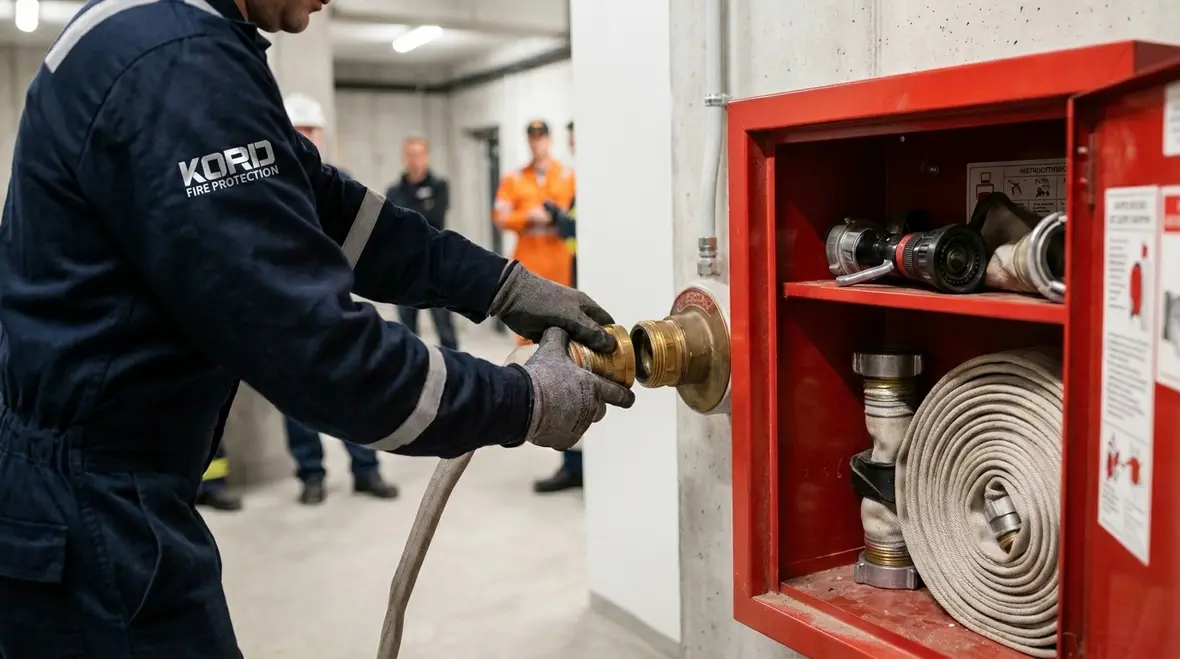
Even the best standard fails if the team does not practice. Therefore, training should cover connection steps, proper hose handling, and what to do if a mismatch appears. kord fire protection technicians recommend short, repeatable drills. These drills can include connecting from cabinet to outlet, confirming thread engagement, and running a controlled water flow test where permitted.
Also, training should address the human factors. Crews should know how to identify the correct connection quickly, and they should learn how to stop safely if threads do not engage correctly. A controlled pause prevents damage, protects equipment, and keeps the operation calm when adrenaline tries to take the wheel.
And yes, mistakes can happen. But when the team knows the standard, mistakes shift from “catastrophic” to “fixable.” It is the difference between a pop quiz and a planned seminar.
Practice should feel boring, and that is the point
A calm, repeatable drill is exactly what helps a real emergency feel less chaotic. If crews already know where the hose sits, how the coupling should engage, and what backup adapter belongs on site, they can move with confidence instead of improvising. Fire protection is one of those fields where boring is beautiful. Boring means the process worked, the hardware matched, and nobody had to invent a solution while standing in a hallway under pressure.
Designing for real-world response and compatibility
Standardization should serve emergency access, not office comfort. Consequently, building planning should account for how local fire departments connect hoses. If the jurisdiction uses specific adapters, the building should align with that setup. This helps prevent last minute substitutions that can disrupt flow. Teams reviewing this topic may also find it helpful to compare the building’s interior readiness with standpipe fire department connection requirements so the exterior and interior connection strategy makes sense as one complete response path.
In addition, the design should reduce friction points. That means clear cabinet layouts, consistent placement of hoses and nozzles, and enough space for crews to stand and connect without blocking paths. The system also needs reliable access to the standpipe outlets, with doors and covers that open smoothly.
kord fire protection technicians often stress that compatibility extends beyond thread types. Flow capacity, hose length, and nozzle selection all affect how the system performs. Therefore, crews should verify the full chain, not just the connection.
FAQ
Conclusion: standardize now, move faster later
Standpipe access succeeds when every connection matches the plan. Therefore, building owners and site managers should work with kord fire protection technicians to document thread types, standardize fittings, and train crews on the exact steps that create fast, leak free water flow. If the system today relies on “whatever fits,” it should be upgraded before the next drill, not during an emergency.
For building teams ready to tighten up inspections, maintenance, and service response, a strong next step is to review standpipe system class I-II-III services alongside full fire protection services. Reach out to schedule an assessment and get a clear, documented connection standard for your standpipes.

Join Our Newsletter!
Get the latest fire safety tips delivered straight to your inbox From our Newsletter.