Commercial Fire Alarm Battery Life and How to Extend It
When people ask about commercial fire alarm battery life, they usually want one simple answer: “How long will it last, and how do we make it last longer?” In truth, battery longevity depends on how the system sits in the building, how often it runs, and how well it gets checked. Kord Fire Protection technicians explain that the best results come from smart habits, clean power conditions, and routine testing that catches problems early. And yes, batteries can still disappoint you, even if they look fine from across the room like that coworker who always says they will “circle back.” The goal is to stretch runtime, reduce surprise failures, and keep the fire alarm system ready when it matters most.
How long should commercial fire alarm batteries last?
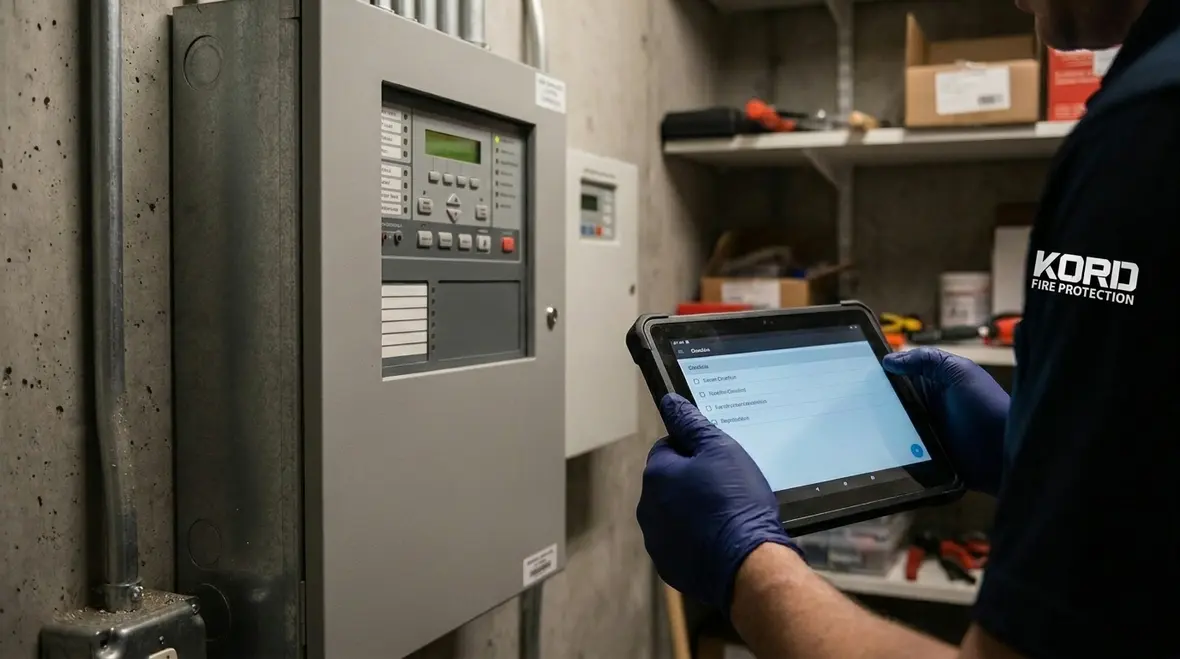
Most businesses plan around standard battery life ranges, but real life is messier. Battery performance drops with heat, heavy system loading, and repeated deep discharge. Therefore, the “expected” lifespan often turns into “expected until the building behaves differently than the spec sheet.” Kord Fire Protection technicians typically review system history first, including panel age, device count, and how the building uses alarm functions during outages.
Next, they check whether the system frequently enters backup mode. If it does, the battery cycles more often, and the effective service life shrinks. In addition, even small issues like a weak connection or corrosion can push the panel to draw extra power. Meanwhile, people sometimes assume the battery is the only culprit, but the battery is often just the messenger.
Facilities that want a deeper look at backup readiness can also review Fire Alarm System Reliability and Battery Health, which pairs nicely with a practical maintenance plan.
Why battery longevity fails in real buildings
Systems age, but so does everything around them. Batteries suffer when they sit in warm control cabinets, when charging voltage drifts, or when the alarm load spikes due to added devices. Over time, dust and moisture can also affect terminals and cause higher resistance. Then, the panel compensates by drawing more current, and the battery spends its energy fighting problems it did not create.
Kord Fire Protection technicians often point out a common scenario: a building upgrades devices, adds speakers, expands zones, or installs new panels, yet no one updates the battery calculations. As a result, the battery gets asked to cover a longer standby period than it was planned for. So even if the battery “works,” it may not meet the backup time you need during an outage.
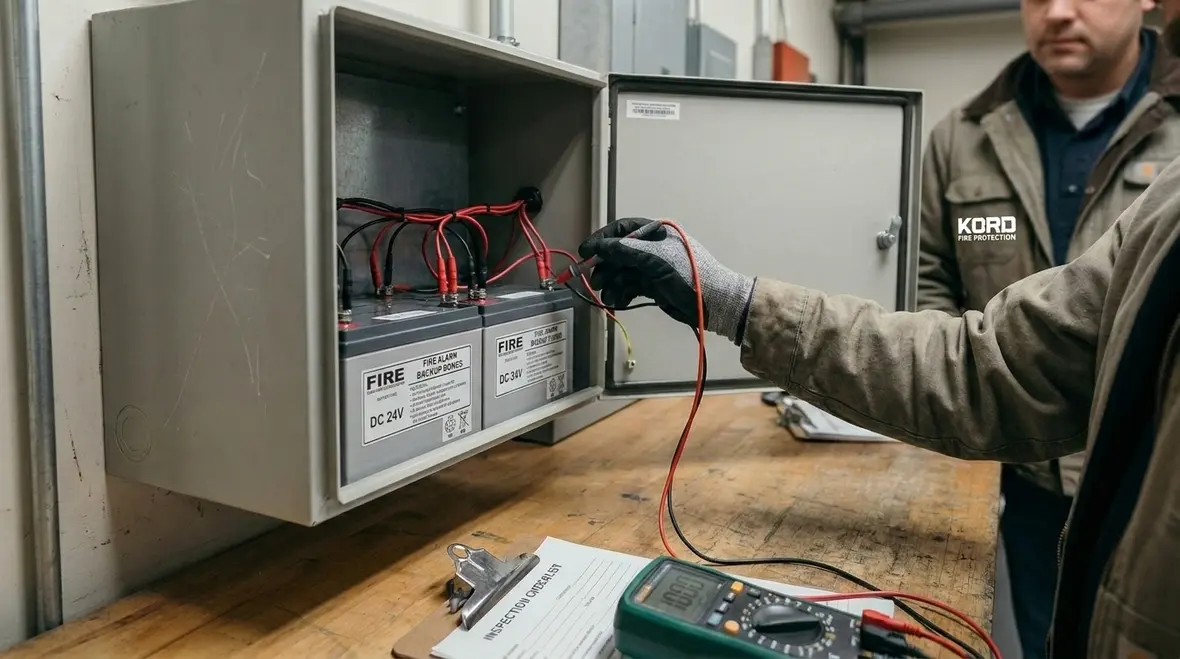
Best practices for standby power and charge cycles
To maximize battery longevity, businesses need stable charging. That means monitoring charging output and keeping the system clean and properly sealed. Batteries last longer when they charge correctly and avoid unnecessary stress. Therefore, technicians focus on verifying float voltage, checking charger operation, and confirming that the system remains within the recommended range.
Additionally, they reduce surprise discharges. When a facility has frequent micro outages, the battery cycles more than expected. Over time, that cycle count shortens life. If the building has unreliable power, the best move is not just “buy a new battery sooner,” but also coordinate with the electrical team to smooth the feed and reduce outage frequency.
And yes, power problems can look minor, like a flicker that lasts a breath. However, a fire alarm system takes those events seriously, because it has to. Like an overprotective friend who won’t let you “just go for a quick run,” the panel keeps the battery ready, whether you notice or not.
Why clean power matters more than people think
A battery’s job sounds simple until the building starts feeding the panel a steady diet of little electrical headaches. Small interruptions, drifting charger output, and inconsistent supply conditions do not always trigger drama right away. Instead, they quietly chip away at useful battery life. That is why steady incoming power, healthy charging circuits, and a cabinet environment that stays dry and reasonably cool matter so much. The battery should be supporting the system during emergencies, not spending its days cleaning up every tiny power mess the building throws at it.
What maintenance should Kord Fire Protection technicians recommend?
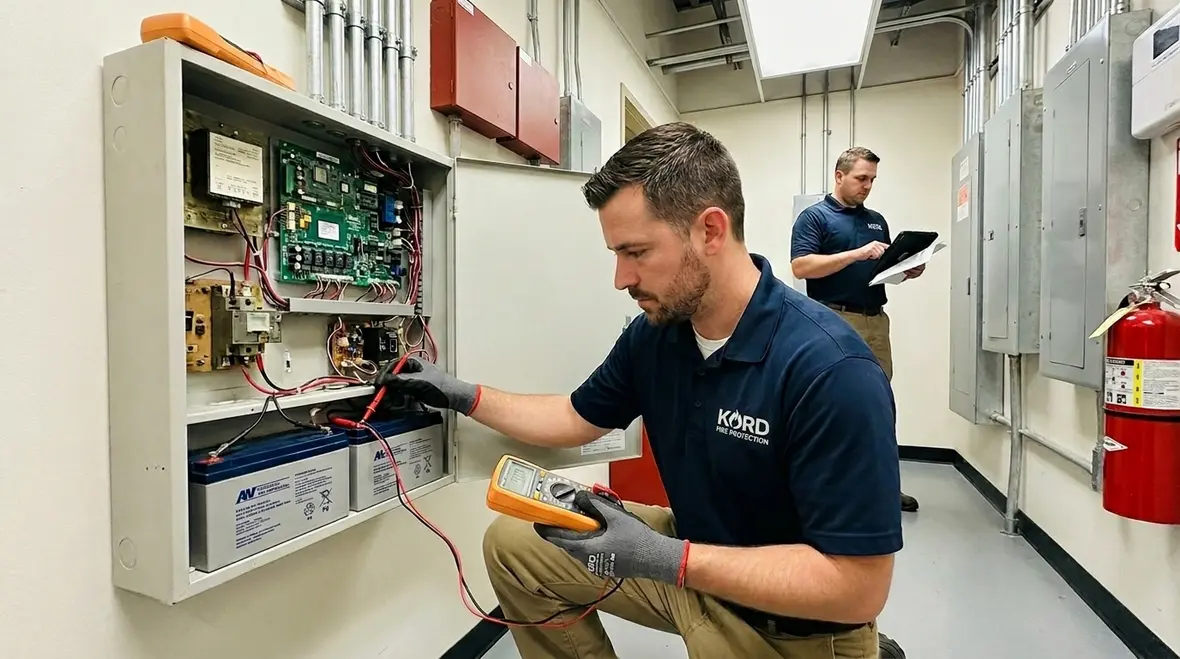
Routine maintenance should be more than a quick glance and a checkbox. Kord Fire Protection technicians typically recommend a structured approach that starts with a baseline, then builds consistency. First, they verify the panel’s battery test records and the latest load calculations. Next, they inspect wiring and terminal condition to make sure the connection quality matches the system’s demand.
Then, they check for environmental stress. If the control cabinet runs hot, battery chemistry ages faster. If the cabinet experiences humidity, terminals and leads can corrode. So technicians look at cabinet ventilation, sealing, and the surrounding temperature.
Finally, they document changes. If someone adds devices or reroutes circuits, technicians confirm the updated battery capacity supports standby and alarm conditions. That paperwork may feel like paperwork, but it often prevents the “we thought it would be fine” moment that no one wants.
If your team is tightening inspection routines, Fire Alarm Inspection and Testing for Commercial Buildings is a strong related read and a useful internal reference for scheduling and documentation habits.
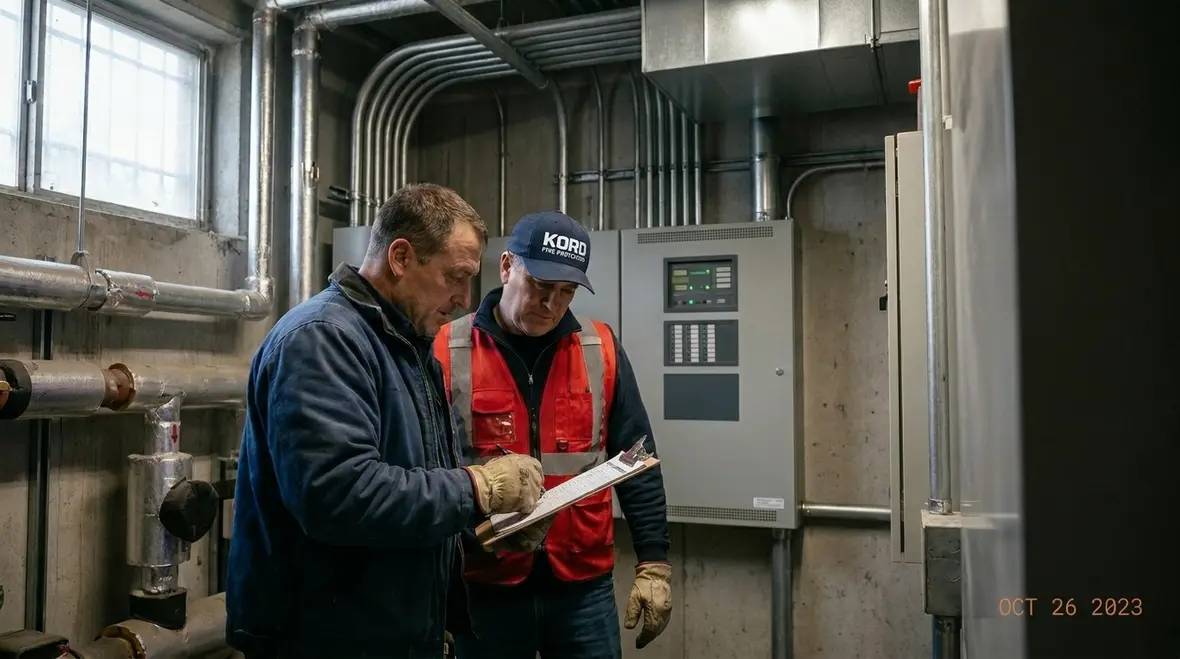
How to calculate load and pick the right battery
Correct battery selection depends on the actual system load, not a guess. Kord Fire Protection technicians typically perform a load assessment that includes standby current, alarm current, and the number and type of devices. Then they match battery capacity to the required backup time. This matters because batteries do not fail only when they “run out.” They also fail when they cannot hold the needed voltage under load.
Moreover, battery aging reduces usable capacity before the battery looks dead. So selecting the right battery size, with a sensible capacity margin, helps the system tolerate aging while still meeting the performance requirement. In addition, the system should use the battery type the panel supports. Mixing types or using mismatched capacity can create charging and performance issues.
To make decisions faster, some facilities follow a simple checklist framework. Here is a dual column view that teams can use during planning:
Common mistakes during battery sizing
One of the easiest ways to shorten battery life is to size for yesterday’s system instead of today’s. Buildings change. Tenant improvements happen. Devices get added. Circuits get extended. Sometimes a panel ends up carrying a lot more responsibility than it did when the original battery calculations were done. When that happens, the battery may still look presentable on paper but struggle in real standby or alarm conditions. A proper recalculation after changes is not just nice housekeeping. It is what keeps the system honest.
Battery testing that actually protects the business
Testing should confirm performance, not just existence. That means measuring battery condition in a way that reflects real load behavior. When teams only do a surface check, they miss early voltage sag and internal weakness. As the battery ages, it can still show “alive” status while losing strength under current demand. Then, during a true outage, it cannot maintain the needed output.
Kord Fire Protection technicians often stress trend-based decisions. Instead of waiting for a replacement date on a calendar, they watch how the battery performs against prior tests. If the results shift, they plan replacement before the system runs into trouble.
Also, testing should align with your building schedule so alarms stay safe and operations remain stable. Because nobody wants a test that turns into a production meeting. The right process keeps the test safe, controlled, and repeatable.
What trend data tells you before failure shows up
Trend records are where the story gets interesting. A single test can tell you whether the battery passed that day. A series of tests can tell you whether the system is drifting toward trouble. Gradual voltage drop, weaker performance under consistent load, or repeated marginal results are all clues that the battery is running out of patience. Good maintenance teams use those clues to schedule replacement before an outage turns the battery into the least helpful person in the room.
FAQ
Final thoughts and next steps for a safer system
Maximizing commercial fire alarm battery longevity takes more than swapping batteries when the date arrives. It requires correct load calculations, stable charging, clean connections, and testing that tracks performance over time. If a facility wants fewer outage surprises and stronger backup coverage, the next move is simple: schedule a battery and system review with Kord Fire Protection technicians. They will confirm sizing, check charging, review test trends, and help build a plan that protects people and your business.
For a broader service conversation, explore Fire Alarm Services or connect related system planning with Fire Pump Service. If your property needs a dependable partner across inspections, repairs, and readiness, Full Fire Protection Services is a strong next stop near the end of your review. Call today to get started.

Join Our Newsletter!
Get the latest fire safety tips delivered straight to your inbox From our Newsletter.