Fire Pump Power Requirements for Electrical Reliability
Commercial fire pump systems do not get to “hope for the best.” They must move water when the building demands it. That is why teams must plan around the fire pump power requirements from day one. In most facilities, engineers expect reliable voltage and frequency at the controller, with starting and running power that stays steady under load. Kord Fire Protection technicians often explain it this way: the pump is the muscle, and electrical power is the bloodstream. If the bloodstream stutters, the system can suffer delays, nuisance trips, or worse, a failure when seconds matter.
And yes, power issues can be as dramatic as a superhero origin story, except no one applauds when the alarm goes quiet. Fortunately, smart planning and real inspections can keep the system dependable. For teams working through design, testing, or troubleshooting, it also helps to understand the bigger picture of fire protection systems, components, and coordination, because electrical reliability does not live in a vacuum. It lives inside a system where each part has to do its job on cue.
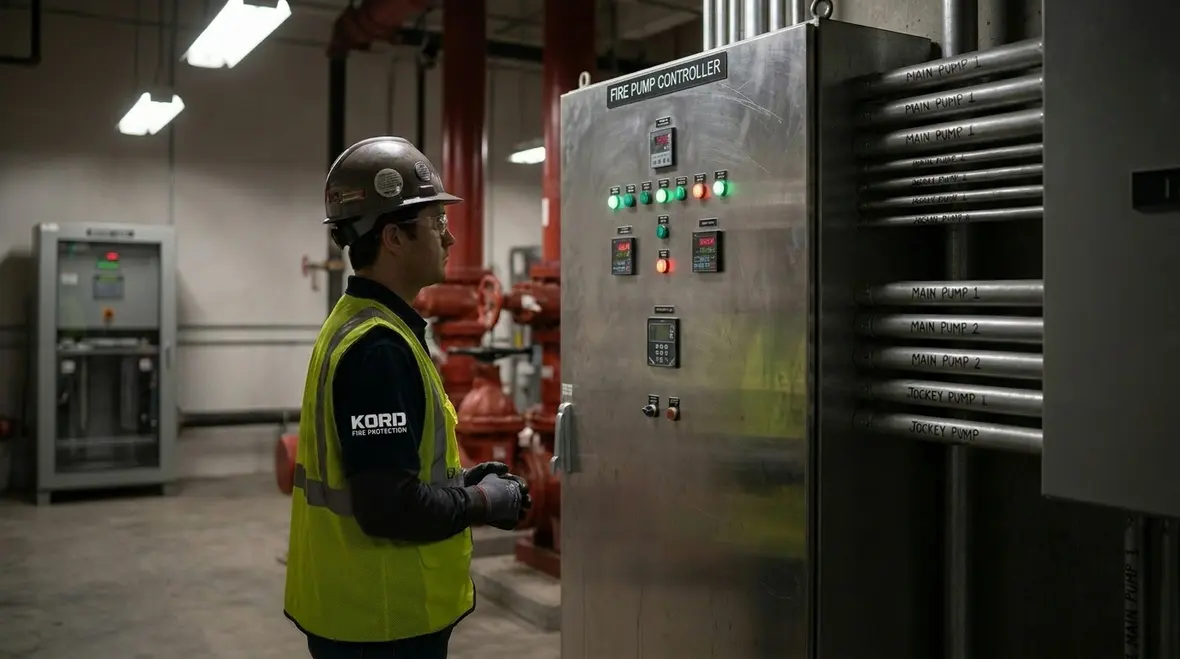
What power stability means for a commercial fire pump
Reliable power starts with stability. In practice, it means the pump controller sees the correct voltage and frequency, and it holds that level as motors start. Fire pump systems often include jockey pumps, main fire pumps, and controllers that can react quickly to pressure drops. Therefore, the electrical system must handle motor starting current without causing the voltage to sag past acceptable limits.
First, technicians confirm the fire pump power requirements match the actual service available at the site. Then they verify the coordination between the utility supply, switchgear, disconnects, branch breakers, and transfer devices. Even small gaps can create big problems during start. For example, a feeder with excessive voltage drop can cause the controller to behave oddly under load.
Why the first few seconds matter so much
At this stage, Kord Fire Protection technicians also focus on how the system responds during the first seconds of operation. That is because motor starting draws high current, and the rest of the building may not care, but the pump absolutely does. If the controller loses confidence right when it should be commanding a start, reliability takes a hit immediately. That is one reason many teams also review broader fire pump electrical requirements and design issues before a project gets too far along.
How to size conductors and protect against voltage drop
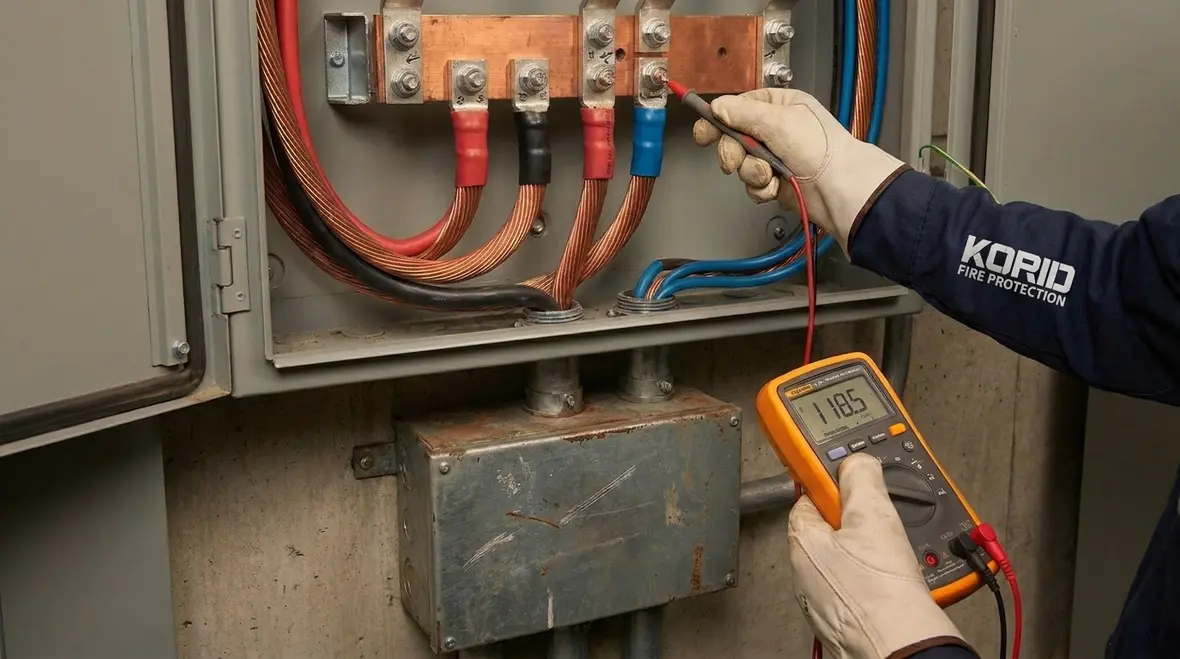
Next comes the wiring. Power that looks fine at the service entrance may not look fine at the controller cabinet. Thus, correct conductor sizing matters, especially between the emergency power source and the fire pump controller.
Kord Fire Protection technicians commonly walk facilities through the concept of voltage drop. They explain that voltage drop depends on conductor length, wire size, load current, and connection quality. When voltage drop exceeds design limits, the motor may pull more current, which then worsens the drop, creating a loop that feels like a bad sitcom plot.
- Conductor size from the supply to the controller and disconnect
- Torque on lugs and terminations, since loose connections can add resistance
- Material and temperature ratings for the environment where the wiring runs
- Routing that avoids unnecessary length increases
Then they confirm protective devices do not add unexpected delay. While breakers and fuses protect equipment, they also must coordinate so they do not trip during a normal start. That sounds simple on paper, but field conditions love to add a little chaos. A slightly loose termination, a long feeder, or a setting that looked fine during submittal review can all become trouble once current actually moves.
Why standby power needs the right behavior under load
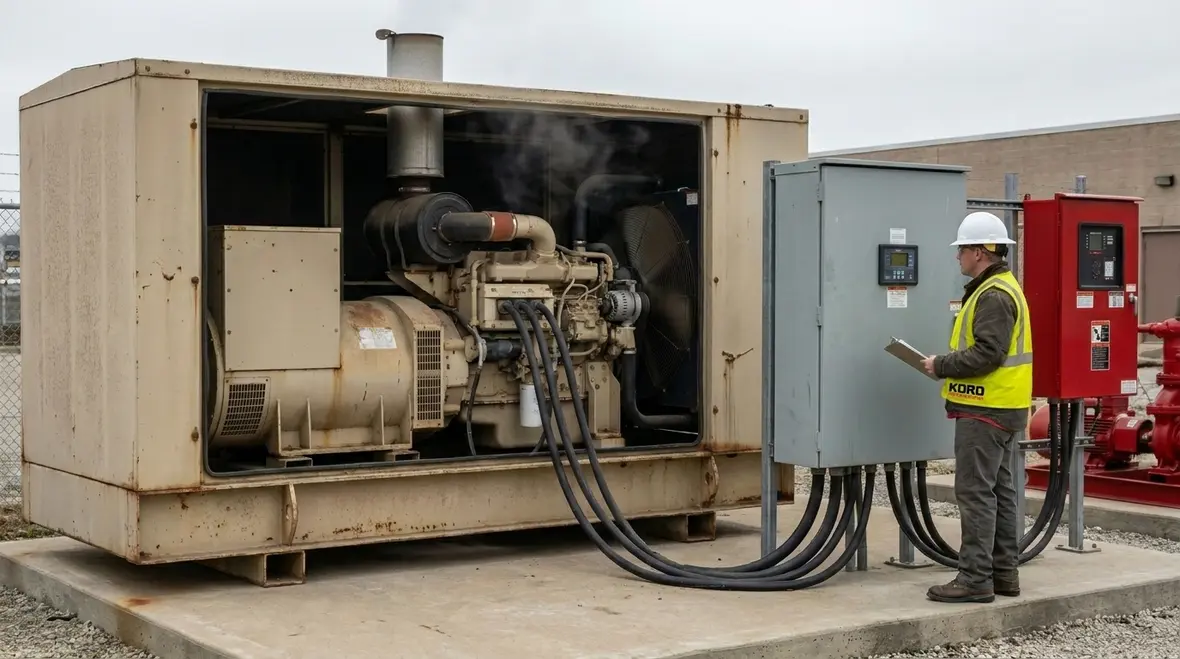
Some commercial sites rely on standby generators, and others use utility plus backup arrangements. Either way, power must perform under load, not just at idle. A generator that starts fine with lights on can struggle when a motor kicks in, especially if tuning, load sharing, or control settings are off.
As a result, technicians test generator performance in a realistic way. They verify start time and voltage regulation during motor starting. They also confirm the transfer system moves the fire pump load without interruption that exceeds allowed limits.
A backup source has to behave like a partner
Kord Fire Protection technicians often explain it in plain terms. The system needs the generator to act like a steady partner, not like a friend who shows up late and claims traffic was “a surprise.” Under heavy load, voltage should remain within design tolerance and frequency should stay controlled.
Additionally, they verify that any protective relays, contactors, and timers work together. A relay that drops out early or a contactor that hesitates can cause a start failure. The goal is simple: keep power ready and steady when water must flow. In many facilities, this kind of review pairs naturally with a broader look at fire pump testing requirements, since good testing often exposes weak backup power behavior before an emergency ever does.
Motor starting and protective coordination that actually works
Now let’s talk about what most people ignore until it fails. Motor starting. Fire pump motors, especially main pumps, can draw large current bursts. Therefore, protective coordination must handle those bursts while still clearing faults quickly.
- Overcurrent protection allows starting current for the required time
- Ground fault and short circuit protections do not behave unpredictably
- Contactors and relays have ratings matched to the motor load profile
- Control power circuits stay stable even if the motor circuit draws heavy current
Then they look at nuisance trips. Sometimes a system trips because of a setting that is too tight, or because a component degrades over time. If the trip happens during a real demand, reliability drops fast. So technicians also confirm inspection records, torque reports, and thermography results where required.
In short, coordination is not a checkbox. It is the difference between “it should work” and “it did work at 2 a.m.” And nobody wants to discover the difference while staring at a controller that suddenly decided this was its moment for artistic expression.
Commissioning and testing strategies for dependable pump operation
After design checks, the next step is commissioning. This is where teams confirm the power path works as intended. It also where surprises show up, because reality likes to add plot twists.
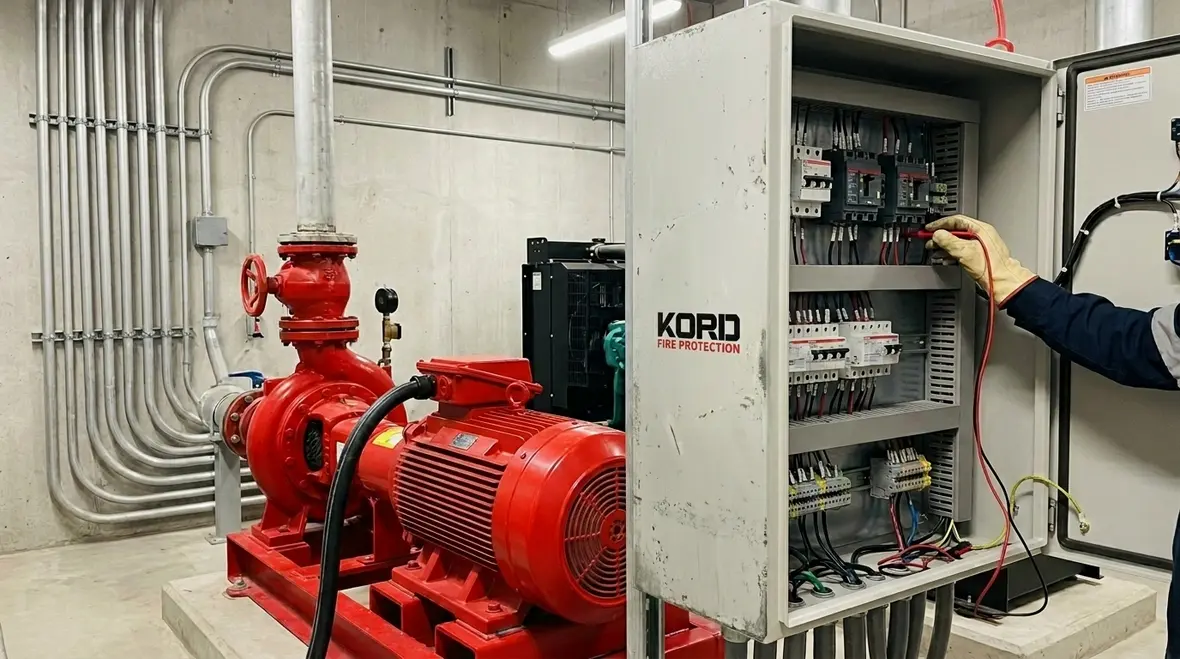
During commissioning, technicians typically verify control logic, phase rotation, and alarm status. They also check that the controller sees stable voltage under simulated start conditions. When testing includes load conditions where permitted, the team can measure voltage drop and starting behavior.
Documentation keeps the good work usable later
Kord Fire Protection technicians often stress documentation. They help teams record test results and align them with as built drawings. Then, they recommend periodic testing that matches the facility’s risk level and service conditions.
Even better, they encourage facilities to treat maintenance like scheduled tune ups, not emergency visits. If a connection loosens or a component ages, early detection prevents failure during the next drill or real alarm event. That approach saves time, reduces repeat troubleshooting, and keeps the fire pump from turning into the most expensive mystery box in the mechanical room.
Common power problems that threaten fire pump performance
Power failures rarely arrive with a neon sign. Instead, they show up as symptoms that get misread. Therefore, teams must recognize the patterns that commonly threaten performance.
- Voltage sag from undersized feeders or poor utility conditions
- Loose terminations that increase resistance and heat
- Incorrect settings on breakers, relays, or transfer equipment
- Generator instability during motor starting due to regulation or control issues
- Unexpected harmonics or interference that can affect controller operation
- Phase loss or phase reversal faults that block motor start
When these problems occur, the system might run slowly, cycle oddly, or trip. And yes, it can still look “mostly fine” until the demand hits. That is why experienced technicians do more than glance at lights; they confirm electrical integrity across the full power path. The site may appear calm, but hidden electrical problems have a talent for waiting until the worst possible moment to introduce themselves.
FAQ: fire pump power requirements and electrical reliability
Choose a power plan that holds under pressure
A commercial fire pump system depends on more than a pump nameplate. It needs power that stays steady, wiring that limits voltage drop, protective devices that coordinate with motor starting, and testing that proves performance. Kord Fire Protection technicians help facilities confirm the electrical path and document results so the system behaves when real demand arrives.
If your site is commissioning new equipment or upgrading an existing setup, ask for a reliability review today. Do not wait for the drill to discover a power problem that should have been solved earlier. For teams ready to move from concern to action, connect with Kord Fire Protection through their fire pump services page and get the right eyes on the system before pressure exposes the weak spot.

Join Our Newsletter!
Get the latest fire safety tips delivered straight to your inbox From our Newsletter.