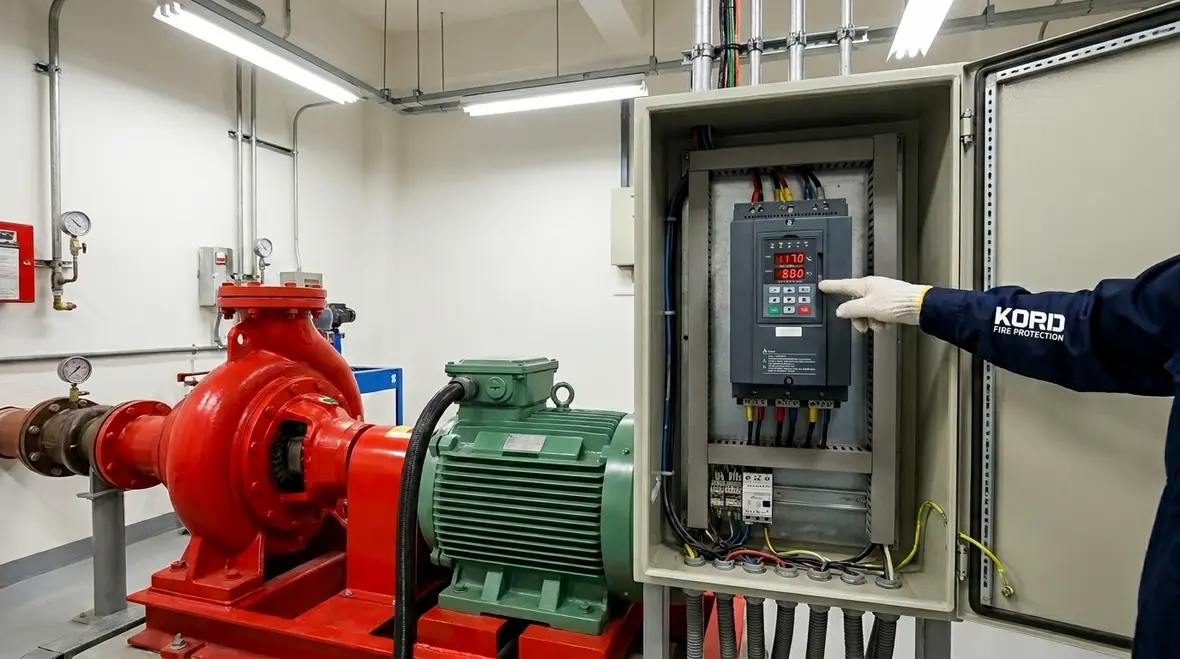
Fire Pump Motor Soft Starters Why They Matter in Fire Scenarios
Fire Pump Motor Soft Starters: Why They Matter in Real Fire Scenarios
When a fire pump motor starts, the system does not have time for drama. It needs speed, control, and reliability. That is exactly where our fire pump motor soft starters step in. They help reduce harsh starting current, protect the motor, and keep pressure steadier when seconds matter most. In fact, Kord Fire Protection technicians often explain that the best fire pump systems do not just pass tests, they perform under stress. And yes, the motor still has a job to do, but it does not need to do it by “jerking” like a shopping cart with one wheel stuck.
In the rest of this article, the benefits get specific, practical, and grounded in what technicians look for in the field. That means less theory for theory’s sake and more focus on what actually happens when equipment has to start cleanly, hold up under repeated testing, and behave when a building needs it most. If you have ever watched a pump room go from quiet to fully engaged in a few seconds, you already know why smooth startup matters.
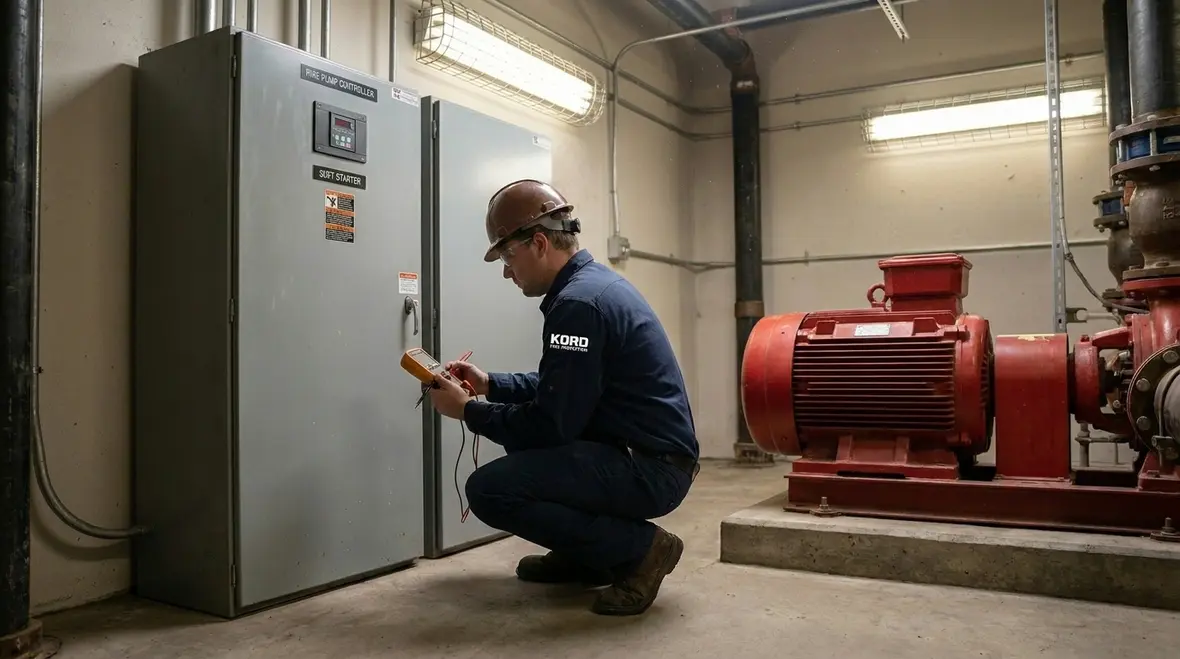
How Soft Starting Reduces Stress on Pump Motors and Electrical Gear
Fire pump motor soft starters manage the start by ramping up voltage smoothly instead of slamming power on at full level. As a result, the motor draws less inrush current during startup. This matters because high starting current can wear down motor windings and increase heat in switchgear components. Additionally, it can strain breakers, contactors, and control wiring.
Kord Fire Protection technicians often put it simply: if the motor and the electrical gear experience less stress every time the pump starts, then the system stays healthier for longer. Meanwhile, the control cabinet also stays calmer. That is not a vibe, it is physics.
Why lower startup shock matters beyond the first second
A harsh start is not just a momentary spike on paper. It can create a chain reaction of wear that affects the motor, the controller, and the parts tied into the power path. Every aggressive startup adds a little more heat, a little more fatigue, and a little more reason for future troubleshooting. Soft starters help trim that stress at the front end, which is usually much cheaper than dealing with it after parts begin aging badly.
That is also why soft starting becomes part of a bigger reliability conversation. It is not only about making startup look smoother. It is about helping the entire fire pump assembly avoid unnecessary punishment over time. If a building has frequent testing, recurring inspections, or a history of electrical sensitivity, that smoother ramp can be one of those small design decisions that pays you back repeatedly.
For teams reviewing broader system planning, Kord’s about fire protection page gives useful context on how the company approaches integrated fire protection work across inspection, testing, service, and system support.
Lower Starting Current Helps Maintain System Stability
Fire pump systems need stable operation, not electrical noise and voltage dips. When a motor starts abruptly, the sudden surge can cause voltage sag in the supply. Consequently, sensitive controls and other equipment may see momentary changes. Soft starters help reduce those peaks by controlling the acceleration of the motor.
In turn, the pump reaches operating speed more predictably. That predictability supports consistent pressure and flow at the moment it matters most. If the fire pump controller has to “guess” because the electrical system is fluctuating, that is like trying to drive while someone keeps turning the wheel. It can be done, but it is not smart.
Stable startup supports the rest of the system too
A smoother electrical transition can help the entire pump room feel less chaotic during activation. Operators get a clearer picture of what is happening, controls respond more consistently, and the pump ramp looks more intentional instead of abrupt. That may sound subtle, but subtle is good when the goal is dependable performance under pressure.
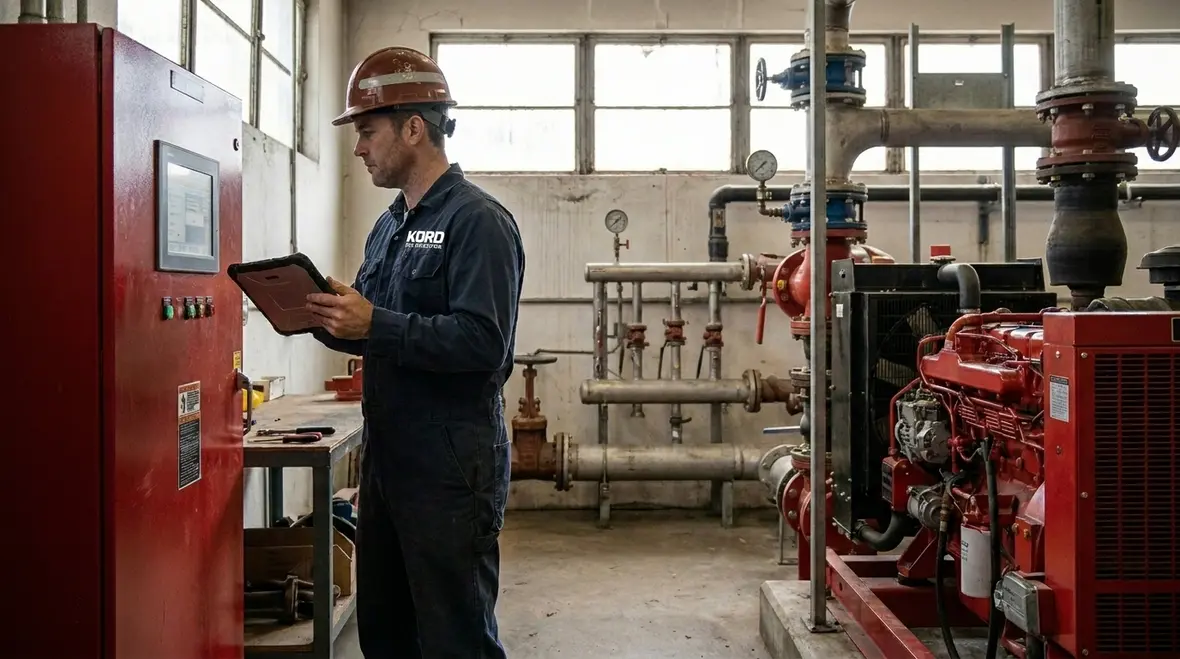
Better Motor Protection for Longer Service Life
Motors do not fail only from age. They fail from heat, vibration, and electrical stress. With soft starting, the motor ramps up more gently, which reduces mechanical shock and electrical strain. Therefore, the motor often runs cooler and sees less wear on internal components.
Kord Fire Protection technicians typically emphasize that fewer stress events mean fewer unexpected repairs. Also, maintenance teams spend less time chasing issues that come from repeated harsh starts. Instead of responding to symptoms, they can focus on planned inspections and calibration. And that saves downtime, which in fire protection always sounds like a nice idea, until it suddenly is not.
Longer life is really about fewer bad cycles
The point is not that a soft starter makes a motor invincible. The point is that it can reduce how punishing each start cycle is. Over months and years, that matters. Less shock at startup can help preserve bearings, reduce thermal abuse, and make the system easier to maintain with fewer ugly surprises during routine checks.
That is especially useful in facilities where service schedules need to stay predictable. A maintenance plan works better when the equipment behaves consistently. It works worse when one rough startup turns a calm week into a scavenger hunt for a hidden electrical issue.
More Consistent Pump Performance During Startup
Pressure and flow stability depend on how smoothly the pump transitions from rest to operating speed. Soft starters support a controlled ramp, so the motor does not jerk into speed. Instead, it builds torque gradually. Then the pump begins moving water with less fluctuation.
That consistency matters in systems where demand can change quickly, such as multi-floor sprinkler setups or combined fire pump and jockey pump arrangements. Moreover, consistent startup reduces the chance of pressure oscillations that can confuse operators or alarm systems.
Field performance is where the conversation gets real
In the field, smooth startup is not an abstract feature on a submittal sheet. It shows up as calmer pressure behavior, clearer operator confidence, and fewer questions about whether the system is doing what it is supposed to do. When startup is repeatable, troubleshooting gets cleaner too, because technicians are not sorting through noise created by an overly violent launch.
Where Soft Starters Fit Into Fire Pump Control and Code Workflows
Fire pump systems do not run on guesswork. They run on engineered design, documentation, and verified testing. Soft starters work within that structure by integrating with typical fire pump control logic such as start signals, run status feedback, and protective functions.
Here is where skilled teams shine. Kord Fire Protection technicians often review the full workflow: device selection, coordination with protection settings, wiring checks, and acceptance testing. They confirm that the soft starter behaves correctly during required testing sequences and emergency starts. In other words, it must work like it should on day one, and also on day five hundred when the system has had its “real-world” moments.
Good integration means no guesswork later
This is also why field verification matters so much. A soft starter that looks fine on paper still has to coordinate with the controller, operate correctly during testing, and support the pump without introducing odd behavior. The best outcome is boring in the best possible way: the system starts, runs, reports correctly, and gives nobody a reason to panic.
If you are reviewing equipment in the context of service or maintenance, Kord’s fire pump service page is a strong related resource for inspection, testing, repair, and ongoing system support.
Dual Column Field Benefits: What Technicians See First
Below are common on-site advantages that fire pump teams notice when soft starters get specified correctly and installed properly.
Electrical and Motor Upside
Less inrush current during startup
Reduced heat and stress in windings
Improved endurance of switchgear elements
Fewer nuisance trips from aggressive current draw
Operational and Maintenance Upside
More consistent ramp to operating speed
Stable pump behavior during activation
Longer intervals between major repairs
Cleaner maintenance planning and fewer surprises
FAQ: Quick Answers About Soft Starting for Fire Pump Motors
Final Word: Upgrade With Confidence and Get the Right Start
Fire pump reliability depends on more than good intentions. It depends on correct components, smart control, and verified performance. Our fire pump motor soft starters help reduce starting stress, support stable pump behavior, and can extend the health of motors and electrical gear. When the goal is a system that starts cleanly and behaves consistently, a smoother ramp is not a luxury. It is a practical advantage that supports both emergency readiness and day-to-day system confidence.
If your system needs safer starts and smoother performance, Kord Fire Protection technicians can help you review options, coordinate controls, and plan testing. For a broader look at available support, visit Kord’s full fire protection services page, or connect directly through the fire pump service page to discuss your pump setup and get a starter solution that starts strong, every time.

Join Our Newsletter!
Get the latest fire safety tips delivered straight to your inbox From our Newsletter.