Data Center Fire Mitigation with Kord Fire Protection
Quick answer: Modern data centers face real fire risk from fast-moving electrical faults, overheating racks, and tricky airflow. Specialized fire suppression solutions use fast detection, clean agent systems, and carefully planned discharge strategies. With Kord Fire Protection, organizations in Australia can coordinate design, compliance, testing, and ongoing service so protection works when seconds matter.
For facilities protecting sensitive equipment, clean agent fire suppression system services fit naturally into a broader data center strategy because they are designed for high-value environments where water damage can be just as painful as the fire itself. That is especially useful when uptime is not just a goal, but the whole job description. ([kordfire.com](https://kordfire.com/clean-agent-fire-suppression/?utm_source=openai))
Why data center fire mitigation needs a purpose-built approach
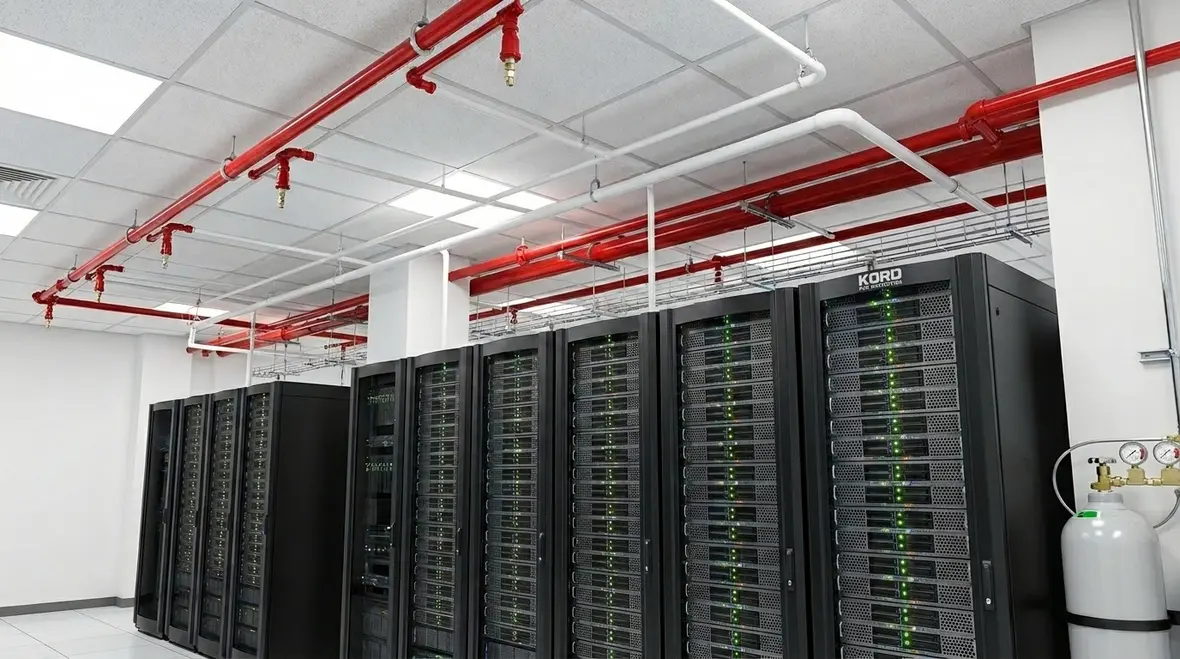
In the first place, data centers do not behave like typical warehouses. They hold dense equipment, complex power paths, and high heat loads. As a result, flames and smoke can spread in ways that surprise people who only plan for “general” risk. That is why data center fire mitigation starts with the real environment: rack layouts, airflow direction, cable routing, ventilation cycles, and how quickly systems can shut down.
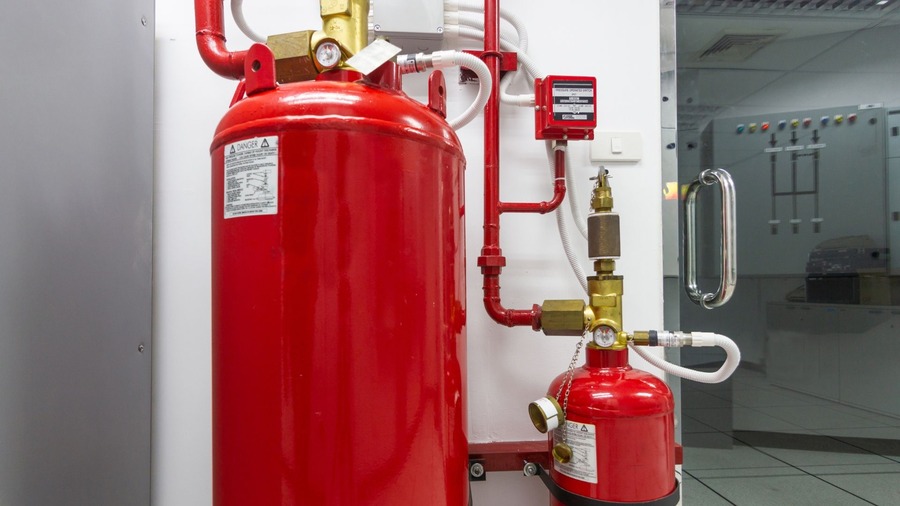
Kord Fire Protection’s own data center guidance emphasizes hazard assessment around room size, ceiling height, airflow patterns, equipment density, cable trays, raised floors, and battery rooms before system design begins. Their service guidance also notes clean agent systems are commonly used in data centers, server rooms, computer rooms, and telecommunications spaces where water could damage assets. ([kordfire.com](https://kordfire.com/data-center-clean-agent-fire-suppression-guide/?utm_source=openai))
In addition, fires in electronics and cabling often create toxic smoke and rapid flame growth. Meanwhile, sprinkler discharge can damage critical assets if not designed correctly. So, suppression must protect people and equipment without turning the server room into a flood zone. And yes, anyone who has watched a “mythical” fire plan fail during a real drill knows the punchline is always the same: the theory looks great until physics shows up.
How specialized systems protect people and equipment at the same time
Specialized fire suppression does not just “put out fire.” Instead, it aims to control the event early, manage smoke, and limit downtime. Typically, modern designs use a layered approach that pairs detection with the right suppression method.
- Early detection: Aspirating smoke systems, flame detection, and thermal sensing catch changes sooner than standard spot detectors.
- Rapid intervention: When detection triggers, systems release suppressant in a controlled way to reduce heat and oxygen support.
- Controlled discharge: Designs consider airflow so agents reach the protected spaces effectively.
Kord Fire’s data center clean agent guide specifically highlights airflow analysis, agent selection, nozzle and piping layout, room integrity testing, functional alarm testing, and documentation review as part of a proper design and testing process. Their broader clean agent resources also frame these systems as a fit for critical equipment where minimizing residue and downtime matters. ([kordfire.com](https://kordfire.com/data-center-clean-agent-fire-suppression-guide/?utm_source=openai))
At the same time, good engineering supports safe evacuation and orderly shutdown. Consequently, facility teams can reduce risk to staff, vendors, and nearby operations across industrial, retail, and commercial sites. And while every organization wants “zero downtime,” the smarter goal is measurable protection that reduces the chance of a long outage.
Layering detection with suppression makes the difference
That layered approach matters because the system is not a single magic button. Detection, release logic, airflow response, enclosure performance, and maintenance all need to agree with one another. Otherwise, the site ends up with expensive hardware and crossed fingers, which is not a recognized protection standard anywhere for very good reason.
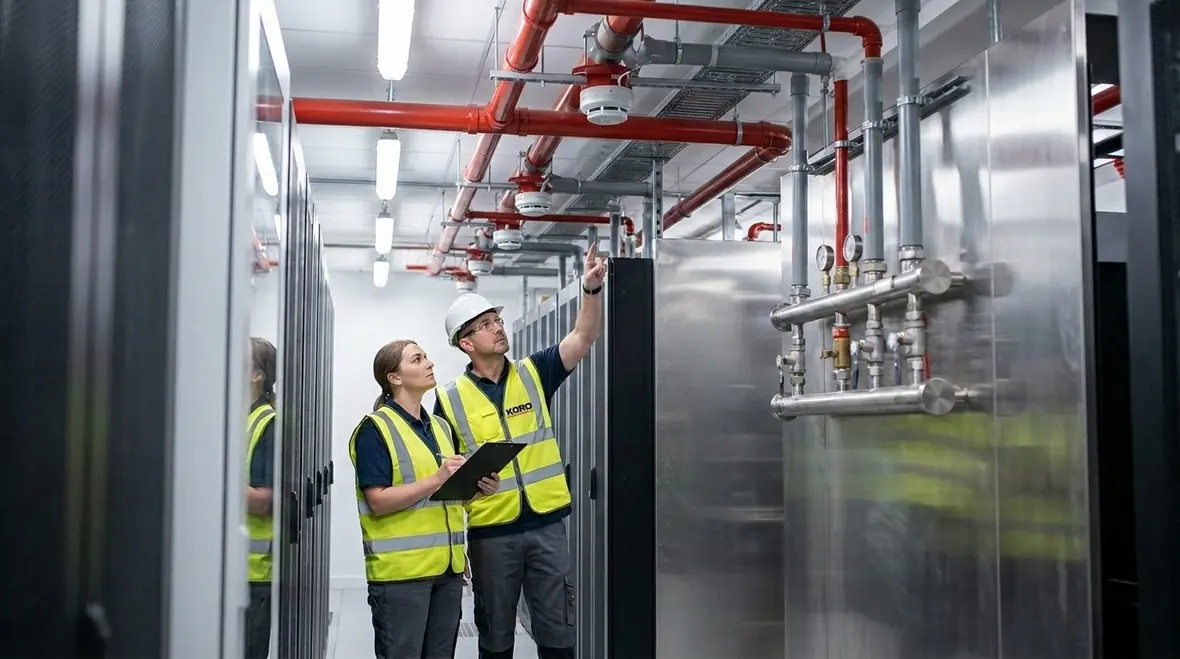
What agents and designs fit modern rack and airflow patterns
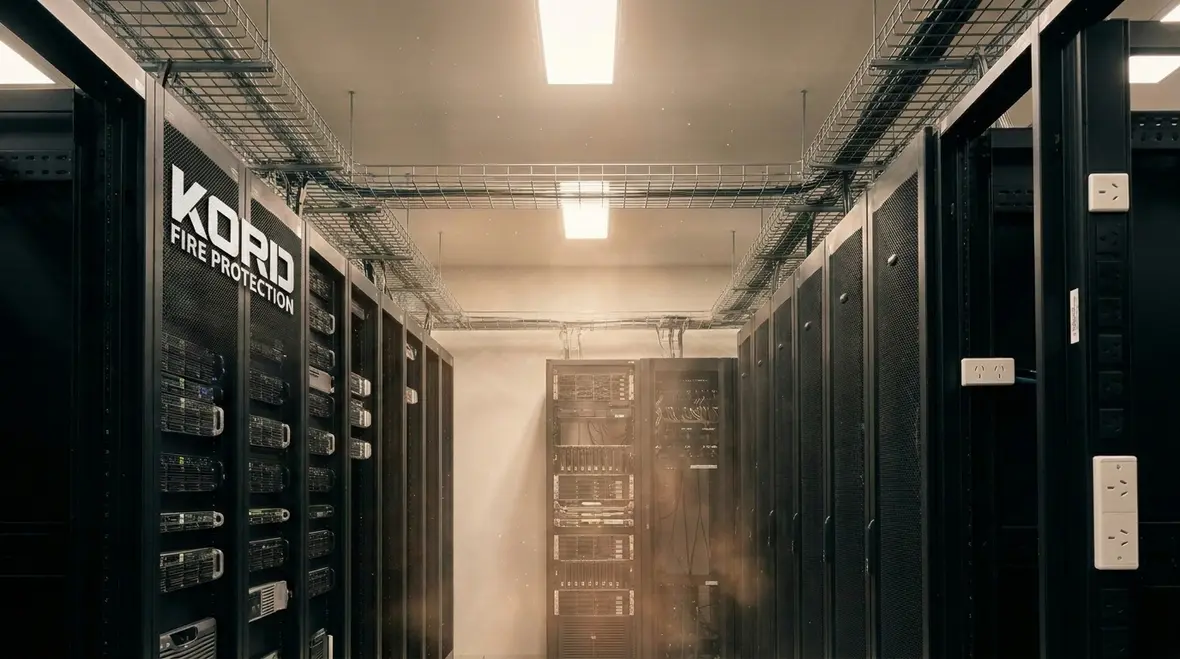
Because racks create heat pockets and airflow channels, suppression design must match how air moves through the room. For example, hot and cold aisle layouts influence where smoke travels and how quickly conditions change. Therefore, engineers map airflow paths, pressure zones, and ceiling obstructions before choosing the suppression strategy.
Kord Fire’s published guidance calls out common clean agent options such as FK 5 1 12 and inert gas blends for data center use, while also stressing that airflow can push agent away from the hazard if it is not accounted for during modeling. Their services page explains these systems are designed for Class A, B, and C hazards and are widely used where sensitive electronics need protection without residue. ([kordfire.com](https://kordfire.com/data-center-clean-agent-fire-suppression-guide/?utm_source=openai))
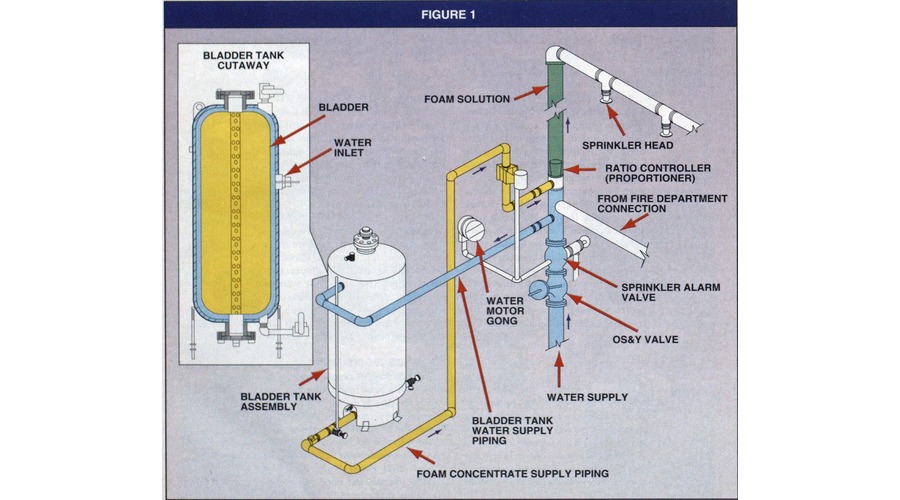
Common solutions include clean agent systems for enclosed or semi enclosed spaces, along with water mist approaches for certain environments where they fit the hazard profile. Also, some facilities use custom zoning so only the affected area releases agent. That reduces the disruption impact on unaffected equipment, which matters a lot when multiple tenants or business units share the same building.
Now, here’s the part people often skip in planning decks: maintenance access and sealing. If doors leak air or cable penetrations are not sealed properly, suppression performance drops. So the best designs include a plan for enclosure integrity, inspection points, and acceptance testing. In other words, suppression success depends on more than just the nozzle or cylinder count.
If you want more context on this specific issue, Kord Fire also has a related resource on room integrity testing for clean agent systems, which fits naturally with data center planning because enclosure performance is part of whether the design concentration actually holds long enough to do its job. ([kordfire.com](https://kordfire.com/clean-agent-suppression-system-and-room-integrity-testing/?utm_source=openai))
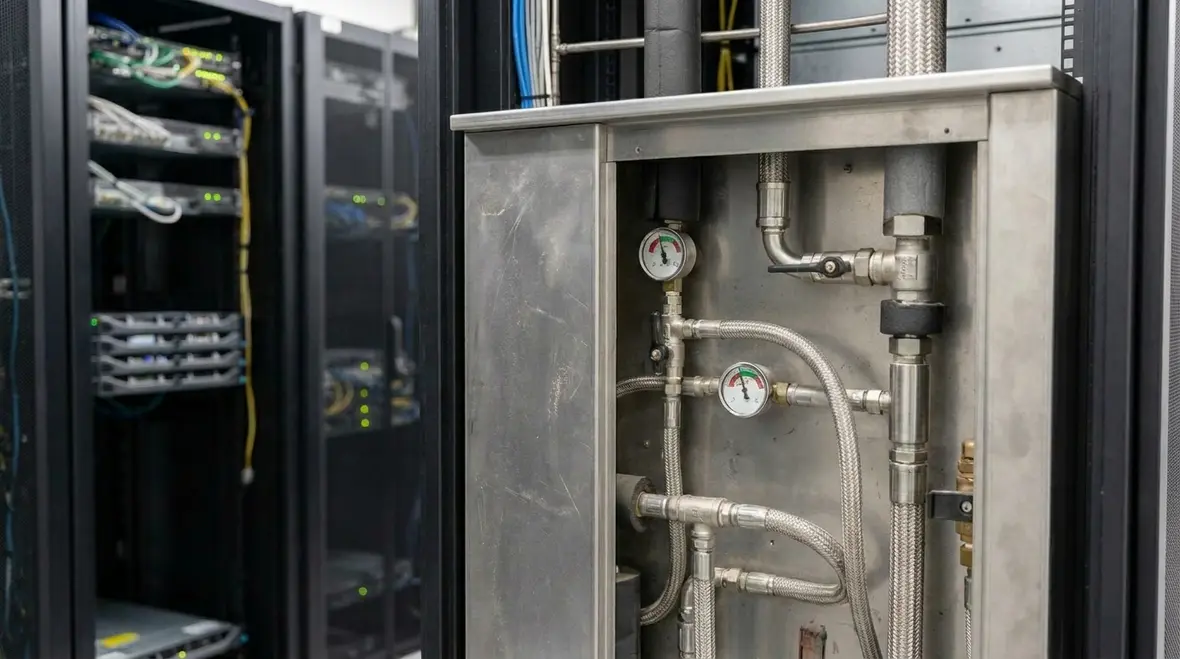
Where detection and release timing can make or break the outcome
In a real incident, timing determines the story. A system that detects late forces suppression to “fight” already established heat and smoke, which increases agent demand and reduces effectiveness. Conversely, systems that detect early can release before conditions escalate.
To get this right, teams should coordinate detector placement with the actual environment. For instance, aspirating systems can sample air from multiple points, which helps when smoke stratifies or when airflow moves smoke in unexpected directions. Also, engineers should calibrate settings based on normal dust levels and airflow conditions, because false alarms are not just annoying. They also train people to ignore the system. And nobody wants to be the organization that cries wolf while servers keep humming like it’s fine. It is not fine.
Kord Fire’s data center articles repeatedly emphasize that airflow dynamics, hidden spaces like underfloor and ceiling voids, and proper maintenance planning can make or break outcome quality. They also note that room integrity testing and functional alarm testing belong in the process, not as an afterthought once everyone is already hoping for the best. ([kordfire.com](https://kordfire.com/data-center-clean-agent-fire-suppression-guide/?utm_source=openai))
Then, they must confirm shutdown logic. Fire dampers, fan control, and power isolation routines should align with suppression activation. As a result, the system does not push smoke around the room or keep ventilation running when it should stop. This is where a well coordinated design becomes operationally reliable.
Early warning is only useful if the room responds correctly
This is the quiet part of fire mitigation that saves the day without asking for applause. You can have excellent detection hardware, but if ventilation keeps redistributing smoke or if shutdown routines lag behind release, the room starts working against the system. Data centers already have enough drama without the HVAC joining the plot.
Compliance, risk assessments, and documentation across Australia
Across Australia, organizations operate under multiple standards, local requirements, and insurance expectations. Therefore, fire suppression for data centers requires careful documentation: hazard classification, design rationale, test plans, and maintenance schedules. Facility managers also need clear procedures for inspections and functional testing.
Kord Fire’s clean agent standard overview and services content both stress that these systems need proper design, installation, testing, and maintenance, with documentation supporting compliance review and ongoing readiness. That aligns neatly with the reality that critical facilities are audited on what they can prove, not what they vaguely remember talking about in a meeting six months ago. ([kordfire.com](https://kordfire.com/clean-agent-standard-for-fire-suppression-systems/?utm_source=openai))
In addition, industrial and commercial sites may include mixed hazards: electrical switchgear, battery backup areas, loading bays, and service corridors. Because of that, the fire strategy must align with whole site risk rather than just the server room. Then, contractors should confirm that suppression design matches as built conditions, not just what was drawn in the tender.
This is precisely where Kord Fire Protection can become a vital partner. They can support coordination across design intent, installation quality, acceptance testing, and ongoing service so the system stays ready. In practice, that means fewer surprises during audits, fewer gaps during handover, and better continuity when multiple teams touch the same asset.
Service, testing, and upgrades that keep protection effective over time
Fire systems do not “set and forget.” Instead, they live and breathe with the building. Over time, rack density changes, cable routes evolve, and airflow patterns shift. Meanwhile, dust accumulation and component aging can alter performance. So, strong data center fire mitigation includes a maintenance rhythm, not just initial commissioning.
For a practical program, organizations typically plan for:
- Scheduled inspections: Verify detectors, pipework or agent components, and enclosure integrity.
- Functional testing: Confirm response times, alarms, and control sequences.
- Record keeping: Maintain test results, changes, and service history for audit readiness.
- Change management: Reassess risk when racks, cooling, or tenancy changes occur.
Kord Fire’s published material supports this lifecycle view, pointing to regular inspections, calibrated detection devices, pressurized cylinders, room integrity testing, and coordinated maintenance as essentials rather than optional extras. In plain English, the system cannot protect tomorrow’s room if it is still configured for last year’s one. ([kordfire.com](https://kordfire.com/data-center-clean-agent-fire-suppression-guide/?utm_source=openai))
And upgrades matter. New hardware often runs hotter and draws different power profiles. If the facility team updates cooling or expands power distribution, the suppression strategy may need refinement. Kord Fire Protection can help align those changes with field conditions so the system keeps up. Think of it like software updates, but for safety. Less flashy, far more important.
FAQ: Specialized fire suppression for data centers
Conclusion: Build protection that performs when it counts
Specialized fire suppression for modern data centers works best when it matches real airflow, real hazards, and real operational timelines. When teams coordinate detection, agent design, testing, and change management, they reduce risk without guessing.
Kord Fire Protection can help organizations across Australia keep systems compliant and dependable through commissioning and ongoing service. Request an assessment today and make your next outage less likely than your worst-case scenario.

Join Our Newsletter!
Get the latest fire safety tips delivered straight to your inbox From our Newsletter.