fire pump power reliability for uninterrupted commercial power
Ensuring uninterrupted power for commercial fire pump systems starts with one goal: fire pump power reliability that you can trust when seconds matter. When the lights flicker, when a utility hiccup shows up uninvited, or when a storm rolls in like it owns the building, your fire pump still has to run. At Kord Fire Protection, our fire pump technicians explain what keeps that power steady and how facility teams can verify it, not just hope for it. And yes, while some people treat “maintenance” like optional homework, commercial life safety does not.
Why uninterrupted power decides whether pumps perform
In a fire event, a pump system does not get the luxury of a slow start. It needs correct voltage, stable frequency, and fast transfer from one power source to the next when required. Therefore, technicians focus on the entire power chain, not just the pump motor.
First, fire pumps rely on electrical feeders that must stay within code limits. Next, controls and starters must receive clean power so they can start on demand. Then, auxiliary circuits such as pressure maintenance and alarm interfaces must stay alive too.
When fire pump power reliability gets tested and verified, the system behaves like a professional: it shows up, does the job, and does not complain. When power is unreliable, the pump may fail to start, start late, or trip on protective devices. In other words, it acts like a comedian who missed the cue and now has to improvise under fire pressure.
Power problems rarely begin where people think they do
That is why technicians do not stop at the controller and call it a day. They trace the path from the incoming service to the pump controls and back through the supporting equipment. The issue that looks dramatic in the pump room often started somewhere much less glamorous, usually in a feeder, connection, transfer component, or upstream electrical condition.
How Kord fire protection technicians map the power path
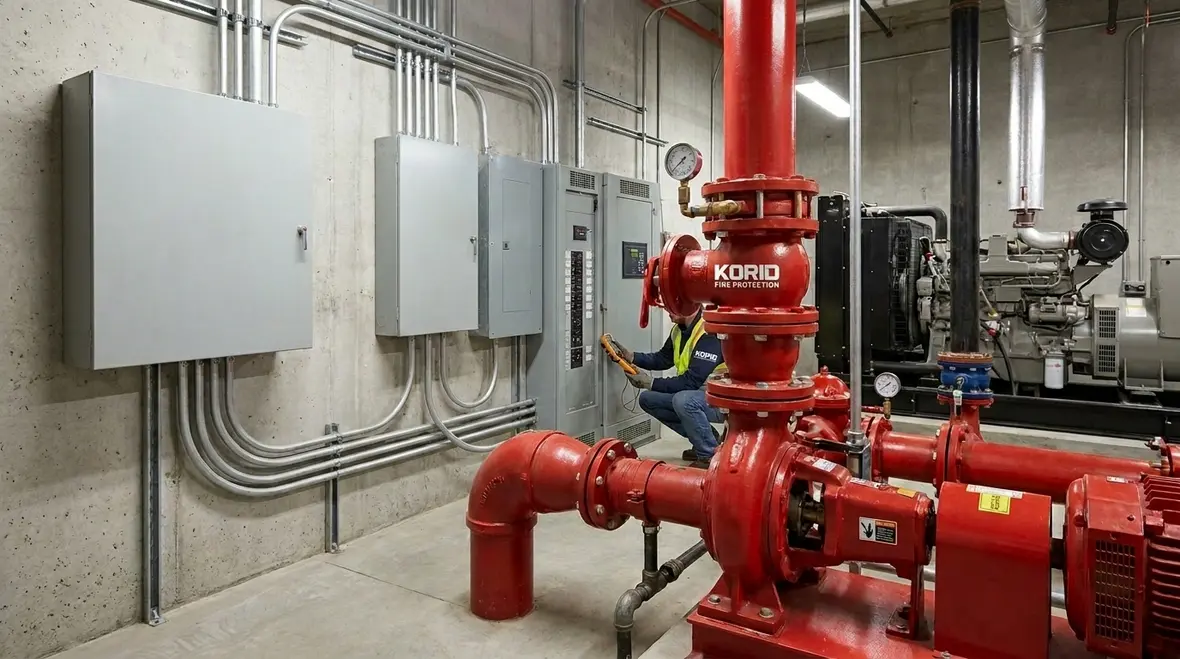
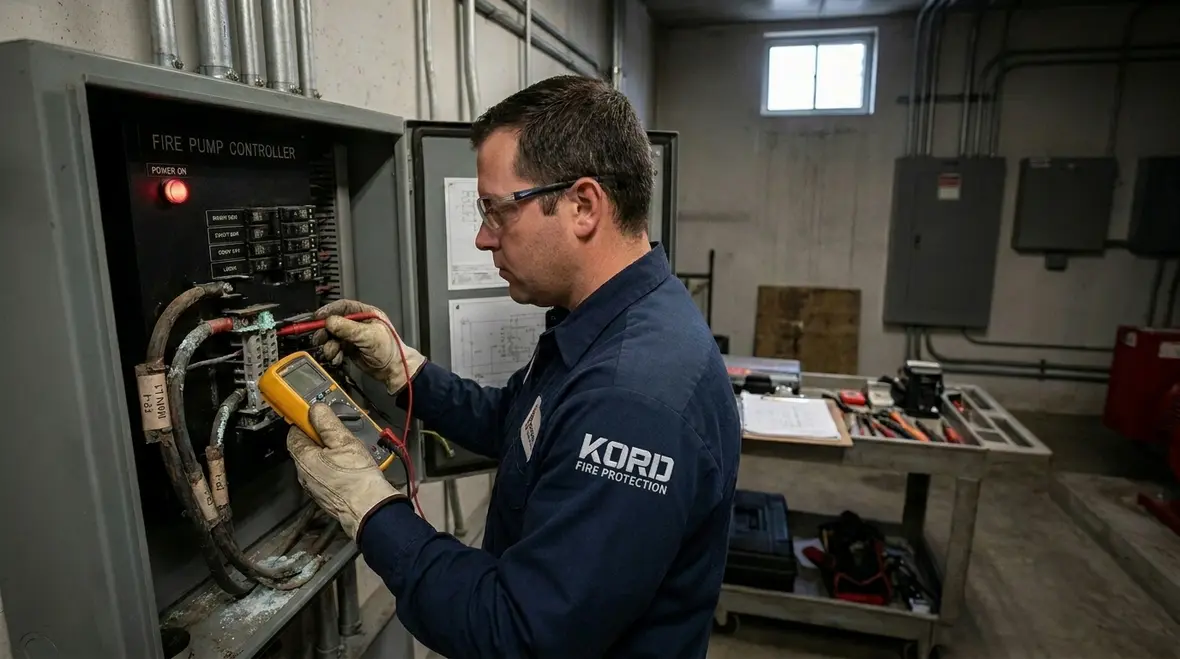
To explain things clearly, Kord Fire Protection technicians walk through the whole route electricity takes, from the utility connection to the pump control panel. They do this because many failures look like “a pump problem,” yet the root cause sits upstream.
Typically, their review covers service equipment, switchgear, transfer equipment, branch wiring, and the fire pump controller itself. They also check for common risk points such as loose terminations, corroded connectors, undersized conductors, and worn components in transfer gear.
Moreover, technicians do not stop at a visual inspection. They often verify insulation condition, motor nameplate match, and proper protective device coordination. Then, they connect the findings to a practical plan that reduces surprise outages.
This kind of review lines up naturally with Kord Fire Protection’s approach to essential fire pump electrical requirements and design, where stable supply, control behavior, and protective coordination all need to agree before anyone can honestly call a system reliable.
Backup power and transfer equipment: the rules that matter
Commercial systems frequently use standby generators, batteries, or transfer switches to maintain operation during utility loss. However, backup power fails when transfer does not happen fast enough or when equipment is misconfigured.
Fire pump transfer equipment must switch under the conditions the code expects. Therefore, technicians confirm settings, interlocks, and timing sequences. They also verify that the controller logic supports the transfer method used on the job.
One more thing that gets overlooked: load management. If the facility uses emergency circuits that draw too much power during an event, the generator may sag, and that sag can reduce motor performance. As a result, the fire pump control system can see conditions outside safe limits.
So, when the backup system kicks in, the pump should receive dependable power right away, not “eventually, when the generator feels like it.” Facility teams get calmer, and the system gets safer.
Transfer confidence is built before the outage happens
A backup source only helps if the pump controller sees the right power at the right time. That is why transfer settings, sequencing, and real world testing matter so much. Nobody wants to discover a hidden delay while the building is already having a very bad day.
Voltage dips, harmonics, and starting current control
Even when power stays “on,” it can still be wrong. Voltage dips can occur during starting, load changes, or upstream faults. Meanwhile, harmonics from other building equipment can distort the electrical signal and stress controls.
Kord fire protection technicians explain these risks in plain terms: motors draw high starting current, and electrical systems do not always react the same way each time. To address this, they evaluate conductor sizing, starter type, controller settings, and the source impedance of the supply.
In addition, they look at how other loads share the same electrical distribution. If there is a large mechanical system, an industrial-style load, or frequent cycling equipment, that pattern can influence stability. Consequently, the fire pump system may need isolation, correct protective coordination, or a review of how emergency power loads are staged.
It helps to think like this: your fire pump system must perform like a drum that never skips, even when the rest of the band goes wild.
Testing, monitoring, and maintenance that prove reliability
Maintenance does not mean “check it once and hope.” Instead, it means verify performance with tests that match real conditions. Technicians typically use a mix of scheduled inspections, functional testing, and documented verification.
For example, they may test transfer operation, inspect wiring connections, verify controller indications, and confirm that alarm and supervisory circuits stay active. They also plan tests around operational needs so the site stays safe without guesswork.
Furthermore, power quality checks can reveal trends before they cause failure. They look for repeating patterns like frequent nuisance trips, abnormal voltage drops, or signs of overheating at terminations.
When facility teams and fire pump power reliability work together through strong documentation, the system becomes easier to manage during audits and incident investigations. Also, it keeps maintenance departments from playing telephone with thirdhand information.
This is also where a broader understanding of how NFPA 20 regulates fire pump systems becomes useful. Reliability is not just about whether the motor spins. It is about whether the whole setup is installed, tested, and documented in a way that keeps performing when the pressure is real.
Common failure points and how to prevent them
Many power issues come from predictable sources, which means prevention often looks boring at first. But boring is good when your building’s safety depends on it.
Key failure points include degraded battery capacity, generator fuel supply issues, faulty transfer switch mechanisms, and control panel components that wear from heat and vibration. Loose connections and moisture intrusion also drive failures, especially in older facilities or areas with frequent condensation.
Additionally, some systems suffer from outdated settings. Over time, facilities add new loads, remodel areas, or change electrical distribution without updating fire pump support details. Therefore, technicians recommend a review after major electrical changes.
Finally, training matters. Staff should know what normal indications look like, what alarms require attention, and who to contact. When people react fast and correctly, the system keeps doing its job, even when the building surprises everyone else.
Dual column view: what to check and why it impacts performance
What Kord technicians check
- Service and feeder conditions
- Transfer switch or controller logic
- Voltage stability and starting conditions
- Wiring termination integrity
- Generator and backup readiness
- Test documentation and trends
Why it impacts safety
- Prevents low voltage at start
- Ensures fast, correct power transfer
- Reduces trips and controller errors
- Stops overheating and intermittent faults
- Keeps pump running during outages
- Shows reliability instead of guessing
FAQ: fire pump power reliability for commercial systems
Get an expert reliability plan for your pump power system
If commercial life safety depends on your fire pumps, then your power path needs more than a quick look. Contact Kord Fire Protection and ask for a reliability focused power review with clear recommendations and documented testing. Technicians will explain what they find, what it means for performance, and what to fix first so the system stays ready. Waiting for a real event is like waiting for a smoke alarm to test itself. Don’t do that.
For teams that want a direct next step, Kord Fire Protection also offers dedicated fire pump services that include maintenance, testing, inspections, documentation, and support for electric fire pump systems. If your site has not reviewed its power path lately, this is the moment to schedule the visit before the building decides to create its own surprise test.

Join Our Newsletter!
Get the latest fire safety tips delivered straight to your inbox From our Newsletter.