Extinguisher Accessibility for Employees Placement and Coverage
In any workplace, people need quick, safe access to firefighting tools when seconds matter. That is why extinguisher accessibility for employees should be part of the emergency plan from day one, not an afterthought stamped into a binder. When extinguishers sit where workers can spot them and reach them without squeezing past obstacles, response improves and panic drops. Kord Fire Protection technicians often explain it like this: a fire does not care about “good intentions,” and neither should the layout. And honestly, neither do building codes, though they never heckle anyone out loud.
How Kord Fire Protection Technicians Assess Real Workplace Risk
First, Kord Fire Protection technicians look at how a site actually behaves. Not how the floor plan looks in a spreadsheet, but how people move, where doors swing, where carts park, and where workers naturally pause to talk. Then they match extinguisher placement to the locations where small fires start most often. This matters because a “one-size-fits-all” layout turns into a game of hide and seek during an emergency. And unlike a board game, nobody wins when visibility is poor.
They also evaluate materials and ignition sources. For example, kitchens and break rooms tend to produce different fire patterns than labs, warehouses, or electrical rooms. Therefore, placement should follow the path of least resistance for the average worker. In addition, technicians check if the area has unique hazards that require extra attention, such as flammable storage, machine heat, or frequent power use. When risk changes, placement strategy should adapt.
Why real movement matters more than tidy diagrams
A drawing can show a perfect aisle, but daily operations usually tell a funnier and less polished story. A cart gets parked in the wrong place, a pallet leans into a corner, or a door that looked harmless on paper suddenly blocks sightlines when it swings open. That is why accessibility should be judged by lived use, not wishful geometry. The best extinguisher placement is practical, repeatable, and obvious enough that even a stressed employee can find it without stopping to think.
Mapping Placement to Travel Paths, Visibility, and Reach
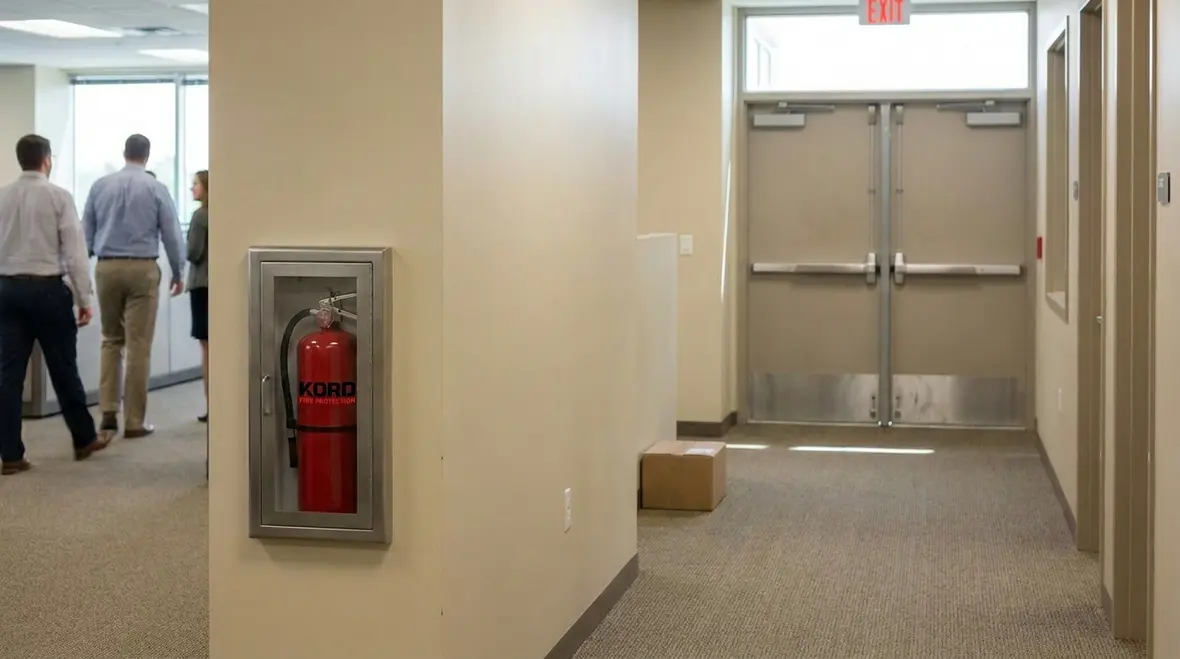
Next, the key goal is simple: workers must find and use extinguishers quickly. To do that, Kord Fire Protection technicians focus on three practical factors. Visibility comes first, because a red cabinet in a dark corner may as well be a myth. So they place extinguishers where employees naturally look when moving through the area, like near exits, along main circulation routes, and where people stand during normal work.
Then comes reach. A workplace has many body types and abilities, so the mounting height and location must allow quick access. Also, workers should not need to climb, crawl, or step around hazards just to grab the unit. If an extinguisher sits behind a stacked pallet, it is not “placed,” it is “stored,” and a stored extinguisher is a late extinguisher.
Finally, they consider travel paths and turning points. When people round corners or pass through choke points, placement should support those moments. In practice, technicians often place units so a worker can reach one while staying oriented toward exits. After all, firefighting works best when the plan supports safe movement.
Clear sightlines beat good intentions
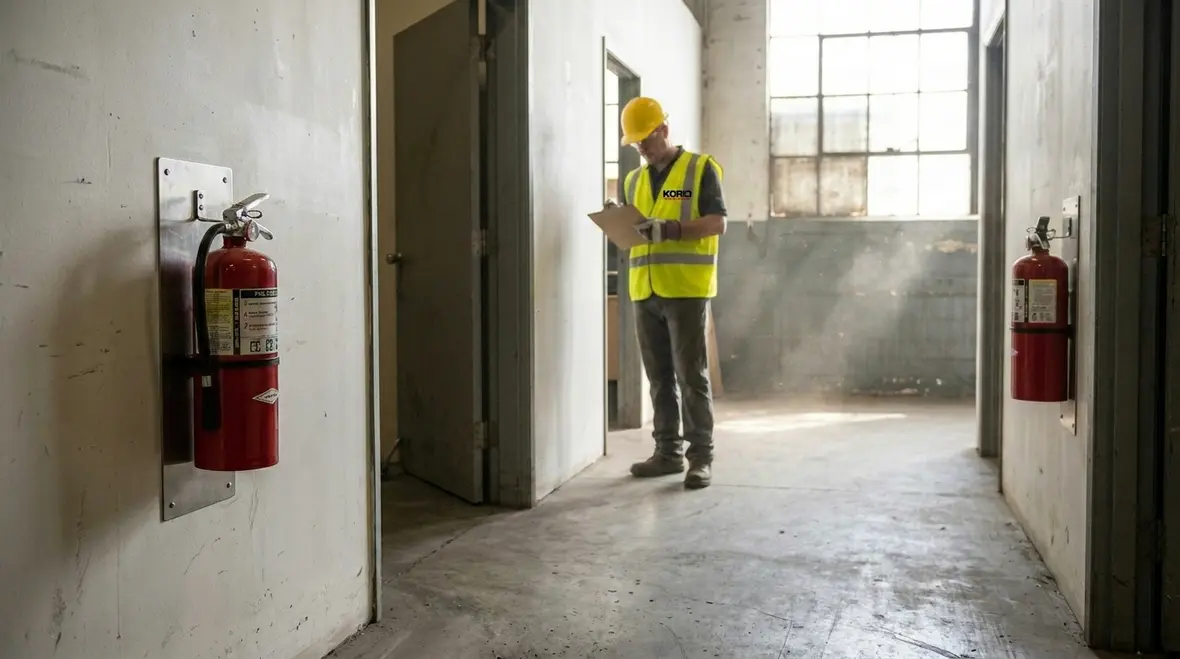
A well-placed extinguisher should announce itself without being dramatic about it. Good signage, open visibility, and consistent mounting locations make a huge difference when people are under pressure. During an emergency, no one wants to solve a scavenger hunt. If a worker has to scan three walls, peek behind a display, and second-guess their memory, the layout has already failed a pretty basic job.
Should Extinguishers Be Near Exits or Near the Hazard?
This is where many teams get stuck in old habits. Some believe the best location is always the exit. Others argue for placing tools next to hazards. Kord Fire Protection technicians help businesses balance both, because the right answer depends on how the hazard behaves and how fast staff can reach safety. For most workplaces, they aim to avoid placing extinguishers so far from the likely fire start that employees waste critical time.
So, they often place extinguishers along the path between the hazard and the exit. That way, employees can fight a small fire early while still keeping their route clear. Also, if a door is blocked or a hallway fills with smoke, workers still have options. In short, the goal is not to pick a single spot, but to build a path of action.
To keep it clear, technicians may use a simple mapping step. They mark hazard zones, then trace common walk routes, then place units so each route offers a nearby option. This approach reduces guesswork and helps staff respond without needing superhero reflexes.
That balance also helps managers avoid the classic debate that goes nowhere fast: “Should we put it here or there?” Usually the better question is, “Can an employee reach it safely while still keeping an exit option?” Once the conversation shifts to movement, visibility, and safe retreat, placement decisions get smarter in a hurry.
Using Dual Coverage to Avoid Dead Zones
Even with smart planning, workplaces can form “dead zones,” where people cannot easily access an extinguisher or cannot see it. Therefore, coverage planning should consider line of sight, obstructions, and how doors open under stress. Kord Fire Protection technicians often recommend spacing that supports overlapping coverage so one location does not fail if conditions change.
Here is a simple dual-coverage logic, commonly explained in technician walk-throughs:
In addition, they test the layout with real staff movement. If an extinguisher cannot be reached while carrying a clipboard, a phone, or simple work gear, the placement may need tuning. Nobody wants a plan that only works when everyone is perfectly free and fully caffeinated.
Common Placement Mistakes Kord Fire Protection Technicians See
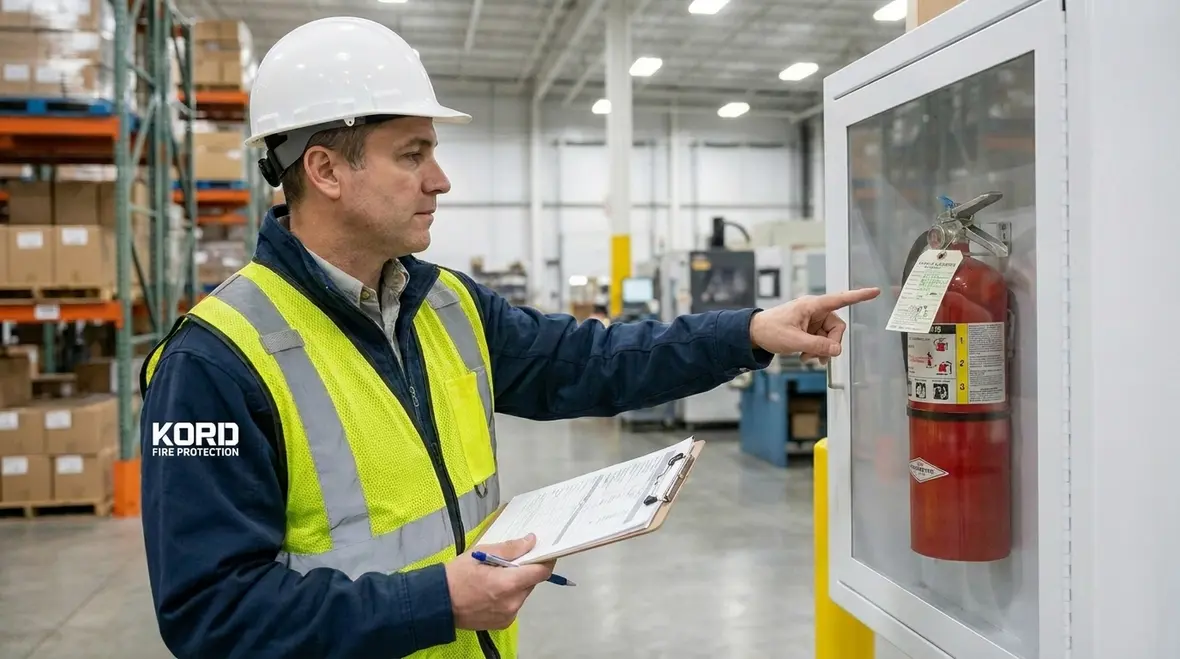
When technicians visit sites, they often find predictable issues. One is mounting extinguishers in areas that look tidy but fail in practice. For example, placing a unit behind a swing gate or inside a staff-only corner can make retrieval slow. Another issue is inconsistent placement across similar floors. Employees memorize patterns, and if each floor breaks the pattern, response slows.
Teams also underestimate how quickly storage builds up. A spot that is clear today may be blocked tomorrow by new inventory, holiday supplies, or “temporary” equipment that stays longer than promised. Therefore, businesses should treat extinguisher placement as an ongoing program, not a one-time install.
Also, some organizations place units too close to heat sources or at points where they might be damaged by routine operations. And yes, sometimes extinguishers sit near machinery because someone assumed “it is safer there.” That logic may work in cartoons, but in real life, heat and impact can compromise equipment.
Finally, technicians often hear that staff “knows where they are.” Then they ask for directions. When employees guess, hesitate, or point to the wrong corner, that is not confidence, it is a risky hope. Extinguisher accessibility for employees should be tested, trained, and refreshed as part of the safety culture.
Consistency is part of accessibility
Consistency sounds boring until an emergency proves otherwise. If similar floors, wings, or departments use similar placement patterns, workers react faster because their memory has something reliable to work with. Predictable placement builds confidence quietly, and quiet confidence is much more useful than loud guessing.
Training and Maintenance After Placement Improves Response
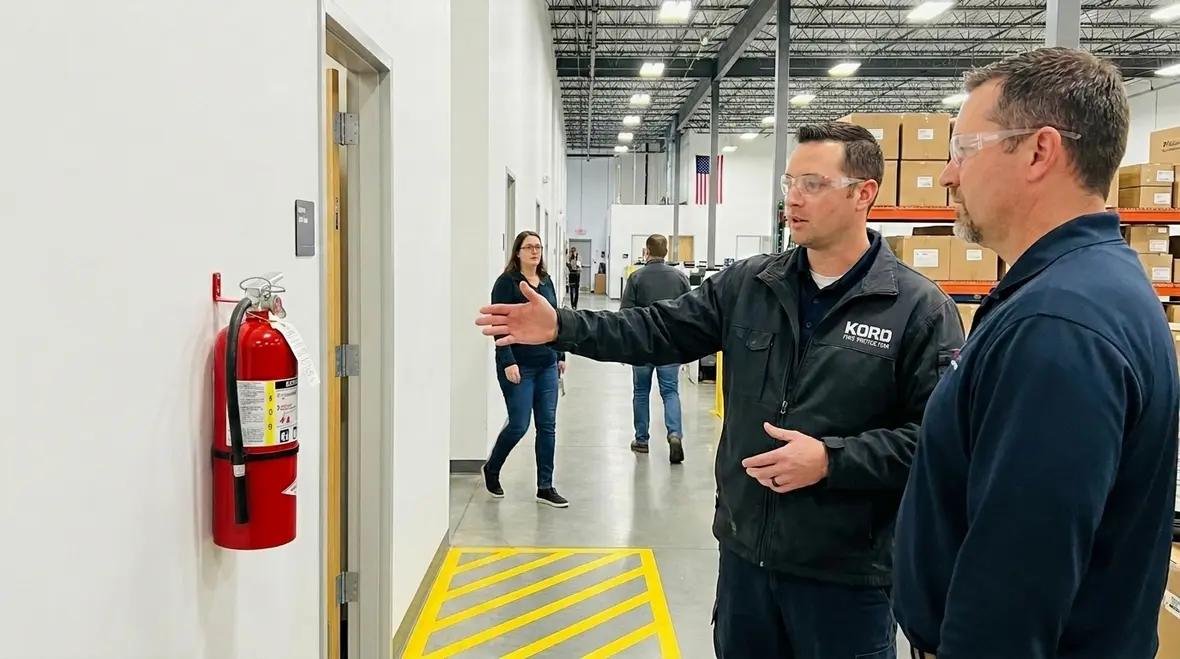
Even the best layout fails if the workforce cannot use the equipment under pressure. Kord Fire Protection technicians recommend pairing placement with short training moments that match the real environment. For example, they can demonstrate how a worker should approach, check the area, and use the correct extinguisher type. That matters because people often grab the wrong unit when stress rises.
Moreover, maintenance supports reliability. Extinguishers must be inspected on schedule, kept in good condition, and protected from tampering or damage. Businesses should also audit the placement during routine walk-throughs, especially after renovations, new storage, or changes to traffic flow. If a hallway becomes narrower or a door swings differently, placement may still “exist” but no longer “works.”
Additionally, clear communication helps. Managers should reinforce where each unit is located and how employees should report any blockage. In practice, a simple habit like keeping a monthly quick check can prevent months of hidden problems. It is like cleaning your glasses before blaming your eyesight.
For businesses that want stronger day-to-day readiness, Kord Fire Protection offers fire extinguisher service and certification, including inspections, testing, maintenance, and training support. For facilities that need broader coverage, their full fire protection services help connect extinguisher strategy with the bigger life-safety picture.
FAQ: Extinguisher Placement for Workplace Emergencies
Final Call to Action for Safer Coverage
Fire safety planning should move with the real workplace, not with the original drawings from years ago. If employees struggle to find equipment, navigate around obstacles, or reach units fast, response will lag when it matters most. Kord Fire Protection technicians can help businesses optimize extinguisher placement, improve coverage, and support training that matches daily movement.
Book a site assessment today and build a plan that works in the real world, not just on paper. Your team deserves coverage that shows up early, not late. If your property also depends on water pressure performance for suppression readiness, explore Kord Fire Protection’s fire pump services for a stronger end-to-end protection strategy.


Join Our Newsletter!
Get the latest fire safety tips delivered straight to your inbox From our Newsletter.