Fire Pump Motor Troubleshooting in Australia Checklist
Quick Answer: Fire pump motor issues usually trace back to power quality, wiring faults, control settings, cooling problems, or worn components in the pump system. A solid approach starts with safe verification of alarms and readings, then moves into insulation, bearing, and drive checks. Kord Fire Protection can keep these repairs aligned with compliance needs.
When a facility needs fire pump reliability, fire pump motor troubleshooting cannot be treated like a weekend hobby. In Australia’s industrial, retail, and commercial sites, small motor problems can become mission failures, especially when tests happen at the worst time, like right before a busy service day. This article walks through common performance issues, how teams typically find the cause, and what a smart service partner does next. If the site needs broader fire pump service, that support should sit beside the troubleshooting process instead of arriving after the damage is done. Along the way, Kord Fire Protection can become a vital partner, because troubleshooting without documented, compliant follow through is like checking a seatbelt and never fastening it.
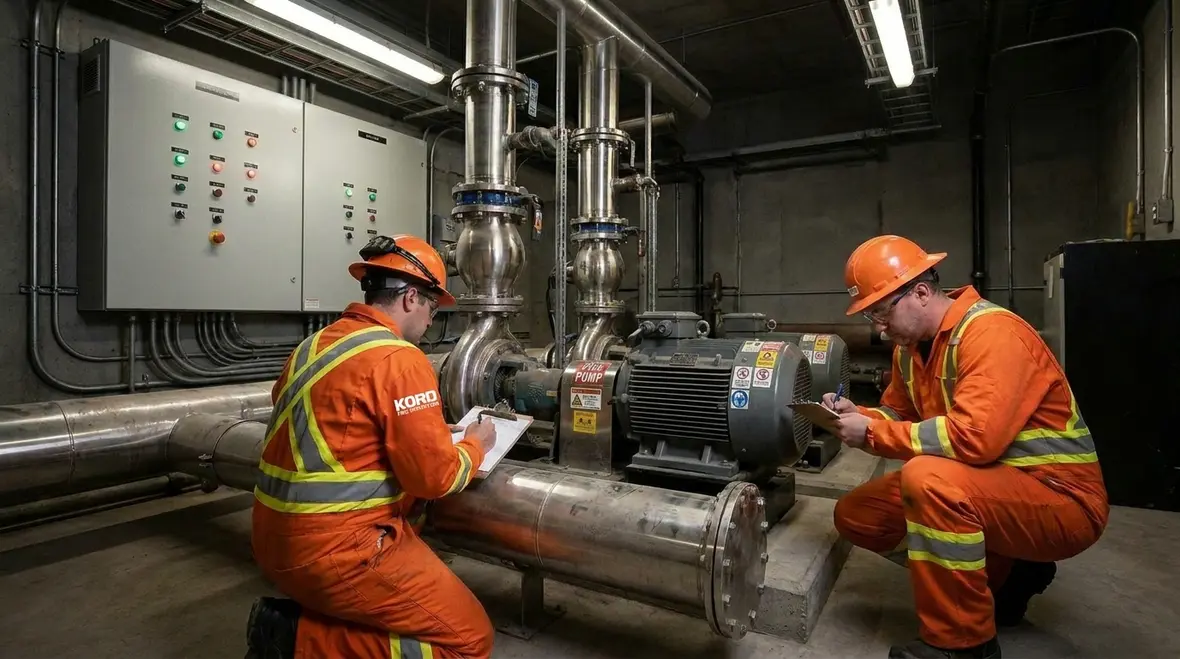
What symptoms usually point to motor trouble
Fire pump motors rarely announce their problems like a pop-up ad. Instead, they show patterns. First, look at what the system does during a test run or an actual demand.
- Difficulty reaching full speed: The motor ramps slowly, stalls, or takes longer than expected.
- Unexpected noise and vibration: Whining, grinding, humming, or rhythmic vibration shows up during run time.
- Overcurrent trips: The controller trips, fuses blow, or protection devices reset repeatedly.
- Temperature rise: Motor housing or bearings run hotter than normal after short cycles.
- Low flow or pressure: The motor runs, but the pump cannot maintain required performance.
Next, staff should connect symptoms to likely causes. For example, if the motor draws higher current but does not increase speed, the team often finds a wiring issue, a voltage drop, or a mechanical load problem. Meanwhile, if current looks normal but pressure falls, the motor may be fine and the pump, coupling, or suction conditions are to blame. Either way, disciplined fire pump motor troubleshooting keeps the team from chasing ghosts.
How to confirm power, wiring, and control settings
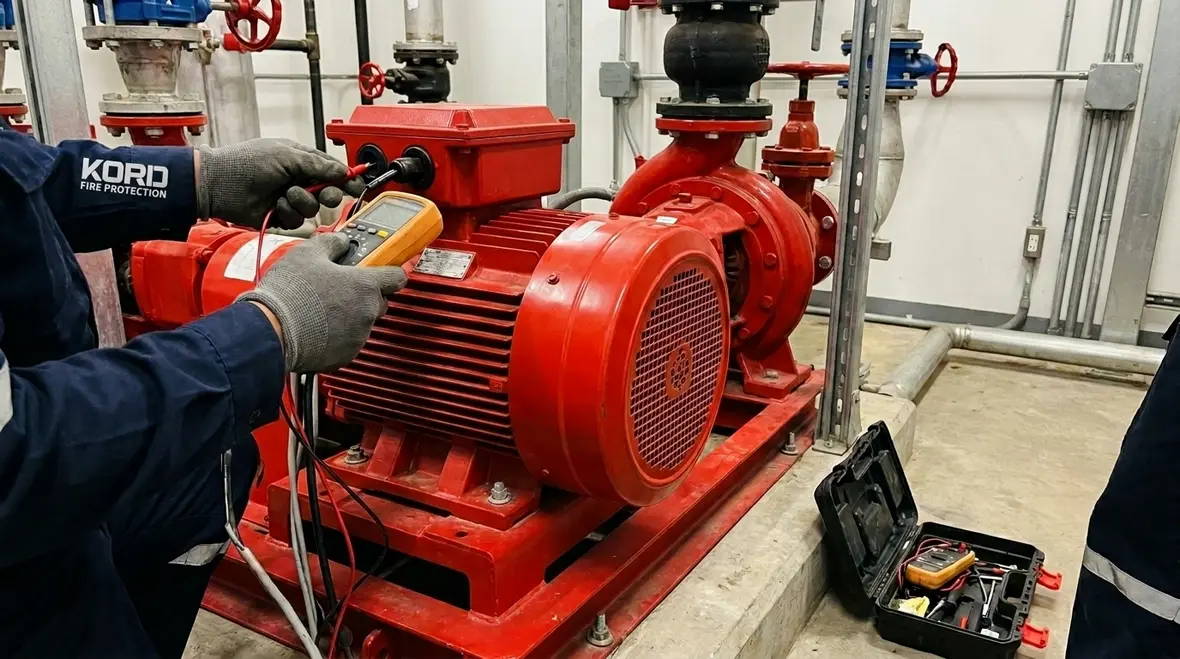
Before anyone touches hardware, they should verify the basics. Then they should document readings so the next technician does not start from zero. Start with incoming voltage and phase balance at the motor terminals during operation. If the motor runs on a three phase system and one phase sags, performance drops and overheating follows.
- Measure voltage during start and running, not just at rest.
- Check terminal tightness and look for discoloration or heat marks.
- Inspect control wiring for loose connections or damaged insulation.
- Verify starter settings, contactor condition, and overload calibration.
- Confirm correct motor rotation direction during commissioning and after any service work.
At this stage, a common mistake looks like this: someone swaps a component because it is “easy,” while the real issue is voltage dip from undersized cables or a failing contactor. So, teams should check voltage drop and conductor condition. Also, if a controller shows fault codes, they should not be cleared and ignored. Fault history tells a story, like the latest episode of a long running TV drama, only this one ends in fewer surprises. For related context, Kord Fire Protection also covers fire pump motor starter issues that often overlap with these early checks.
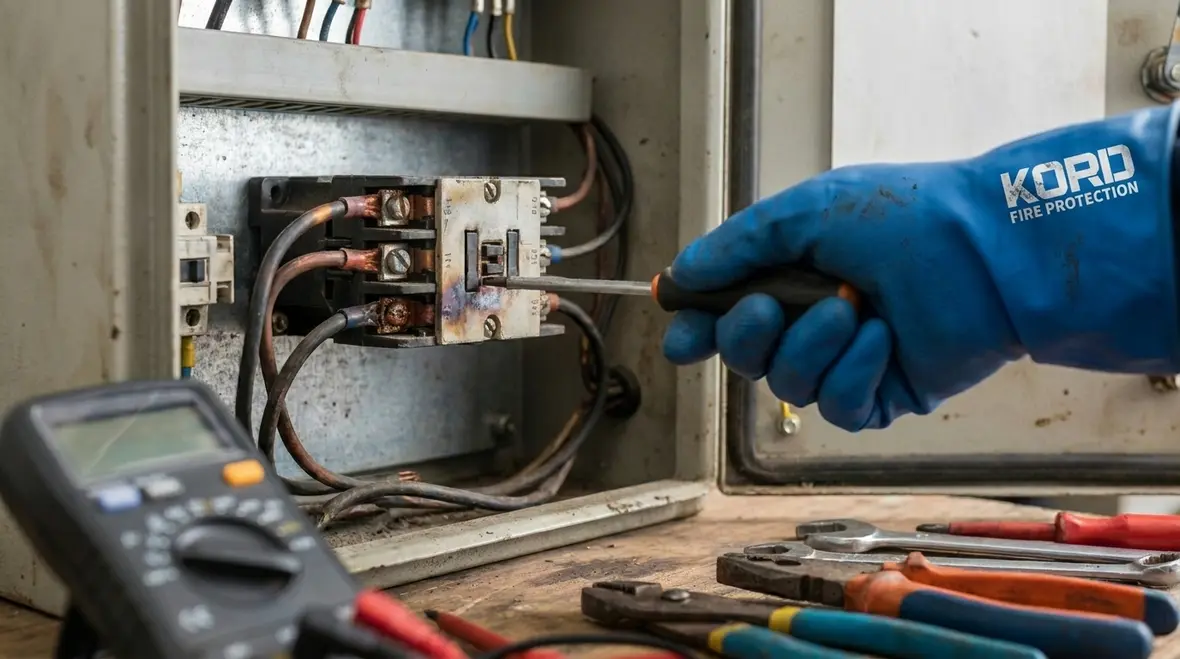
Insulation faults, grounding, and protection devices
Insulation does not fail on day one. It degrades quietly, then it fails during a real demand, when everyone remembers that the test schedule exists. Therefore, teams should perform insulation resistance checks and verify grounding integrity. A weak ground path can cause nuisance trips and erratic control behavior.
In practical terms, technicians typically review:
- Insulation resistance: Compare readings to manufacturer guidance and prior test results.
- Ground continuity: Confirm proper bonding of the motor frame and associated equipment.
- Thermal protection: Verify temperature sensors, relays, or thermistor paths operate correctly.
- Overload relays: Ensure settings match motor data and duty expectations.
Then, if insulation readings are low, the service team should isolate the motor winding and plan repair or replacement. This step can save money later, because repeated starts with insulation weakness can damage windings beyond economical repair. In other words, stop the “try again later” plan. Fires do not wait, and neither do damaged motors.
Why documentation matters after electrical checks
This is also the point where good teams separate themselves from chaotic ones. Readings should be logged, alarms recorded, and any protection changes noted clearly. A compliant service trail makes future diagnostics faster and keeps site managers from hearing three different theories from three different people. If that sounds familiar, yes, this is exactly how mystery faults earn their second and third encore.
Mechanical load: bearings, coupling, impeller, and alignment
Now we shift from electricity to physics. Even if the motor receives perfect power, the pump system can still overload it. Misalignment, worn bearings, or a damaged coupling can drive current up, raise vibration, and reduce pressure output.
Key checks usually include:
- Coupling condition: Look for wear, cracks, or backlash in flexible couplings.
- Alignment verification: Confirm alignment using proper tools and tolerances.
- Bearing health: Listen for bearing noise and inspect grease condition.
- Impeller and shaft inspection: Check for scoring, binding, or debris.
- Suction conditions: Verify strainers, valves, and inlet pipe issues do not create cavitation.
Next, technicians interpret the combination of vibration and temperature. For example, if vibration rises quickly and the temperature climbs, alignment or bearing drag often plays a big role. If pressure falls while motor current looks steady, suction conditions or internal pump wear might be the issue. This is where effective fire pump motor troubleshooting becomes more than a checklist. It becomes pattern recognition supported by measurements, not guesswork.
Cooling, ventilation, and heat management
Heat is the slow villain. Motor fans may get clogged, filters may be missing, and enclosures can trap hot air in plant rooms and pump sheds. When cooling fails, the motor runs at a higher temperature and insulation life shortens.
Teams should inspect:
- Motor fan operation and airflow paths
- Ventilation openings, louvers, and clogged intake screens
- Motor enclosure seals and water ingress
- Ambient temperature around the motor
Then they should compare operating temperatures to historical records. If a motor runs hotter after a site change, such as added equipment near the motor, the cause may be airflow restriction rather than a failing winding. Also, a quick joke helps teams remember: if the motor cannot breathe, neither can your incident report budget.
Small environmental changes can create big headaches
Plant rooms do not stay frozen in time. Shelving gets added, louvers get blocked, dust builds up, and somebody eventually stores “temporary” materials where airflow used to exist. None of that feels dramatic in the moment, but motors are not especially forgiving about it. A ventilation issue can mimic electrical stress, and if nobody checks the room itself, the motor gets blamed for a crime it did not commit.
When performance tests do not match expectations
Operational tests reveal gaps that visual inspection cannot. If the pump does not reach the required pressure or flow during a test, the team should not immediately blame the motor. Sometimes the system has valve issues, suction restrictions, or controller setpoint problems.
During performance checks, technicians often review:
- Pressure readings at the correct test points
- Flow meter accuracy and calibration status
- Valve positions and any partial closures
- System control logic and setpoint confirmation
- Air entrainment or vapor issues at the suction side
To keep this process clear across multi site facilities in Australia, teams can use a simple two lane method for faster decisions. Here is one example approach for service workflow planning:
| Electrical lane Verify voltage, wiring, protections, insulation, and phase balance. | Mechanical lane Verify alignment, bearings, coupling, impeller condition, and suction flow. |
As the data builds, the technician decides which lane needs deeper work. This reduces downtime and keeps repairs focused. For teams also dealing with controller side confusion, Kord Fire Protection has a related guide on troubleshooting fire pump controller electrical issues that fits naturally with this workflow.
Why Kord Fire Protection should lead the service partnership
Fire pump motor troubleshooting works best when it connects technical action to compliance outcomes. Kord Fire Protection can become a vital partner by supporting a complete lifecycle: troubleshooting, documentation, scheduled testing coordination, and service planning that fits how facilities actually operate across Australia.
Instead of chasing issues in isolation, a partner helps teams manage outcomes such as:
- Consistent test results tracking across multiple assets
- Clear reporting that helps operations and compliance teams respond faster
- Corrective actions aligned with manufacturer and industry expectations
- Reduced repeat faults through root cause verification
Because let us be honest, nobody wants the fire system acting like a “season finale” where it fails only on the one day leadership asks for proof.
FAQ
Conclusion and CTA
Reliable fire pump performance starts with smart, measured fire pump motor troubleshooting that connects electrical checks to mechanical reality. When symptoms appear, they should act quickly, verify power and controls, inspect bearings and alignment, and confirm system performance during tests. That mix of discipline and pattern recognition is what keeps small faults from becoming very expensive surprises.
If you want this handled with documentation, compliance focus, and fewer repeat callouts, contact Kord Fire Protection for a service review and troubleshooting plan tailored to your sites across Australia. It is a much better ending than waiting for the system to choose the most inconvenient possible moment to get dramatic.

Join Our Newsletter!
Get the latest fire safety tips delivered straight to your inbox From our Newsletter.