
NFPA 33 Section 10.10: Spontaneous Ignition Hazards From Residues
Quick Answer
NFPA 33 Section 10.10 requires facilities to control spontaneous ignition hazards created by residues, including paint, coatings, and cleanup byproducts. The rule focuses on removing, storing, and managing contaminated materials to prevent heat buildup, accumulation, and ignition from reactive residues.
If your facility is reviewing spray operation scope and where residue pathways create risk, a useful companion read is NFPA 33 Section 1.1 Scope: What Spray Operations the Standard Covers.
Why Section 10.10 matters in real operations
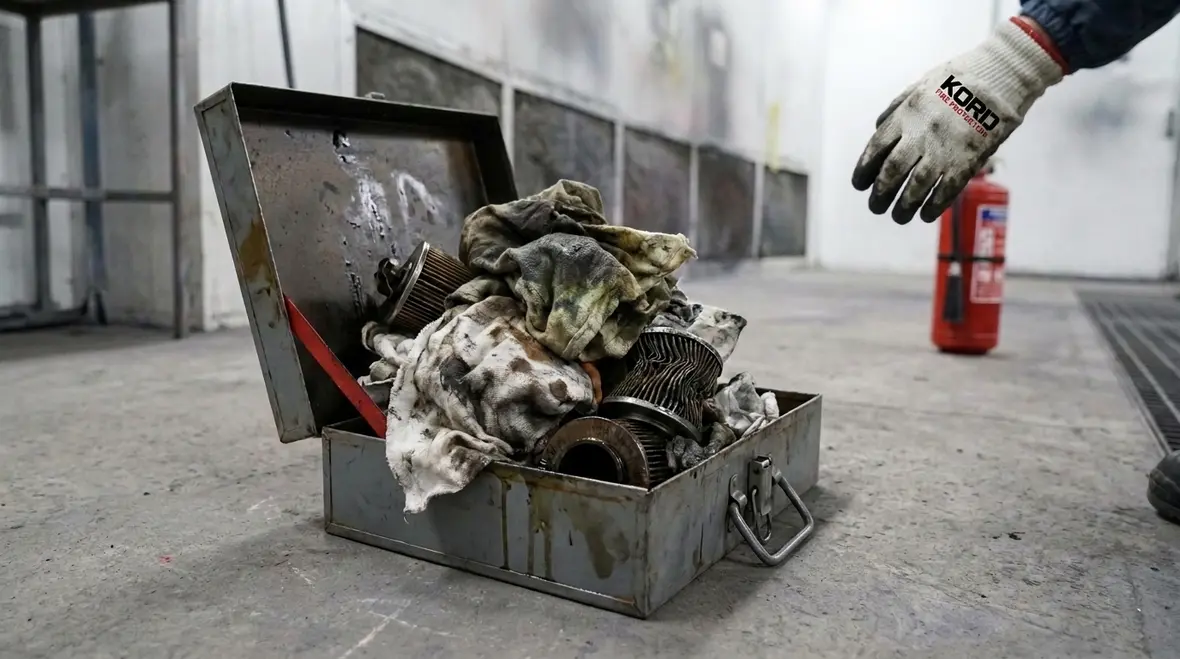
In coating and finishing environments, spontaneous ignition often does not start as a visible fire. Instead, it begins as heat generation within contaminated waste, rags, filter media, sludge, and residue layers that can accumulate when housekeeping, disposal, and storage controls break down. NFPA 33 addresses this hazard explicitly because certain residues can oxidize or undergo exothermic reactions, building temperature until ignition occurs.
For facilities dealing with NFPA 33 spontaneous ignition hazard paint residues, compliance requires more than generic fire safety. It requires a documented residue management process that aligns with how workers generate waste, how residue is collected, and how containers, transport, and storage are maintained.
What “spontaneous ignition hazards from residues” typically includes
Section 10.10 targets residues that can trap heat and foster ignition, especially after finishing operations. In practical terms, residues frequently include:
- Paint and coating sludge from filtration systems, strainers, and booth-related collection equipment
- Waste coatings on spent liners, absorbents, and cleaning materials
- Rags, wipes, and disposable cleaning cloths contaminated with coatings or solvents
- Residue on interior surfaces of spray equipment, mixers, hoses, and transfer lines
- Overspray and residue accumulation on booth structures, ducts, fans, and collection components
- Debris and residues from color change operations, line purging, and cleanup tasks
Commercial and industrial facilities usually generate these materials in predictable workflows. Retail and light industrial coating operations also face risk when they perform touch-up, maintenance painting, or cleaning without the same level of residue segregation and container controls.
How ignition happens: the operational failure points
Spontaneous ignition is usually driven by a combination of reactive residue characteristics and heat accumulation conditions. The most common failure points include:
1) Accumulation in containers or work areas
Waste contaminated with coatings can generate heat as it oxidizes. If waste is allowed to accumulate beyond the intended limit or left unattended in high load areas, temperature can rise rapidly. This often occurs when benchtop waste, rag bins, and cleanup staging points are treated as “temporary” for too long.
2) Improper storage of contaminated waste
Containers that do not maintain correct closure, labeling, or compatible configuration can contribute to heat buildup. In many facilities, the real compliance problem is not the absence of bins, but the lack of controlled handling: incorrect container types, missing lids, improper liner use, or waste stored where it cannot cool.
3) Ineffective cleanup practices after coating and maintenance
Residue that remains in hard to access areas can later become part of the waste stream or can contribute to ongoing heat generation in collection equipment. Facilities often miss residue on ducts, fan housings, booth surfaces, and behind panels where housekeeping schedules are inconsistent.
4) Filtration and collection system neglect
Filters, strainers, and collection devices can hold coating residue even after operations end. If maintenance intervals and disposal practices do not match the site’s production intensity, residues can accumulate and become a recurring ignition risk. This is especially common during high throughput periods or extended shifts.
Compliance controls that prevent spontaneous ignition
Facilities typically reduce risk by implementing a residue management plan that covers generation, segregation, containerization, removal, storage, and disposal. The controls below reflect the operational intent behind NFPA 33 Section 10.10.
Residue management plan tied to actual job tasks
- Map where residues are generated: booth operations, color changes, cleanup tasks, and maintenance activities.
- Define acceptable container types and lid requirements for contaminated waste.
- Set maximum accumulation time and transfer frequency based on production volume.
- Establish clear “end of shift” and “end of job” housekeeping requirements.
Container controls for contaminated rags and cleanup materials
- Use designated waste containers for coating contaminated materials rather than multipurpose trash.
- Train staff to close lids immediately and keep containers in assigned locations.
- Require labeling and segregation by material type when site processes generate multiple waste categories.
Housekeeping and inspection routines that actually reach hidden residue
- Include booth and exhaust related surfaces in the cleaning scope, not only floors.
- Inspect areas where residue settles: duct runs, fan housings, cabinet interiors, and behind service panels.
- Document results and corrective actions, especially after housekeeping deviations or unusual production runs.
Filtration, sludge, and residue disposal procedures
- Schedule filter and collection media inspections and replacement based on site usage.
- Define how residue is removed, contained, and transported to disposal.
- Ensure waste handling matches the site’s hazardous materials and fire safety procedures.
Because enforcement typically depends on documented practice and demonstrated control, facilities should align residue procedures with their broader coatings safety program and fire protection maintenance plan.
Commercial facility checklist: what inspectors and auditors look for
Commercial, industrial, and retail facilities usually face scrutiny through observed housekeeping, waste handling behaviors, and maintenance records. A practical checklist includes:
- Training records for workers handling contaminated residues, including correct container closure and disposal steps
- Waste container controls that match the site’s waste stream and accumulation time limits
- End of shift cleaning evidence, including booth and exhaust equipment surfaces
- Filtration maintenance documentation showing intervals, inspections, and disposal methods
- Corrective actions logged for housekeeping gaps, container lid failures, or residue buildup findings
- Site maps or visual references showing where residues must be collected and stored
If a facility lacks a reliable inspection cadence, residue control tends to drift. Kord Fire Protection supports commercial organizations with ongoing inspection and maintenance coordination to strengthen consistency across shifts and locations.
For teams tightening overall system discipline, it also helps to review adjacent maintenance habits in Dust And Debris In Fire Pump Rooms Maintenance, especially if facility inspections tend to miss the “out of sight, out of mind” problem.
Frequently Asked Questions
Call to action
NFPA 33 Section 10.10 compliance depends on disciplined residue control: correct waste containers, controlled accumulation times, targeted housekeeping, and documented filtration maintenance. Kord Fire Protection can help commercial facilities verify inspection and maintenance routines that reduce ignition risk from NFPA 33 spontaneous ignition hazard paint residues. Contact Kord Fire Protection to assess your current program, strengthen residue procedures, and support ongoing compliance readiness.

Join Our Newsletter!
Get the latest fire safety tips delivered straight to your inbox From our Newsletter.



