
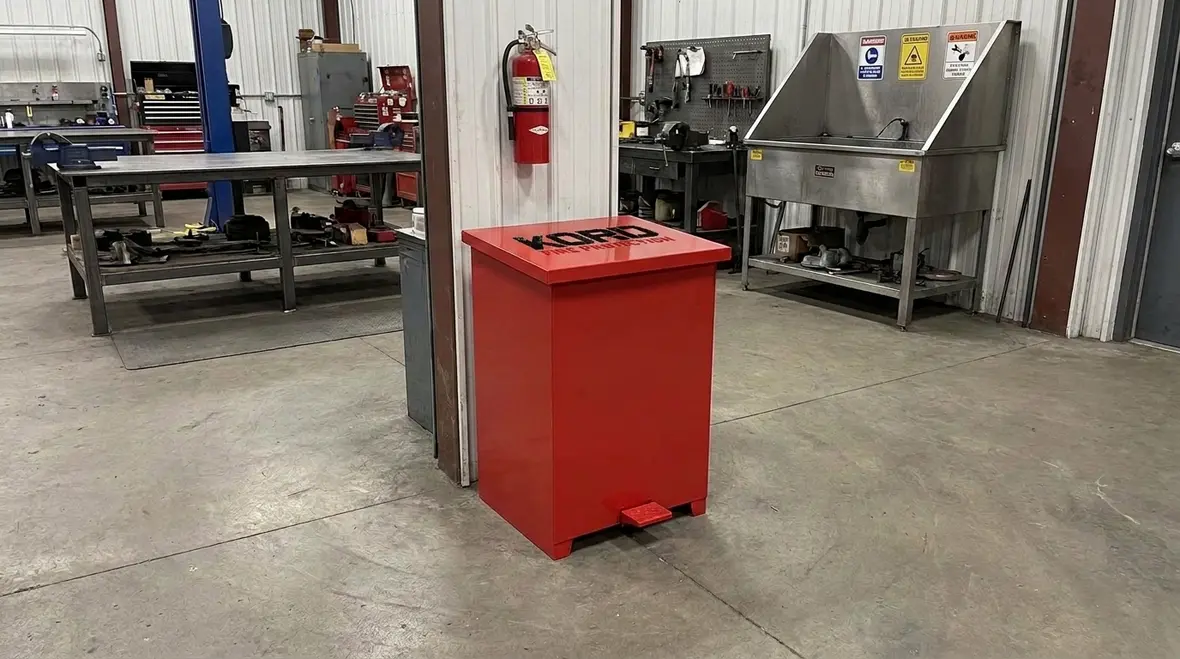
NFPA 33 Section 10.6: Waste Containers for Solvents and Residues
Quick Answer: NFPA 33 Section 10.6 sets strict expectations for waste containers holding solvent residues, emphasizing safe construction, tight closure, and controlled handling. Facilities must implement labeled, compatible containers and maintain them to prevent ignition sources and to meet NFPA 33 waste container solvent residue requirements.
NFPA 33 Section 10.6 addresses how commercial and industrial facilities manage waste containers that store solvents and residues. These containers often serve as the last checkpoint before waste is removed for disposal, reprocessing, or transport. When waste storage practices fall out of alignment with the standard, facilities face elevated risks including container overheating, leakage, vapor accumulation, and ignition exposure during handling.
Facilities building a stronger inspection-ready program often pair container controls with broader fire protection services so documentation, maintenance, and corrective actions stay connected in day to day operations. ([kordfire.com](https://kordfire.com/?utm_source=openai))
What NFPA 33 Section 10.6 Requires for Waste Containers
NFPA 33 Section 10.6 focuses on waste containers used for solvents and residues. The intent is to prevent unsafe accumulation of flammable vapor and residue on container surfaces, reduce the chance of ignition from routine operations, and maintain safe containment during storage and transfer. Facilities that work with solvent wiping, parts cleaning, spraying, solvent-based coatings, or degreasing operations commonly rely on these waste containers.
Core compliance expectations that drive day to day operations
- Proper container selection and compatibility: Waste containers must be compatible with the solvents and residues being collected. Incompatible plastics, coatings, or gaskets can degrade and increase leak and vapor escape risk.
- Correct lids and closure discipline: Containers should remain closed when not actively adding waste to reduce vapor release.
- Safe placement and protection: Containers require safe location relative to ignition sources and operational hazards such as hot surfaces, electrical equipment, or high traffic areas.
- Controlled residue management: Containers must be maintained so residue does not accumulate beyond acceptable conditions used for compliance. This is where NFPA 33 waste container solvent residue requirements become a critical audit point.
Solvent Residue Limits: How Facilities Meet the NFPA 33 Threshold
Facilities frequently interpret Section 10.6 through the lens of residue accumulation. Compliance programs typically need clear internal thresholds, inspection triggers, and documented container changeout schedules. In practical terms, many facilities align their program with NFPA 33 waste container solvent residue requirements, commonly treated as a 0.5% to 1.0% residue condition depending on the specific waste characterization and how the facility controls accumulation.
Why residue percentage matters operationally
Residue percentage functions as a risk proxy. As residue builds, the waste container can hold more fuel value per surface area, creating conditions where small ignition events can escalate quickly. Residue also increases the likelihood that lids, seams, or gaskets will experience degradation or contaminated sealing surfaces.
Practical methods to manage residue accumulation
- Container sizing aligned to waste generation: Over sized containers reduce frequent changeouts but may allow residue to build. Under sized containers increase handling frequency and risk. Facilities typically optimize container size to match production cycles and cleanup intervals.
- Standardized wipe and rags procedures: Waste containers often receive solvent contaminated wipes or residues. Facilities reduce variance by standardizing how rags are drained, stored, and deposited.
- Time based and condition based changeout triggers: Audits show that time only triggers can miss fast residue spikes. Condition based triggers improve reliability, especially during maintenance peaks.
- Measured inspection evidence: Compliance is strongest when inspection records demonstrate that residue condition checks occur consistently and that corrective actions are documented.
Because waste characterization can vary across operations, facilities benefit from a structured compliance approach that includes waste container monitoring, staff training, and maintenance verification. Kord Fire Protection supports commercial, industrial, and retail facilities with inspection readiness and ongoing service aligned to NFPA expectations. Teams looking to tighten documentation and corrective action habits may also find Kord’s guide to commercial fire safety audits useful for building repeatable review routines. ([kordfire.com](https://kordfire.com/commercial-fire-safety-audit-step-by-step-process/?utm_source=openai))
Container Construction, Closures, and Handling Controls
NFPA 33 waste container performance depends not only on what the container is made of, but how it is managed. Section 10.6 expects containment strategies that prevent vapor release and limit fuel accumulation exposure. The most common compliance gaps often appear in closure behavior, placement, and container condition.
High impact failure points found in commercial facilities
- Lids left open during routine tasks: Employees may open containers for convenience and forget to close. Over time, this behavior increases vapor release and creates a predictable inspection finding.
- Damaged gaskets, warped lids, or compromised seams: Even small damage can reduce sealing performance. Contaminated sealing surfaces also interfere with proper closure.
- Wrong container type for the residue: Substitutions using similar looking containers lead to chemical incompatibility and accelerated deterioration.
- Improper staging areas: Placing containers near hot equipment, direct sun heating, or high traffic impact zones increases hazard severity and inspection risk.
- Overfilling and residue carryover: Overfilled containers increase the likelihood of spillage during handling and complicate residue condition verification.
Operational controls that strengthen compliance posture
- Simple closure rules: Use job aids, container location cues, and training to reinforce close when not in use.
- Compatibility verification: Maintain an approved container list tied to the solvents and residues used in that area.
- Transfer discipline: Define how containers are moved, who can move them, and what happens if a leak is discovered.
- Maintenance checks: Inspect container integrity, seals, and labeling during routine fire safety rounds.
Inspection Readiness: What Fire Marshals and Auditors Look For
Compliance does not live only in written procedures. Auditors typically expect operational evidence. For NFPA 33 waste container solvent residue requirements, verification usually includes container condition, closure habits, storage practices, and documentation of when containers were changed out.
What to document and how often to inspect
- Container labeling and identification: Each waste container should clearly identify contents as required by the facility’s safety program and align with regulatory expectations.
- Changeout intervals: Record when containers are replaced and why the decision was made. Include condition based triggers related to residue accumulation.
- Physical condition checks: Include inspection notes on lid closure, gasket condition, corrosion, and signs of leakage.
- Corrective actions: Document what staff does when closures fail, residue levels trend high, or containers show chemical damage.
Common inspection outcomes that indicate gaps
- Containers found open without active waste addition.
- Residue buildup visibly exceeding internal thresholds.
- Container surface degradation suggesting chemical incompatibility.
- Inconsistent recordkeeping that cannot show repeatable compliance.
If your facility needs help structuring inspection routines and sustaining compliance across shifting schedules, Kord Fire Protection can support with fire protection service planning, documentation support, and practical recommendations that align with ongoing commercial operations. Kord also publishes practical guidance on fire protection compliance audits for teams that want to reduce repeat findings instead of just surviving the next walkthrough. ([kordfire.com](https://kordfire.com/fire-protection-compliance-audits-reduce-operational-risk/?utm_source=openai))
Implementing a Sustainable Compliance Program in Commercial Operations
Successful NFPA 33 waste container practices operate like a system: equipment choice, training, inspection, maintenance, and waste handling logistics work together. Facilities that treat waste containers as a recurring management task rather than a one time setup tend to remain audit ready.
A practical rollout approach
- Inventory the waste streams: Identify solvent types, residue characteristics, and where waste is generated.
- Select compatible containers: Ensure material and closure performance match the waste stream.
- Define residue management thresholds: Align internal controls to NFPA 33 waste container solvent residue requirements, commonly treated as 0.5% to 1.0% residue for actionable control, based on how your program measures and verifies waste condition.
- Train staff on closure discipline and deposit procedures: Standardize how waste is placed into containers and when lids remain closed.
- Install inspection routines: Assign responsibility, define frequency, and set corrective action paths.
- Track and trend: Use records to identify high residue build areas and adjust container size or changeout frequency.
To strengthen adjacent fire safety management practices, facilities may also benefit from complementary guidance on inspection readiness and system coordination. For related risk management topics, see Fire Protection Services Guide by Kord Experts for practical commercial compliance support. ([kordfire.com](https://kordfire.com/fire-protection-services-guide-by-kord-experts/?utm_source=openai))
Frequently Asked Questions
Conclusion and Call to Action
NFPA 33 Section 10.6 requires disciplined waste container management for solvents and residues, especially around container compatibility, closure behavior, and residue control aligned with NFPA 33 waste container solvent residue requirements. Facilities that document changeouts, inspect container condition, and train staff reduce inspection findings and improve safety outcomes. Kord Fire Protection can help your team build and sustain an audit ready program through ongoing service, maintenance support, and practical compliance planning. Request a review today.

Join Our Newsletter!
Get the latest fire safety tips delivered straight to your inbox From our Newsletter.



