Resilient Fire Protection Infrastructure Design for Data Centers
Quick Answer: Modern data centers need fire protection that stays effective under heat, smoke, and system failures, while keeping downtime low. A strong fire protection infrastructure design links detection, suppression, passive barriers, and maintenance into one resilient strategy. Kord Fire Protection can act as a vital partner, aligning engineering, installs, inspections, and upgrades for Australian facilities.
In Australia, data centers for industrial, retail, and commercial operators face a tough balancing act: high uptime expectations, complex electrical rooms, and strict compliance. To handle that reality, teams increasingly use a fire protection infrastructure design approach early, then refine it through installation, testing, and continuous improvement. This article walks through how resilient fire protection gets built for modern environments, from risk mapping and system selection to coordination with contractors and ongoing service. Kord Fire Protection becomes valuable here, not as a last minute vendor, but as a steady partner who helps keep the protection ready when the building needs it most. And yes, fire systems still need TLC, because even the best equipment can become “mysteriously unreliable” if nobody checks it.
For facilities planning broader support around inspections, alarms, sprinklers, and suppression, full fire protection services can fit naturally into the bigger operational picture. For a more specific data hall angle, Kord Fire Protection also covers data center fire protection and NFPA 75 considerations, which pairs well with the resilience focused approach discussed here.
Resilient protection starts with how the facility actually operates
Designers cannot treat a data hall like a generic warehouse and call it a day. Instead, they must map how the facility runs during normal hours and during abnormal moments. For example, operations teams may reroute airflow, change cooling set points, or move workloads across zones. Those changes can alter smoke movement and heat spread, which affects both detection and suppression performance.
Therefore, teams typically start with site specific fire scenarios and a clear understanding of ignition sources. They then connect those scenarios to the physical layout: server aisles, cable trays, transformer rooms, UPS spaces, generator areas, and any adjacent office or retail support zones. Next, they test the concept against practical constraints such as access for maintenance, safe pathways for technicians, and the need to prevent nuisance alarms that drain trust in the system.
At this stage, a partner like Kord Fire Protection helps owners by translating design intent into workable field outcomes. In other words, they make sure the plan survives contact with reality, where ceiling voids hide surprises and “temporary” installations have a long life span. That practical lens also lines up with Kord Fire Protection’s data center fire prevention strategies for modern facilities, which expands on how uptime goals and real hazards collide.
Why operations based planning matters
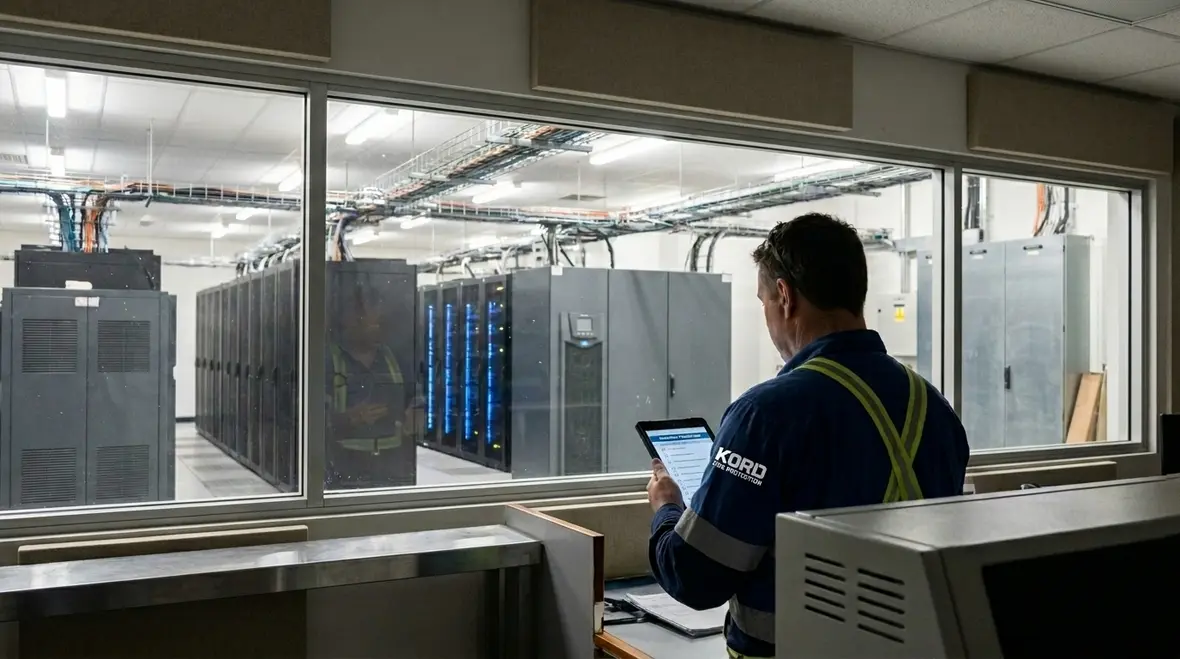
A resilient design has to respect the fact that data centers are living systems. Equipment moves, cooling patterns change, and support spaces get repurposed faster than many teams expect. When the fire strategy follows the real operating model rather than a frozen drawing set, owners are much more likely to end up with protection that still works after the first round of upgrades instead of something that only looked smart at handover.
Detection and response: build speed without chaos
Resilience often comes from fast detection and controlled response. However, speed alone can create confusion if the response strategy triggers messy evacuation or interrupts critical operations unnecessarily. The goal stays simple: identify the right threat, confirm it reliably, and act with the least disruption that still protects life and assets.
Modern data centers often use layered detection so the system can differentiate smoke from non fire events like dust or normal cooling effects. Designers may combine different technologies and place them with attention to airflow patterns. Additionally, response pathways matter. Alarm routing, paging, and building management system integration need testing so the first alert leads to correct actions, not a meeting about what the beep means.
As teams refine the concept, they also address one of the most common operational headaches: alarm management. If occupants treat every alarm as a drill for the wrong scenario, the organization loses the ability to respond during a real event. Transitioning from “alarm volume” to “action quality” takes disciplined design and ongoing service.
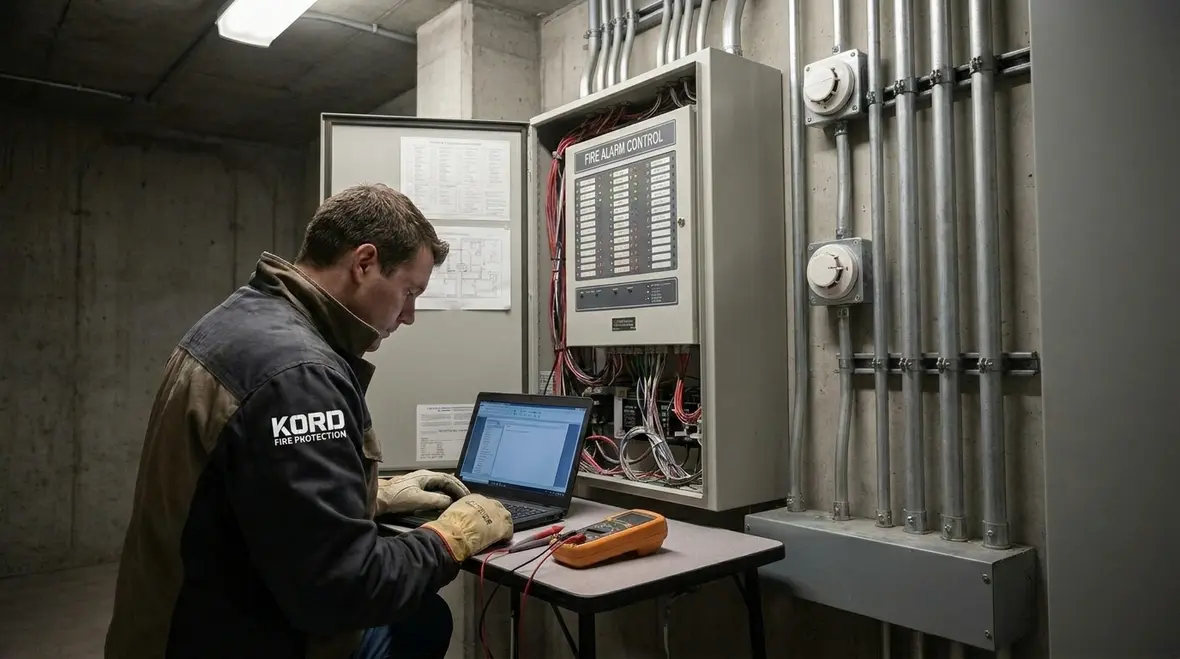
Kord Fire Protection can contribute by setting up maintenance routines that keep detectors calibrated, panels supervised, and reporting accurate. That kind of routine work sounds small, until the day it prevents a false confidence moment. Their related guide on fire protection for data centers reinforces the same idea: detection only helps when the response chain is clear and dependable.
The difference between fast and useful
Fast alerts are valuable, but useful alerts are what save time and trouble. A detector that catches a real event early is excellent. A detector that cries wolf every time airflow changes is just training everyone to ignore the panel. In critical environments, resilience means the system responds quickly, but with enough logic and testing behind it that people trust what it tells them.
Suppression choices must match heat, occupancy, and equipment
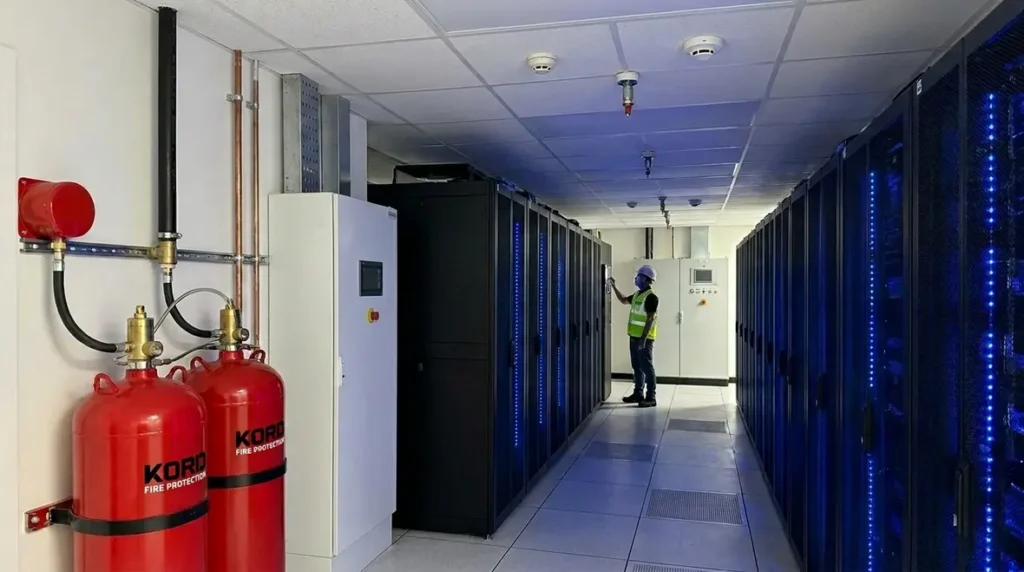
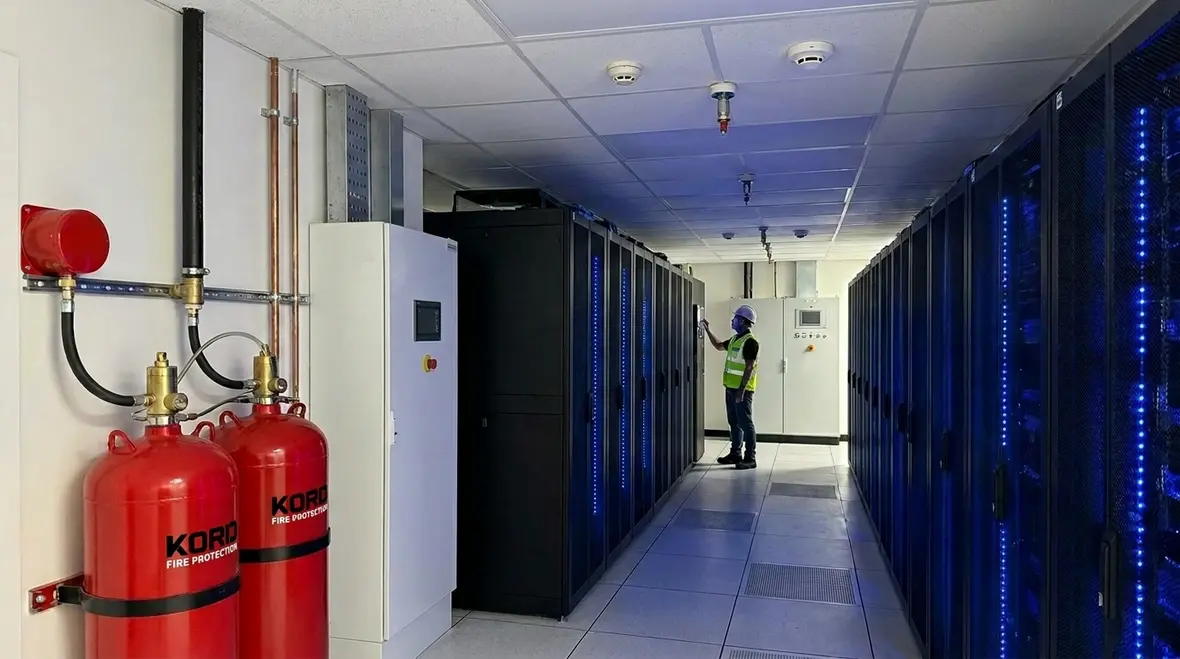
Suppression strategy can make or break a fire protection plan in a data hall. Water based systems can be effective in many occupancies, but they can also introduce risk to sensitive electronics if they discharge in the wrong way. Clean agent suppression helps reduce residue, yet it requires careful design to ensure the right volume control and operational intent. In other areas, teams may choose alternatives based on hazard class, clearance constraints, and expected fire growth.
To design resilient suppression, specialists examine how fire will develop in cable systems, racks, and insulation materials. They also account for ventilation and suppression interaction. For instance, if the cooling system continues running during a suppression event, it can spread smoke and heat beyond the intended protected volume. Therefore, response controls often tie into fan shutdown logic and damper operation as part of the coordinated emergency sequence.
Just as important, installers must consider service access and replacement schedules. A system can look perfect on paper and still face operational problems if service teams cannot reach valves, cylinders, or detection interfaces. Consequently, designers should plan for future access and documented change control.
This is where fire protection infrastructure design becomes practical rather than theoretical. Kord Fire Protection can support the full lifecycle by helping owners plan maintenance pathways, understand testing requirements, and reduce downtime during inspections and component replacement. It is the difference between “installed” and “stays ready.” For facilities comparing options, Kord Fire Protection’s data center clean agent fire suppression guide offers a helpful companion read.
Design for service, not just first day success
The best suppression concept is not only effective during an incident. It is also maintainable six months later, two years later, and after the room has been modified three times. If technicians cannot access the parts that need inspection, testing turns into guesswork. That is why resilient design includes the boring but beautiful details of access, labeling, isolation, and documentation. Boring, yes. Beautiful, also yes, at least to anyone who has ever inherited a mystery system.
Passive fire protection prevents spread when systems face stress
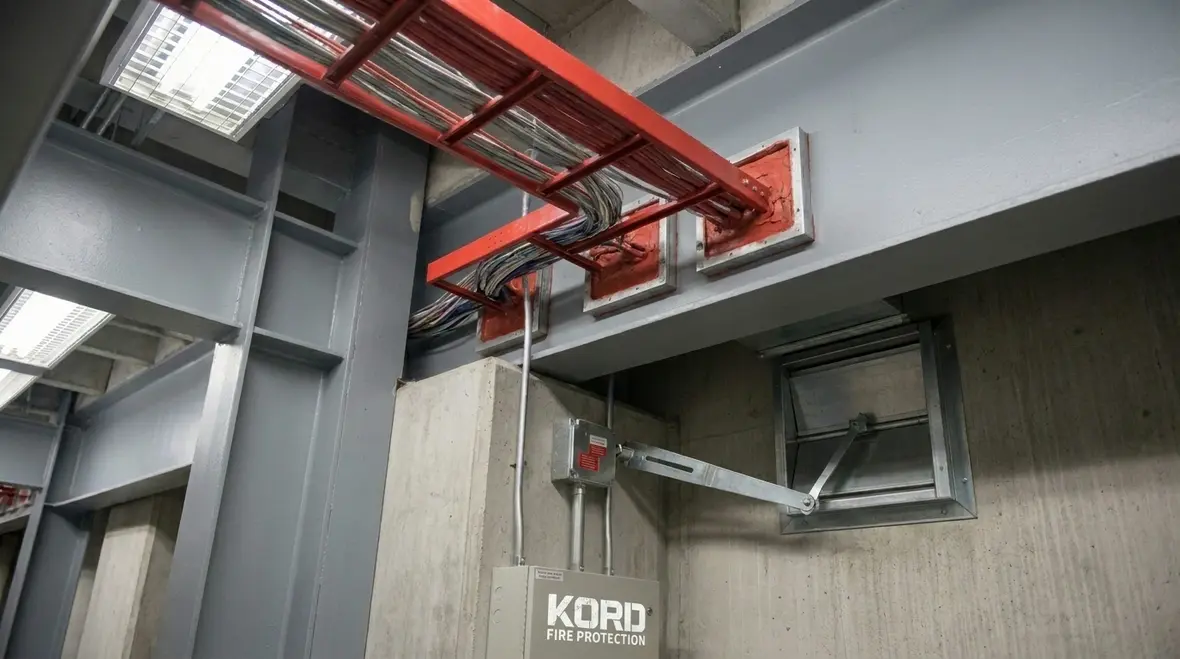
Active systems perform, but passive fire protection sets the stage for survival. Fire stopping, compartmentation, fire rated boundaries, and protected penetrations slow movement of smoke and heat. In data centers, cable penetrations and tray transitions are frequent weak points because people add upgrades over time and forget to treat every opening like it matters.
Resilience improves when teams build passive measures into the early design. That means specifying fire stopping methods for common penetrations, planning for future cable additions, and coordinating with electrical contractors on how they will seal and document every entry. Therefore, the logic is direct: if the compartment holds, the active system has time; if the compartment fails, the active system faces a faster, harsher reality.
Furthermore, designers should verify that rated elements remain intact after renovations. This requires inspection planning, not just installation. When facilities scale out across multiple sites, standardizing inspection checklists helps maintain consistent quality across regional contractors.
Kord Fire Protection often works well in this lifecycle mindset, partnering with facilities teams to align documentation, site practices, and verification schedules so passive measures keep doing their job long after the final handover photo.
Coordination across trades keeps the whole system honest
In modern data centers, fire safety depends on teamwork. Mechanical, electrical, security, controls, and fit out trades all influence how hazards behave. A resilient design builds interfaces clearly and tests them in sequence, so the alarms, shutdowns, dampers, and suppression triggers work together.
To achieve that, projects should include coordination meetings tied to design milestones and commissioning steps. For example, teams can confirm where cable pathways cross rated boundaries, where smoke or heat detection points sit relative to airflow changes, and how the building management system receives signals. Then they should run functional tests that simulate real conditions without risking equipment.
Here comes a light joke, because data centers deserve joy too. If the fire system depends on 20 different inputs and only 19 work, the system may still “function,” but it will function like an unreliable narrator in a movie. It might sound confident, yet it will lie at the worst moment.
In Australia, this coordination matters even more due to varied facility layouts and operational requirements across industrial, retail, and commercial settings. Kord Fire Protection can act as a vital partner by managing interfaces, supporting commissioning documentation, and helping owners keep test evidence organized for audits and internal governance. Teams that want a closer look at this broader approach can also review data center fire mitigation with Kord Fire Protection.
Commissioning proves the story
Drawings make promises. Commissioning checks whether those promises survive real sequencing, real signals, and real human operation. That is why interface testing matters so much in data centers. A resilient fire strategy is not just a list of components. It is proof that the components react together in the right order when conditions stop being polite.
Maintain resilience with testing, reporting, and smart upgrades
Fire protection does not become obsolete after installation, but performance can drift over time. Detectors collect dust, agent systems need periodic checks, valves can seize, and cabling changes can alter airflow and heat transfer. In addition, data centers evolve quickly. New racks, new cooling, new power paths, and new security zones create new hazards even when the building footprint stays the same.
Therefore, teams should use a service plan that includes routine inspections, functional testing, and clear reporting. They should also manage change control so modifications trigger an appropriate review of the fire protection infrastructure design, rather than assuming “it should still be fine.” That assumption is how someone ends up spending the budget twice: once on the upgrade, and again on fixing what the upgrade accidentally broke.
Kord Fire Protection supports ongoing resilience through structured maintenance, realistic testing intervals, and practical guidance for facilities teams who need clarity, not mystery. When owners have clean records and consistent outcomes, audits become less stressful and response readiness becomes measurable.
Dual site considerations for Australian facilities
Operators managing multiple sites across Australia face a common challenge: maintaining consistent standards when contractors, climates, and layouts vary. Therefore, the best approach uses a baseline design framework while allowing site specific adjustments. That can include differences in fire load, ceiling heights, ventilation habits, and equipment density across facilities.
For example, a retail backed data room in a commercial building may need tighter nuisance alarm management to protect staff operations, while an industrial facility may require attention to higher mechanical heat sources and dust loading. Both can follow the same design logic, but each needs tailored placement, testing focus, and maintenance scheduling.
When the organization standardizes documentation and training, it also improves response quality during incidents. Transition planning helps too, like ensuring that new technicians learn the system logic and reporting format. Kord Fire Protection can support those standards, making it easier to scale compliance and keep performance consistent across regions.
FAQ
Final thoughts for Australian data center owners
Resilient fire protection for modern data centers comes from a connected approach: early fire protection infrastructure design, layered detection, suppression matched to hazards, strong passive barriers, and honest coordination across trades. Then it must continue through disciplined maintenance and smart upgrades.
Kord Fire Protection can be a vital partner, helping owners keep systems tested, documented, and ready across multiple sites. If a facility team wants fewer surprises and faster response confidence, it is time to plan the next protection step with Kord.

Join Our Newsletter!
Get the latest fire safety tips delivered straight to your inbox From our Newsletter.