Industrial Fire Suppression Safety Plans in Australia
Quick Answer: Modern industrial fire suppression safety plans go beyond checklists. They combine site risk reviews, smart system design, realistic training, and clear shutdown and inspection rules. When a facility teams with Kord Fire Protection, the plan becomes safer, easier to audit, and faster to act on during emergencies.
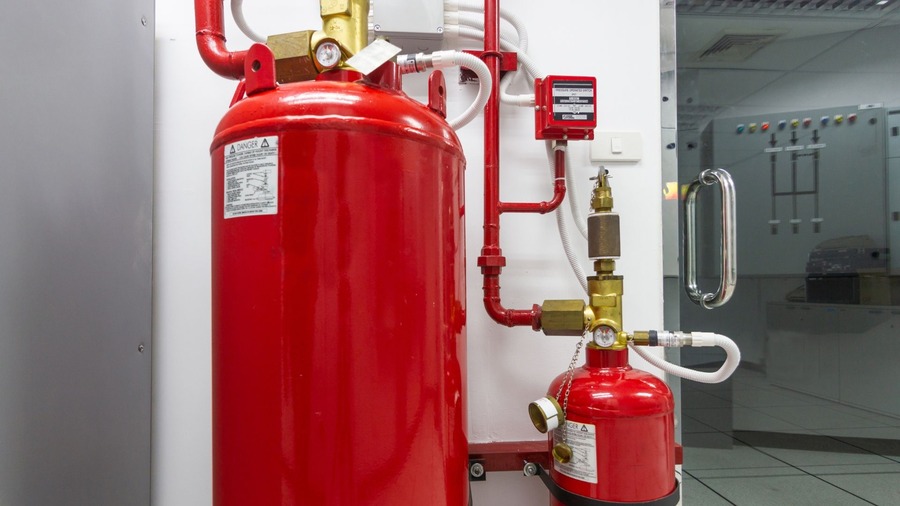
In Australia, industrial fire suppression planning now needs to match how facilities actually operate, not how a form once described them. That means a modern safety plan sets out the right system choices, the right protection strategy for each hazard, and the right steps people must take when something goes wrong. It also means ongoing verification, so the plan stays accurate long after commissioning. In this article, third person guidance walks through the modern approach, plus how Kord Fire Protection can become a vital partner in keeping industrial, retail, and commercial facilities ready.
For facilities looking to connect planning with real system support, fire protection services from Kord Fire Protection fit naturally into the conversation because strong plans work best when inspections, suppression equipment, alarms, and response readiness are aligned from the start.
Modern risk based thinking for today’s facilities
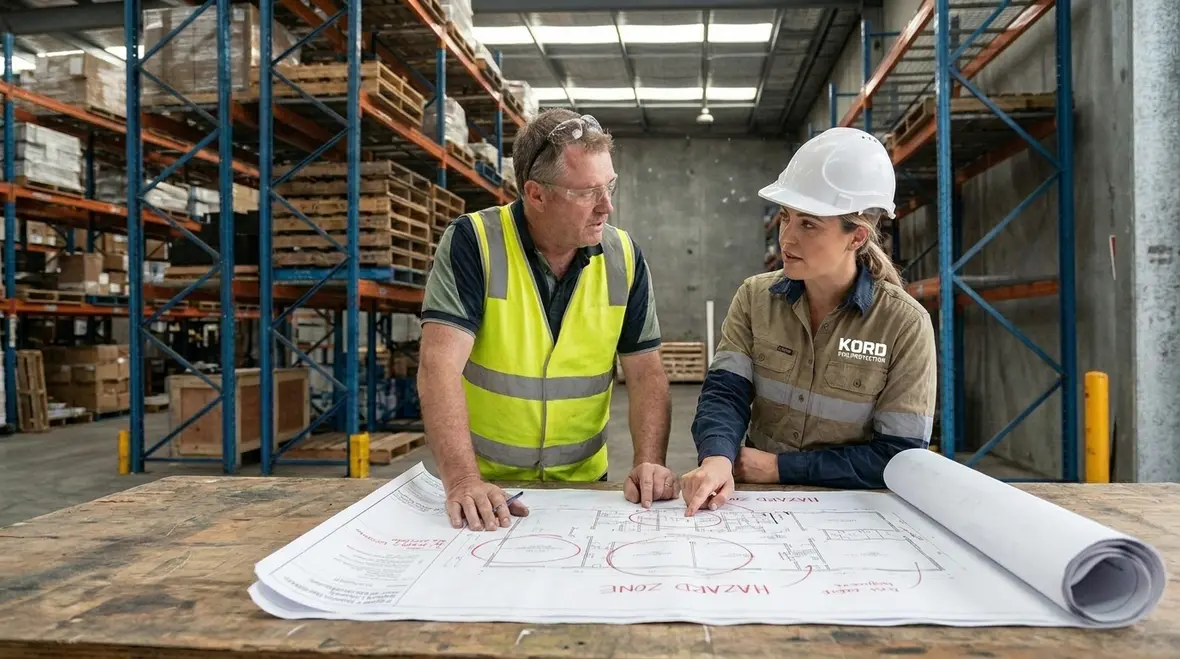
Industrial sites do not stay the same. Equipment gets upgraded, racking gets taller, and production patterns shift like a playlist that never ends. Therefore, industrial fire suppression planning starts with real hazard mapping, not generic assumptions. Teams identify ignition sources, fuel loads, ventilation effects, and where people are most likely to be during an incident.
Next, they connect hazards to protection methods. For instance, flammable liquids, dusty atmospheres, and high rack storage often require different design logic. And while the fire code will set minimum expectations, modern plans typically add practical detail that helps staff act quickly. In other words, the plan should read like an instruction manual, not a legal novel that someone forgot to finish.
At this stage, documentation matters. A good plan records how decisions were made, which areas received which safeguards, and what assumptions the design relies on. When auditors or insurers ask questions, the facility can answer with evidence instead of vibes.
Turning hazard mapping into usable action
That practical layer is what separates modern planning from old paperwork. A team may know that a certain zone contains solvents, packaging, charging stations, or heat producing machinery, but the safety plan has to explain what that means for alarms, suppression response, isolation steps, and evacuation decisions. If the hazard map is detailed but the response steps are vague, the plan still leaves people guessing at the worst possible moment.
Designing safety plans that work during emergencies
A plan should behave correctly under stress, when alarms ring and phones are suddenly useless. Accordingly, modern industrial fire suppression safety plans outline emergency roles, call sequences, and decision points. They also connect suppression systems to detection and notification, so people do not get conflicting instructions like two DJs playing different songs.
Effective plans usually include the following:
- Clear responsibilities by role, including who authorises actions and who coordinates access
- Pre defined procedures for isolation, shutdown, and safe re entry
- Guidance for high risk spaces, such as chemical storage, loading bays, and plant rooms
- Evidence based assumptions about system response times and conditions
Additionally, the plan should cover what happens when parts of the system do not perform as expected. That could mean a partial fault, a maintenance lockout, or a degraded detection input. Rather than pretending everything will always work, modern plans prepare people to respond safely when it does not.
This is where coordination becomes a superpower. When the suppression team, the electrical team, and site operations align, the plan stops contradicting day to day reality.
The value of linking planning to related guidance
Facilities often benefit from connecting one planning document to related risk guidance instead of treating every issue like a separate island. For example, Kord Fire Protection’s article on special hazard fire suppression in Australia fits neatly here because it reinforces the idea that different environments demand different suppression strategies, different assumptions, and different response details.
Inspection, testing, and record keeping without the guesswork
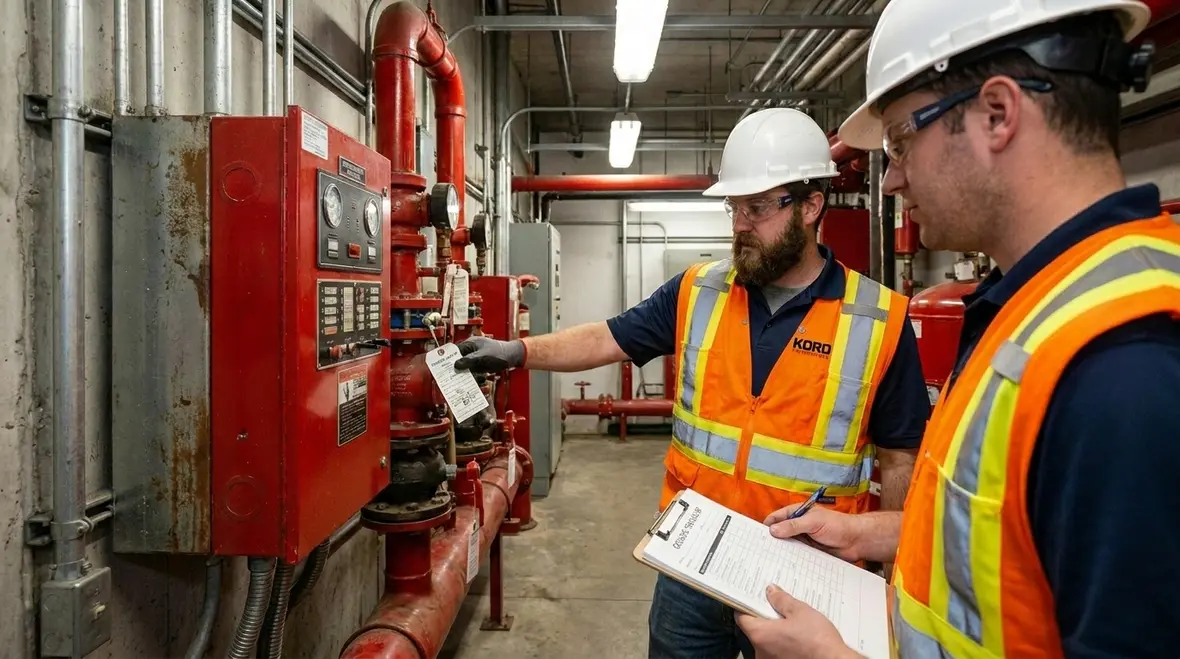
Even strong systems fail when they drift out of spec. Therefore, modern industrial fire suppression planning includes an inspection and testing schedule that matches manufacturer requirements and local code expectations. It also defines what “good” looks like, so staff can recognise drift early.
Also, record keeping should be built for speed. Instead of hunting through files during an audit, facilities track service history, test results, and corrective actions in a clear structure. This is not glamorous work, but it is the difference between “we think it was checked” and “here it is, stamped, dated, and signed.”
For multi site businesses across Australia, consistency matters even more. A robust approach standardises processes so the plan does not change every time leadership changes. At the same time, the plan should still reflect site specific hazards, so it remains accurate for each building.
In practical terms, testing also feeds back into planning. When results show recurring issues, the facility can adjust training, maintenance routines, or design assumptions. In that way, the plan improves over time instead of staying stuck in 2017 like an old meme.
That cycle becomes even stronger when teams compare findings across facilities. One site may reveal a recurring inspection bottleneck, another may expose a training gap, and a third may show that a design assumption no longer matches current storage patterns. Once those lessons are captured, the plan stops being a static document and starts acting more like a working system of memory.
Training programs that build real confidence
Technology can be impressive, but people make the difference. Consequently, a modern safety plan includes training that focuses on actions, not just theory. Staff should understand what the suppression system does, what signals to interpret, and what steps they should take in the first minutes.
Because training gets stale, facilities often use a cycle approach. They run baseline sessions for new staff, refresher training for existing teams, and targeted coaching after drills or incidents. This prevents “one and done” training that fades faster than a promotional flyer.
Common training elements include:
- Hands on familiarisation with alarm panels and evacuation routes
- Role based drills, including command structure and communication steps
- Scenarios tailored to the actual hazards on site
- Clear escalation guidance for contractors and visitors
Moreover, training should not only happen in meetings. It should link to the plan’s procedures so that staff can follow them in a real incident. When drills are run properly, the plan becomes easier to trust.
Why practical drills matter more than polished slides
A polished presentation can explain system basics, but it cannot recreate the noise, urgency, and decision pressure of a real alarm event. Practical drills expose hesitation, unclear authority lines, and tiny communication failures that look harmless on paper but become expensive under stress. That is exactly why facilities that drill well tend to respond well. They have already practiced the awkward parts.
How Kord Fire Protection supports the safety plan as a vital partner
For many facilities, industrial fire suppression planning becomes difficult when multiple vendors handle different parts. Therefore, partnering with a service provider can reduce gaps, missed handoffs, and unclear responsibilities. Kord Fire Protection can become a vital partner by bringing structure to the process and keeping safety actions aligned with system performance.
In a strong partnership, the facility gains support in areas such as:
- Reviewing site hazards and aligning suppression strategies to real conditions
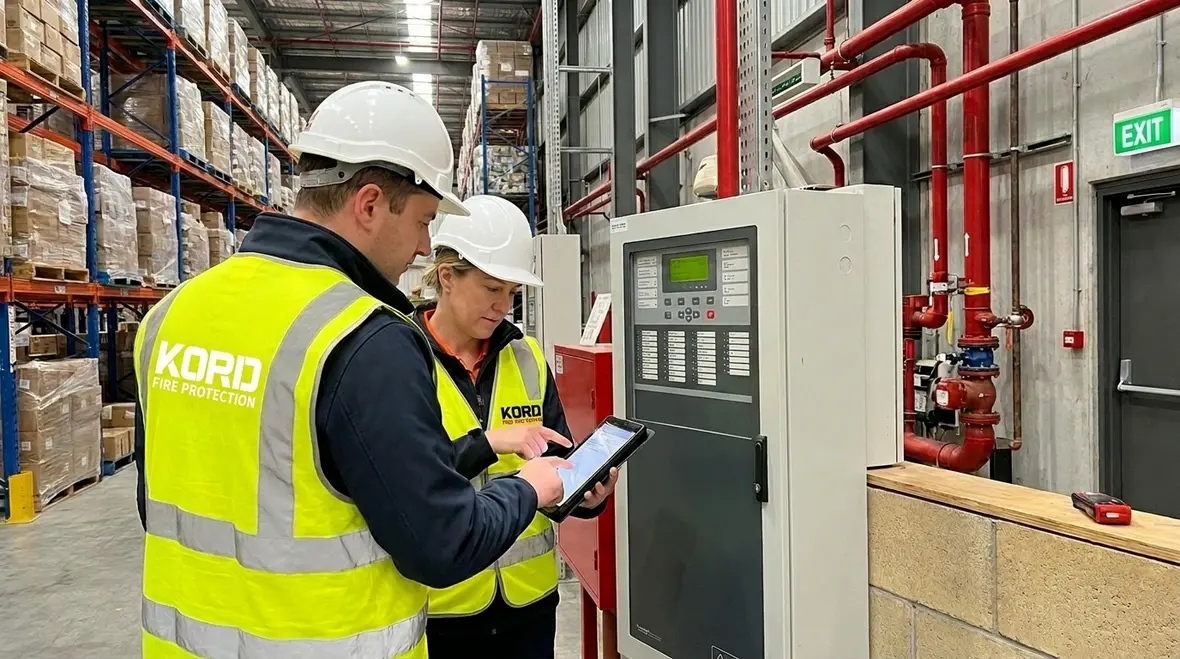
- Coordinating maintenance and inspection schedules that keep records audit ready
- Supporting updates to emergency procedures as the site changes
- Helping staff understand system signals and expected response behaviour
Additionally, Kord Fire Protection helps the facility keep the plan practical. That matters because a safety plan that no one can use during a stressful event is just paperwork with ambition. When the service team works with operations, the plan fits the site, not the other way around.
And yes, while emergency training can feel like a routine until the alarm actually goes off, having the right partner turns that routine into readiness.
That partner approach also connects well with Kord Fire Protection’s guidance on commercial fire prevention planning for industrial warehouses, where planning, inspection expectations, and day to day workflow are treated as part of the same safety picture instead of separate checkboxes floating around in different binders.
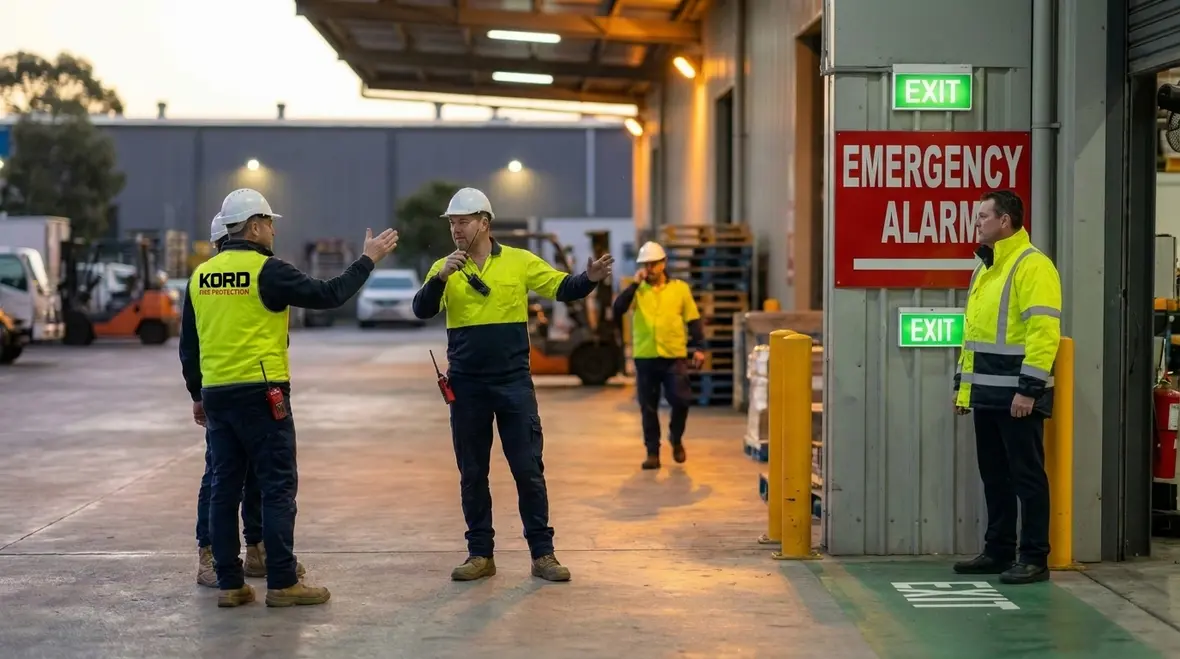
Drills, audits, and continuous improvement that sticks
Plans should not sit quietly until the next audit. Instead, facilities use drills and audits as learning tools. After each test, the team reviews what happened, what decisions were made, and where the process slowed down. Then they update the plan so the next drill runs better.
Accordingly, continuous improvement can include:
- Corrective actions tied to drill outcomes and inspection findings
- Schedule adjustments based on recurring issues and system behaviour
- Procedure updates when new processes, contractors, or layouts enter the site
- Communication improvements to reduce confusion during alarms
Audits also benefit from a clear “chain of evidence.” When the facility can show that inspections happened, testing met requirements, and drills improved performance, the safety plan becomes a living document with proof. That is how modern industrial fire suppression safety plans stay effective across changing operations in Australia.
Continuous improvement sticks best when ownership is obvious. Someone has to log findings, someone has to assign corrective actions, and someone has to check that those actions actually happened. Otherwise, the same issue keeps returning like a sequel no one asked for. Modern plans work because they close that loop instead of admiring it from a distance.
FAQ
Conclusion
Modern industrial fire suppression safety plans protect people and assets by staying practical, testable, and updated as the site changes. When facilities build emergency roles, training, and record ready maintenance into the plan, readiness stops being luck.
If the goal is a calmer incident response and a plan that stands up to audits, Kord Fire Protection can help. Reach out to discuss industrial fire suppression planning support for your facility across Australia.

Join Our Newsletter!
Get the latest fire safety tips delivered straight to your inbox From our Newsletter.